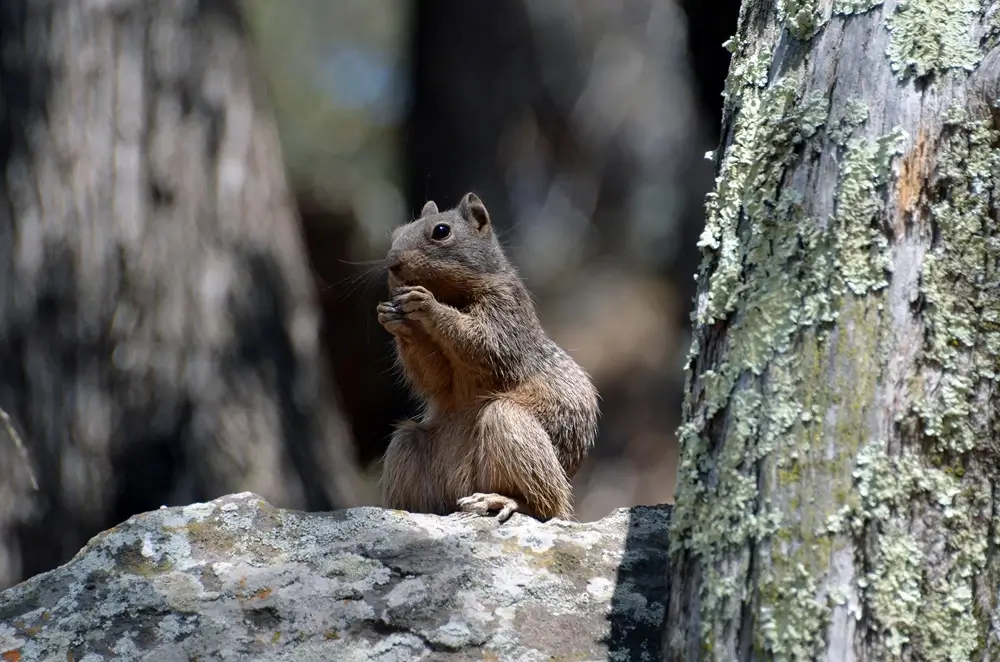
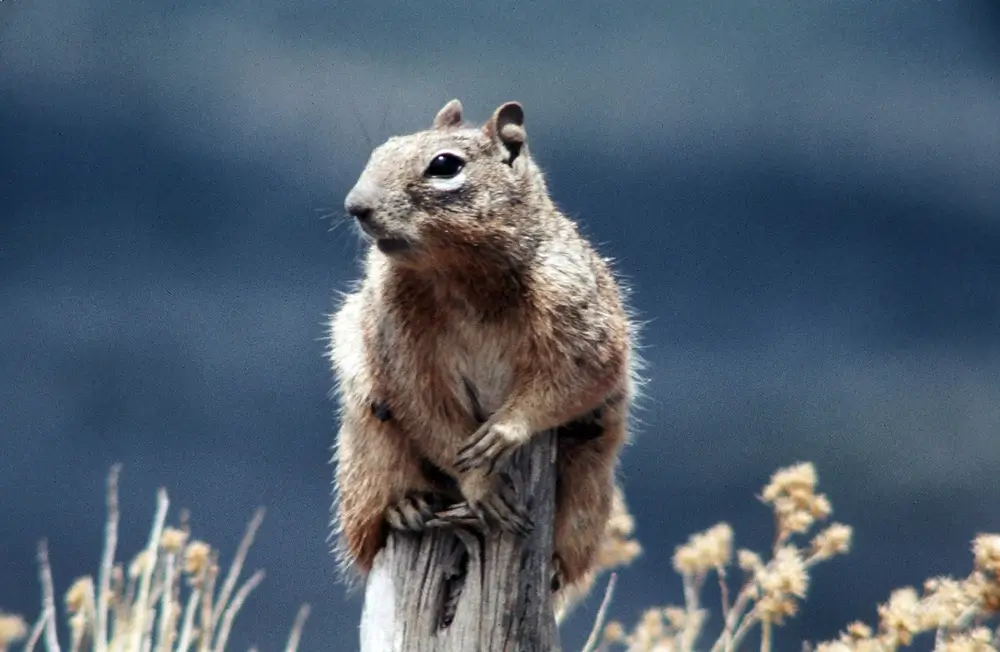
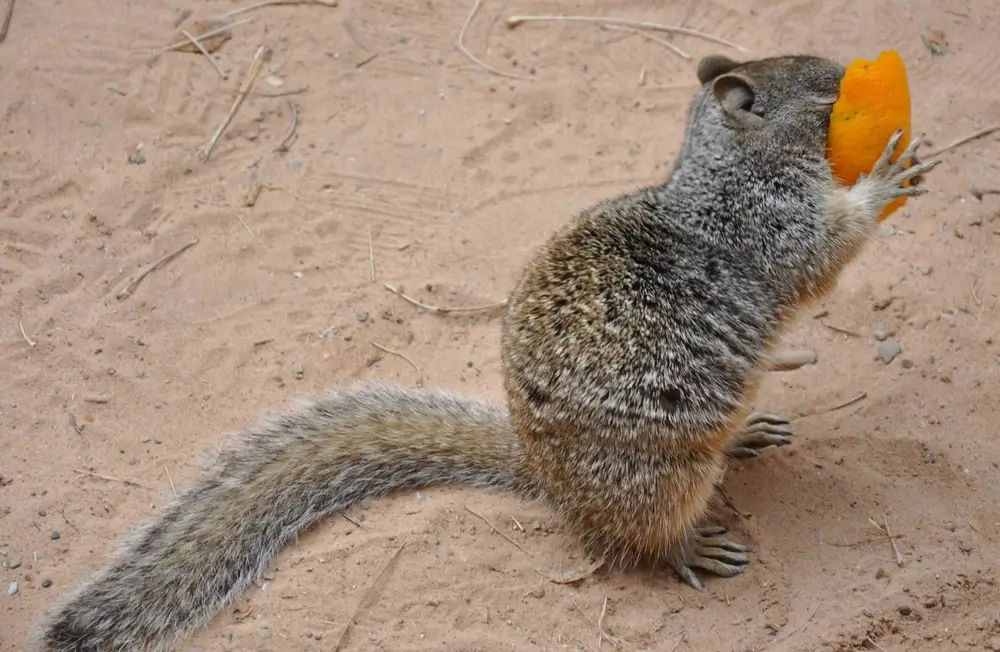
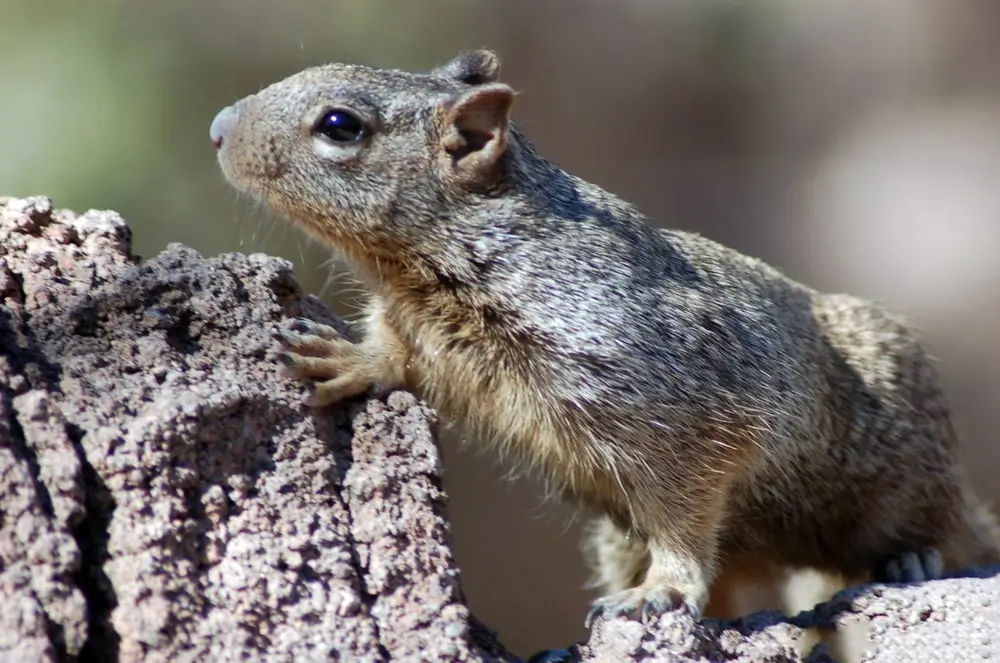
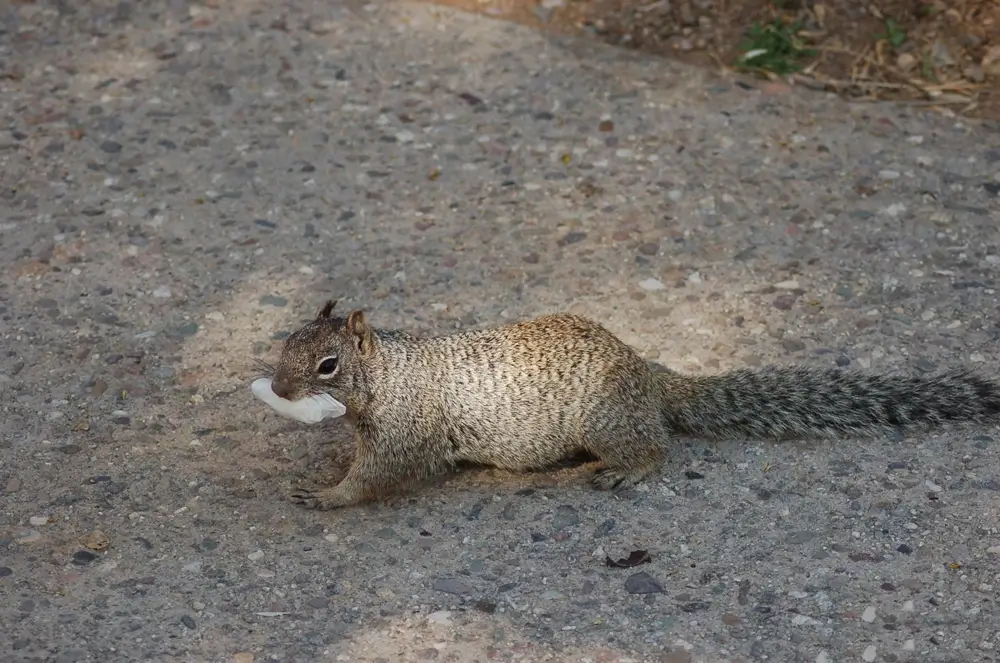
The rock squirrel is a large ground squirrel that is 17-21 inches (43-53 cm) in length. It is mottled gray on its uppersides with a brownish rump and creamy white on its undersides. It has a long bushy tail with white edges.
Habitat
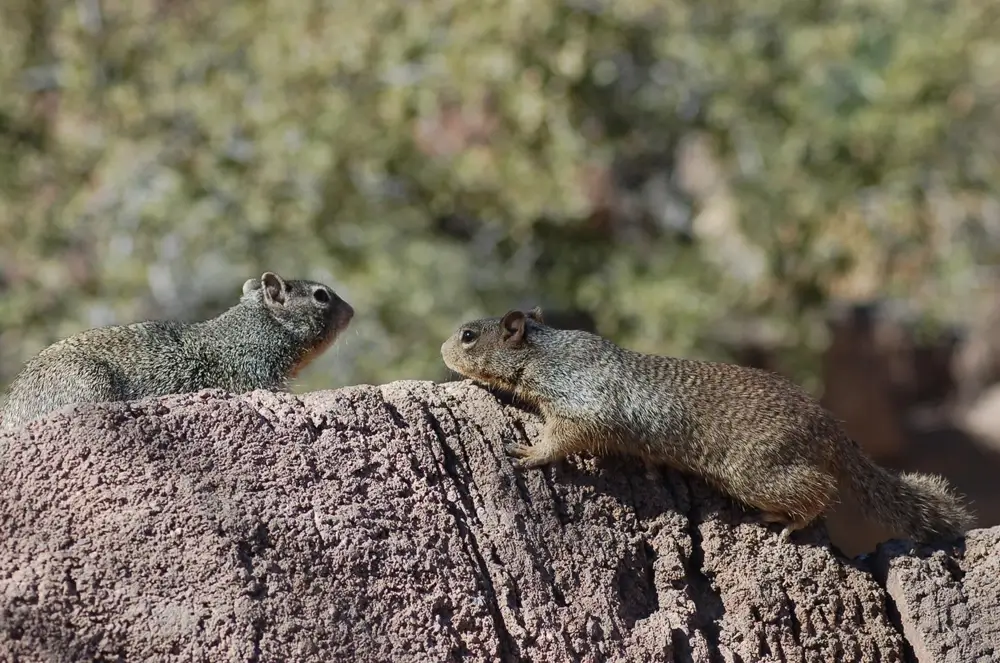
The rock squirrel is found in rocky habitats. It can be found on cliffs, canyon walls, talus slopes, rock and boulder piles, and highway fills. It is often seen sitting on or running on rocks. It usually makes its den in a burrow below the rocks, but it may make a den in a tree hollow.
Diet
The rock squirrel eats pine nuts, walnuts, seeds of mesquite, cactus, saltbush, agave, wild gourd, cherries, and sumac, as well as all sorts of cultivated fruits and vegetables. It also eats insects like grasshoppers, crickets, and caterpillars. It also eats carrion or dead animals. Although it is a ground squirrel, it is a good tree climber and climbs juniper and mesquite trees to gather fruit. Sometimes it carries food back to its den to store and eat later.
Life Cycle
The female rock squirrel has two litters a year with 3-9 babies in each litter. Rock squirrel babies are called kits or kittens.
The first litter is born between April and June, and the second litter is born between August and September.
The rock squirrel has an average lifespan of 2-3 years in the wild. In captivity, they can live to be 6 years old.
Behavior
The rock squirrel is diurnal. That means it is most active in the early morning and the late afternoon. In the northern part of its range and in high elevations, it may hibernate for short periods. The rock squirrel lives in colonies.
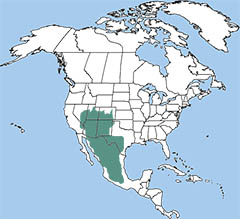
The rock squirrel is found in southern Nevada, Utah, Colorado, Arizona, New Mexico, western Texas, and the panhandle of Oklahoma. It is also found in Mexico.