The rose-breasted grosbeak is 7.1-8.7 inches (18–22 cm) in length with a wingspan of 11.4-13 inches (29-33 cm).
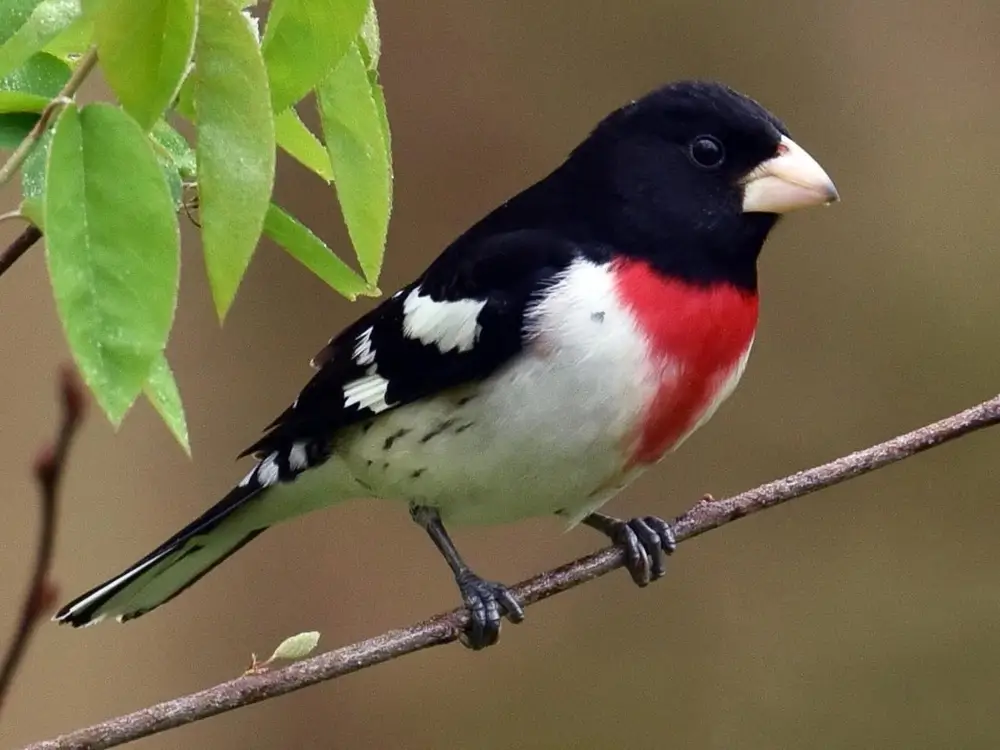
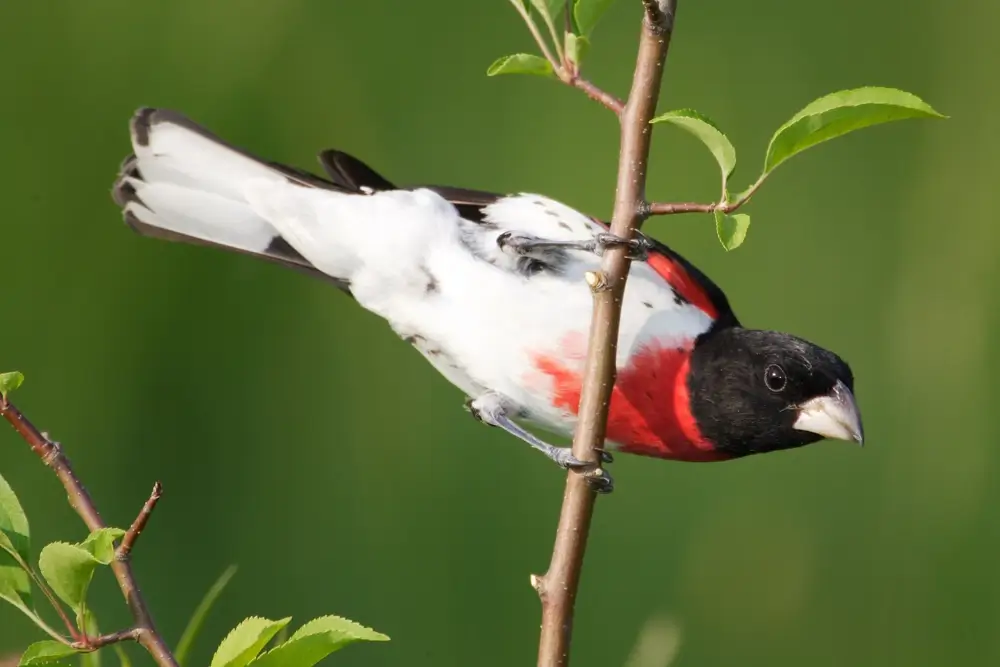
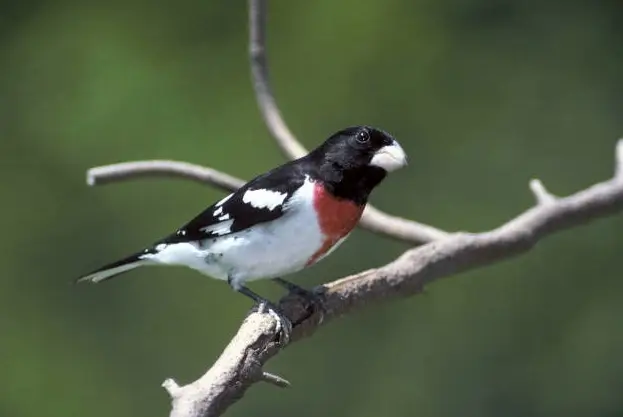
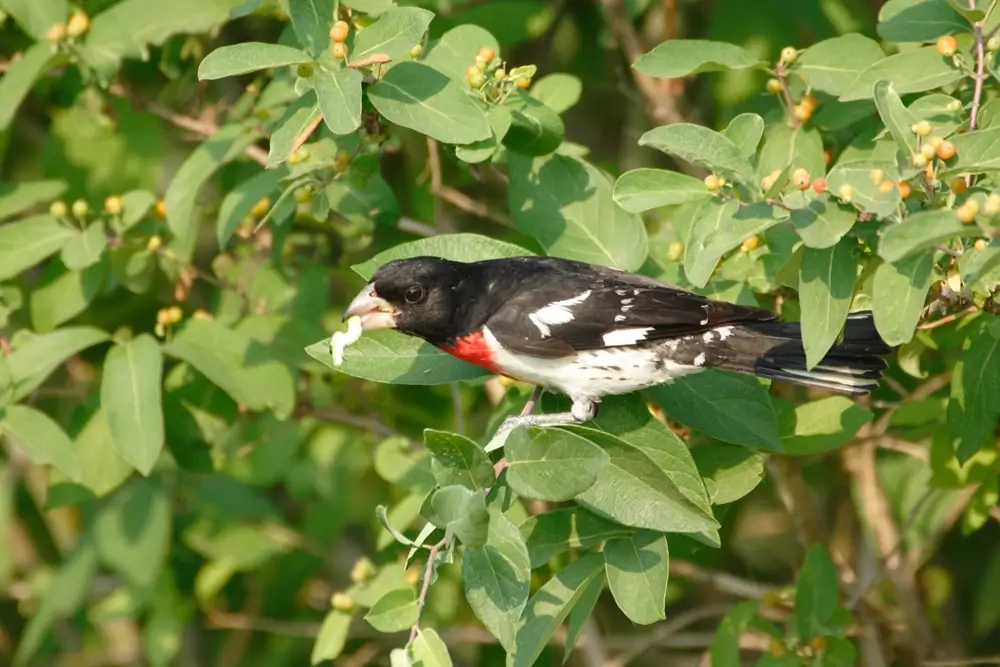
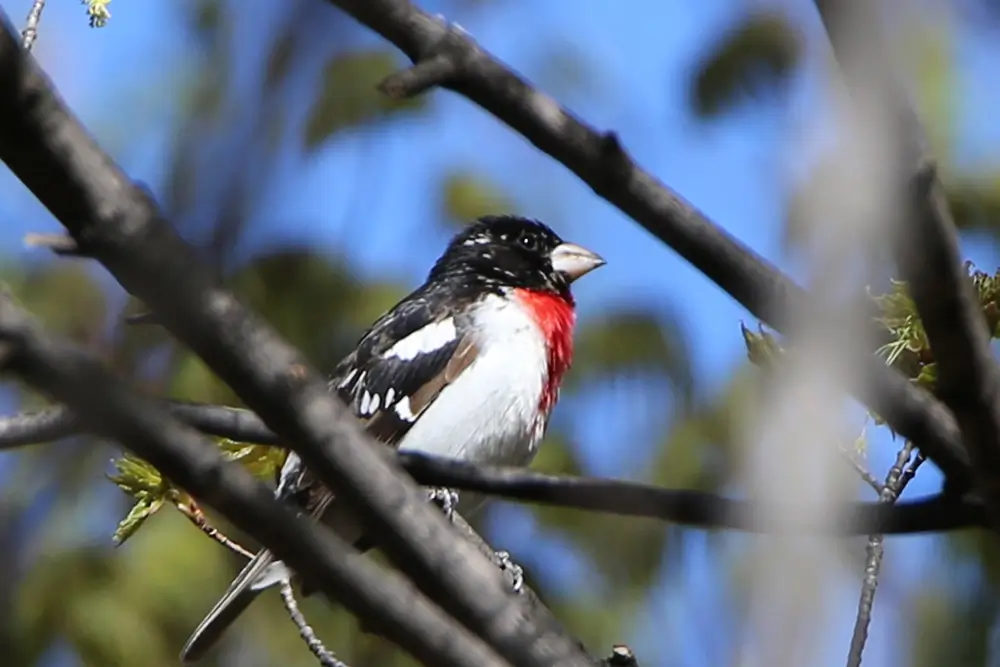
It has a strong, pale pinkish-white, cone-shaped bill. The male has a black head, wings, and back; a white belly and rump; and a red breast and underwings.
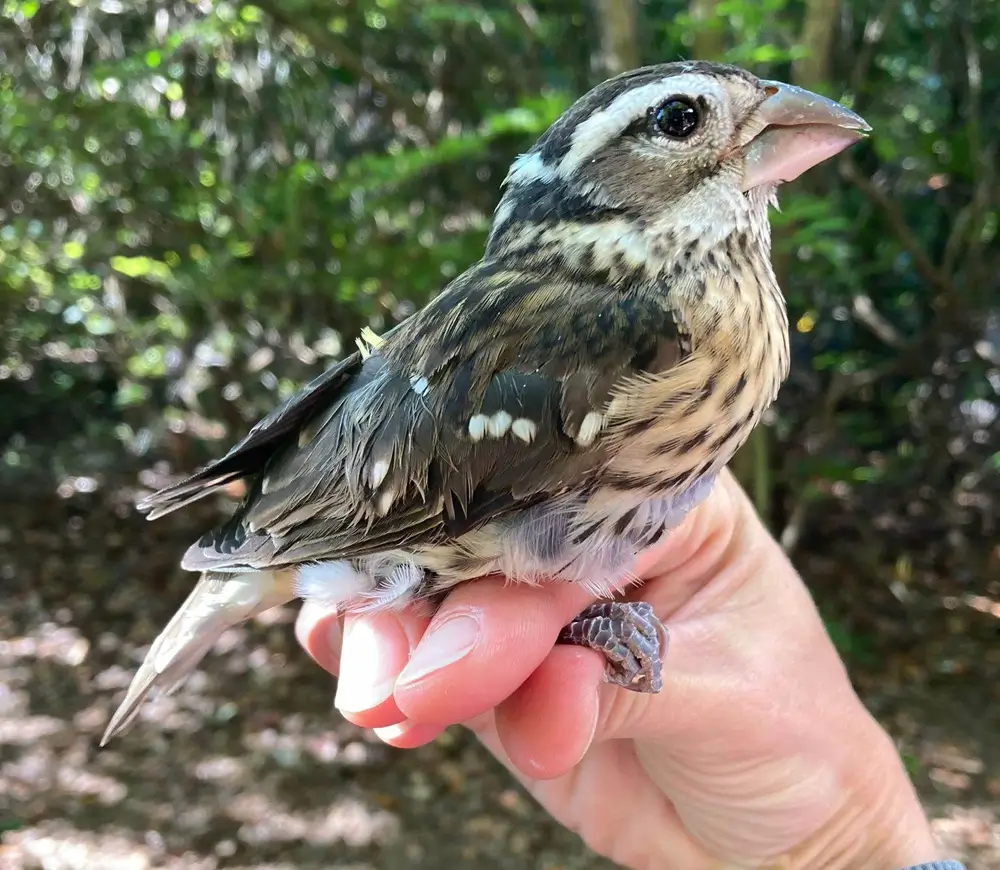
The female has a brown back, a cream-colored breast with brown streaks, and a white belly and rump. She has a white stripe over her eyes and yellow underwings.
Habitat
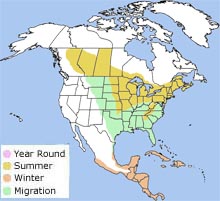
The rose-breasted grosbeak breeds in deciduous and mixed forests and woodlands with open fields and in old orchards. It winters in tropical forests in Mexico, Central America, northern South America, and the Caribbean.
Diet
The rose-breasted grosbeak forages in trees for seeds, fruits, and buds. It also eats insects.
Life Cycle
The female rose-breasted grosbeak lays 1-5 eggs in a loose cup-shaped nest of twigs and grass. The nest is made in a tree or bush. Both parents incubate the eggs for 12-14 days. Both the male and the female feed the chicks.
The chicks fledge when they are 9-12 days old, but stay with their parents for a few more weeks.
The rose-breasted grosbeak has a lifespan of 2-10years in the wild. In captivity, it can live to be up to 24 years old.
Behavior
The rose-breasted grosbeak migrates at night in the early fall and the late spring.
Did You Know?
The rose-breasted grosbeak’s song is similar to the song of the American robin, but it is a little faster.
Support for NatureWorks is provided by:
The Rose-Breasted Grosbeak in NH
The rose-breasted grosbeak breeds across New Hampshire. It migrates south in the fall.
The rose-breasted grosbeak breeds from northeastern British Columbia east to Nova Scotia and south to North Dakota, Oklahoma, Missouri, Ohio, West Virginia, and New Jersey.
The rose-breasted grosbeak is a neotropical migrator. It winters from southern Mexico to northern South America and the Caribbean.