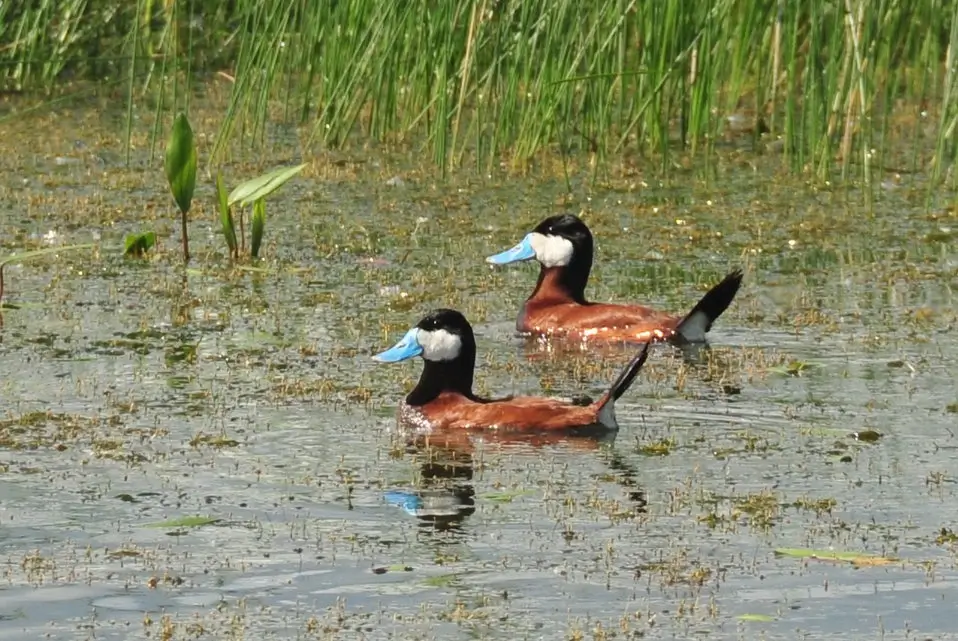
The ruddy duck is a small, stocky diving duck, 14-17 inches (36-43 cm) in length with a wingspan of 22-24 inches (56-62 cm).
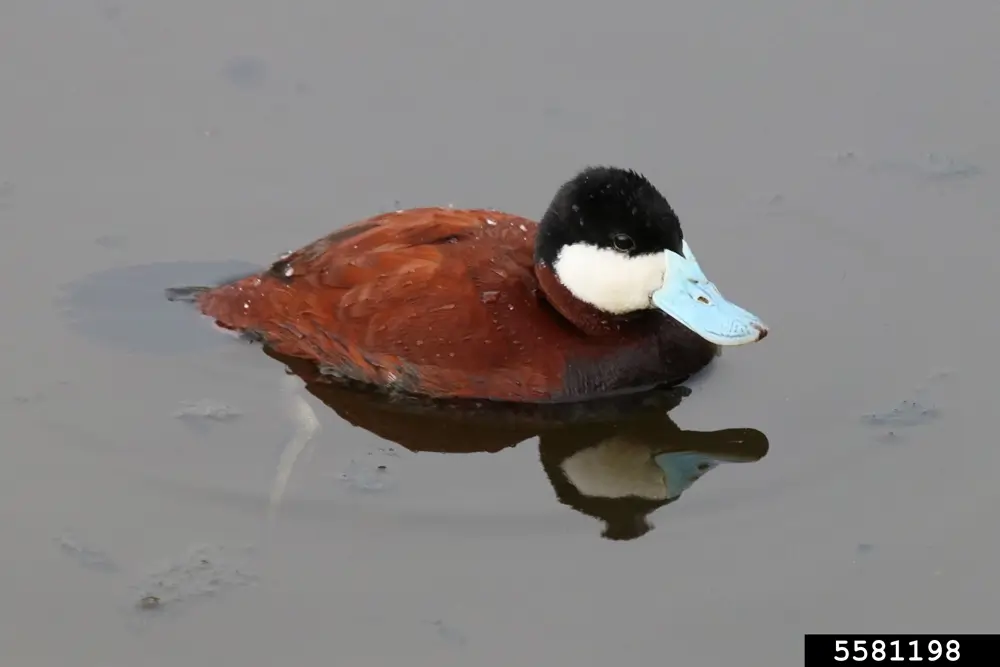
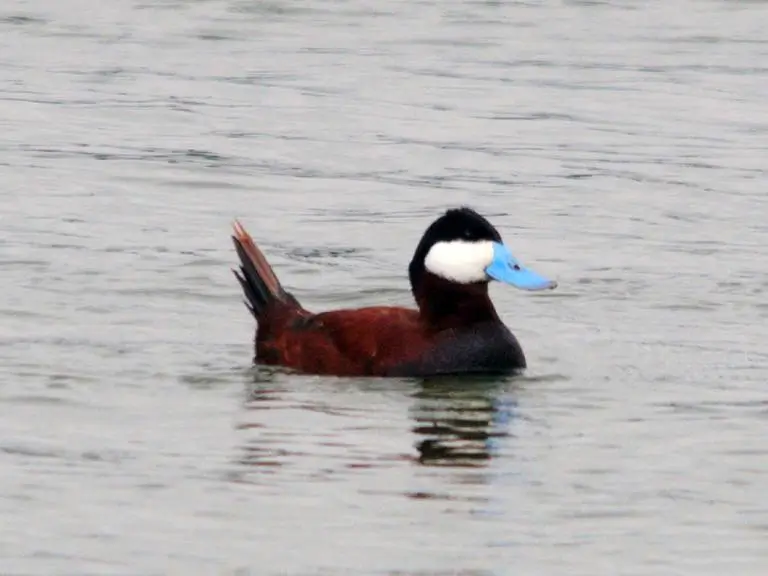
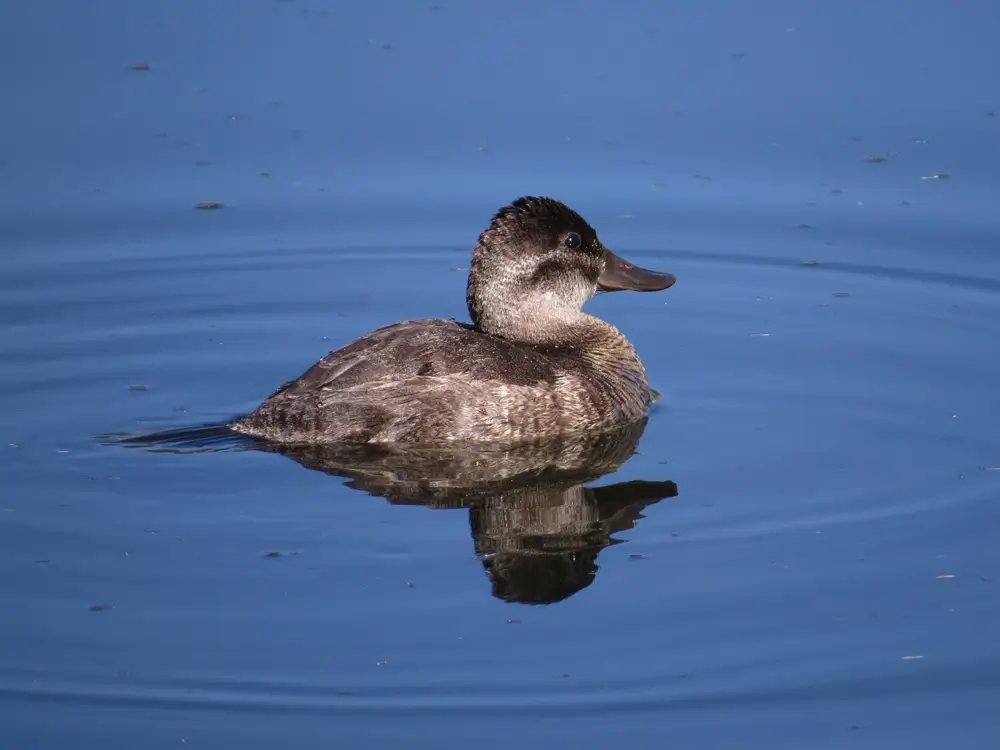
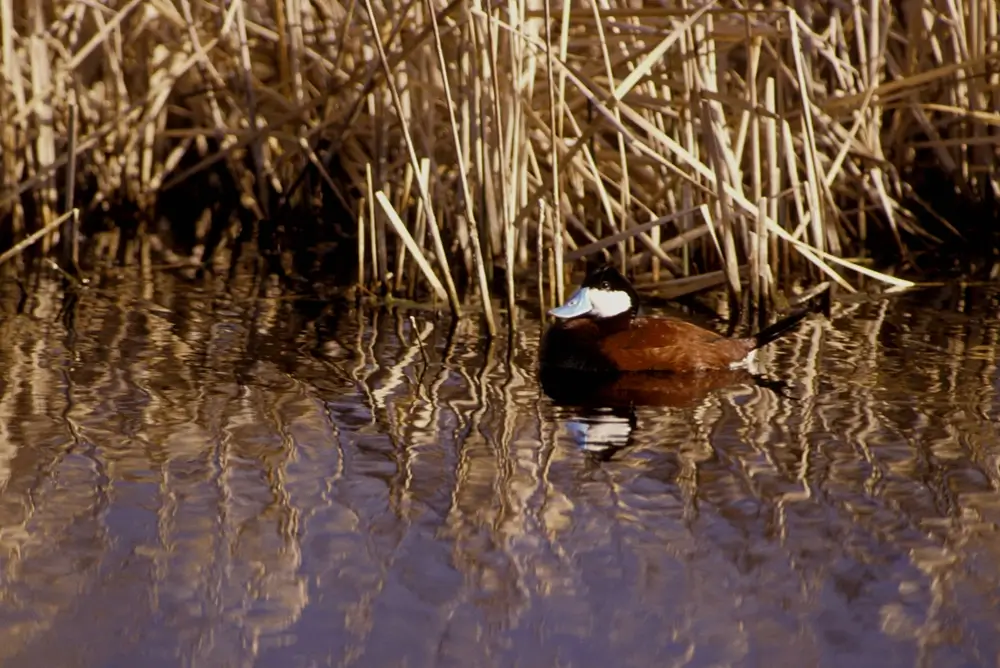
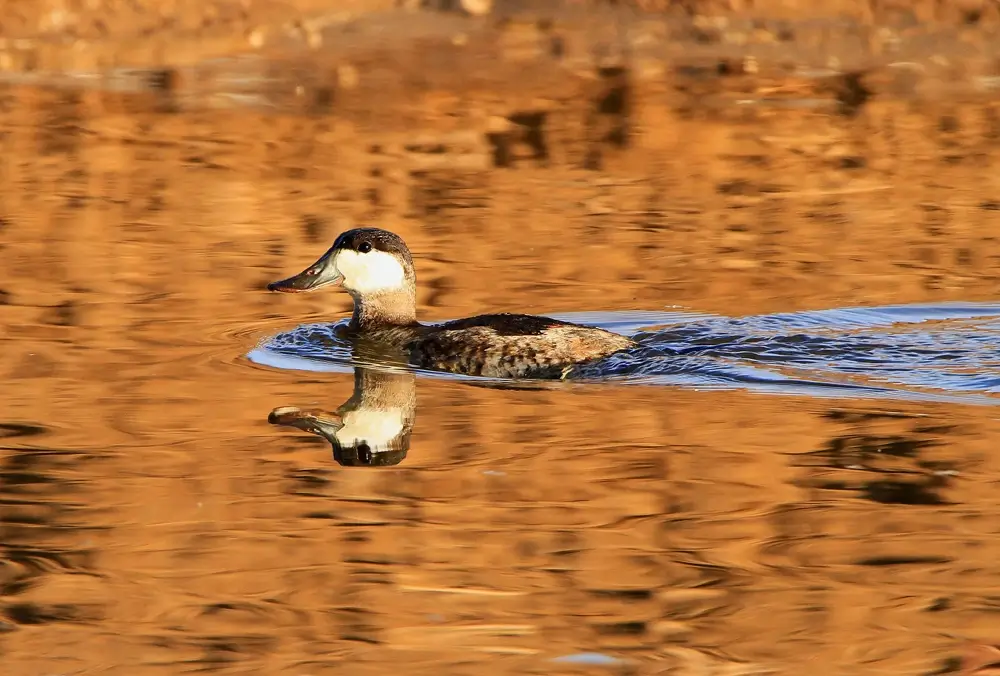
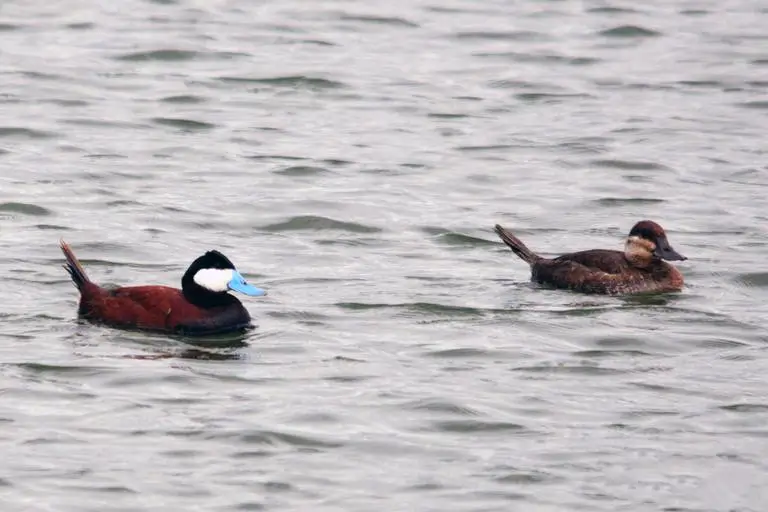
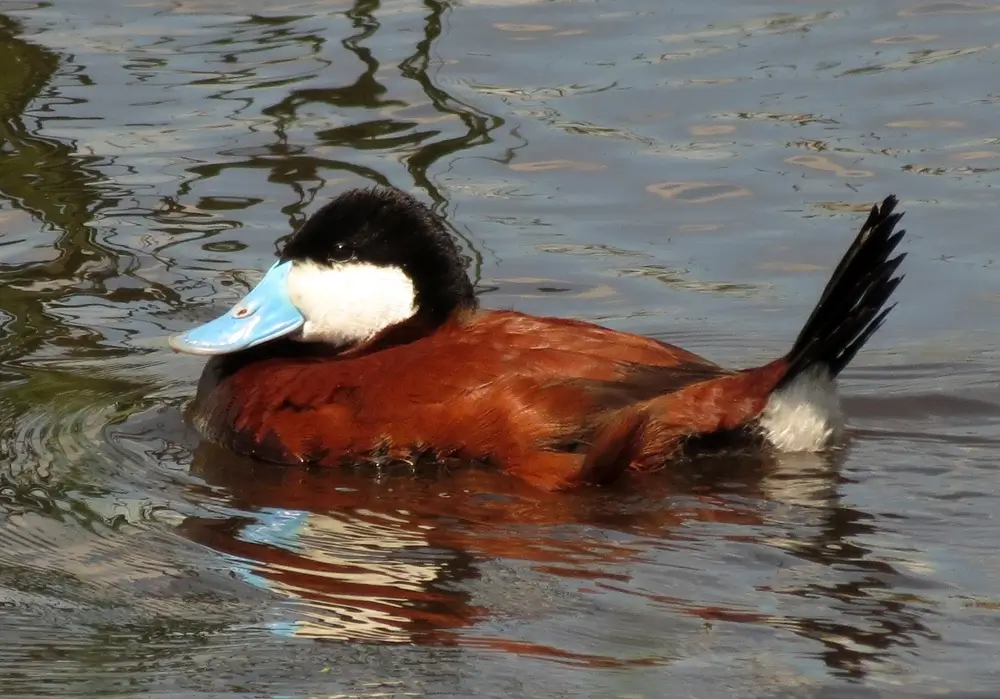
It has short, stubby wings and a long, stiff tail that it often holds straight up. The male has a chestnut body, a black crown, a white face, and a wide, bright blue bill. The female is grayish-brown with grayish-white cheeks, with a black line running across the side of her face.
When it is not breeding season, the male looks similar to the female, and his bill turns grayish-black.
Habitat
The ruddy duck breeds on freshwater and alkaline marshes, lakes, and ponds, and winters on marshes and in shallow coastal bays.
Diet
The ruddy duck is a diving duck that eats insects, insect larvae, snails, mollusks, seeds, and the roots of aquatic plants.
It uses its broad bill to strain food from both the bottom mud and the surface of the water. It sinks into the water slowly instead of diving straight down like other diving ducks.
Life Cycle
The male ruddy duck courts the female by fanning out his tail, beating his bill against his chest to make a drumming sound, and creating bubbles in the water.
The female lays 6-20 eggs in a floating nest of dry stems lined with down that is concealed among reeds or bulrushes in a marsh. The male usually leaves the female when she starts to incubate the eggs.
The female incubates the eggs for 23-28 days. The ducklings usually stay with their mother and follow her during feeding until they fledge at 43-48 days. The female sometimes lays her eggs in the nests of other ducks.
The ruddy duck has a lifespan of up to 13 years in the wild. In captivity, it can live as long as 20 years.
Behavior
The ruddy duck often dives underwater or swims away from danger instead of flying away.
It has to run across the surface of the water to build up enough speed to take off in flight. Once it is in the air, it has to flap its wings very fast to stay in the air.
Did You Know?
Support for NatureWorks is provided by:
The Ruddy Duck in NH
The ruddy duck does not breed in New Hampshire, but it can be seen in the state during migration and the non-breeding season.
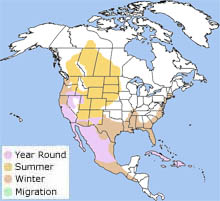
The ruddy duck is found along the Pacific, Gulf, and Atlantic Coasts north to British Columbia, Canada, on the west coast, and Massachusetts on the east coast.
It is also found inland from Missouri to the Gulf Coast.
The ruddy duck has also been introduced to Great Britain.