The ruddy turnstone is a short-legged shorebird that is about 6.3-8 inches(16-21 cm) in length with a wingspan of 19.7-22.4 inches (50-57 cm).
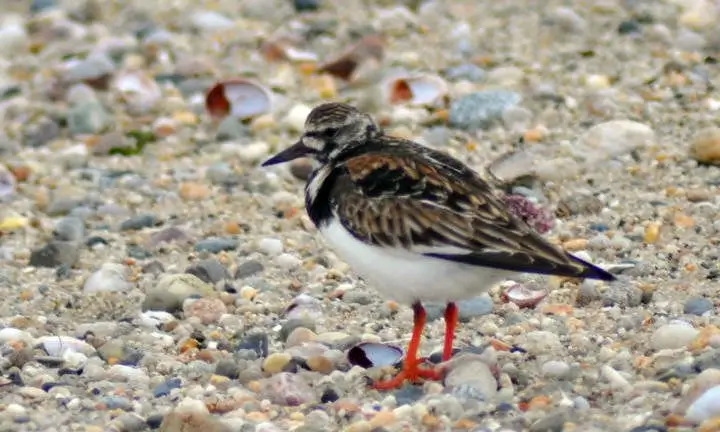
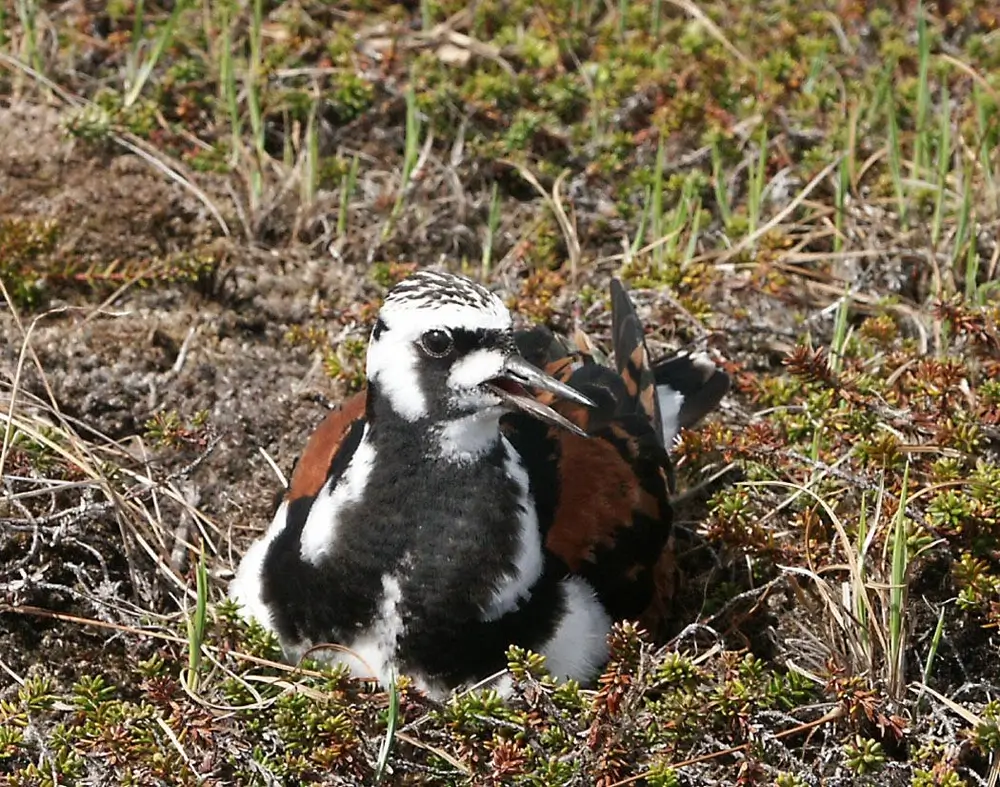
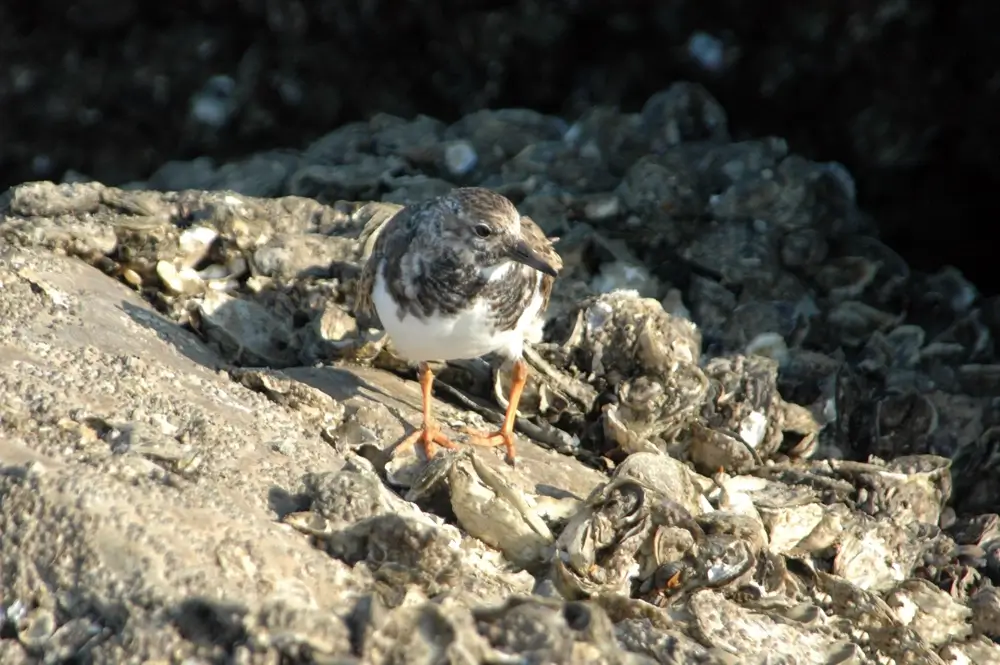
It has a short, dark bill that is slightly upturned at the end; black and white markings on its head; and a black patch on its chest. Its legs are yellow to orange-red.
In summer, its uppersides are a combination of white, rusty red, and black. In winter, it is grayish-brown above.
Habitat
During the breeding season, the ruddy turnstone can be found on coastal tundras. In winter, it can be found in a variety of habitats near the water including mudflats, sandbars, sandy or muddy shores, beaches, and rocky coasts.
Diet
The ruddy turnstone flips over rocks looking for small animals underneath them. It also digs into the sand in pursuit of crustaceans.
It eats a variety of animals, including small mollusks, crustaceans, grasshoppers, insects, larvae, maggots, worms, the eggs of horseshoe crabs, and tern’s eggs.
Life Cycle
Male and female ruddy turnstones form pairs either before or after reaching their breeding ground. Nests are made in open areas near the water. The female lays 4 eggs in a grassy area.
Both parents incubate the eggs. Males are very territorial and will patrol the border of the nesting site and will aggressively chase away any intruders.
The chicks hatch in 22-24 days and fledge when they are 19-21 days old. Both parents care for the young. The female leaves before the chicks fledge, leaving the male to care for the chicks until they fledge.
The ruddy turnstone has a lifespan of 6-9 years. The oldest ruddy turnstone on record lived to be 19 years old.
Behavior
The ruddy turnstone gets its name from its habit of turning over stones when it looks for food. It is also sometimes called the seaweed bird because it often feeds among the kelp at low tide.
It is a very good swimmer and may spend hours bathing and preening.
Did You Know?
Support for NatureWorks is provided by:
The Ruddy Turnstone in NH
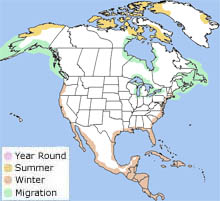
The ruddy turnstone can be seen in New Hampshire along the coast and on the Isles of Shoals during its fall migration in August and September and occasionally during its spring migration in May.
The ruddy turnstone breeds along the coastline from western Alaska east to Greenland. The ruddy turnstone also breeds in arctic regions of Europe and Asia.
It winters along the Pacific and Atlantic Coasts from Oregon and Connecticut south to South America. It also winters on the Gulf Coast.
It is also found in coastal areas in Africa, Asia, Europe, and Australia and Oceania.