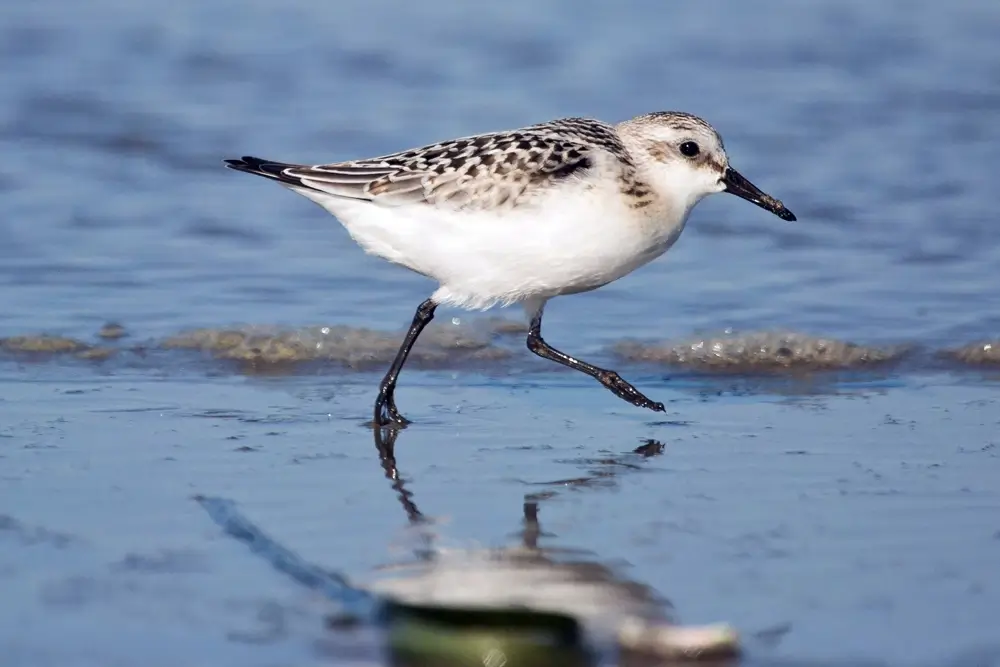
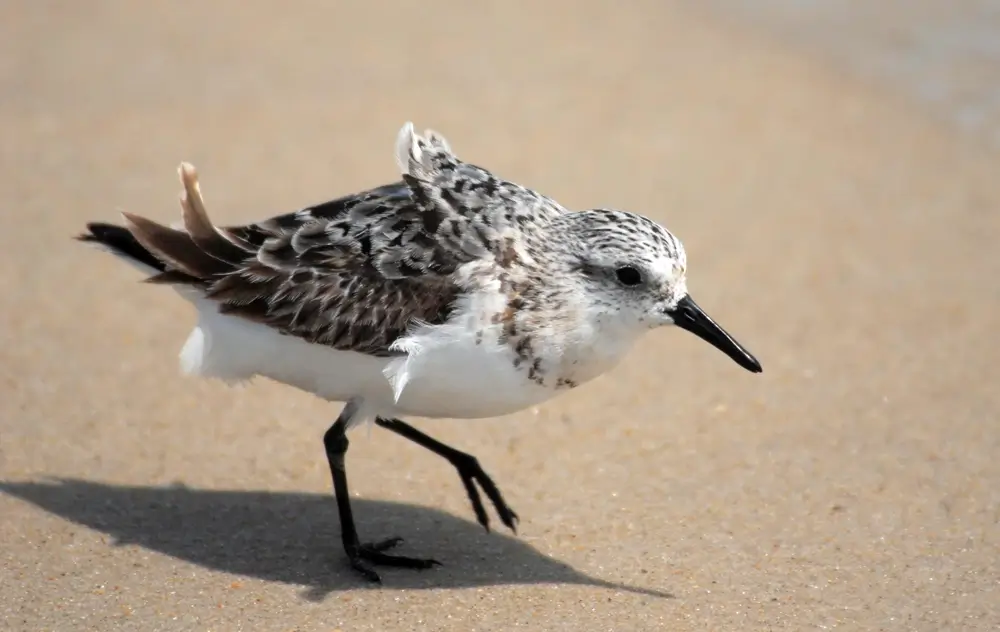
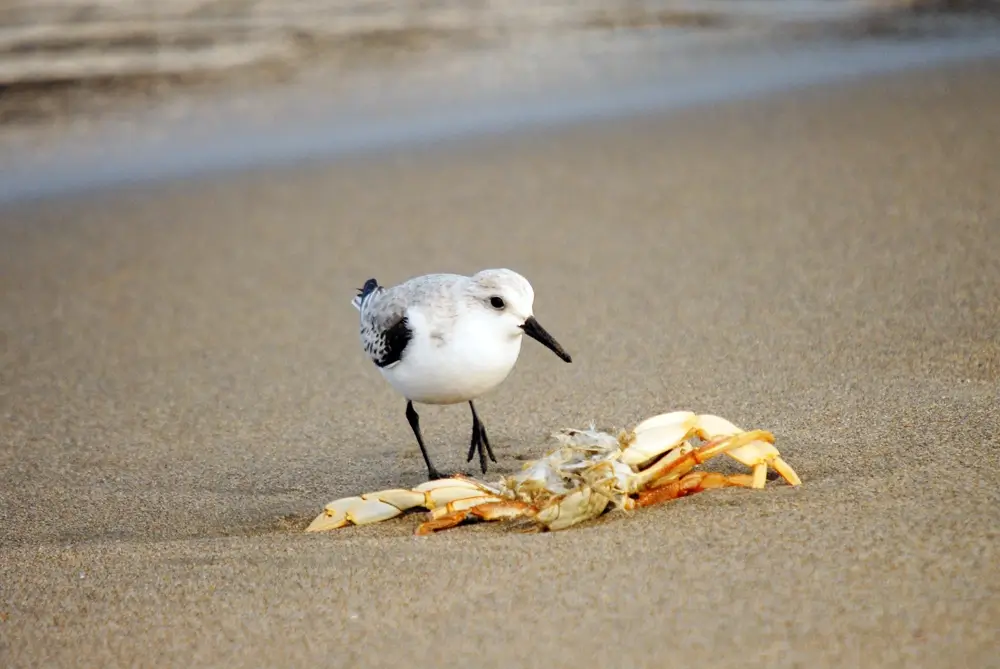
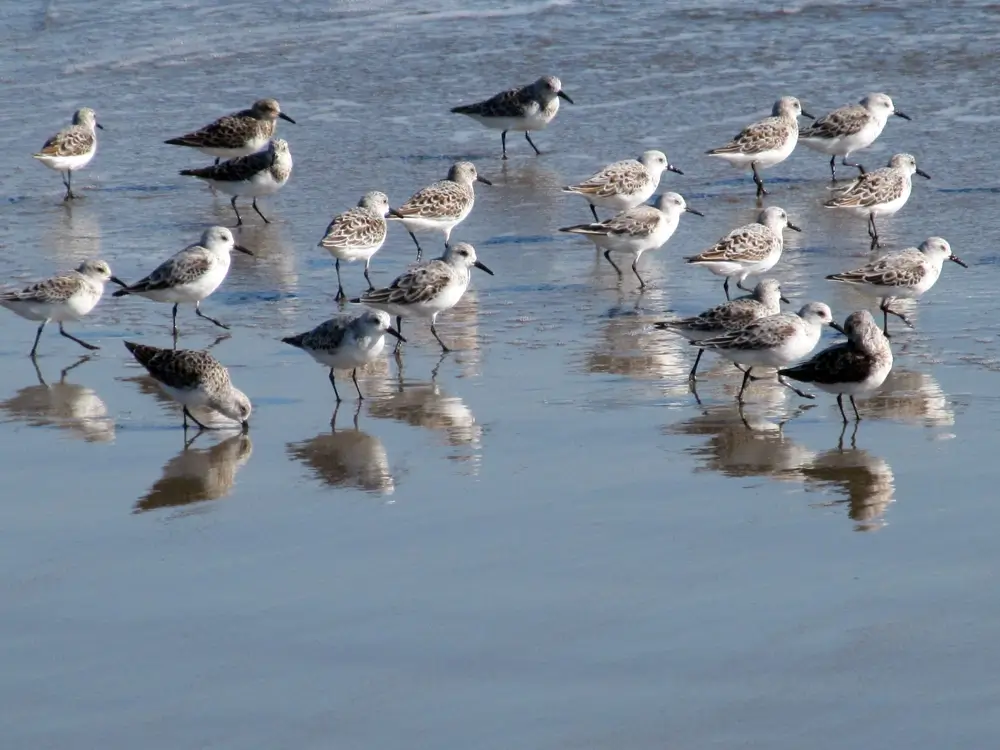
The sanderling is a medium-sized shorebird that is about 7-8 inches (18-20 cm) in length with a wingspan of 13.8–14 inches (35 cm).
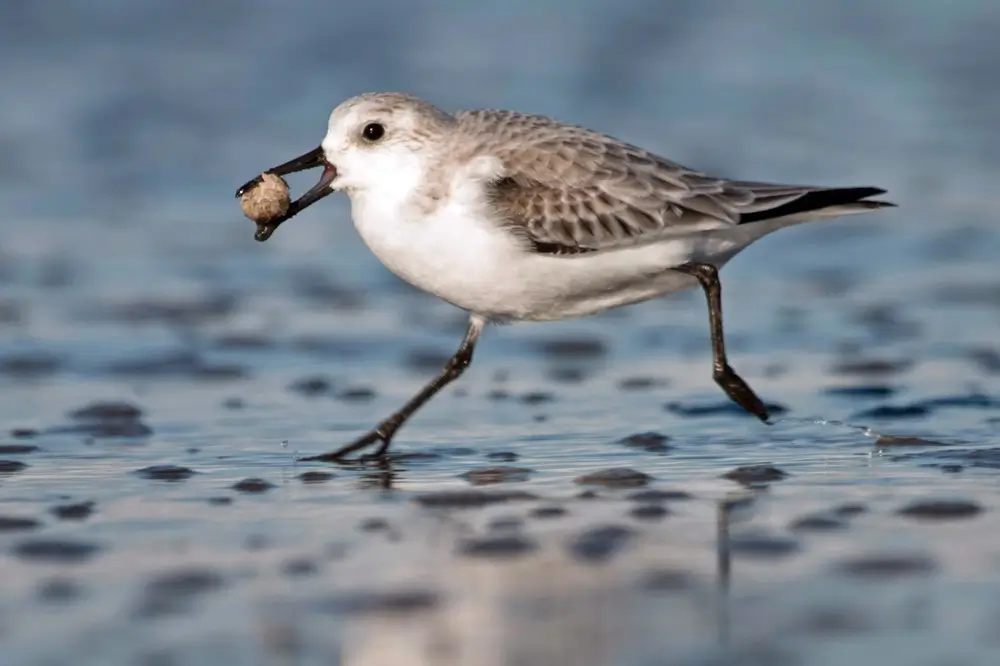
It is speckled brownish-gray on its uppersides and has a dark, pointed bill; black legs; and a white belly. In winter, the sanderling’s plumage turns grayish-white.
Habitat
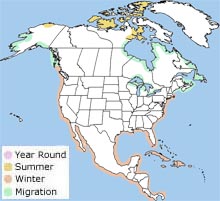
During the breeding season, the sanderling lives on the tundra, usually near a freshwater source like a lake or pond. In the winter, it can be found on beaches, sandbars, mudflats, and pond, lake, and river shores.
Diet
The sanderling eats crustaceans, mollusks, marine worms, and insects.
Life Cycle
The sanderling arrives at its breeding grounds in the tundra in May or June. During courtship, the male flies up into the air rapidly beating his wings, and then flies down vocalizing with a song. He then follows the female with his head down, his tail feathers fanned out, and his wings drooping.
The female sanderling lays 4 eggs in a hollow in the ground lined with grass and lichen. The chicks hatch after 24-31 days and fledge when they are 17 days old.
They are precocial and leave the nest shortly after hatching and begin searching for insects. Both parents incubate the eggs and take care of the young.
The sanderling has an average lifespan of 10 years.
Behavior
Small groups of sanderlings can often be seen on beaches scurrying after waves as they roll back out to sea. They are actually looking for tiny crustaceans and mollusks exposed by the retreating water.
Did You Know?
Support for NatureWorks Redesign is provided by:
The Sanderling in NH
The sanderling does not breed in New Hampshire, but it can be seen in coastal areas of New Hampshire during its migration, especially during its fall migration.
Small numbers of sanderlings may also winter in coastal New Hampshire.