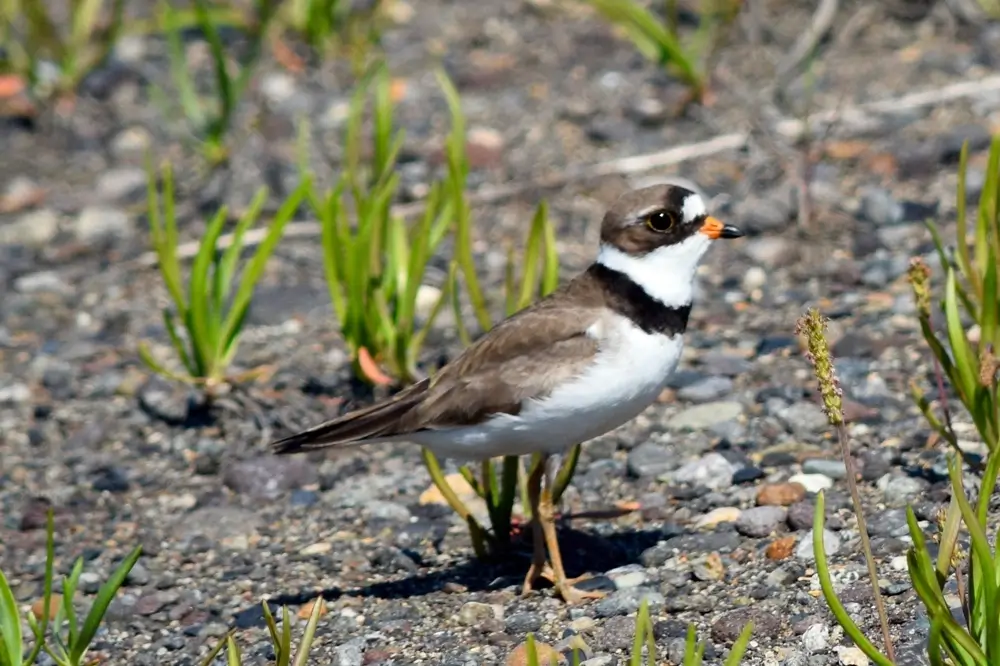
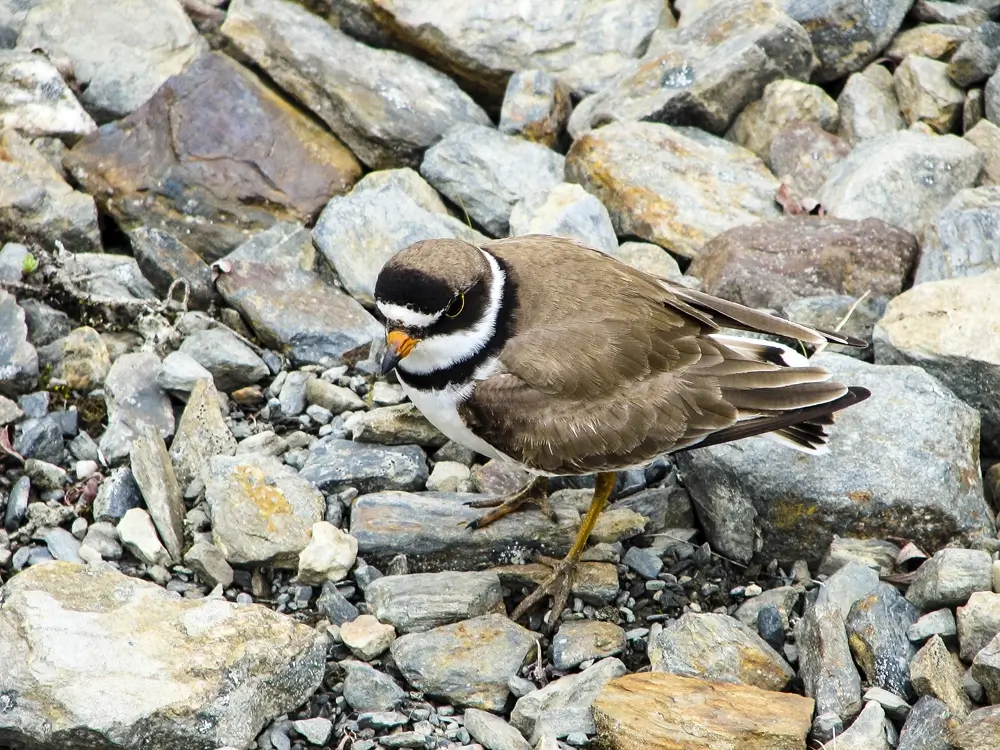
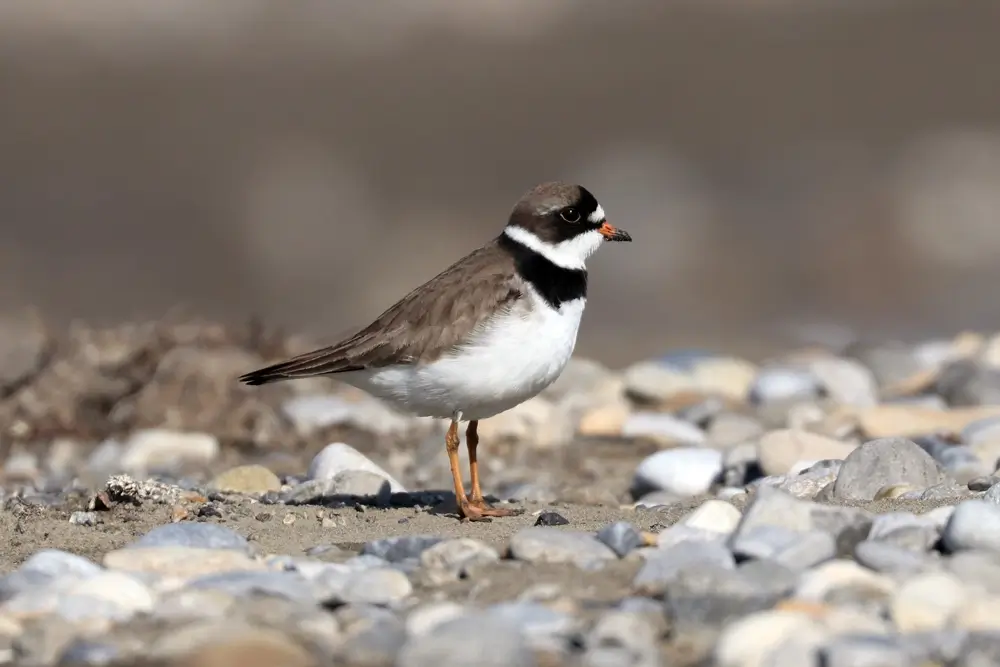
The semipalmated plover is 6.7-7.5 inches (17-19 cm) in length with a wingspan of 4.7-5.1 inches (12-13 cm).
It has a brown back and white undersides. It has a white neck and throat with a black band around it and orange legs and feet. Its black bill has an orange band around it. The semipalmated plover has a black band on the top of its head, white “eyebrows,” and a white patch between its eyes.
Habitat
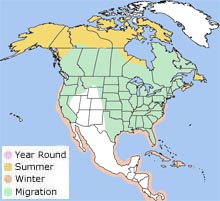
The semipalmated plover breeds on sandy or mossy tundra. During migration and in the winter, it is found on mudflats, salt marshes, and lakeshores.
The female semipalmated plover lays 3-4 eggs in a depression in the ground. In sandy areas, the nest is lined with shell fragments and pebbles. On the tundra, the nest is lined with plants.
Both the male and female incubate the eggs. The chicks hatch in a little under a month. They fledge in 3-4 weeks.
The semipalmated plover has a lifespan of up to 9 years in the wild.
Behavior
The semipalmated plover is very territorial during mating season and often flies a few feet over its territory to warn other plovers away.
Did You Know?
Support for NatureWorks is provided by:
The Semipalmated Plover in NH
The semipalmated plover does not breed in New Hampshire, but it can be found in the state during its migration.