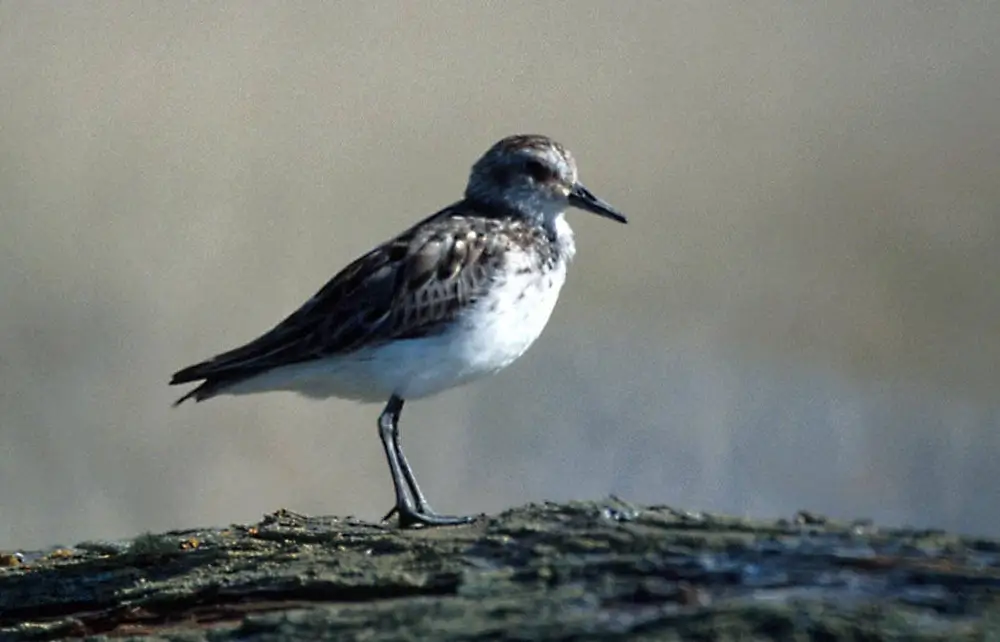
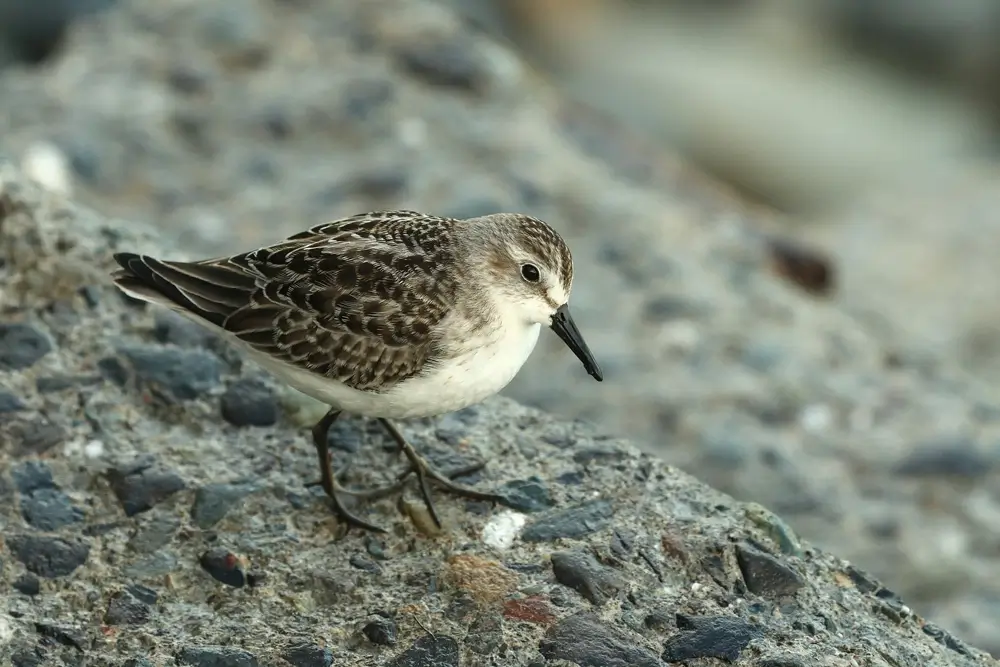
The semipalmated sandpiper is a small shorebird between 5.9–7.1 inches (15–18 cm) in length with a wingspan of 13.8-14.6 inches (35-37 cm).
It is gray and brown on its uppersides. It has a thin, white wing stripe and a white belly. It has a pointed black bill and black legs. Semipalmated means half-webbed.
The semipalmated sandpiper’s toes are actually only slightly webbed, just enough to help them walk on the mud without sinking.
Males and females look alike.
Habitat
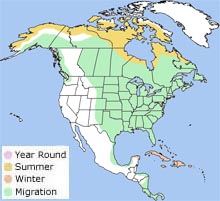
The semipalmated sandpiper breeds on the tundra. It winters on and migrates along coastal beaches, lake and river shores, mudflats, and salt marshes.
Diet
The semipalmated sandpiper eats seeds and aquatic invertebrates.
Life Cycle
The male semipalmated sandpipers arrive on the arctic breeding grounds in late May, usually a few days before the females. The male establishes a territory and then tries to attract a mate with aerial displays that include hovering in the air and calling out with sharp cries. When it finds a mate, the male creates scrapes or shallow depressions in the ground.
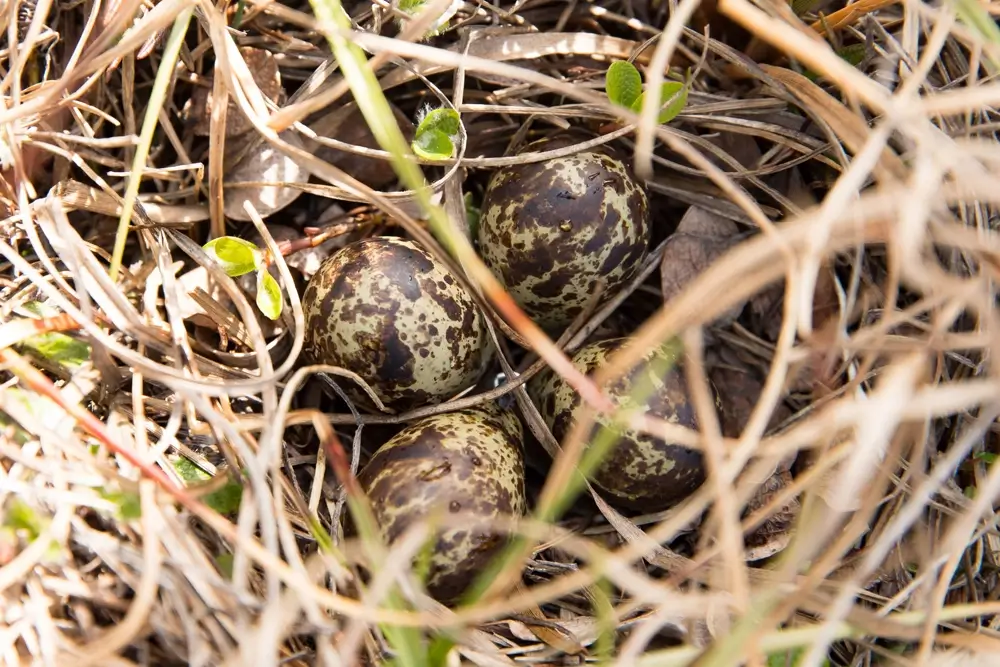
The female selects one of the scrapes the male has made and lays 4 eggs at a rate of one egg a day. Both the male and the female incubate the eggs. The chicks hatch in about 19 days.
The chicks are precocial and hunt for insects shortly after birth. They begin to fly when they are about 14 days old. The female usually leaves the chicks about 10 days after they hatch. The male continues to care for the young until they fully fledge at about 19 days.
The semipalmated sandpiper has a lifespan of around 7 years.
Behavior
During migration, thousands of semipalmated sandpipers can gather to rest and feed on shores.
Did You Know?
Support for NatureWorks is provided by:
The Semipalmated Sandpiper in NH
The semipalmated sandpiper does not breed in New Hampshire.
During its migration, it can be found in the Hampton‐Seabrook estuary and nearby beaches and dunes.