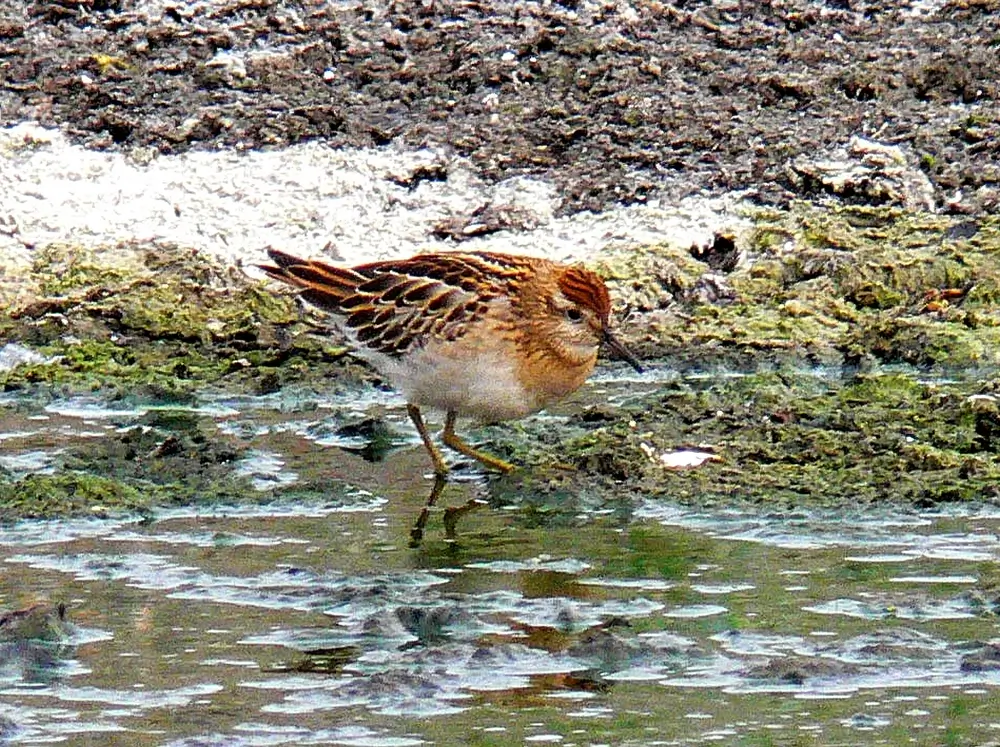
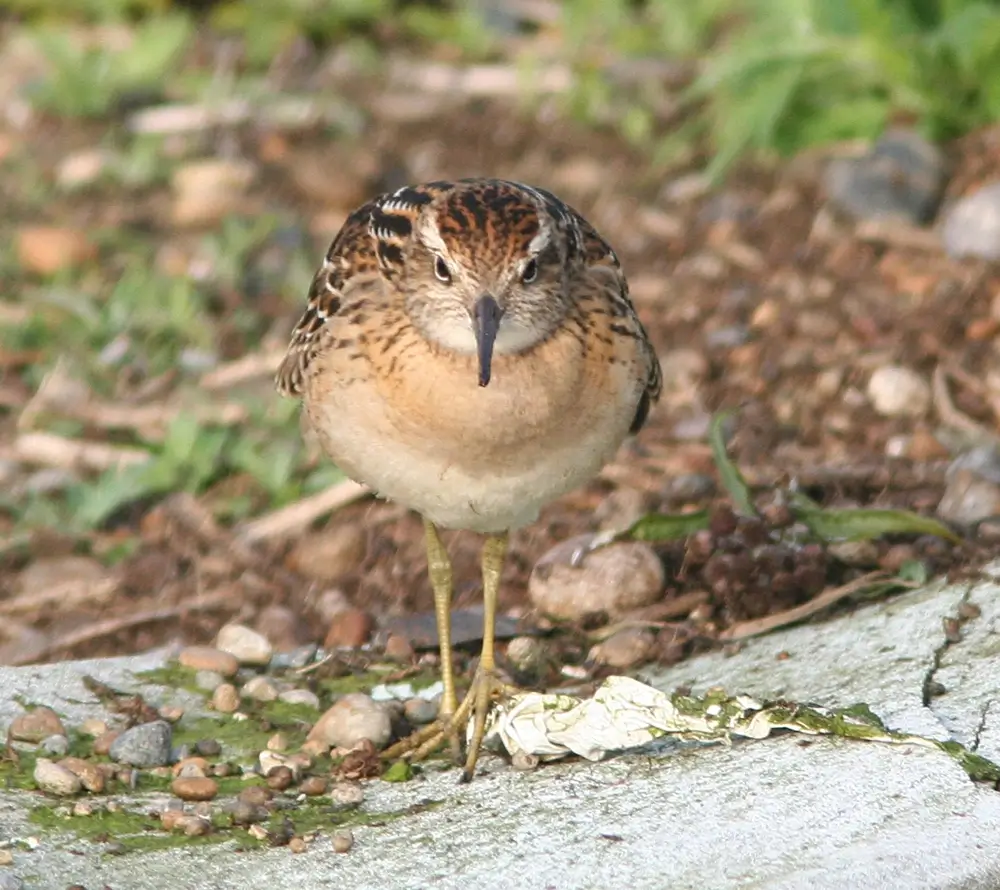
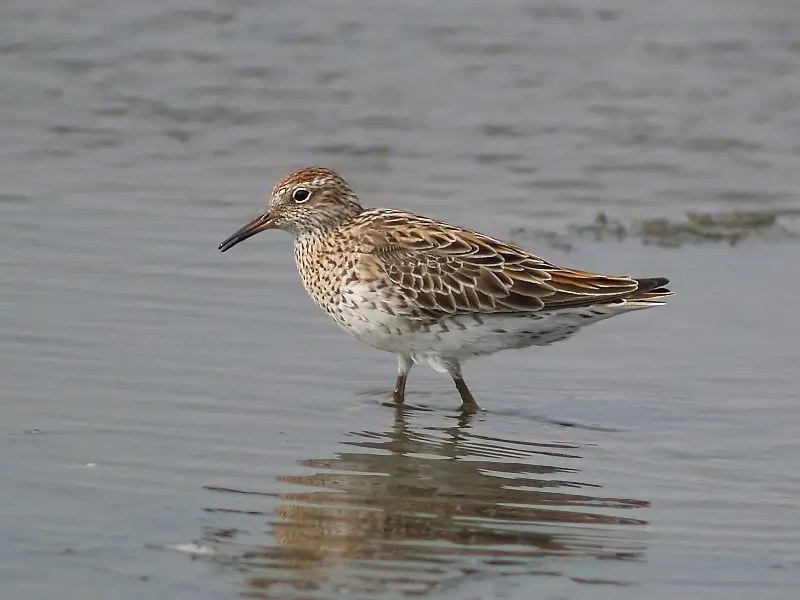
The sharp-tailed sandpiper is a medium-sized shorebird, 6.7-8.7 inches (17-22 cm) in length with a wingspan of 14.2-17 inches (36–43 cm).
Its back, wings, and tail are rusty-brown, black, and white. It has a light cream-to-tan lower chest and belly and a reddish-brown cap.
Its bill is sharp, long, and black. It has long, white-to-gray legs and a sharp tail.
Habitat
The sharp-tailed sandpiper can be found in grassy areas of coastal marshes and on tidal flats.
Diet
The sharp-tailed sandpiper eats mosquito larvae. It also eats mollusks and crustaceans.
Life Cycle
The male sharp-tailed sandpiper mates with more than one female. The female builds a nest of grass on the tundra. She lays an average of 4 eggs. The chicks hatch in 19-23 days.
They are precocial and leave the nest after a day or so and begin to feed themselves. They fledge when they are 18-21 days old.
The sharp-tailed sandpiper has a lifespan of up to 8 years in the wild.
Behavior
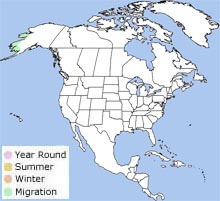
The sharp-tailed sandpiper migrates thousands of miles from its breeding grounds on the tundra of Siberia to winter in Australia and New Zealand.
During migration, sharp-tailed sandpipers may join mixed flocks with other sandpipers and are known for their strong, direct flight and alert, busy behavior.