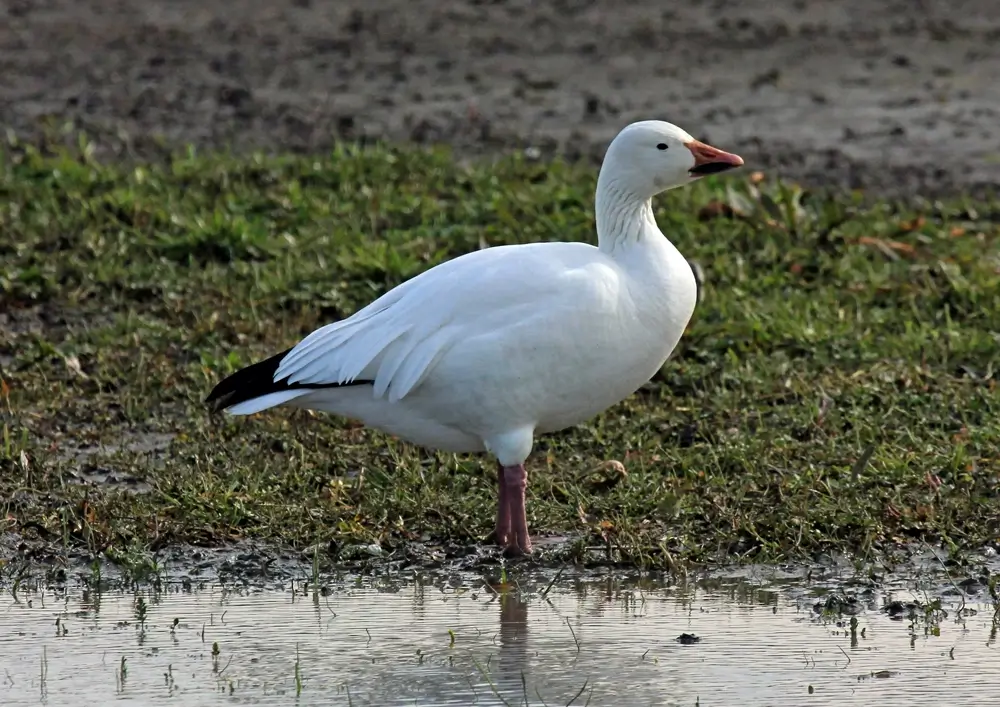
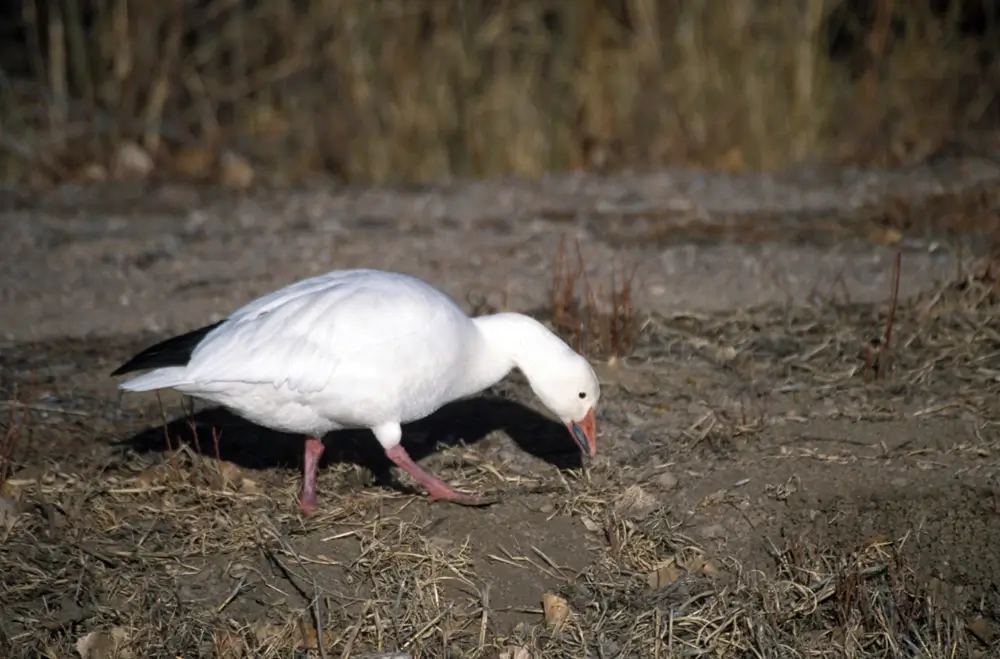
The snow goose is 2.1-2.75 feet (0.64-0.84 m) in length with a wingspan of 4.4-5.4 feet (13-1.7 m). It weighs 3.5-7.3 pounds (1.6-3.3 kg)
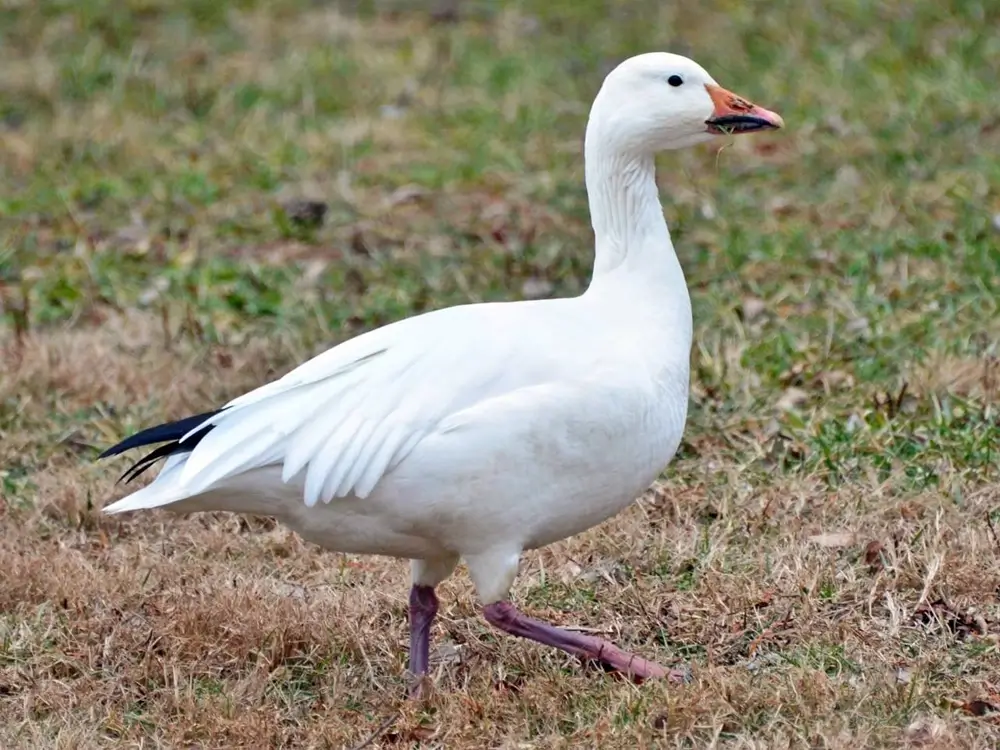
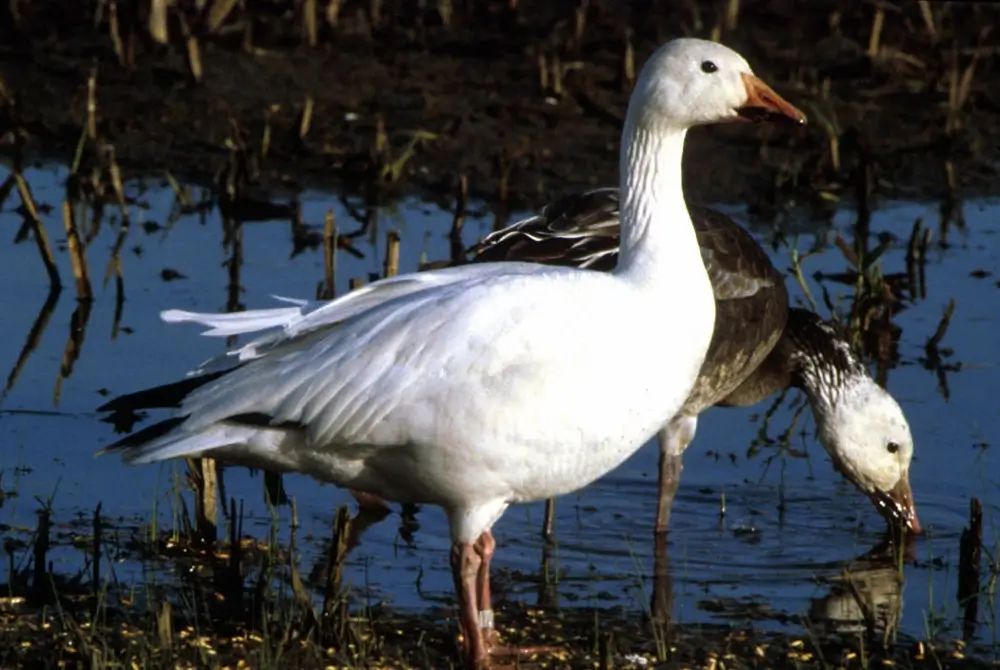
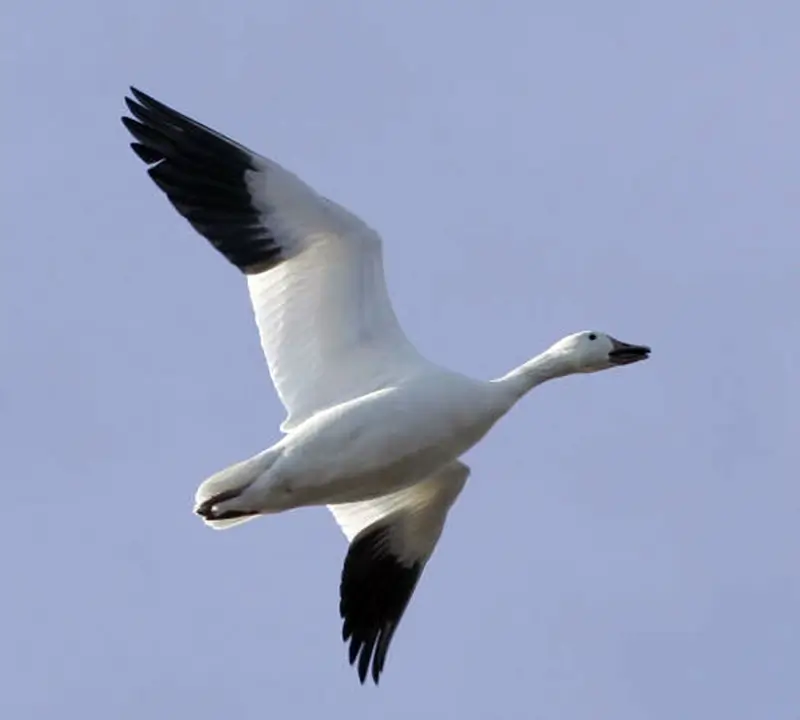
It has black on the edges of its orange-pink bill that makes it look like it is smiling. It has black wingtips, pink legs and feet, and black eyes.
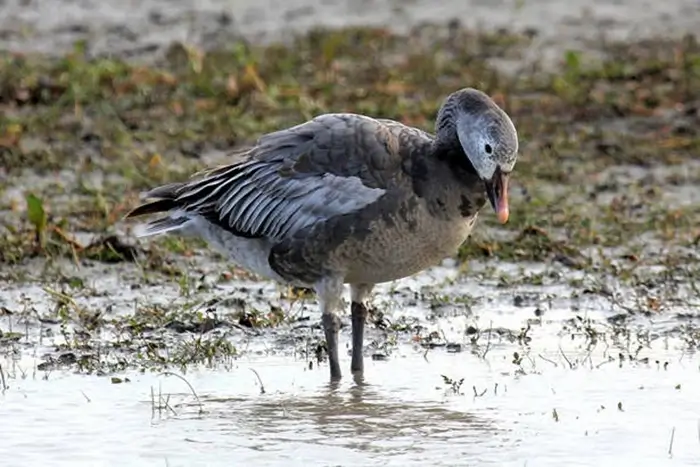
It has two color patterns. It can be all white or bluish-gray with light brown underparts and a white head and neck.
The bluish-gray snow goose is sometimes called the blue goose and was once thought to be a separate species.
Habitat
The snow goose breeds on sub-arctic and arctic tundra, near ponds or streams, and winters in coastal saltwater marshes and bays, wet grasslands, freshwater marshes, and fields and farmland.
Diet
The snow goose is an herbivore. It feeds in water-logged soil or shallow water and eats a variety of plant species and parts, from aquatic plants to grasses and grain. Some of its favorite foods include grasses, sedges, willows, rushes, and horsetails.
The snow goose will eat all parts of a plant, from seeds, leaves, and stems to tubers and roots. It grazes for seeds and grain above the ground and also grubs around and rips up plants by the roots. In the winter, it feeds on leftover grain and new shoots on farmland.
The snow goose is a voracious eater. It has to eat a lot of food because the food it eats passes through its digestive system in only an hour or two.
Life Cycle
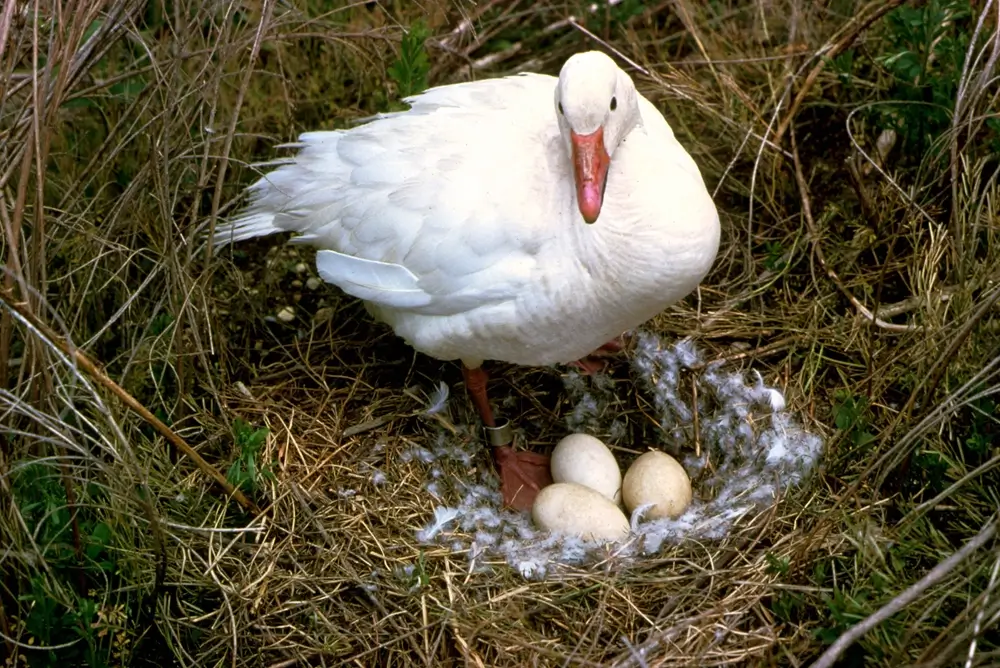
Snow goose pairs form in the spring. It nests in colonies. The female lays 2-5 white eggs in a scrape in the ground lined with dried plant parts and down.
The male guards the nest while the female incubates the eggs. The goslings hatch in 22-25 days. The goslings leave the nest within two days of hatching and can swim and feed themselves.
The goslings stay with their parents through the first winter and migrate with them in the fall and then again in the spring back to the breeding grounds. Male and female pairs usually mate for life.
The snow goose has a lifespan of 20-25 years.
Behavior
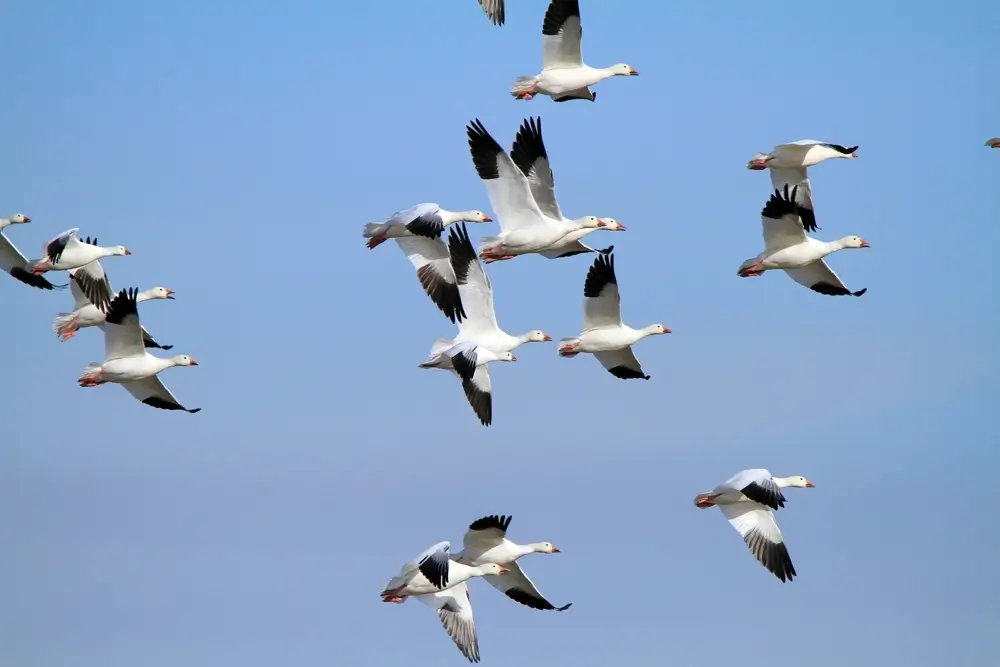
Snow geese migrate in large flocks and fly both night and day. They rest and feed on marshes and other wetlands during their migration. They usually return to the same nesting area each year.
Did You Know?
Support for NatureWorks is provided by:
The Snow Goose in NH
The snow goose does not breed in New Hampshire, but it can be seen in the state during its migration.
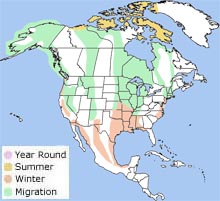
The snow goose breeds in the Arctic regions of North America, including Greenland. In the winter, it is found on the Pacific Coast from British Columbia, Canada, to California, on the mid-Atlantic Coast, and on the Gulf Coast from Mississippi to Texas.
It also winters in small numbers in the interior of the U.S.