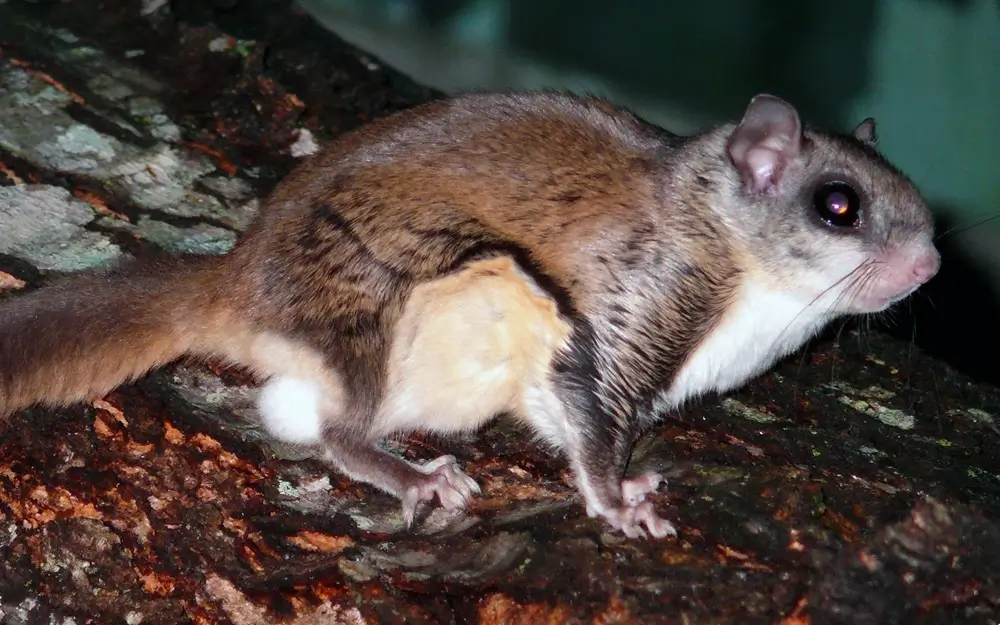
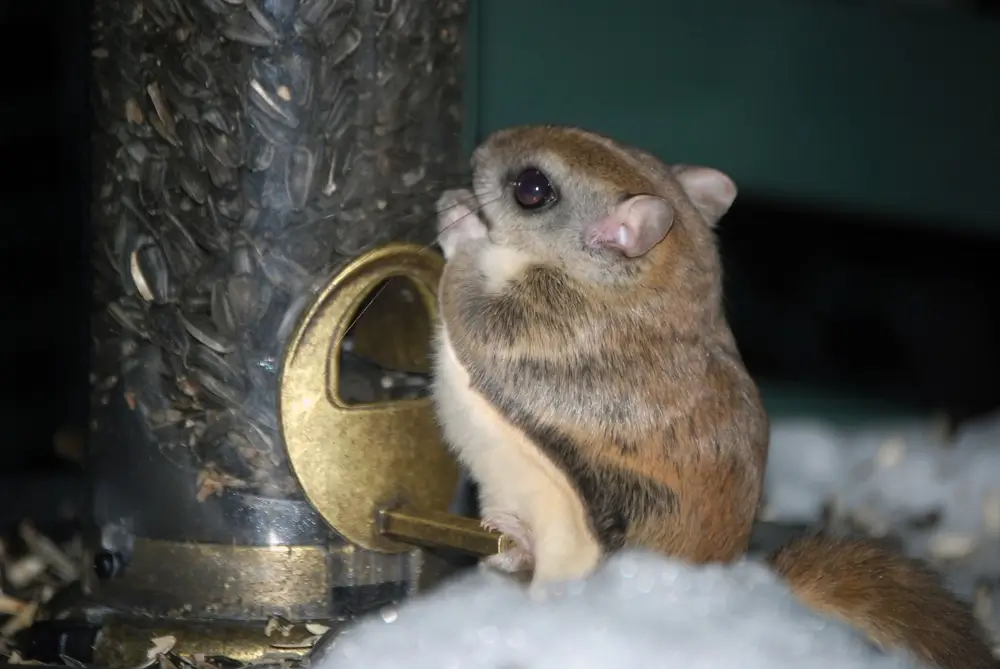
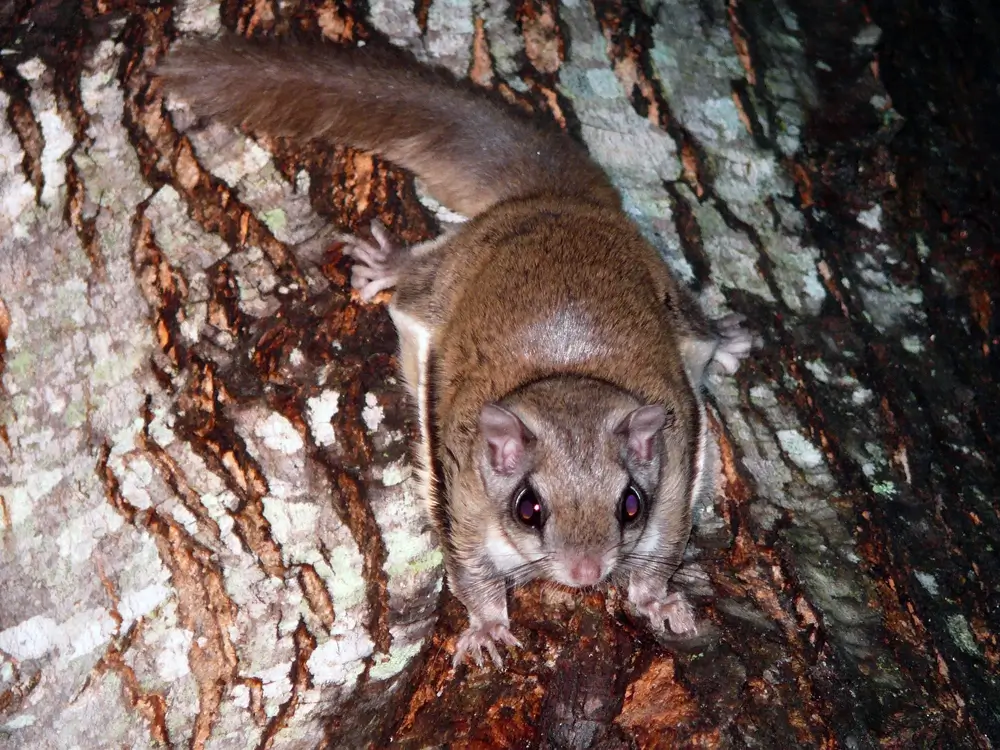
The southern flying squirrel is smaller than the northern flying squirrel. It is about 7-10 inches (17.8-25.4 cm) in length. It has thick, silky grayish-brown fur above and white fur below. It has very large eyes and a long, flat tail.
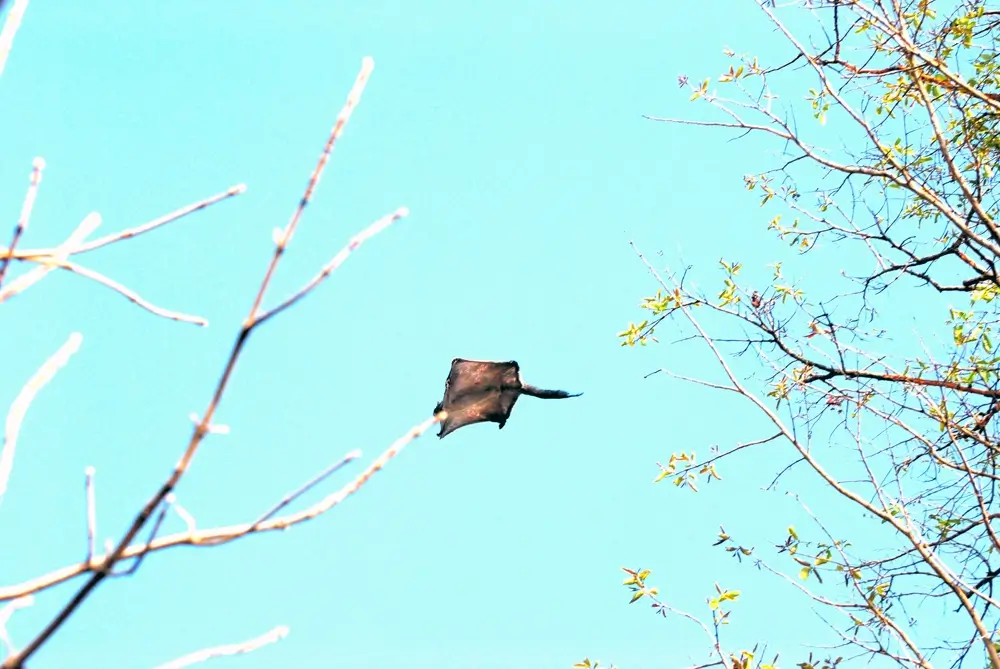
It has a loose fold of skin between its front and rear feet. When it stretches out its legs, this skin forms a kind of parachute that lets the squirrel glide from branch to branch. As the southern flying squirrel approaches its landing site, it pulls up, slowing its descent. When it is gliding, it uses its tail as a rudder to change direction.
Habitat
The southern flying squirrel lives in deciduous and mixed forests with lots of old trees with cavities for nesting. They especially like areas with seed-bearing hardwood trees like hickory, maple, beech, and poplar.
Diet
The southern flying squirrel eats berries, seeds, fruits, lichen, tree bark, buds, and nuts. It also eats insects, carrion (dead animals), nesting birds, and eggs. It stores nuts and seeds in the ground and in crevices and holes in trees for use in winter.
Life Cycle
The southern flying squirrel mates in early spring and again in late summer. After a gestation period of 41 days, the female gives birth to 2-7 young. Baby flying squirrels are called kits or kittens.
The female feeds and raises the kits. She will move them to another nest if she feels threatened. The kits are weaned when they are about 65 days old and begin gliding when they are about five to six weeks old. They are independent when they are about four months old.
The southern flying squirrel has a lifespan of 5-6 years in the wild. In captivity, they can live to be 10 years old.
Behavior
The southern flying squirrel is nocturnal. It usually builds its nest in a tree cavity or abandoned woodpecker hole, but it will sometimes use leaves, bark, and twigs to make a nest in a tree crotch.
Did You Know?
The southern flying squirrel doesn’t hibernate, but in the winter it may stay in its den huddled with a group of other squirrels to keep warm.
Support for NatureWorks is provided by:
The Southern Flying Squirrel in NH
The southern flying squirrel is found in New Hampshire.
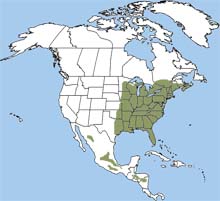
The southern flying squirrel is found from Texas, Kansas, and Minnesota east through most of the eastern United States. It is also found in southeastern Canada and in Mexico and Central America.