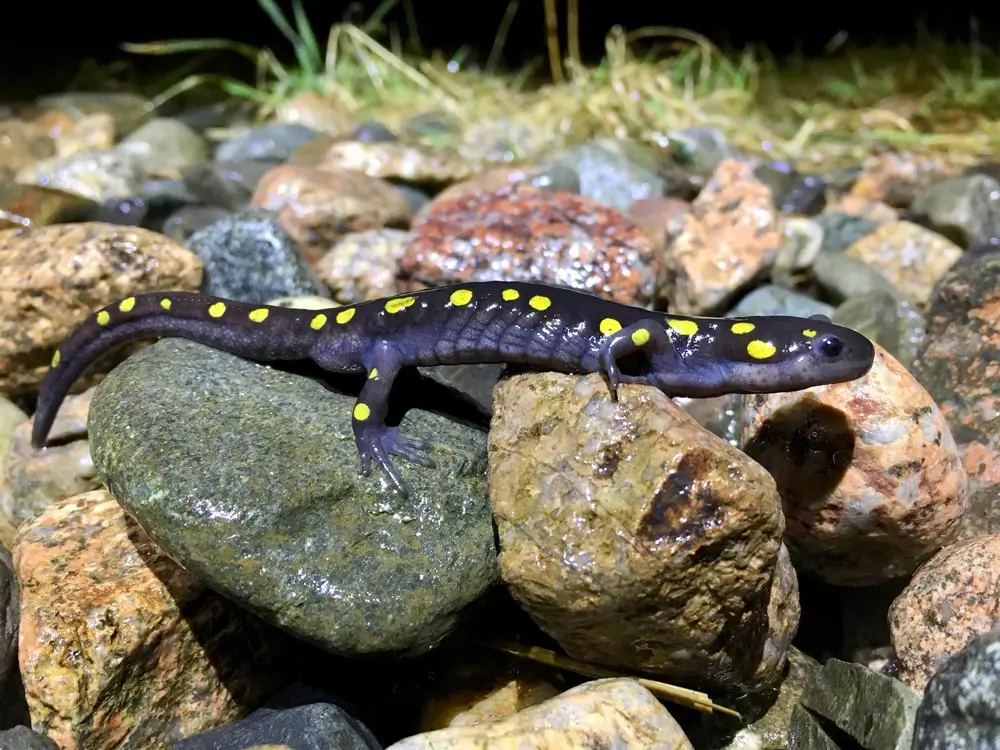
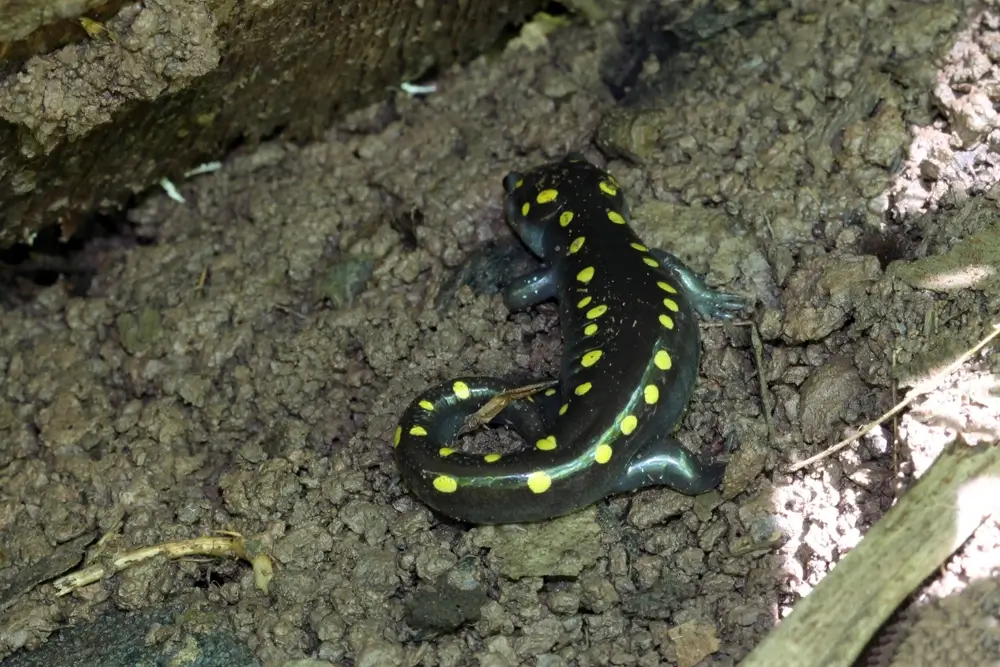
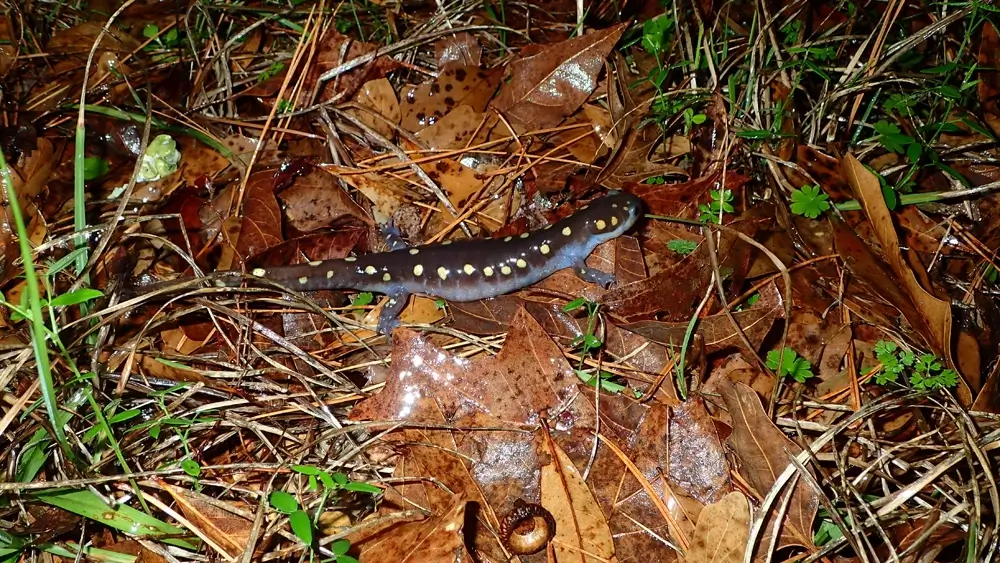
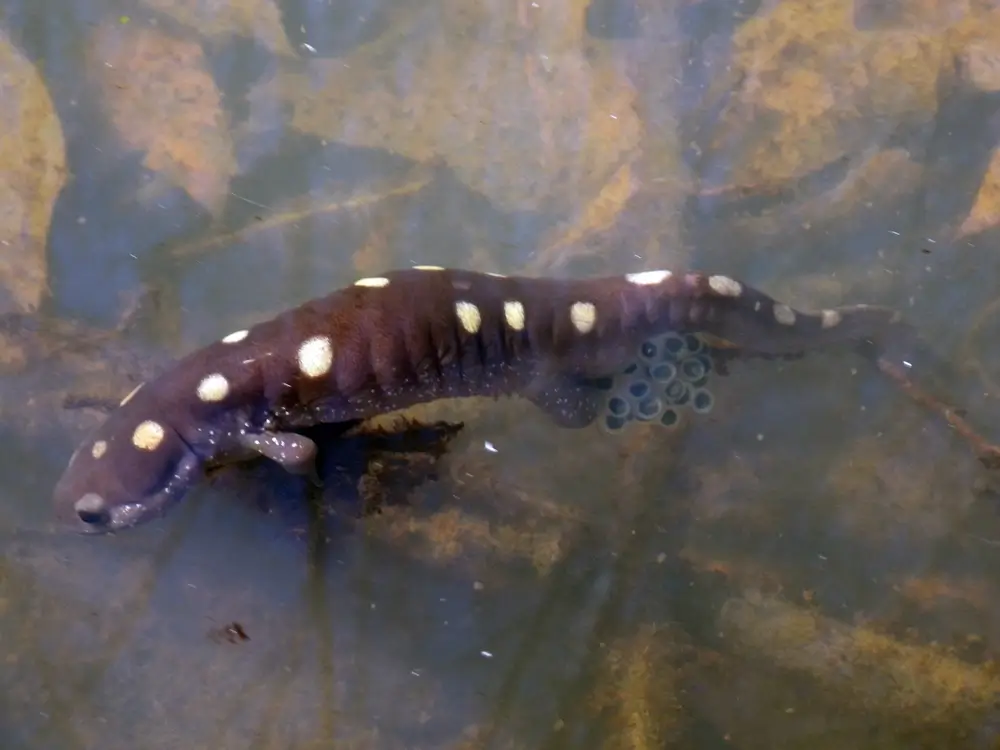
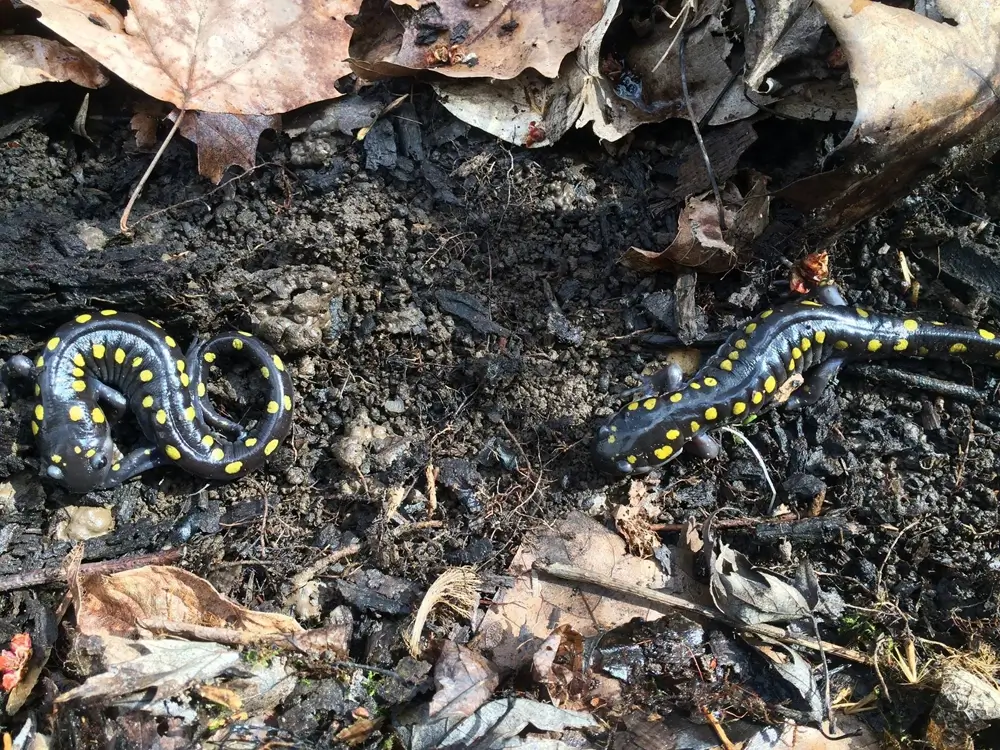
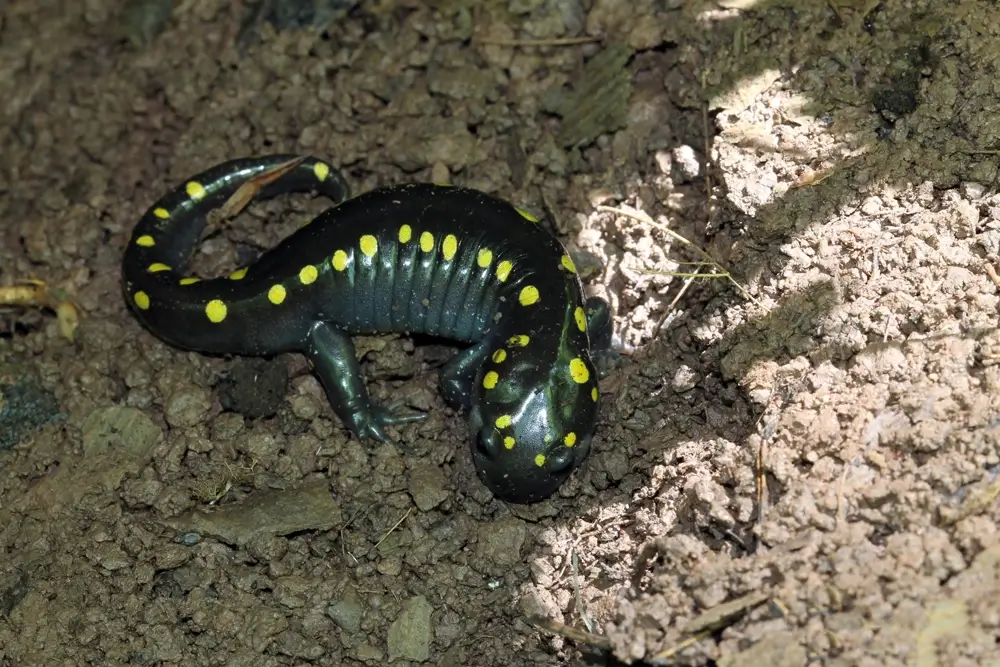
The spotted salamander is 4.5-7.5 inches (11.4-19.1 cm) in length. Its body is bluish-black on top and gray on the bottom. It has two rows of yellow or orange spots starting at its head and running to the tip of its tail. It has 12 costal grooves (vertical grooves).
The spotted salamander is also known as the yellow-spotted salamander.
Habitat
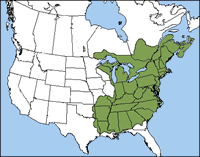
The spotted salamander lives in hardwood forests and hillsides.
Diet
The spotted salamander uses its sticky tongue to catch worms, insects, and snails.
Life Cycle
The spotted salamander breeds from March to April in the northern part of its range, from January to February in the Great Smoky Mountains, and from December to February in the South.
The spotted salamander usually moves to breeding ponds at night during the first rain after the winter thaw. Males arrive at the breeding ponds first.
The female lays one or more egg masses covered with a jelly-like substance. Each egg mass contains about 100 eggs. The egg masses stick to submerged branches and other objects.
The larvae hatch in 1-2 months, depending on the water temperature. Young larvae eat zooplankton and insect larvae and sometimes other spotted salamander larvae. The larvae become salamanders in 2-4 months.
The spotted salamander can live up to 30 years in the wild.
Behavior
The spotted salamander spends most of its time underground. It needs areas with soil that is easy to burrow into.
Did You Know?
Support for NatureWorks is provided by:
The Spotted Salamander in NH
The spotted salamander is found throughout New Hampshire.