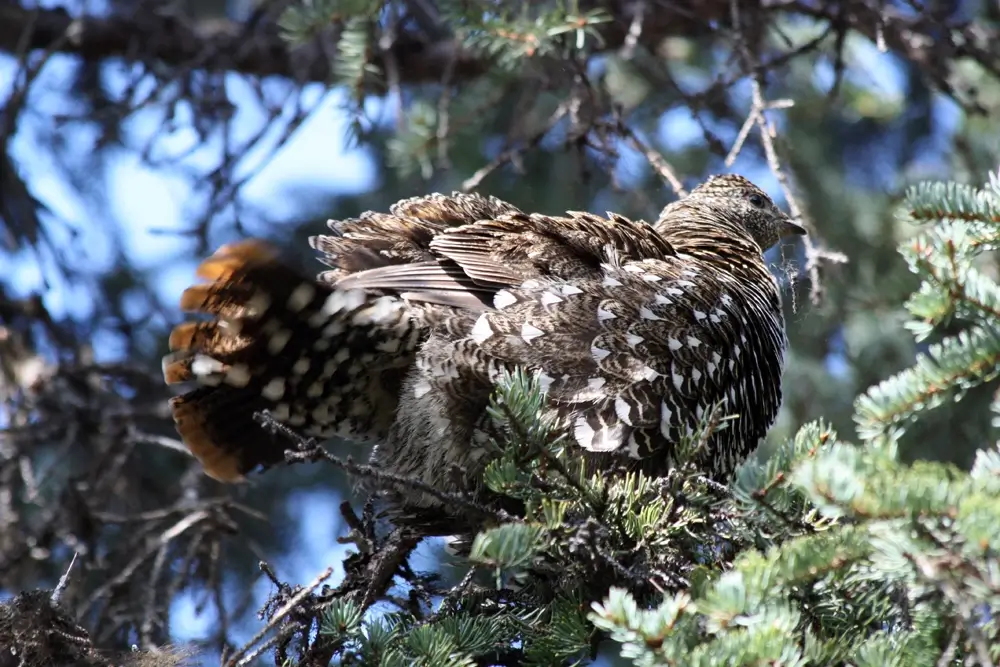
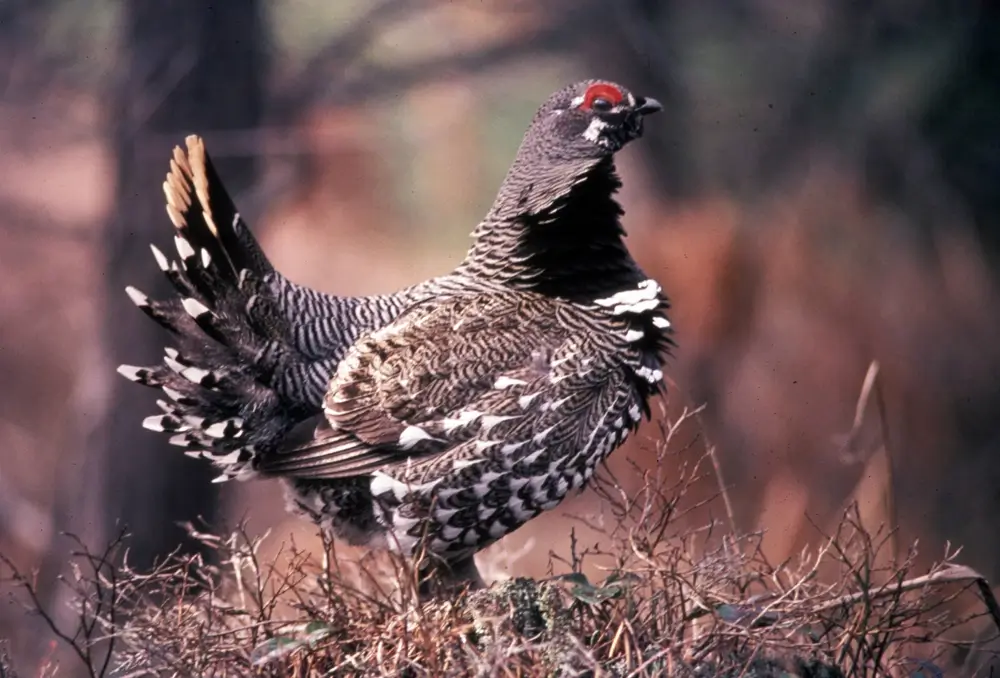
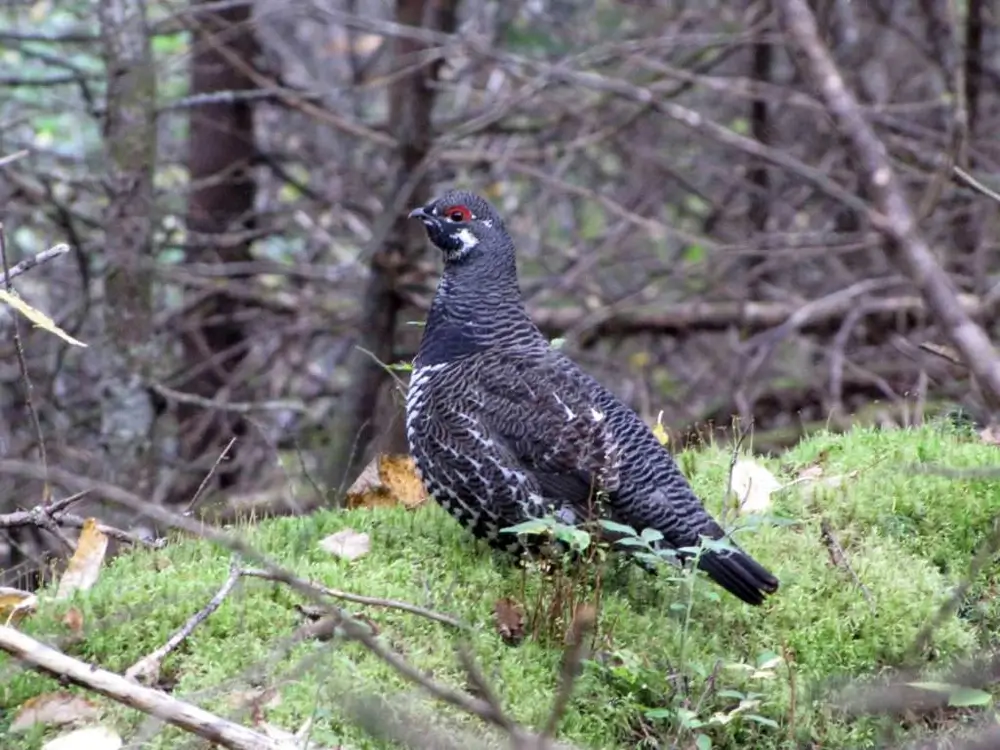
The spruce grouse looks a little bit like a chicken. It is 15-17 inches (38-43 cm) in length with a wingspan of 21.5–22.6 inches (54.5–57.5 cm). Males are a bit larger than females.
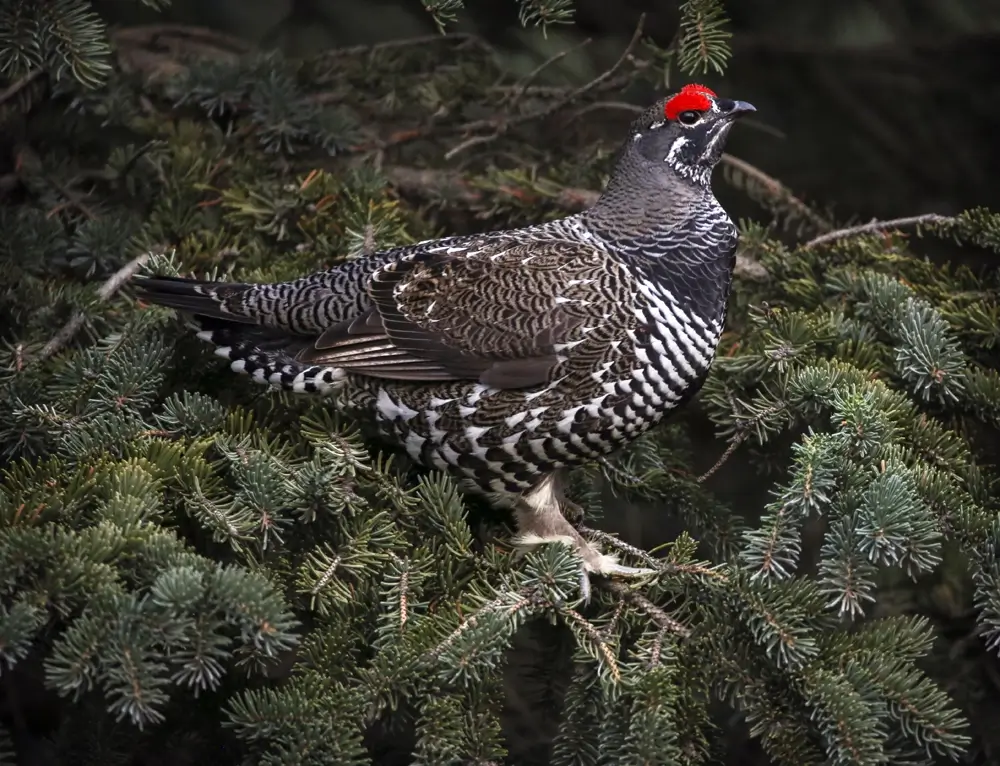
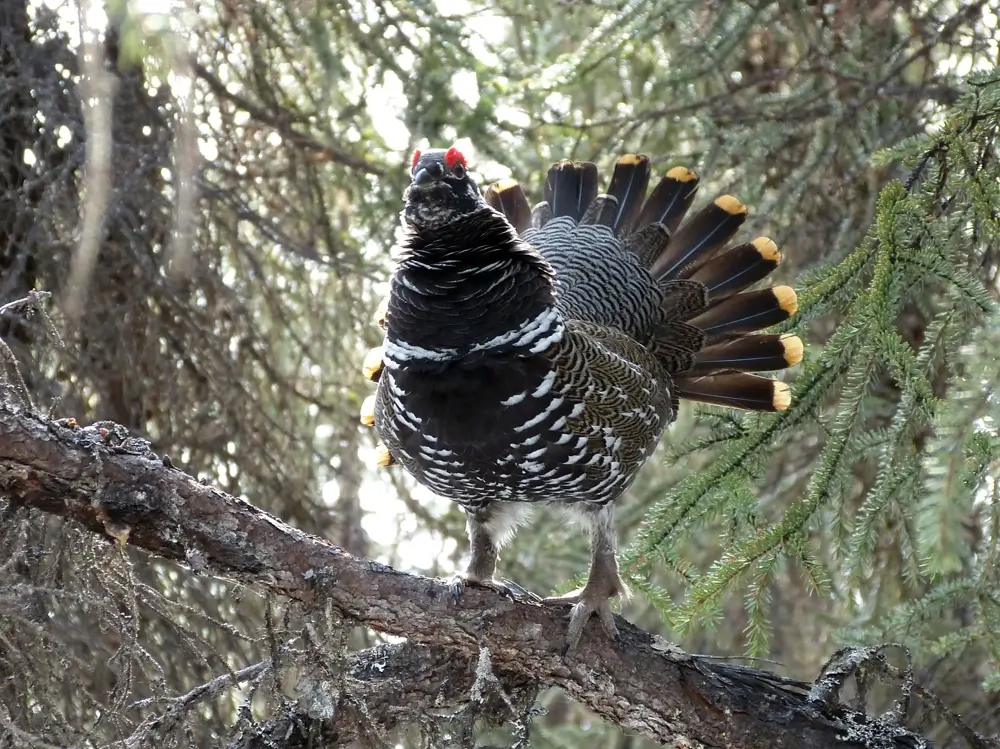
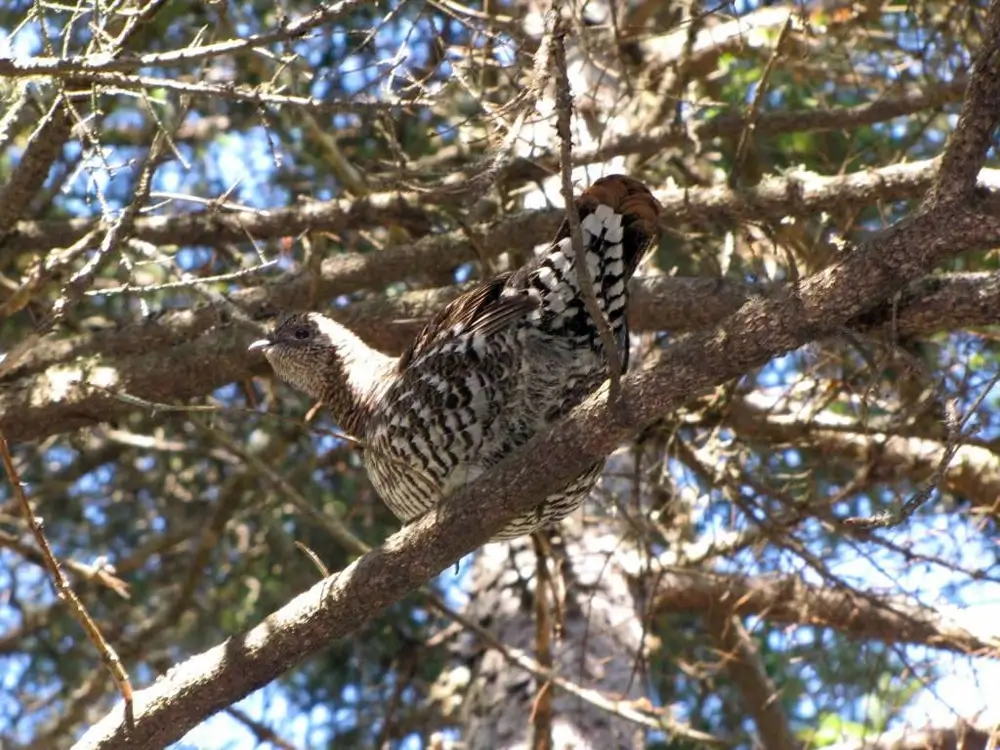
The male has gray and brown feathers speckled with white, a red comb over his eyes, a black throat, and a black chest with a white border. The female is a mottled grayish-brown with white bars and spots. She has no comb.
Habitat
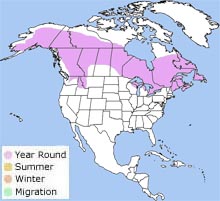
The spruce grouse lives in coniferous forests, especially those with spruce and pine trees.
Diet
Most of the spruce grouse’s diet is made up of the needles and buds of conifer trees like jack pine, juniper, spruce, larch, and lodge-pole pine. It is often found in trees, plucking needles off branches.
In the summer, it may also eat berries, seeds, mushrooms, and insects. The spruce grouse also eats small stones to help break down food in its gizzard. The gizzard is a strong, muscular organ in a bird’s digestive tract that grinds up food the bird eats.
In the winter, it only eats the needles of conifer trees. To make up for the shift in its winter diet, the spruce grouse’s gizzard becomes larger, and its digestive tract becomes about 40% longer.
Life Cycle
During mating season, the male struts around ruffling his feathers and beating his wings. Sometimes he flies just above the ground and flaps his wings to attract a female.
The female lays 4-11 eggs in a hollow lined with moss, grass, and leaves. The nest is usually built under low-lying branches of a spruce tree. The chicks hatch after about 3 weeks and fledge when they are 10 days old.
The spruce grouse has a lifespan of 5-7 years in the wild.
Behavior
The spruce grouse is also known as the “Fool Hen” because it is so tame you can walk right up to it and pick it up.
Did You Know?
Support for NatureWorks is provided by:
The Spruce Grouse in NH
The spruce grouse was once widely found in New Hampshire, but by 1880, they were rarely seen due to the loss of spruce and fir forests from logging.
They are now found in small numbers in northern New Hampshire.