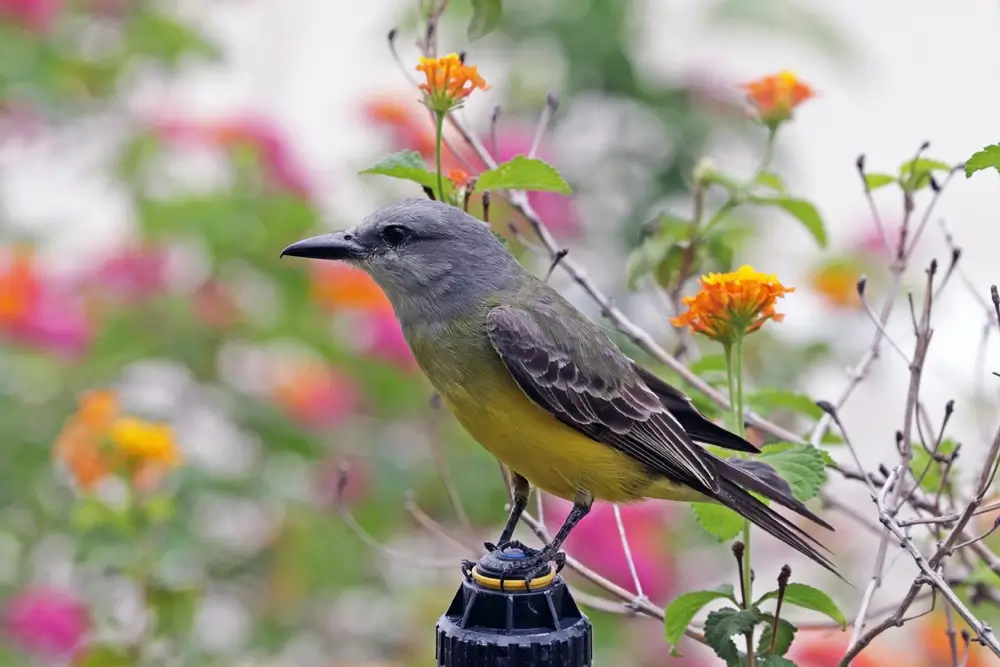
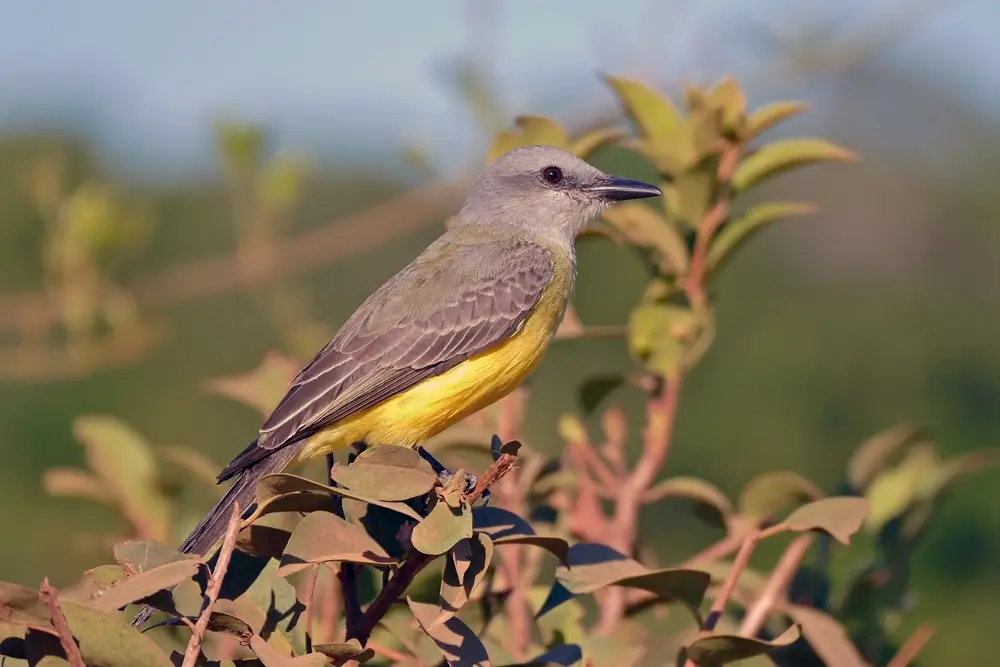
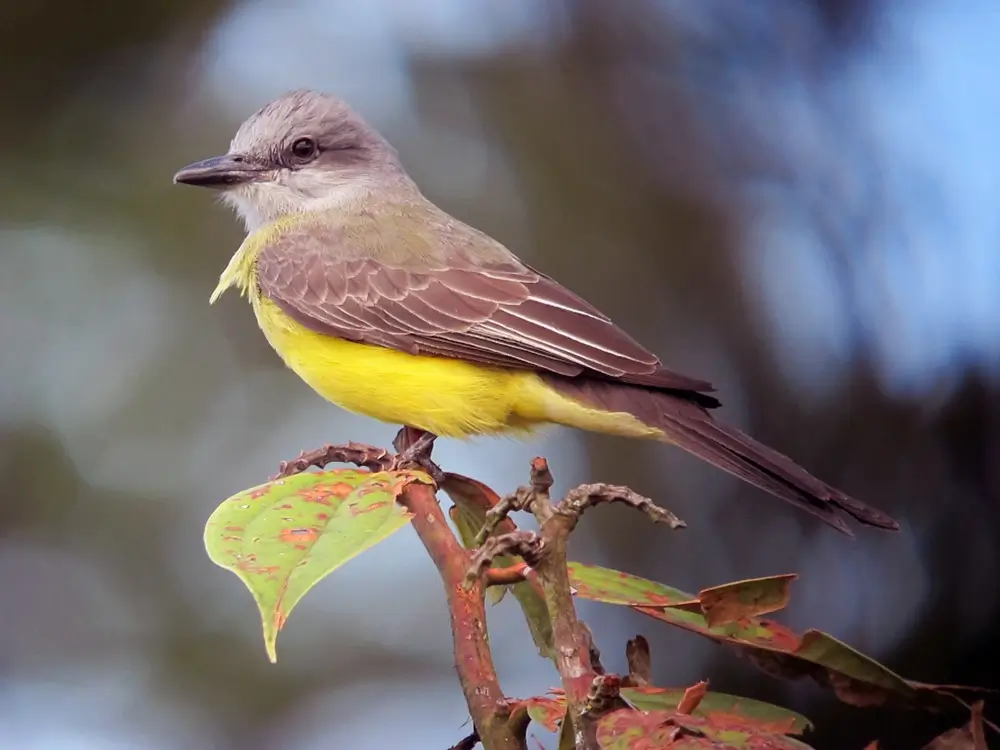
The tropical kingbird is 7.1-9.1 inches (18-23 cm) in length with a wingspan of 14-15 inches (36-38 cm).
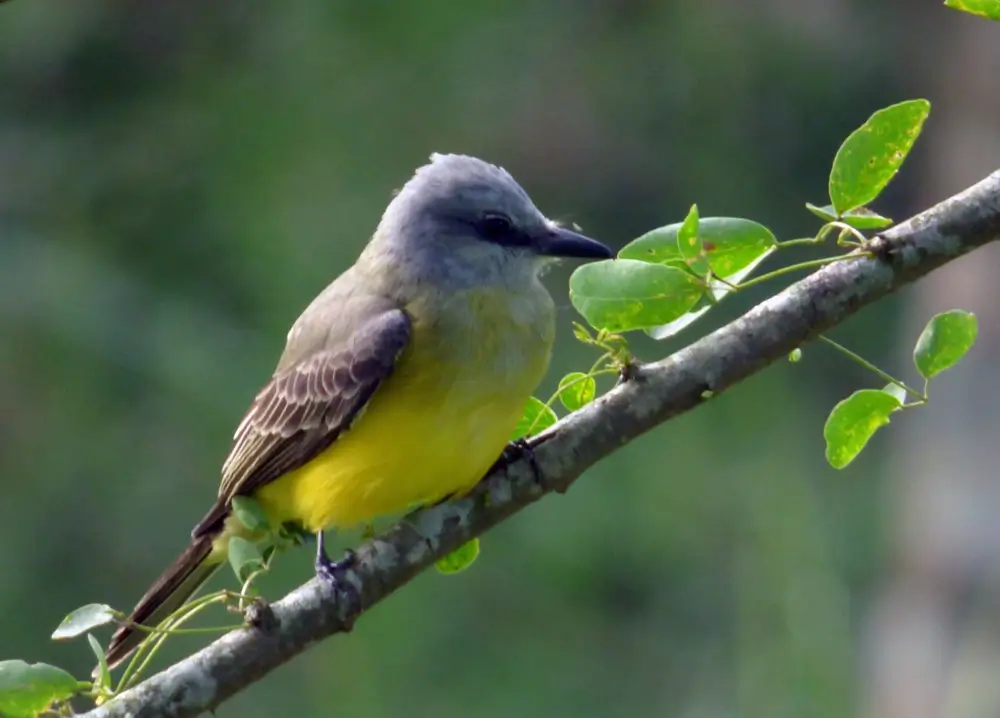
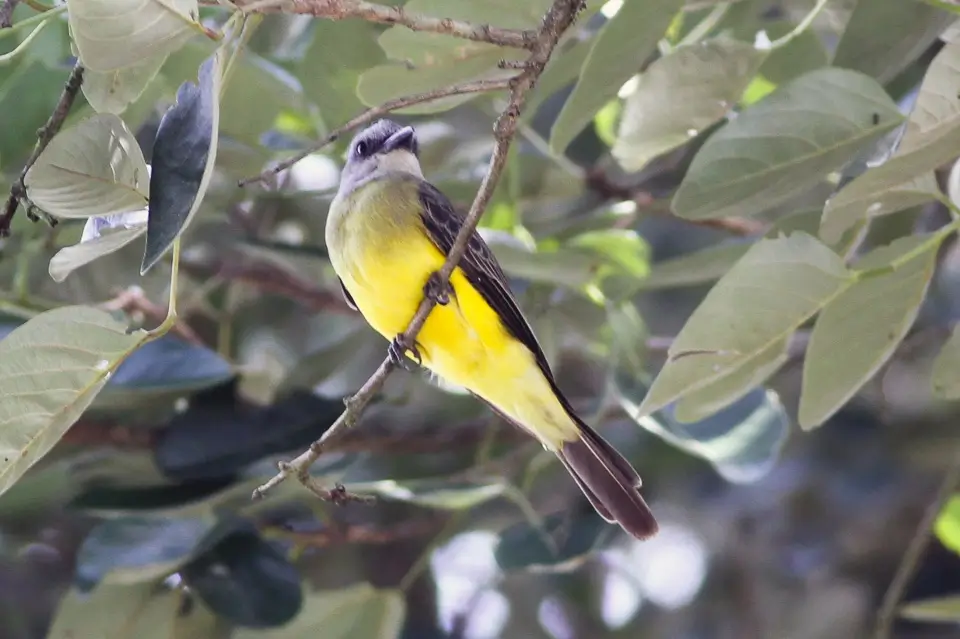
It has a long, brown, forked tail; a pale gray head with a patch of orange on the crown; olive-gray upper parts; and a yellow breast and belly.
Males and females look the same, but males have a slightly larger crown patch.
Habitat
The tropical kingbird is found in open wooded areas with few trees that are near ponds, rivers, and streams. It is also found in suburban and urban areas.
Diet
The tropical kingbird is primarily an insectivore (insect eater), but it also eats fruit. It catches and eats flying insects like beetles, moths, butterflies, wasps, and bees.
Life Cycle
The male tropical kingbird calls out to announce his selection of a nesting site. He flaps his wings to court females. Male and female pairs usually stay together for a breeding season or for an entire year. Tropical kingbirds can be aggressive when protecting their nesting territory and will chase other birds away.
Females lay 2-4 eggs in a cup-shaped nest in the trees. Incubation lasts about 2 weeks. Only the female incubates the eggs. Both the male and the female feed the chicks, and the male protects the nest while the female forages for food.
The chicks fledge in 18-19 days and are independent after about a month.
Behavior
The tropical kingbird is active during the day and at night. It communicates using a series of vocalizations. One vocalization is the “dawn song.” The dawn song happens before daylight and before other birds begin singing. It stops the song once the sun has risen and won’t sing it again until the next day.
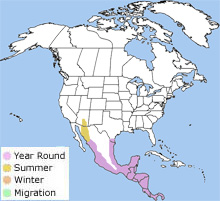
In the U.S., the tropical kingbird is found in southeastern Arizona and southern Texas. It winters from southern Texas south through Mexico and Central America to South America.