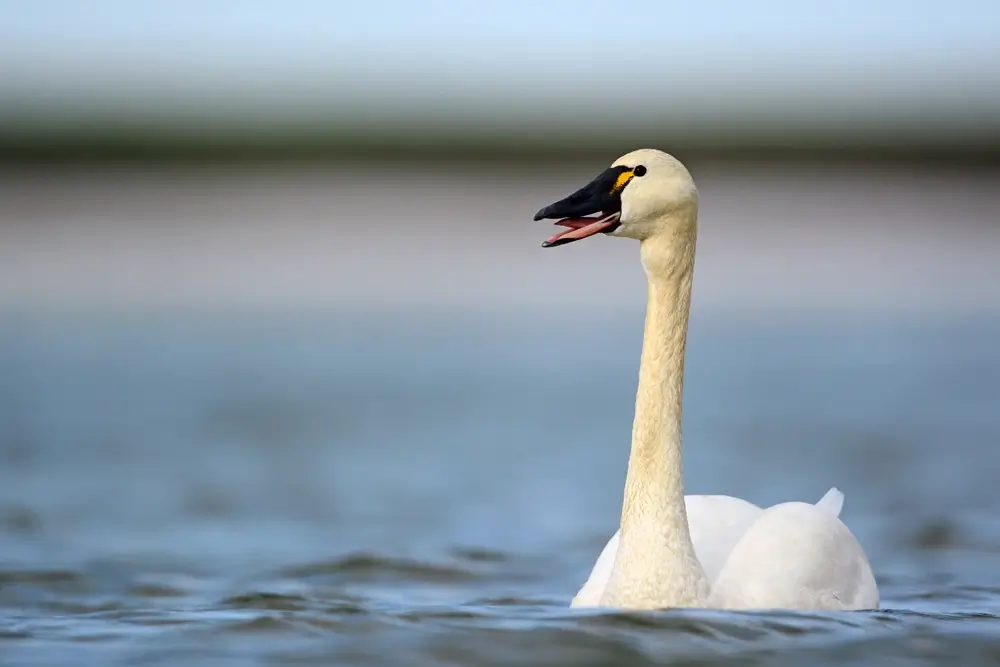
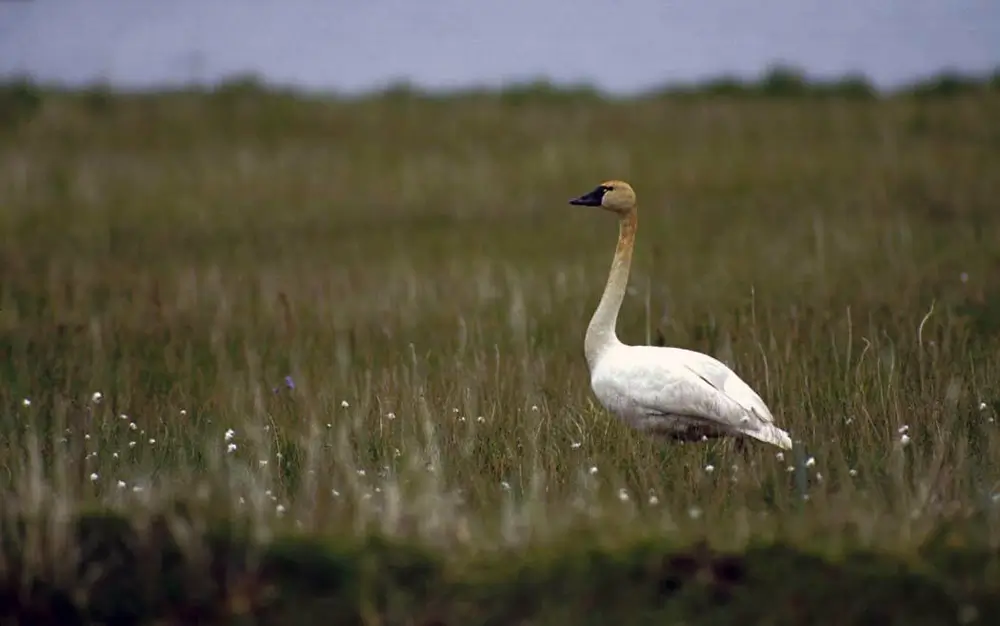
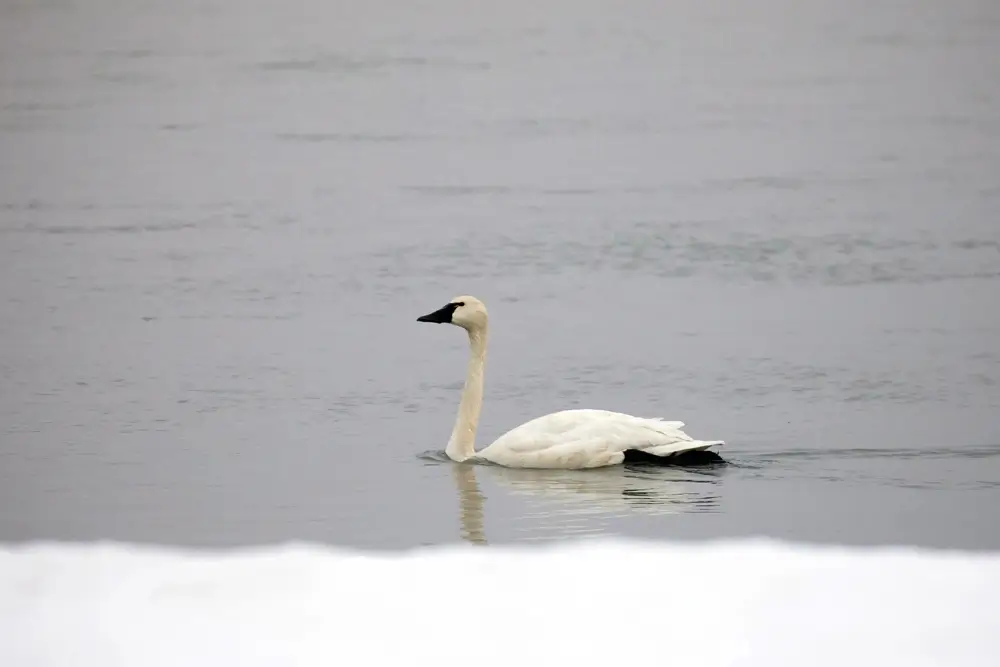
The tundra swan is 3.9-4.8 feet (1.2-1.5 m) in length with a wingspan of about 5.5 feet (1.7 m).
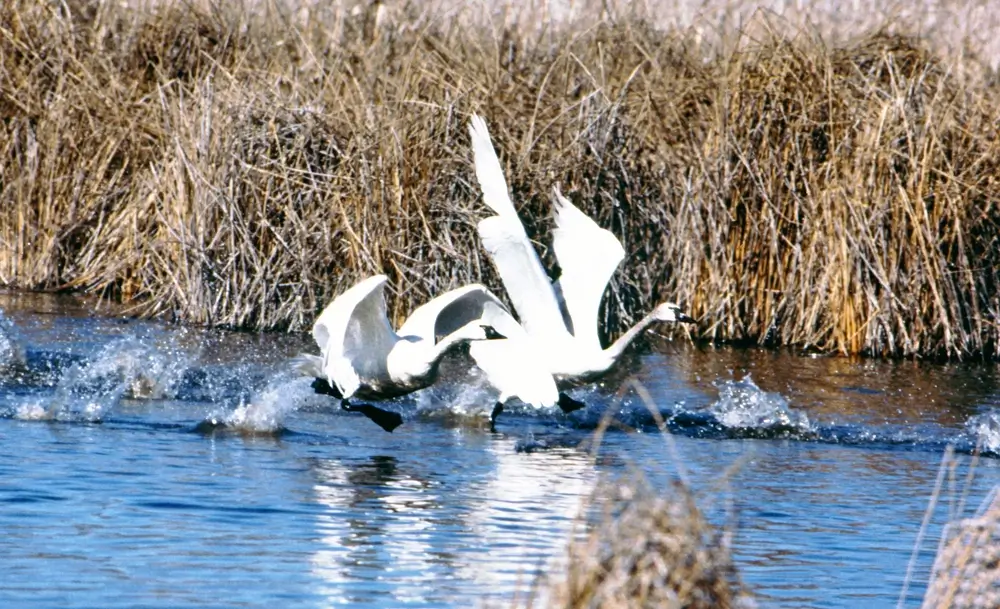
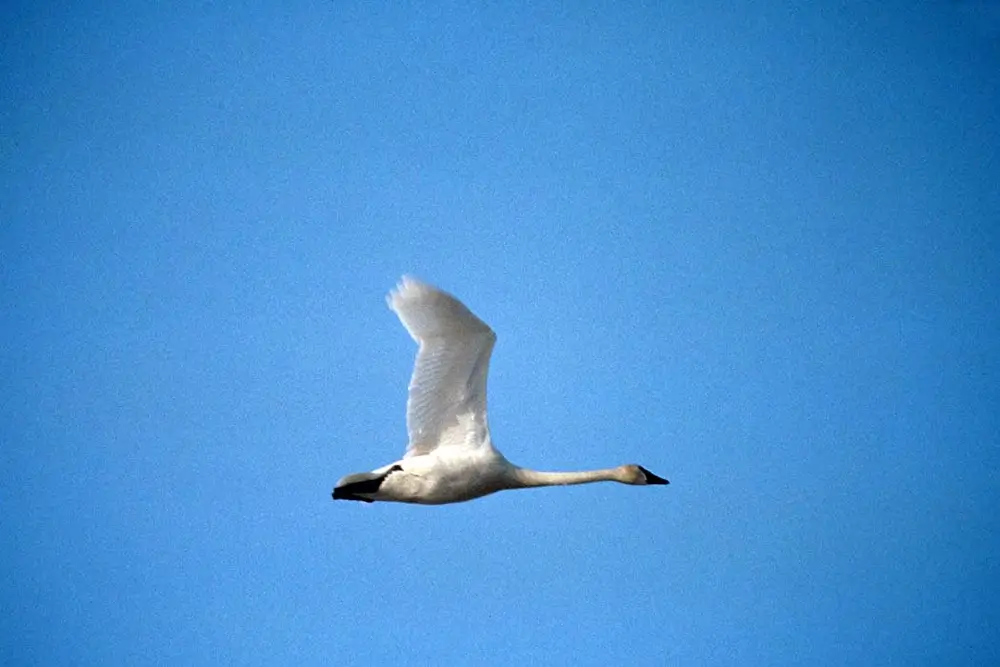
It is white and has a round head, a long neck, a long black bill, a black face, and black feet and legs. It may have a yellow spot in front of its eyes.
Males and females look alike, but the male is usually a little larger.
Habitat
The tundra swan breeds on the Arctic tundra and winters on saltwater bays, estuaries, and marshy lakes, rivers, ponds, streams, and flooded fields.
Diet
The tundra swan feeds in flocks in shallow water. It plunges its long neck underwater and tips up its rear to feed on the tubers and roots of aquatic plants. It also eats mollusks and grains.
Life Cycle
Male and female tundra swan courtship begins in the late winter and continues into the spring. The male and female face each other, stretch out their wings and bow their heads at each other. Both the male and female build a large mound of vegetation with a bowl-shaped depression in the middle and line it with down.
The female lays 3-5 eggs. The female incubates the eggs for 32-34 days while the male guards the nest site.
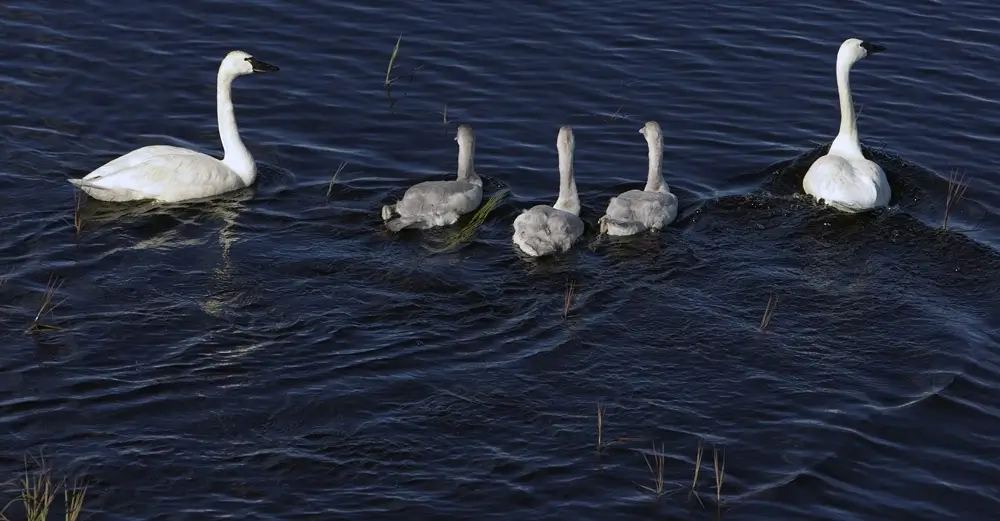
Both parents care for the cygnets, who are precocial and can swim and feed themselves shortly after birth, but still need to be brooded, or sat on by a parent to keep warm on the cold tundra. The cygnets migrate with their parents in the fall and stay with them through the winter. Male and female pairs usually mate for life.
The tundra swan has a lifespan of 15-20 years in the wild. In captivity, it can live to 20-25 years.
Behavior
The tundra swan is the only swan species native to the eastern U.S., and unlike the mute swan, which is an introduced species, it holds its neck up straight when swimming.
Did You Know?
The tundra swan was once called the whistling swan because of the sound its powerful wings make when it is in flight.
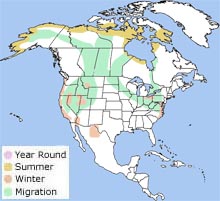
The tundra swan breeds in the Arctic regions of northern Canada and Alaska.
There are two populations of tundra swans in North America, one in the east and one in the west. Both populations migrate over 3,000 miles (4,828 km) each season.
The eastern population winters on the Atlantic Coast from the Chesapeake Bay to North Carolina. The western population winters on the Pacific Coast from southern British Columbia to southern California.
Small groups also winter in interior portions of the west and on the Great Lakes.