Viceroy

Limenitis archippus

Kingdom
Phylum
Class
Order
Family
Genus

Characteristics

The viceroy butterfly is a brush-footed butterfly. Brush-footed butterflies have tiny, hairy forelegs that look more like brushes than feet and are not used for walking.

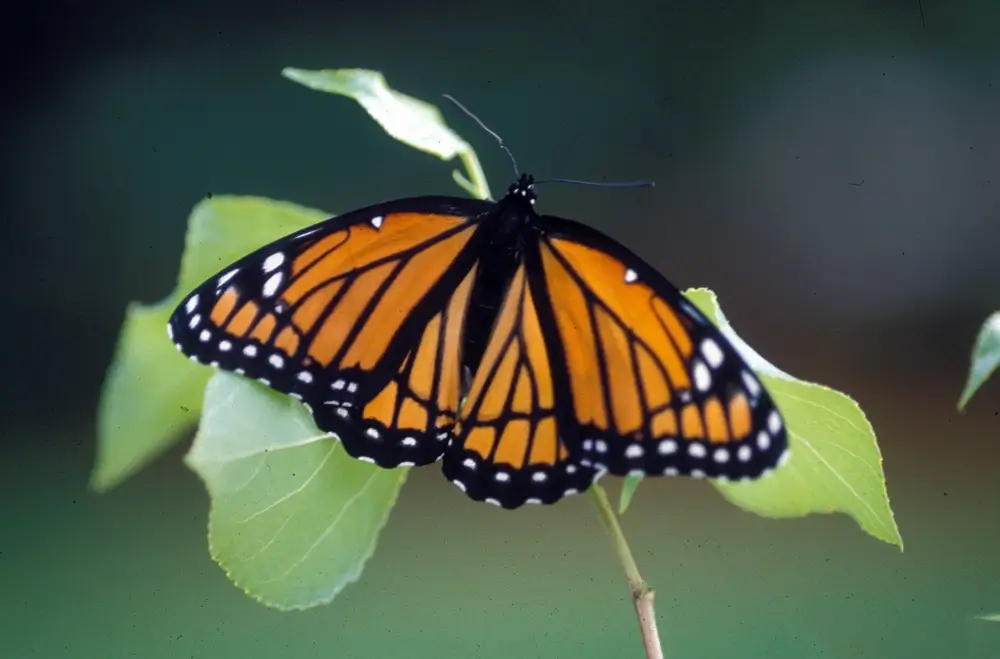
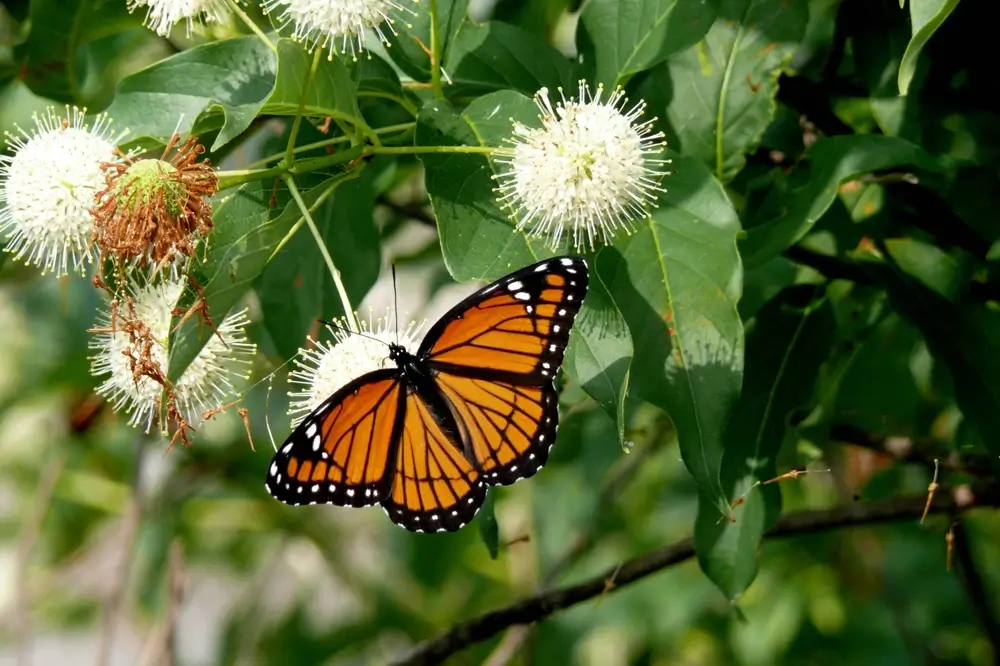
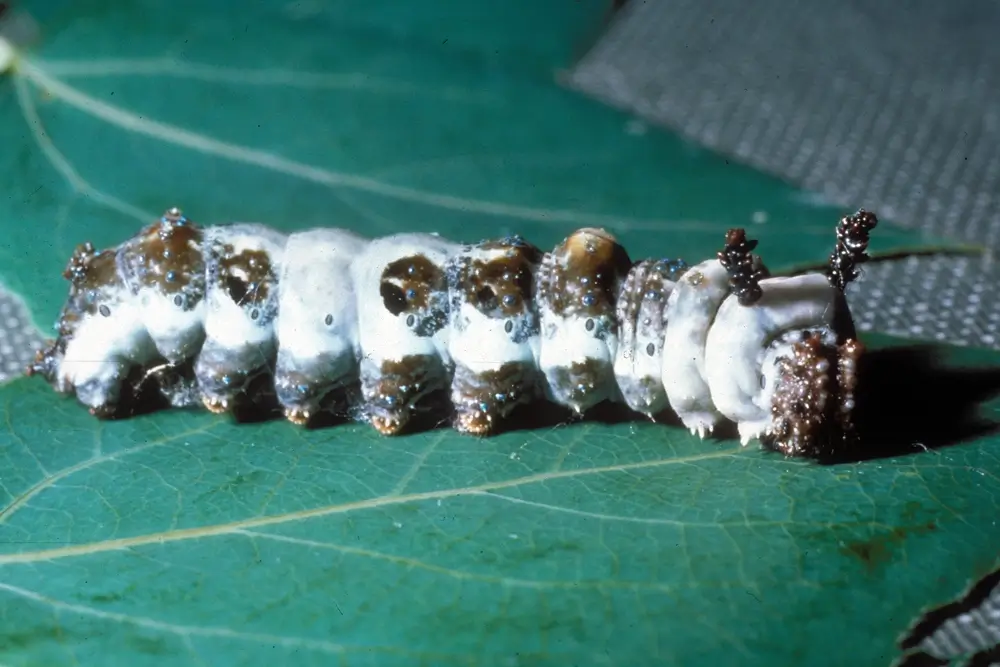
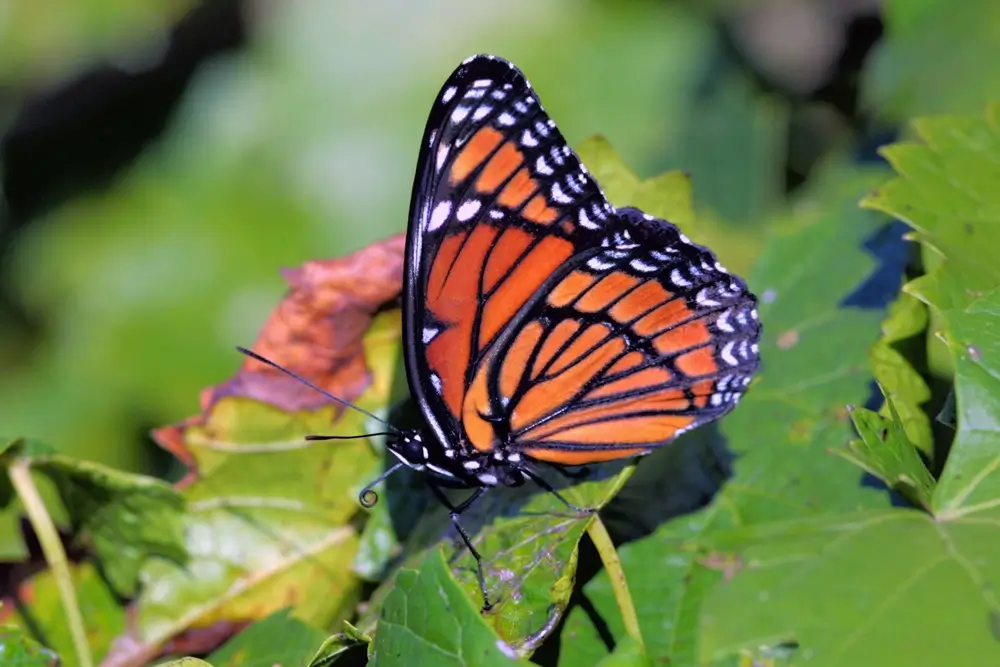
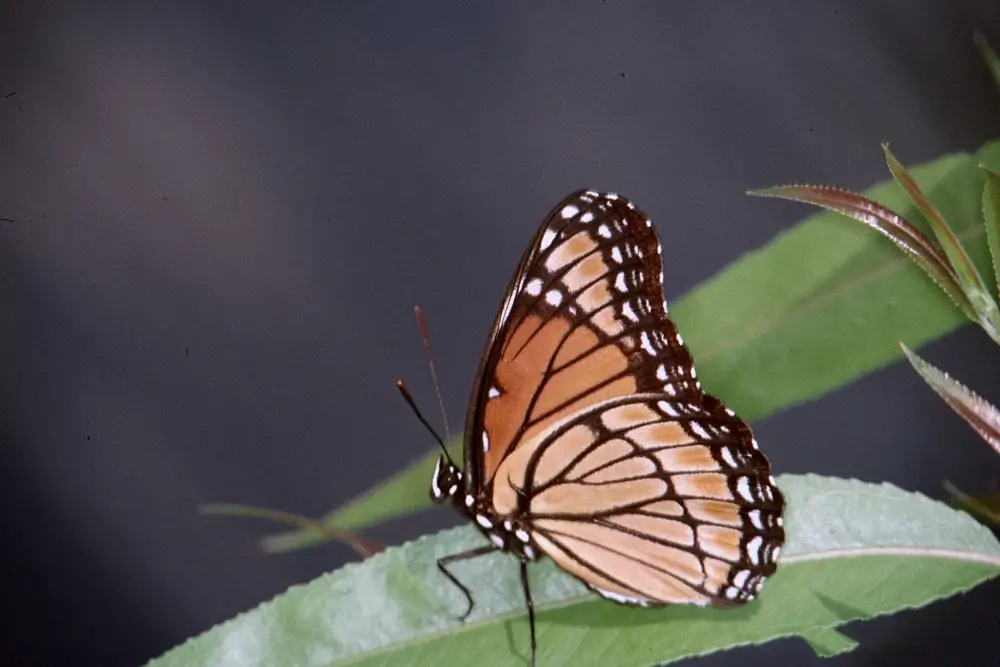
It has a wingspan of 2.5-3.5 inches (6.4-8.9 cm). It is dark orange with black veins. A row of white spots edges its wings. Its color and pattern mimic the monarch butterfly’s pattern, except for a black horizontal stripe that crosses the bottom of its back wings. The viceroy caterpillar is white and olive brown.

Habitat

The viceroy butterfly lives in meadows, marshes, swamps, and other wet areas with willow, aspen, and poplar trees.

Diet

The viceroy caterpillar eats the leaves of willow and poplar trees. The viceroy butterfly eats dung, carrion, fungi, and the nectar of flowers from the Asteraceae family like goldenrods, thistles, and asters.

Life Cycle

The viceroy mates in the afternoon. The female lays her eggs on the tips of the leaves of poplars and willows. There are usually two or three generations of viceroys born each breeding season.

Behavior

Did You Know?

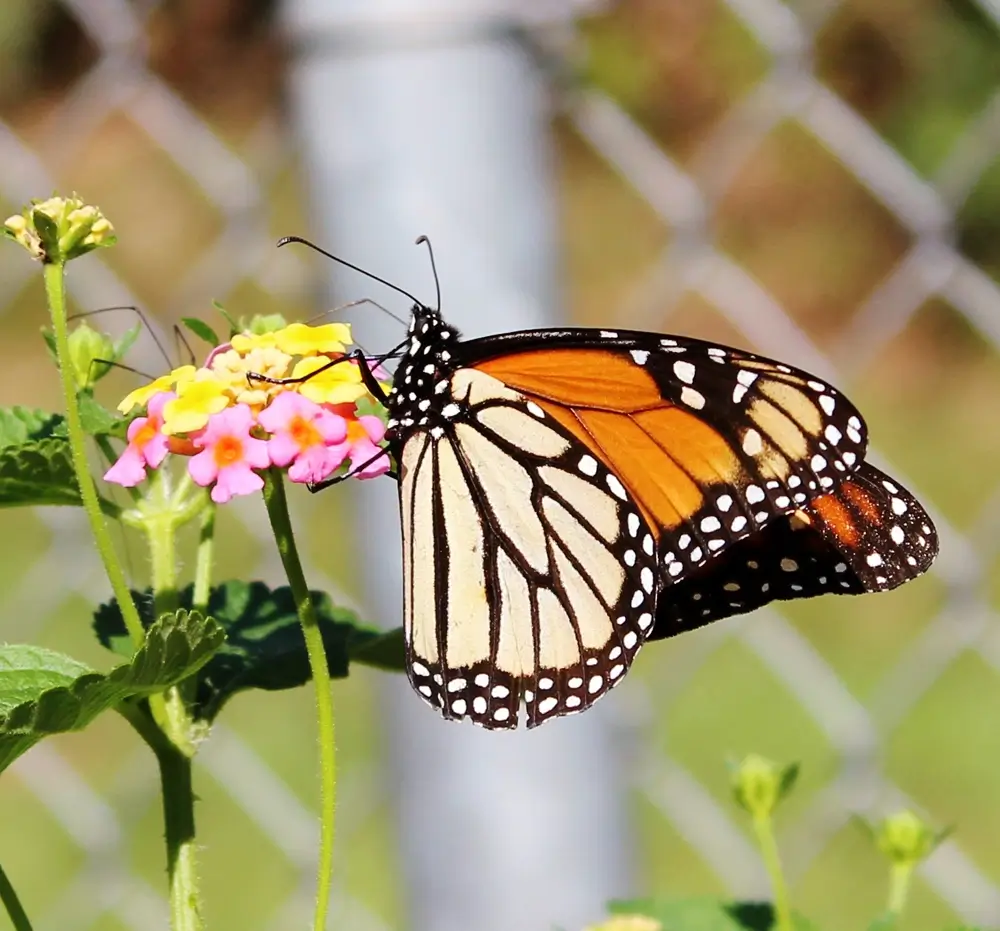
The viceroy and monarch were once thought to exhibit Batesian mimicry, where a harmless species mimics a toxic species.

Studies conducted in the early 1990s suggest that the viceroy and the monarch are actually examples of Mullerian mimicry, where two equally toxic species mimic each other to the benefit of each.

Just goes to show you there’s always something new to discover in the natural world!

Support for NatureWorks Redesign is provided by: 

The Viceroy in NH

The viceroy butterfly is found throughout New Hampshire.

World Status: Least Concern

Range

The viceroy is found in most of the continental United States and in southern Canada and northern Mexico.