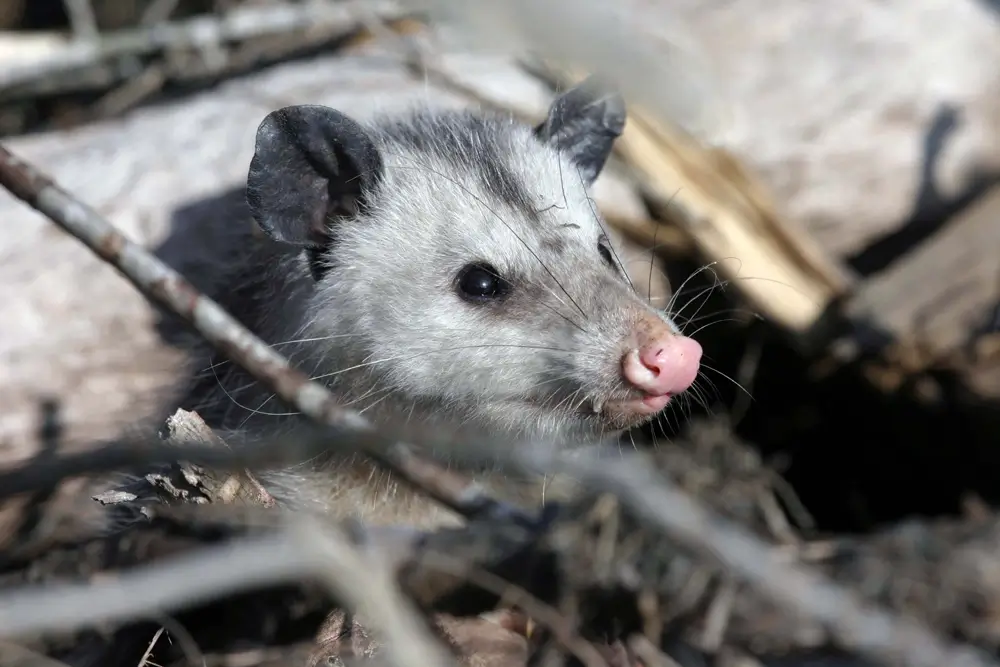
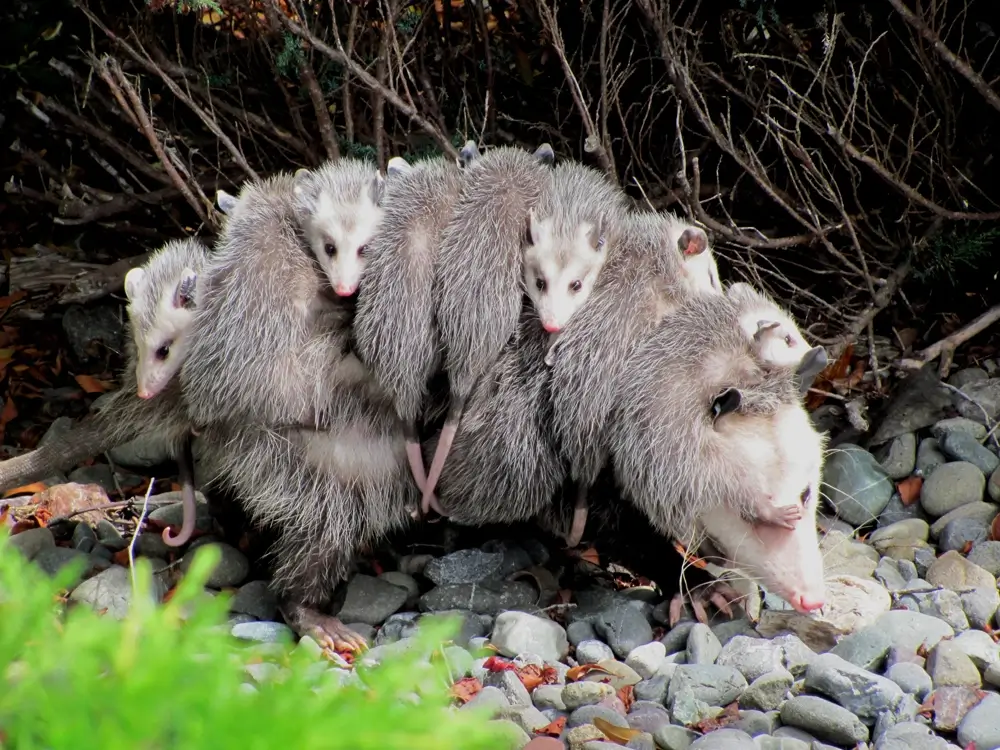
The Virginia opossum is the only marsupial native to North America. Marsupials have pouches. Other marsupials include kangaroos and koalas.
The Virginia opossum is about the size of a large house cat. They are 25- 40 inches (63- 102 cm) long from the tip of their nose to the tip of their tail and weigh 4-15 pounds (2- 7 kg). Males are a bit larger than females.
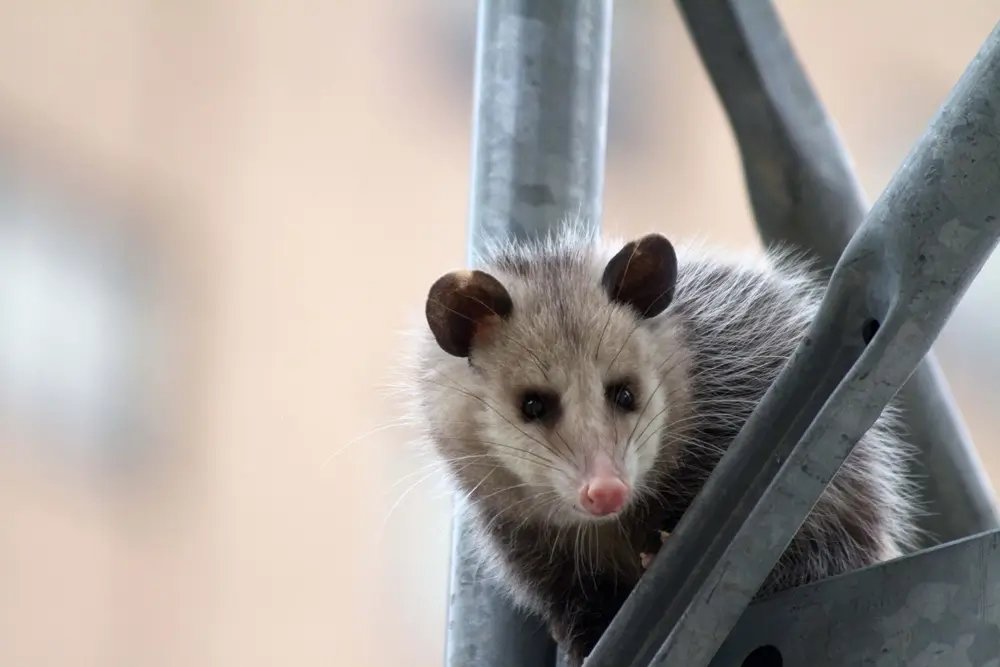
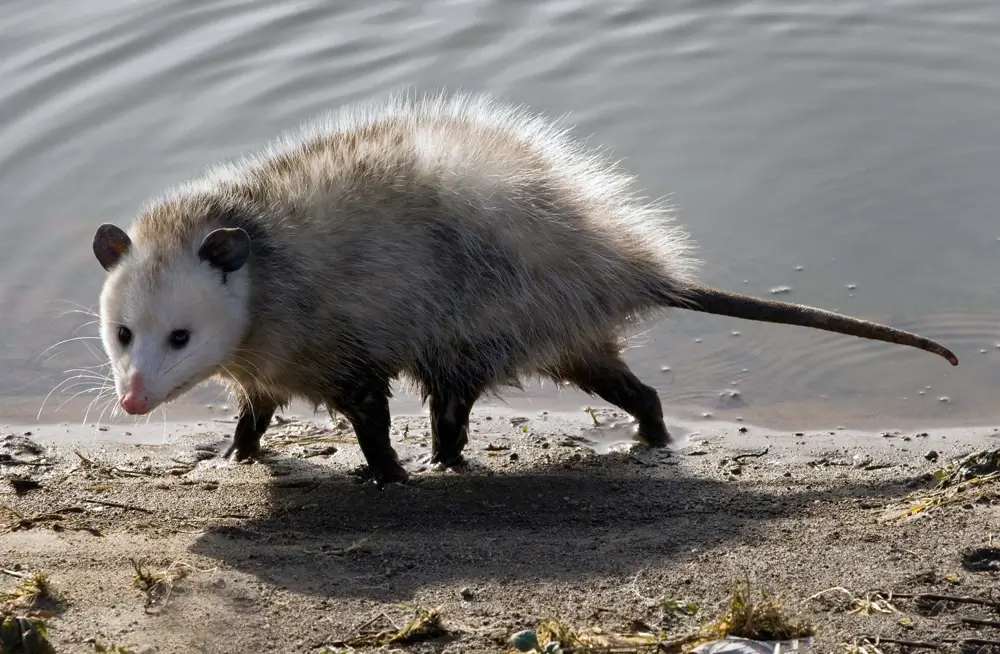
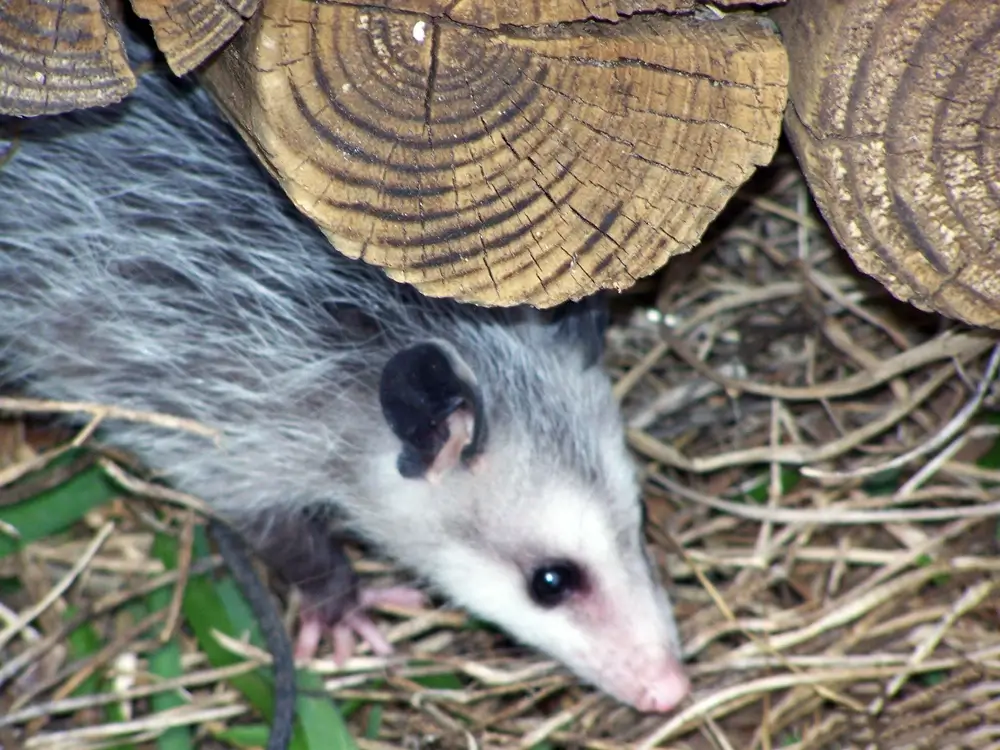
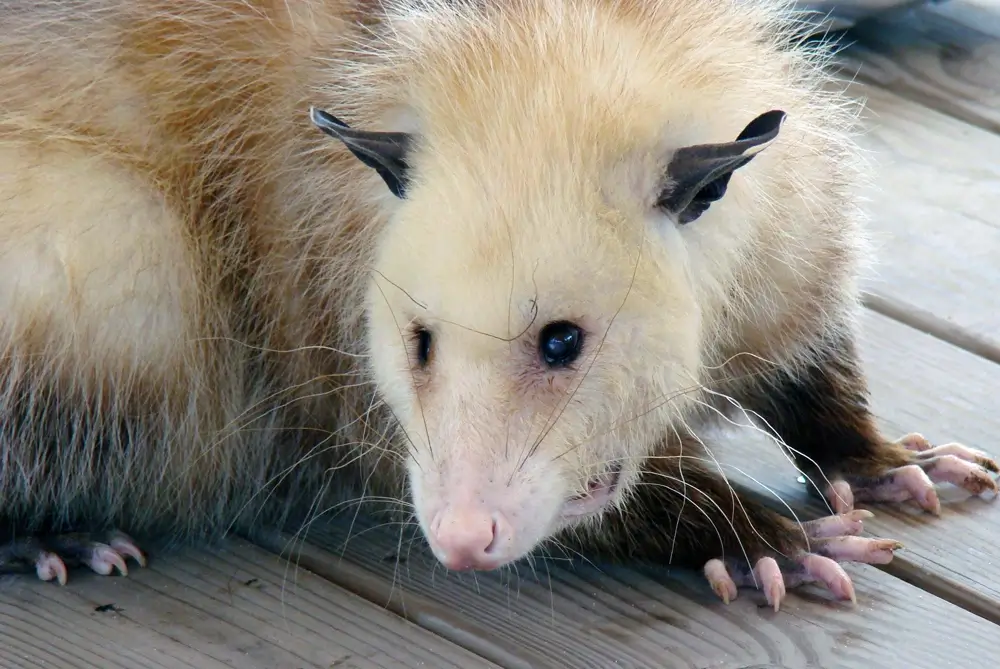
It has a triangular head and a long, pointed nose. It has grayish fur everywhere but on its ears, feet, and tail.
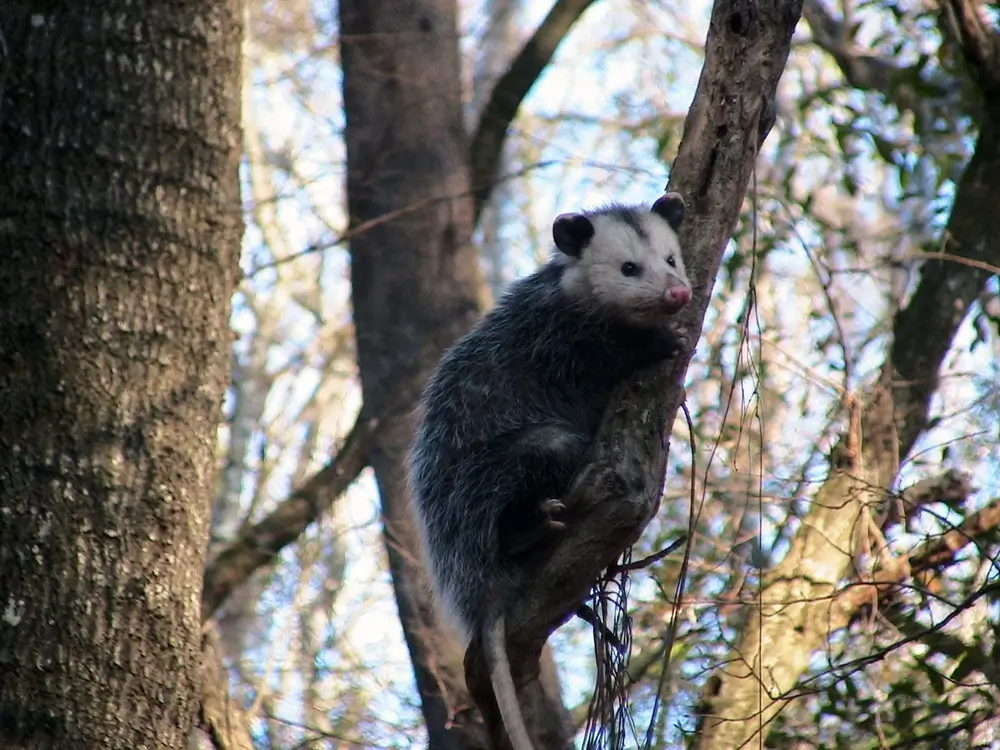
Virginia opossums have a prehensile tail. A prehensile tail is adapted for grasping and wrapping around things like tree limbs. The opossum can hang from its tail for a short time. Some people think opossums hang from their tails and sleep. They don’t. Their tails aren’t strong enough to hold them for that long.
The opossum has an opposable hallux. Hallux are clawless big toes that work like thumbs. The hallux helps the Virginia opossum grab branches when it climbs.
The opossum doesn’t hibernate in the winter, but it often holes up during very cold weather because it runs the risk of getting frostbite on its hairless ears, tail, and toes.
Habitat
The Virginia opossum is found in a variety of habitats, including deciduous forests, open woods, and farmland. It likes wet areas such as marshes, swamps, and streams.
Diet
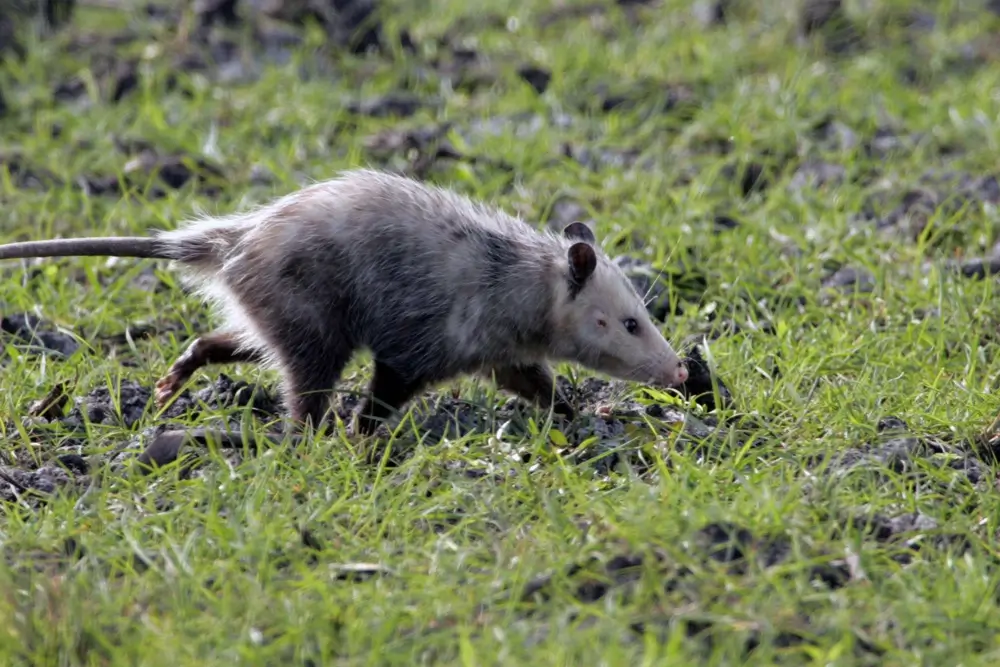
The Virginia opossum is nocturnal and uses its keen sense of smell to locate food. It is omnivorous and eats just about anything, including lots of different plants and animals like fruits, insects, and other small animals.
Sometimes, it eats garbage and carrion, or dead animals. Because so much carrion is roadkill, opossums are often killed by cars while looking for food on roadways.
Life Cycle
A Virginia opossum female may have as many as 25 joeys or babies, but she usually has 7-8. The reason opossums have so many joeys is to ensure that some of them survive. Like most marsupials, opossums are very small when they are born – about the size of a navy bean.
The joeys climb up the mother’s fur and into her pouch, where they find a teat. Some joeys do not find their way to the pouch and die. If they make it to the pouch, only the joeys who find one of the mother’s 13 teats will survive.
Joeys stay in the pouch and suckle for 55-60 days. Then they move out of the pouch and spend another four to six weeks on their mother’s back. In some parts of their range, females have three litters a year.
The Virginia opossum has a lifespan of only two years in the wild. In captivity, they can live to be four years old.
Behavior
The Virginia opossum has many behavioral adaptations it uses to survive. When threatened, it exhibits behaviors like running, growling, belching, urinating, and even defecating (pooping).
Sometimes it “plays possum” and rolls over, becomes stiff, and drools. Its breathing becomes slow and shallow. This coma-like state can last up to four hours. Some predators will think the opossum is dead and go away.
Did You Know?
The name ‘opossum’ was first used in western culture by Captain John Smith in 1608. It comes from the Powhatan name apasum, which means “white animal.”
Support for NatureWorks Redesign is provided by:
The Virginia Opossum in NH
The Virginia opossum is found throughout New Hampshire.
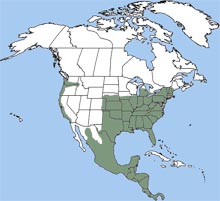
The Virginia opossum is found in most of the United States east of the Rocky Mountains and on the West Coast. It is also found in Mexico, Central America, and British Columbia, Canada.