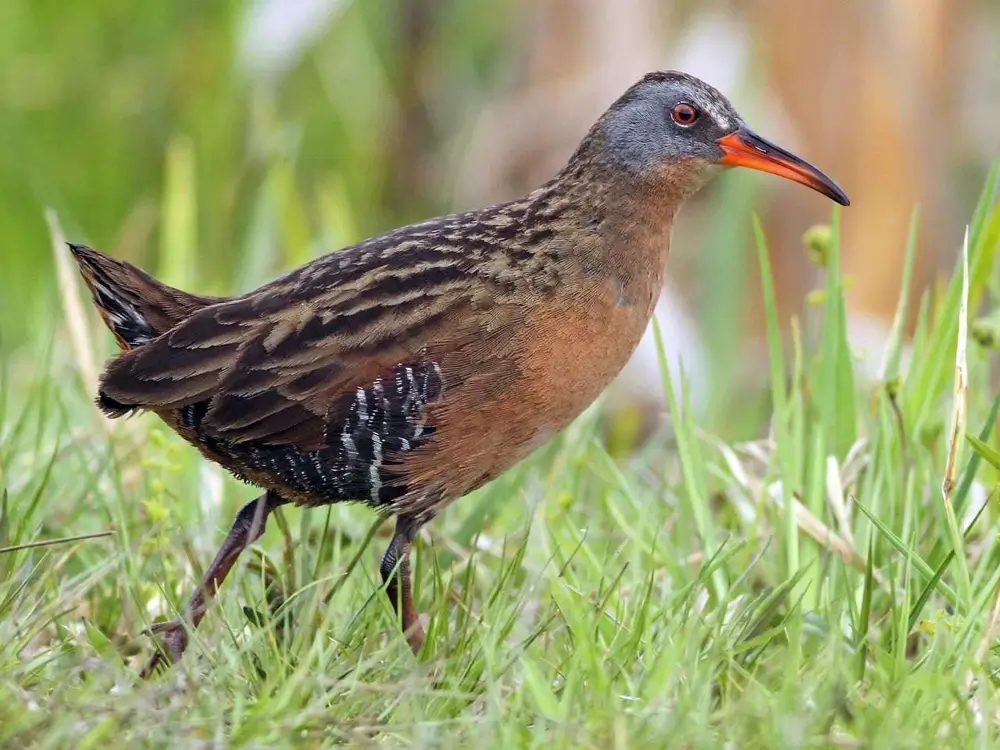
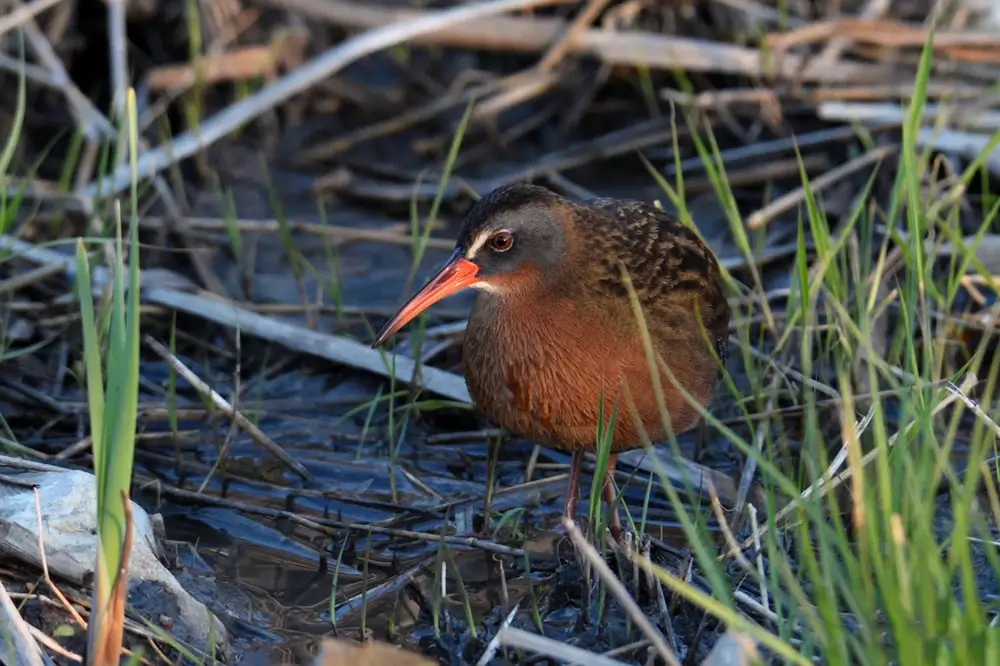
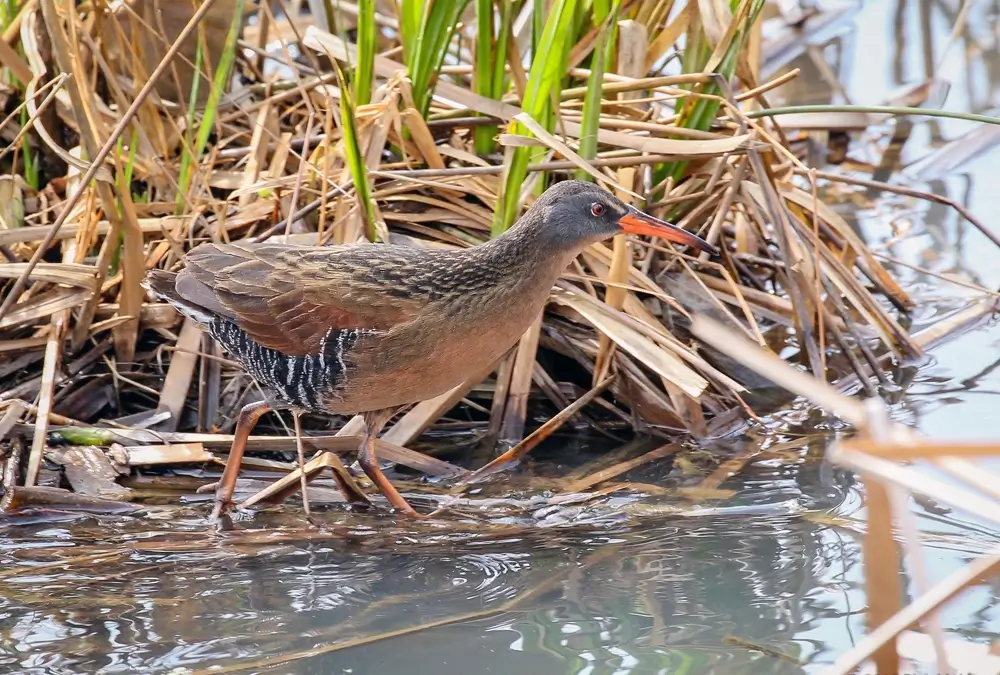
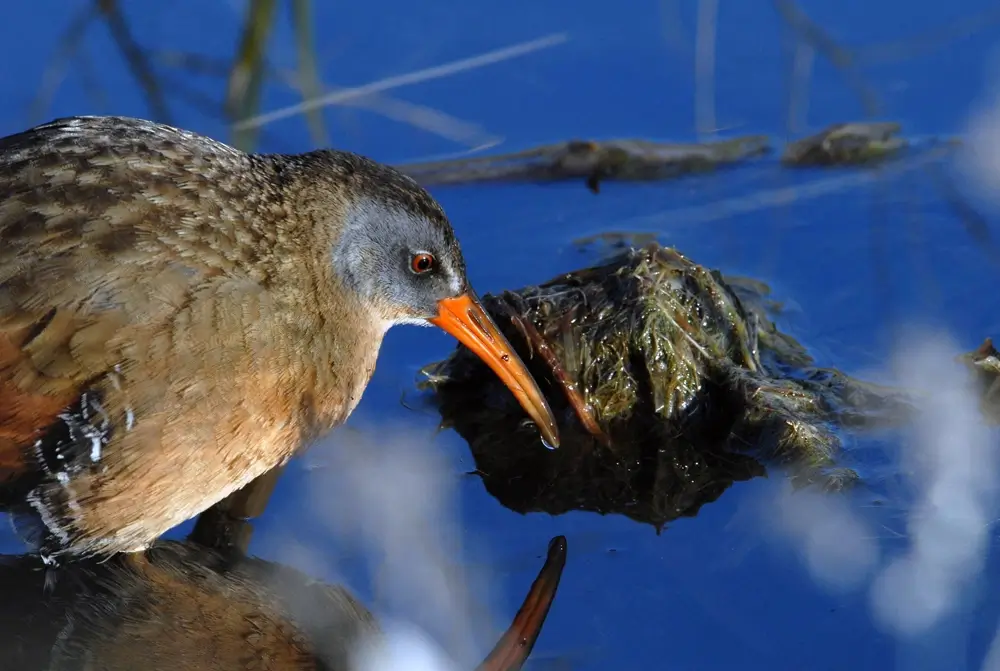
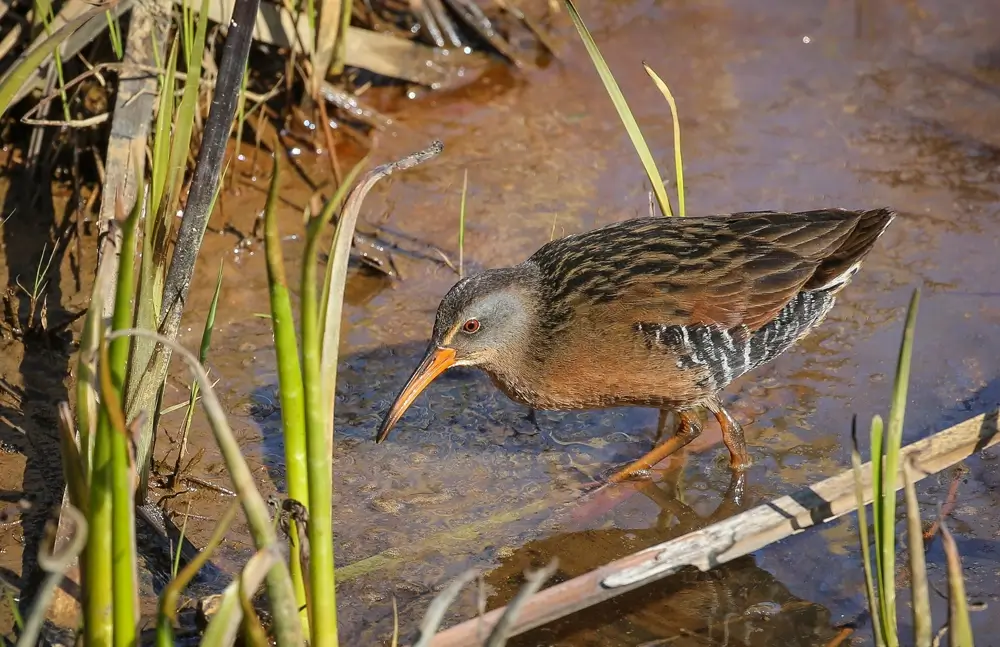
The Virginia rail has a chicken-like body with a short tail and strong legs. It is reddish in color with gray cheeks and a long, curved red bill. Males and females look alike, but males are a bit larger.
The Virginia rail is rarely seen. Its compact, narrow body is built for living in dense plant cover. It is 7.9–10.6 inches (20–27 cm) in length with a 12.6-15 inch (32–38 cm) wingspan.
Habitat
Freshwater marshes and wetlands are the usual habitats of the Virginia rail. It is sometimes found in salt marshes.
The most important features of its habitat are shallow water, heavy plant cover, and lots of food.
Diet
The Virginia rail probes standing water, moist soil, and mudflats with its long bill to find food. It eats small aquatic invertebrates such as beetles, spiders, and snails.
It also eats fish, frogs, and small snakes. In the winter, when food is less available, the Virginia rail eats aquatic plants and seeds.
Life Cycle
Male and female pairs build their nest in May. The nest is built in a marsh with lots of plant cover. Above their nest, they build a canopy by weaving surrounding tall plants for added protection. The Virginia rail often builds several dummy nests in its territory.
The female lays 8-9 eggs. Both the male and female incubate the eggs, and the young hatch after 19 days.
The young chicks are precocial and develop very quickly. They are running around the nest, drinking, and swimming only 11 hours after hatching.
The Virginia rail has a lifespan of 2-5 years in the wild.
Behavior
The Virginia rail has very strong legs and weak wings. With its strong legs, it can walk and run on floating marsh plants. It only flies during migration.
Did You Know?
Support for NatureWorks is provided by:
The Virginia Rail in NH
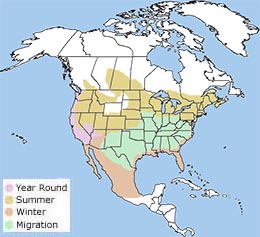
The Virginia rail breeds in New Hampshire. It migrates south in the fall.