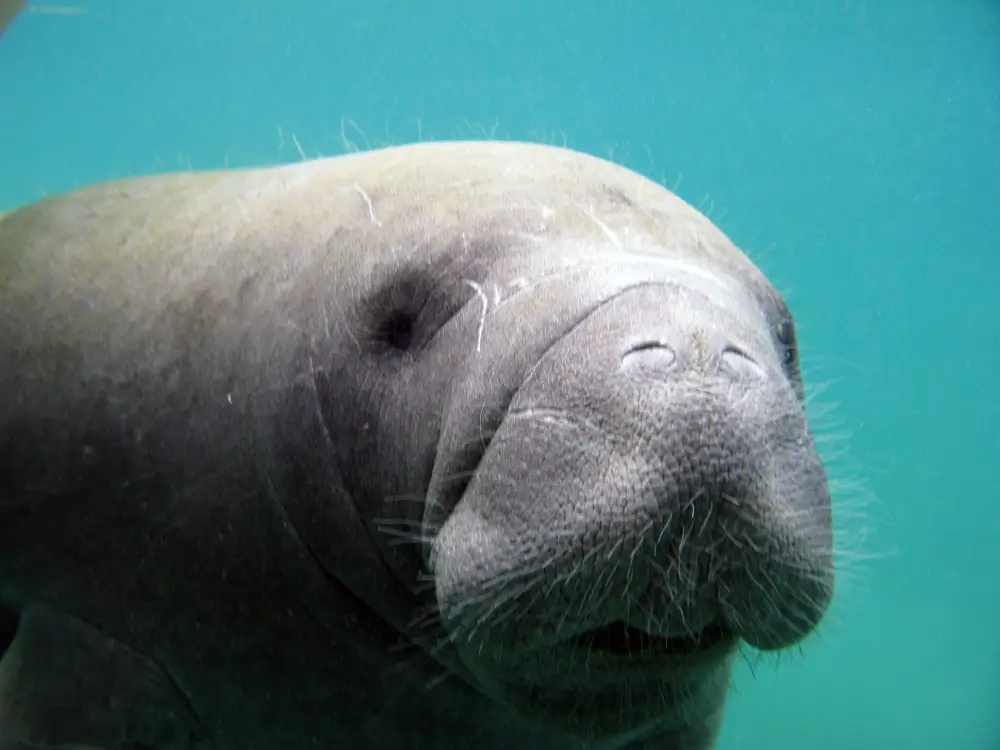
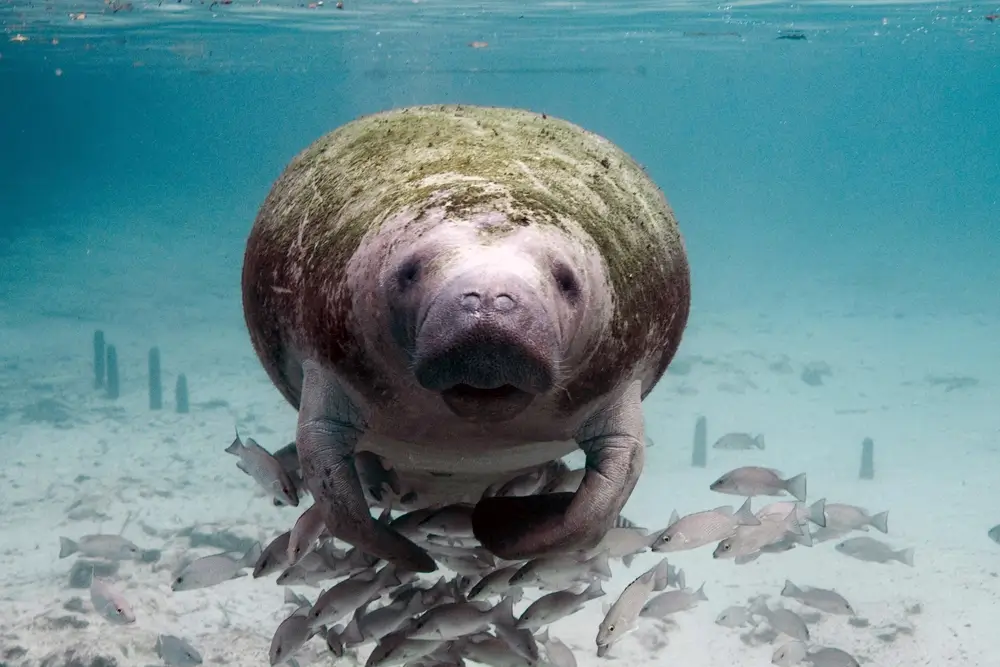
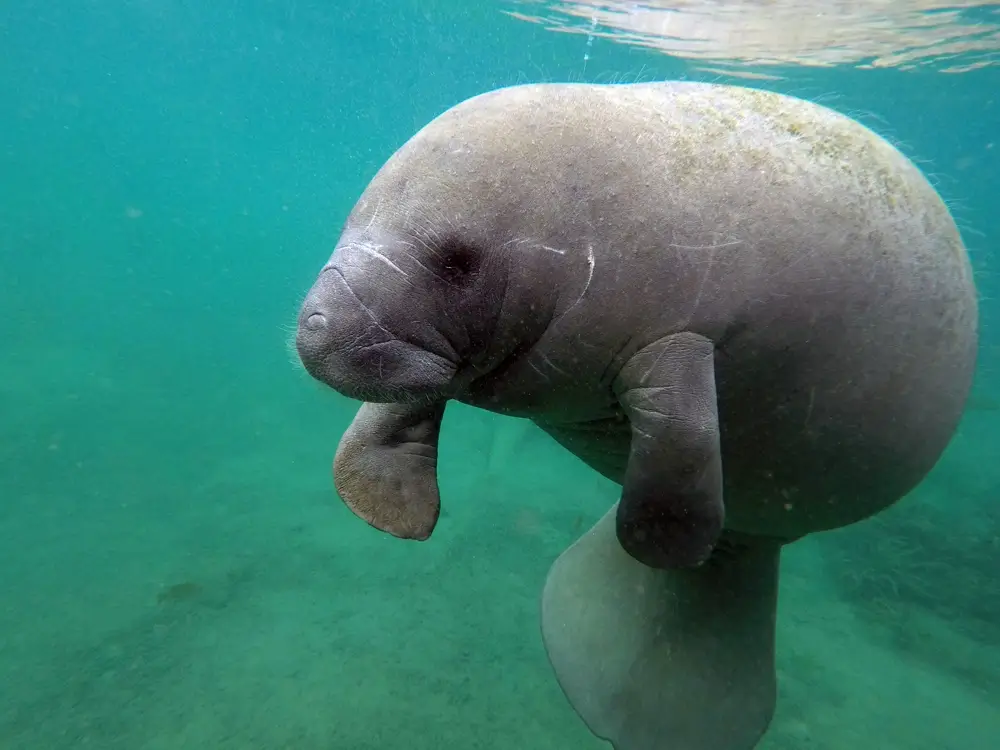
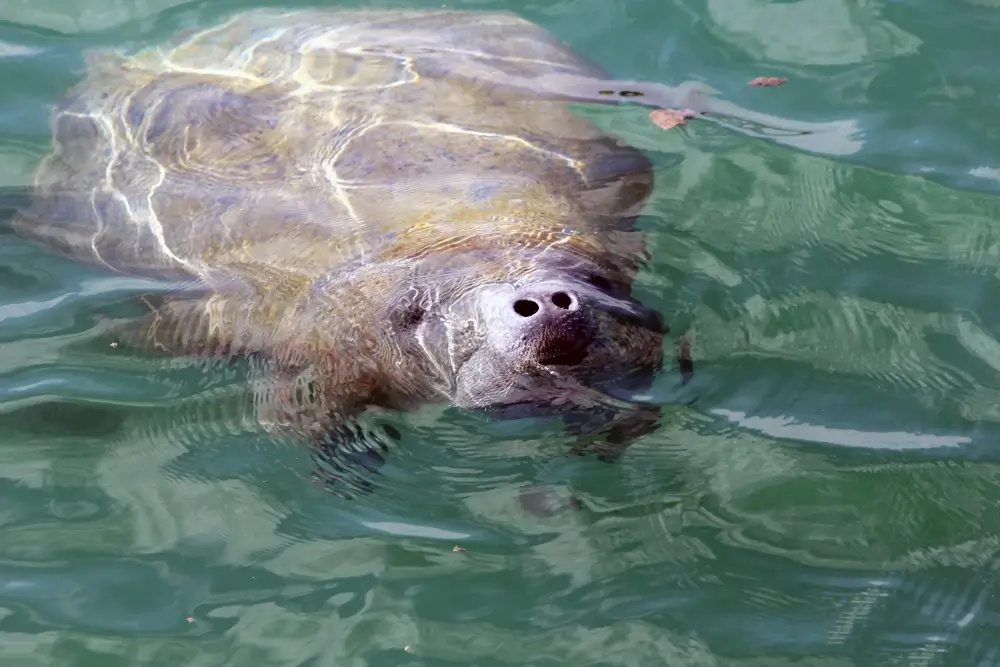
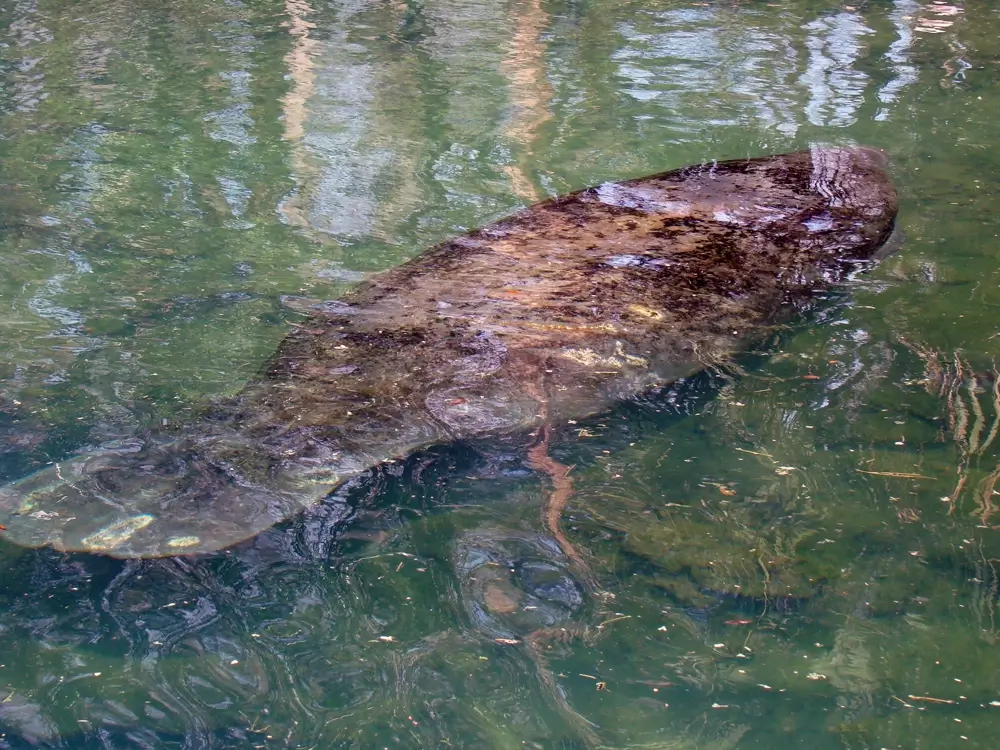
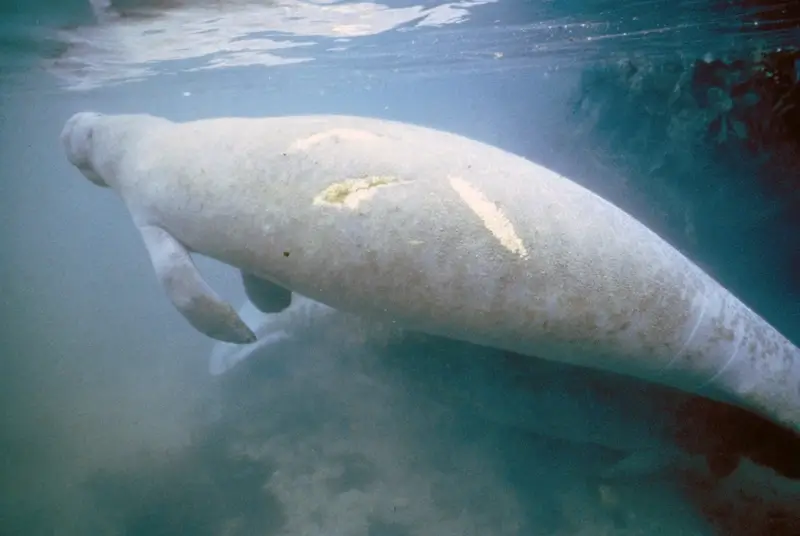
The West Indian manatee is an aquatic mammal. Adults are about 10 feet (3 m) long and can weigh up to 1,000 pounds (453.6 kg).
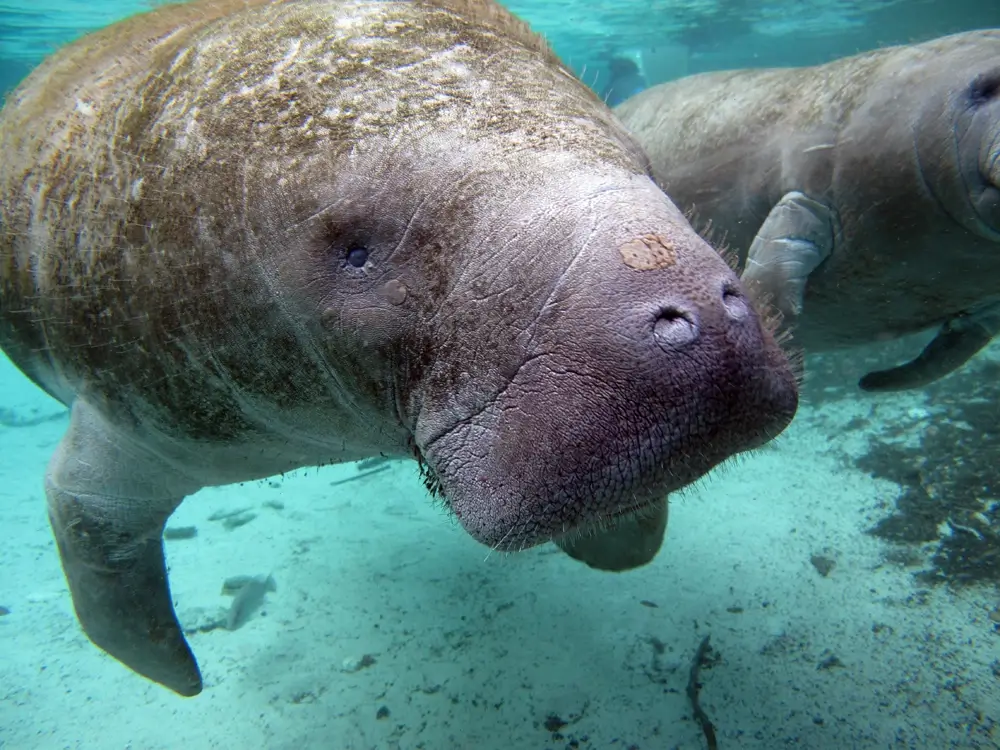
It is gray or brown and has a very light covering of fur. It has a broad head with a big upper lip that has short whiskers on it. It has a large, flat, round paddle-like tail and large front flippers. It has no hind flippers or external ears.
Habitat
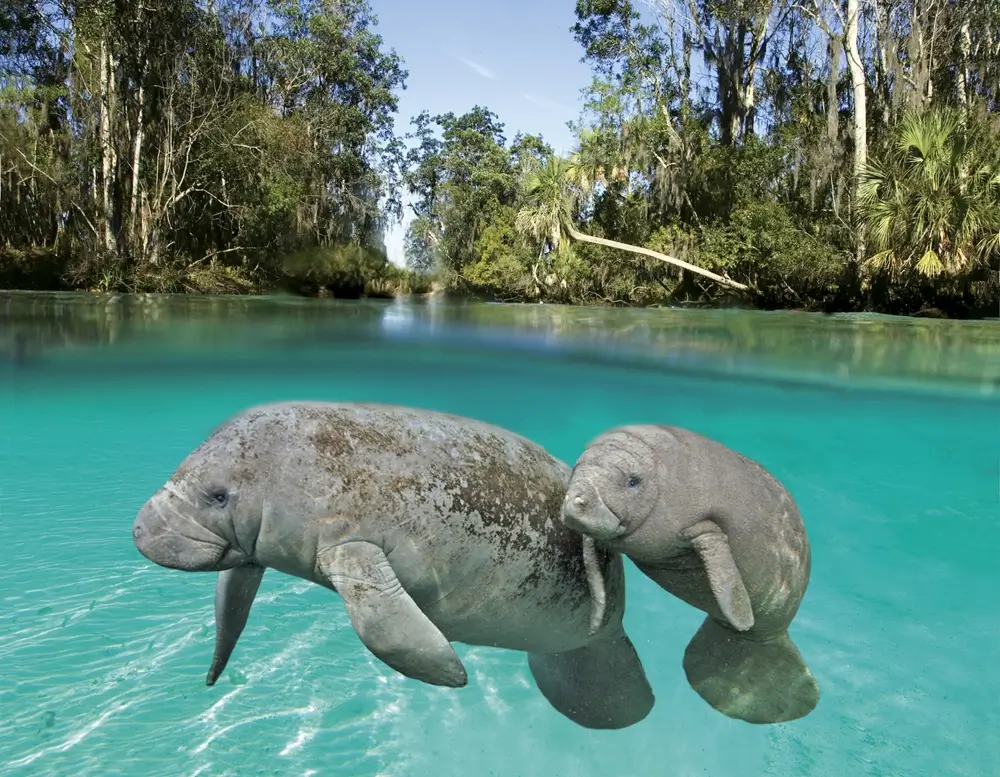
The West Indian manatee lives in shallow coastal waters, rivers, bays, and lakes. The manatee cannot survive in water that is too cold. When the water temperature gets too cold, it migrates to warmer waters.
Diet
The West Indian manatee is an herbivore. It spends about five hours a day eating. It eats aquatic plants like water hyacinth and hydrilla. It uses its lips, bristles, and flippers to grab plants. An adult manatee eats as much as 60 to 100 pounds (27-45 kg) of vegetation a day.
Life Cycle
The West Indian manatee can mate at any time of the year. The female manatee reaches breeding age when she is nine years old. When a female is ready to mate, she may be followed by up to 20 males. The males will push and shove each other to try to get closer to the female. She may mate with more than one male.
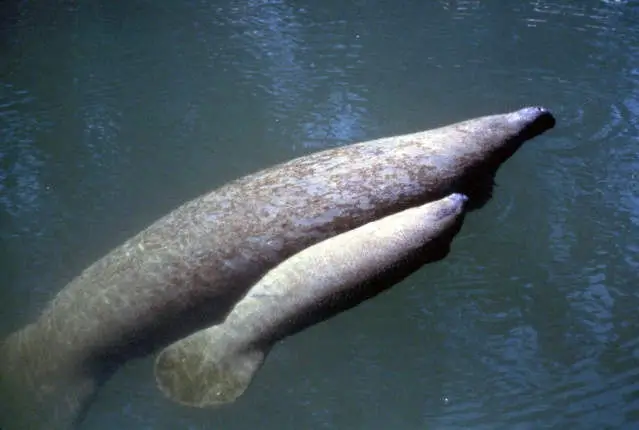
The female has one calf every two to five years. The female gives birth about a year after mating. The calf is born underwater. Right after birth, the mother brings it to the surface on her back. The calf nurses underwater. It may continue to nurse for up to two years.
In the wild, the West Indian manatee has an average lifespan of 30-40 years, although they can live to be 60. The most common dangers to West Indian manatees are getting hit by boats, getting tangled up in fishing gear, and habitat loss.
Behavior
The West Indian manatee is a nomad. It often moves from place to place in search of food. It can swim at speeds of up to 15 mph (24 kph) for very short distances, but it usually swims at speeds of 1-4 miles (1.6-6.4 km)per hour.
When it is not swimming, it hangs suspended in the water or rests on the bottom. It usually only stays underwater for four minutes, but it can stay submerged for as long as 15 minutes.
The West Indian manatee is usually silent, but it does vocalize with squeals, chirps, and screams.
Did You Know?
The West Indian manatee is an endangered species in the United States. It has few natural predators, but because it swims so slowly it is often injured or killed by boat propellers. It can also get caught in fishing nets.
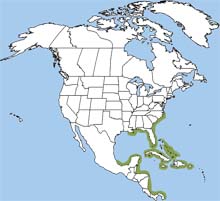
In the United States, the West Indian manatee is found in the coastal waters of the southern Atlantic Ocean from North Carolina to Florida and the Gulf Coast. In the winter, it is usually only found in Florida. It is also found in the Caribbean, Central America, and South America.