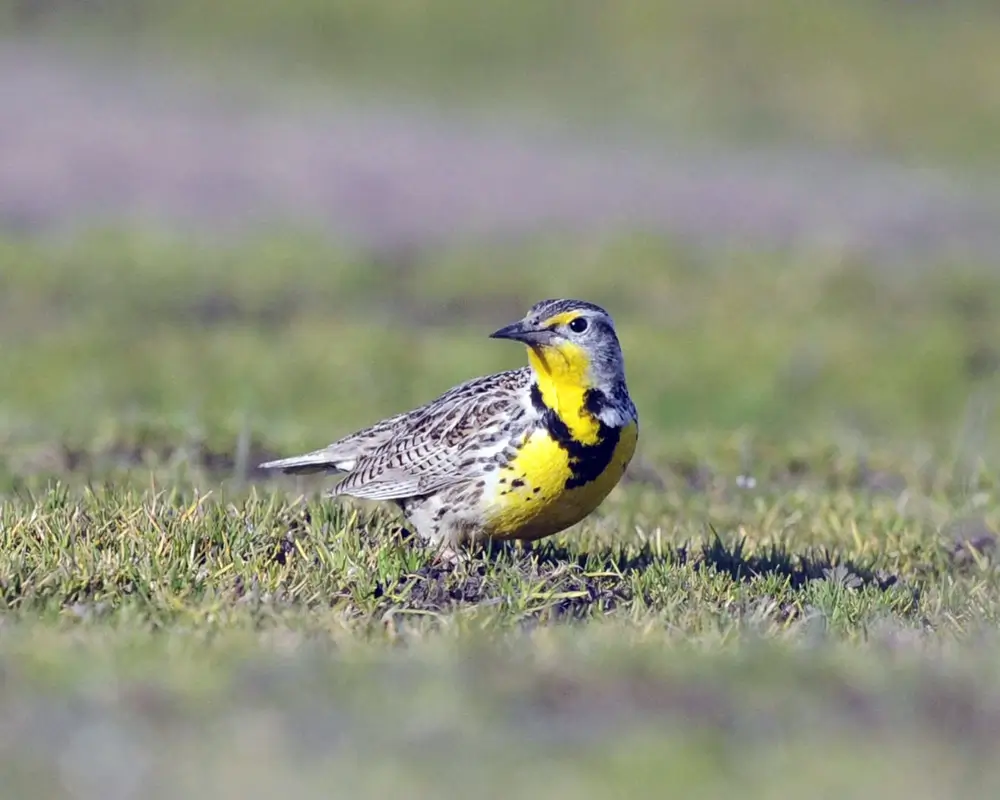
Western Meadowlark

Sturnella neglecta

Kingdom
Phylum
Class
Order
Family
Genus

Characteristics

The western meadowlark is 6.3–10.2 inches (16–26 cm) in length and has a wingspan of 16.1 inches (41 cm). It weighs 3.1–4.1 ounces (88–116 g).

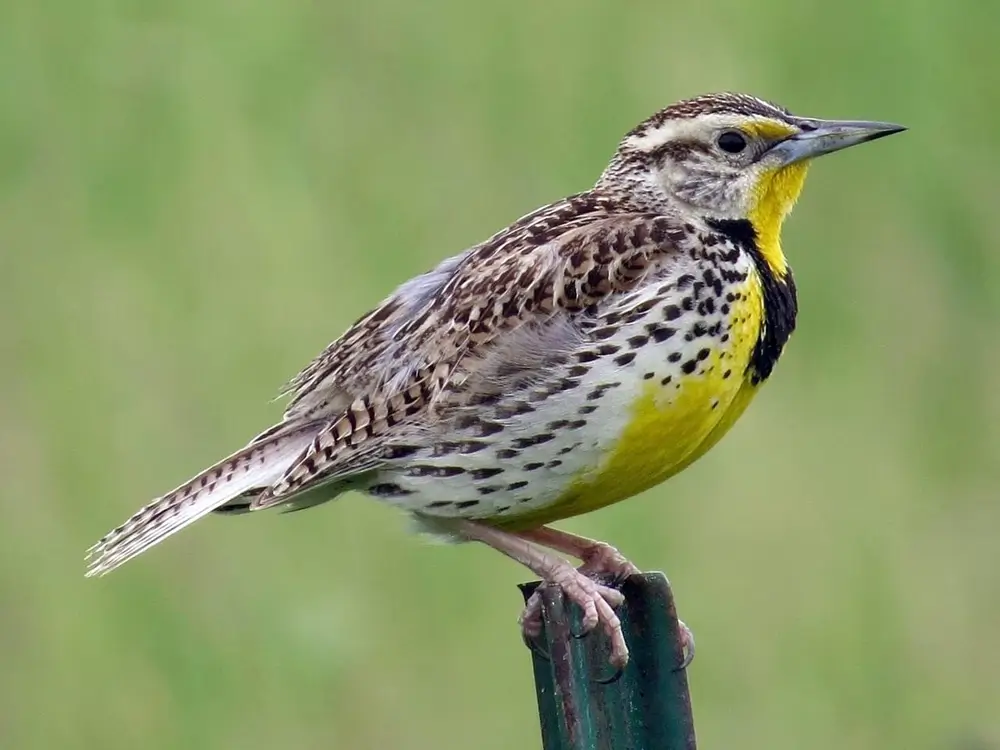
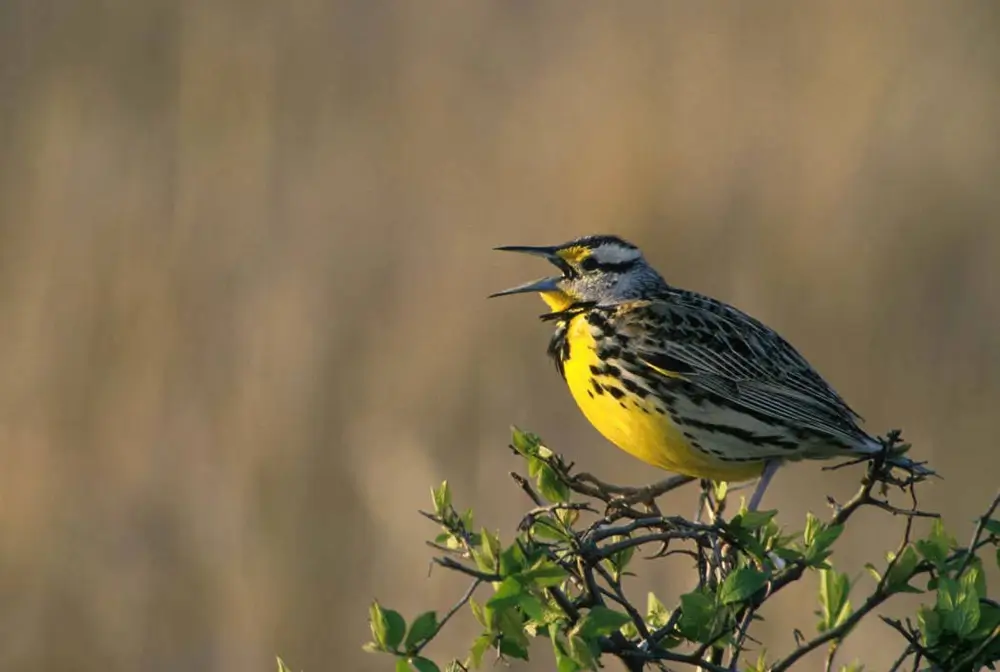
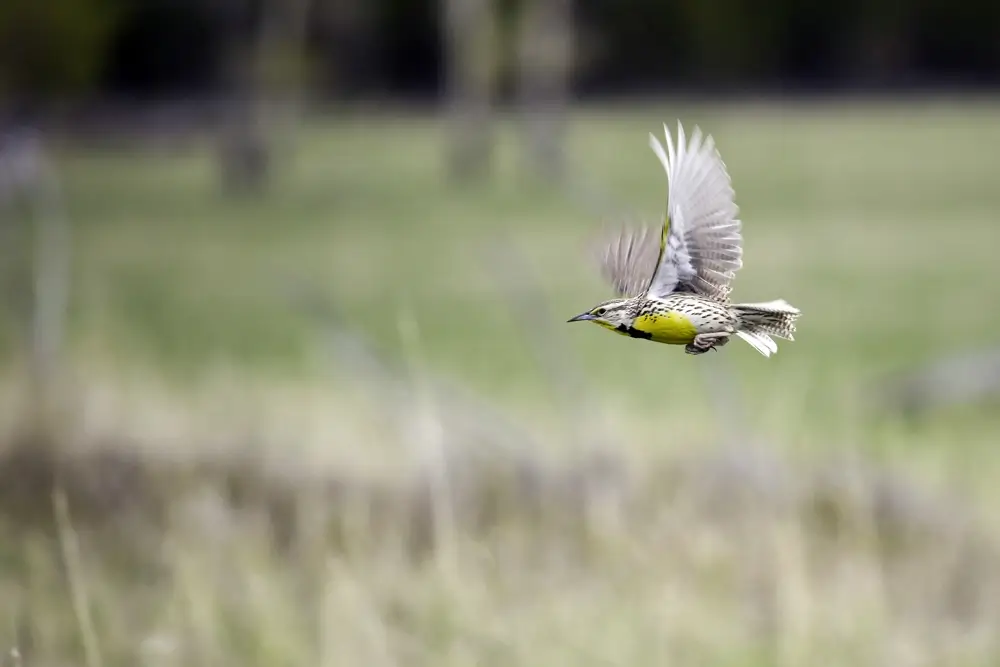
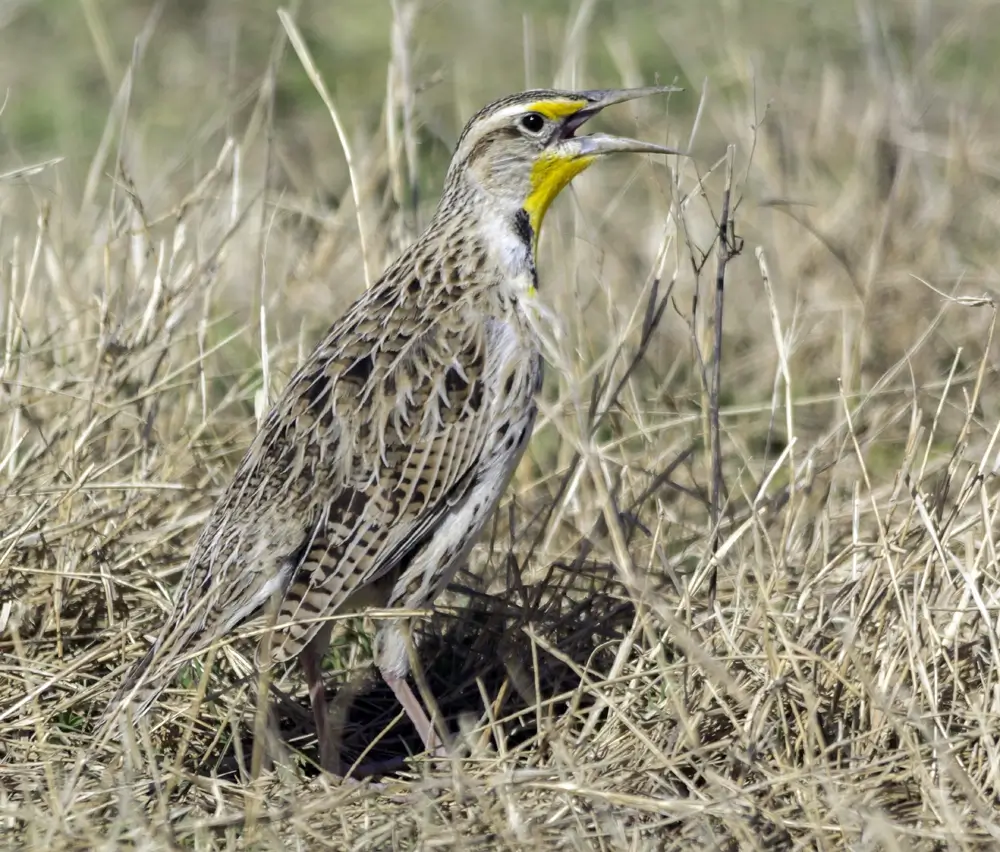
It has a brown and black back and wings, a long pointed bill, and a bright yellow chest with a black V on it. The meadowlark’s colors may be a little duller in winter.

Habitat

The western meadowlark is found in meadows, plains, prairies, and other open grasslands.

Diet

The meadowlark’s diet is mostly insects like caterpillars, and grasshoppers, although it sometimes eats seeds.

Life Cycle

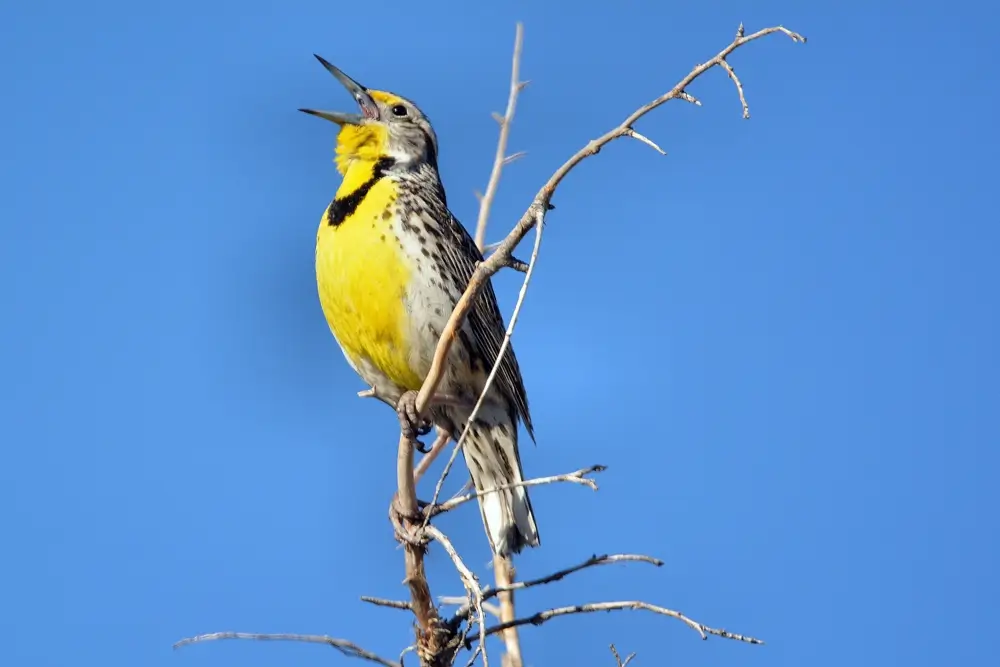
The male meadowlark uses visual displays to attract a mate. When he finds a female that he wants to mate with, he points his bill in the air, puffs out his yellow throat, and flaps his wings above his head. If that doesn’t get the female’s attention, he hops up and down.

The western meadowlark builds its nest on the ground. The female finds a depression in the ground and shapes it by digging in the dirt with her bill. She lines the depression with soft grass and makes a roof by pulling grass and plants over the depression. She then weaves in grass to make a waterproof dome, leaving enough space for an opening.

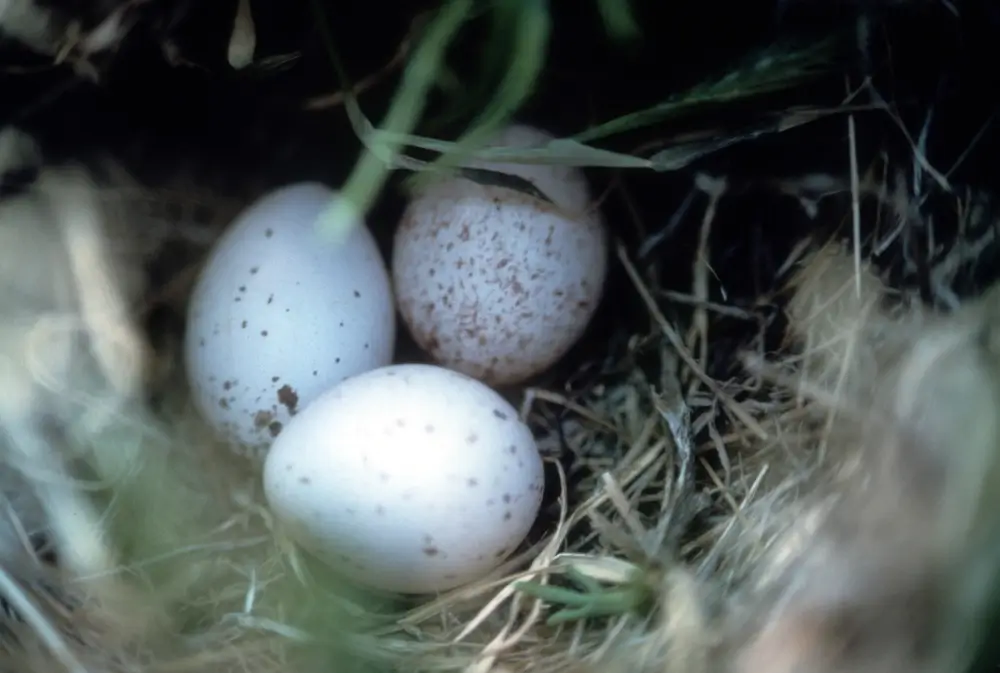
The female lays 3-7 eggs. It takes about 12 days for the eggs to hatch. The meadowlark usually has two broods a year. The male protects the nest by noisily chasing intruders away. The western meadowlark has a lifespan of 5-8 years.

Behavior

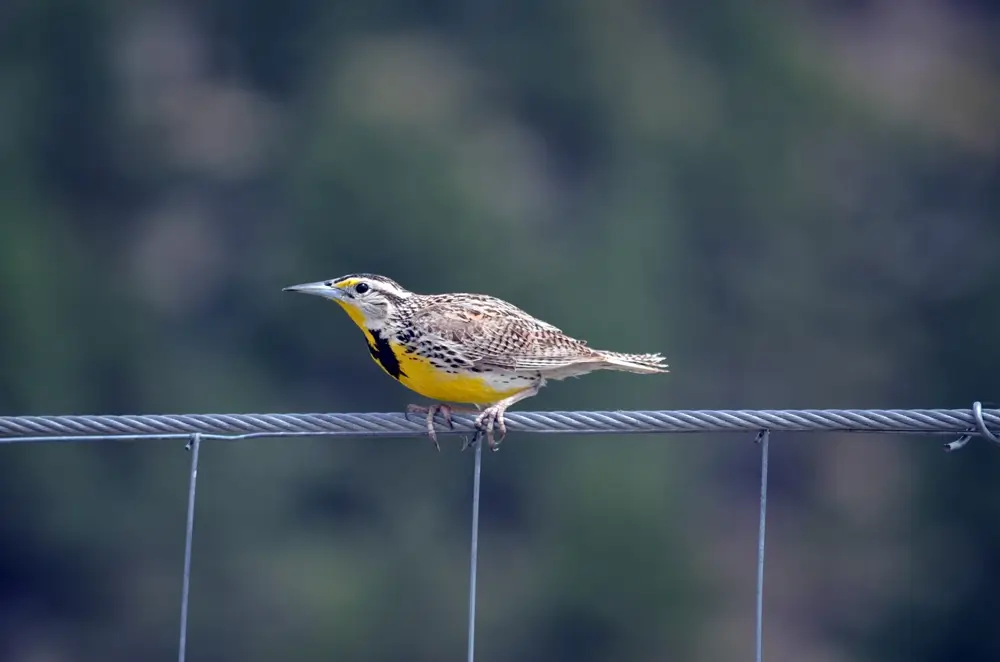
The male meadowlark arrives at the breeding ground a couple of weeks before the female. It likes to perch on fences, poles, and wires to claim and guard its territory. A male’s home range is usually about six or seven acres. If another male invades his territory, he may get into a fight with the intruder. Fighting meadowlarks lock their feet together and peck at each other with their beaks.

Did You Know?

The western meadowlark is very similar to the eastern meadowlark. The western meadowlark’s yellow color extends a little further onto its cheek. The songs of the two meadowlarks are the easiest way to tell them apart.

The song of the western meadowlark is a series of flute-like gurgling notes that go down the scale. The eastern meadowlark’s call is a simpler series of whistles.


Support for NatureWorks Redesign is provided by: 

The Western Meadowlark in NH

World Status: Least Concern

Listen Here

Todd Wilson, xeno-canto.org
western meadowlark

Range

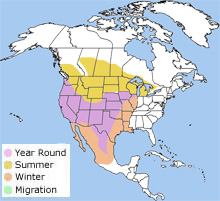
The western meadowlark is a short-distance migrator. Its range stretches from British Columbia to northern Michigan and south to northern Mexico.