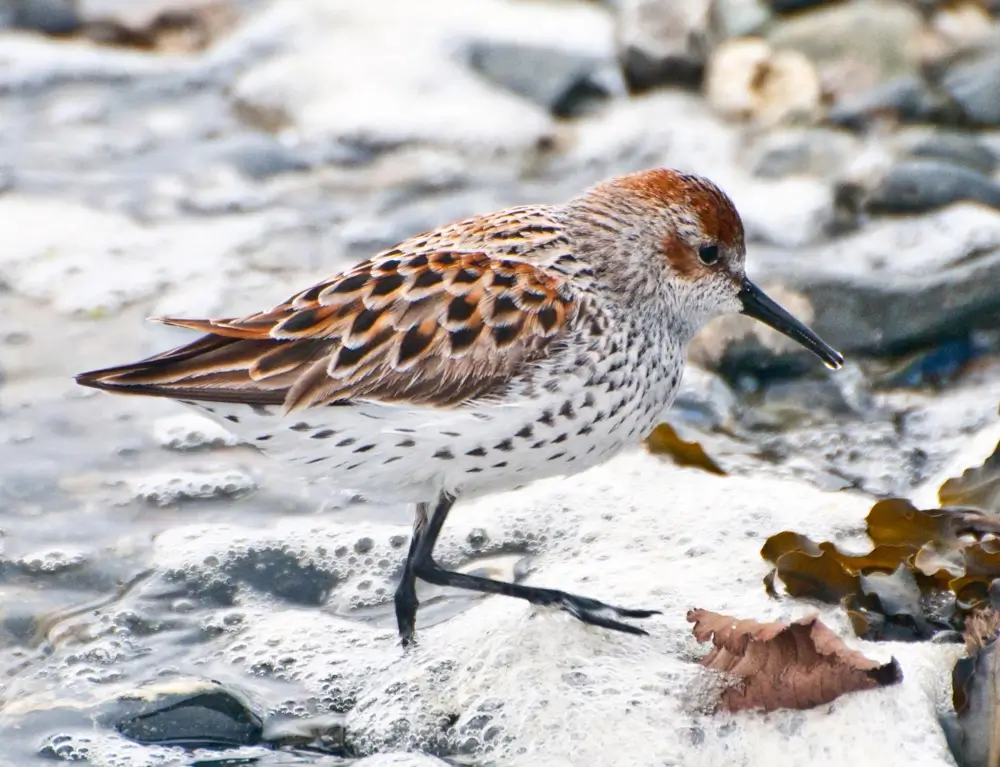
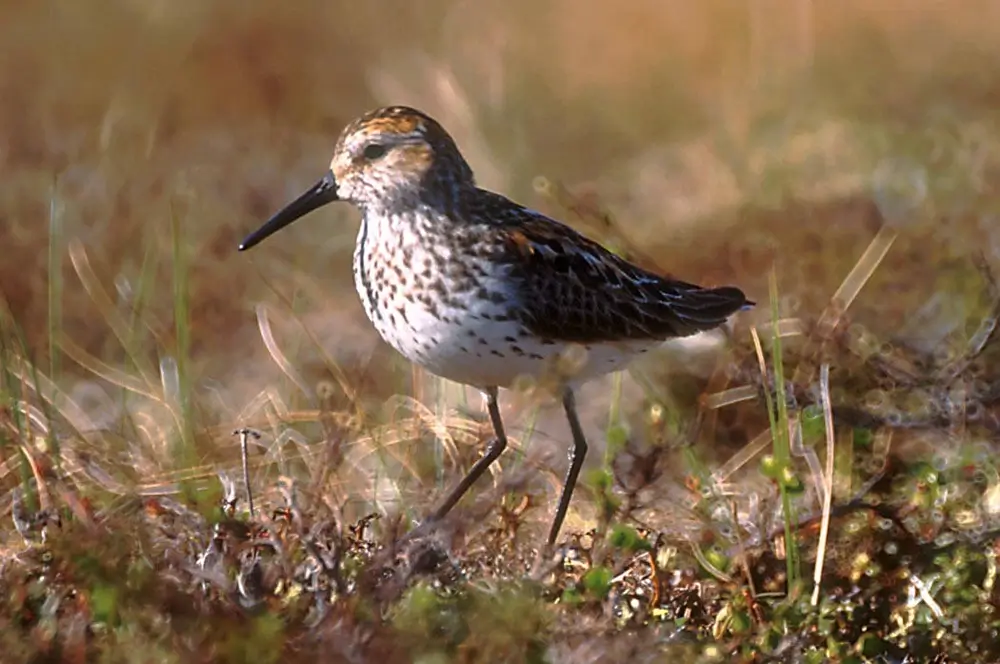
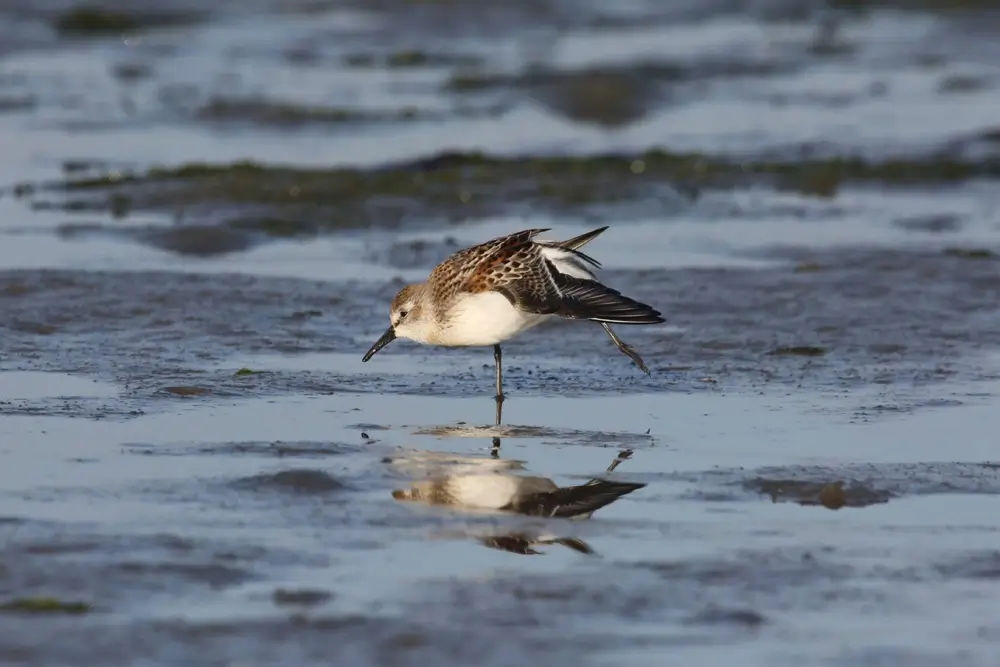
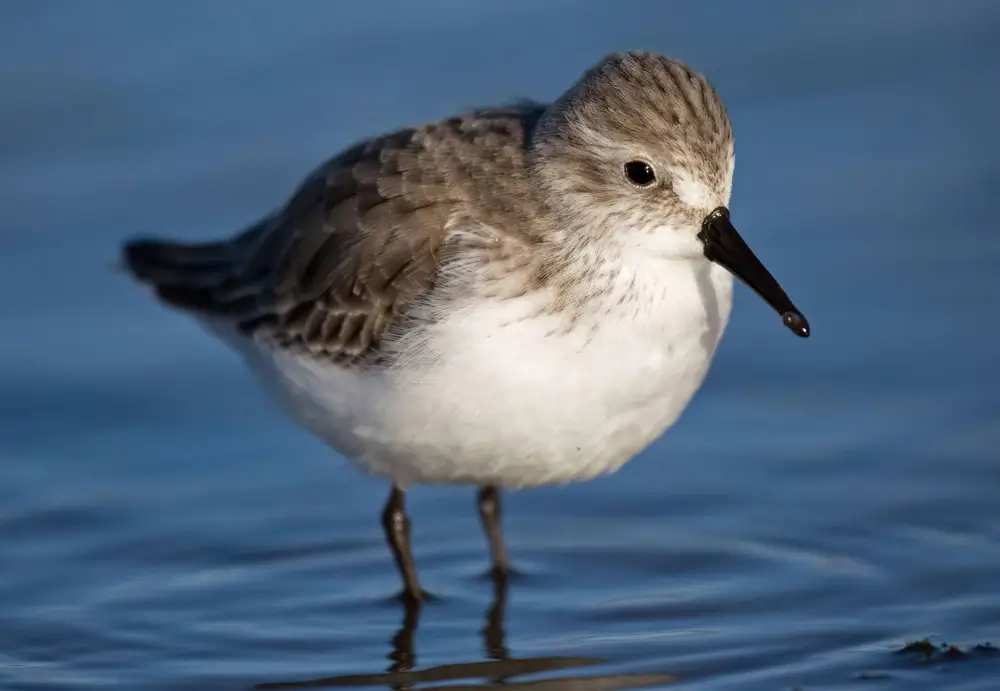
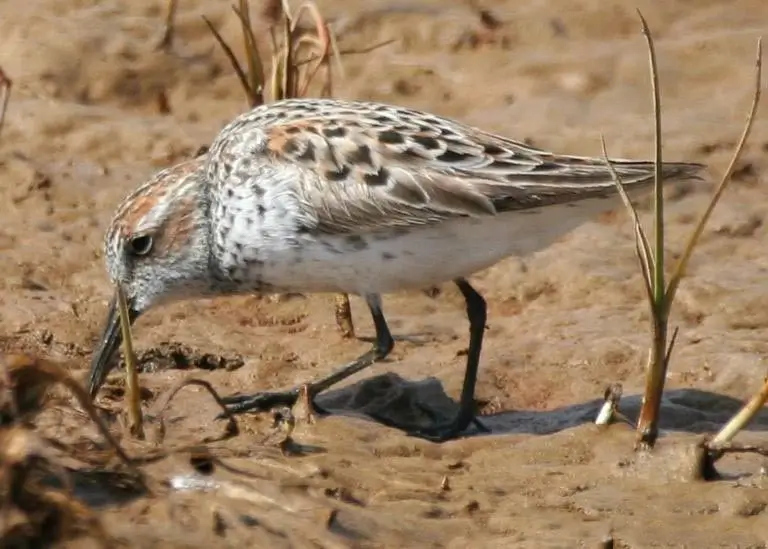
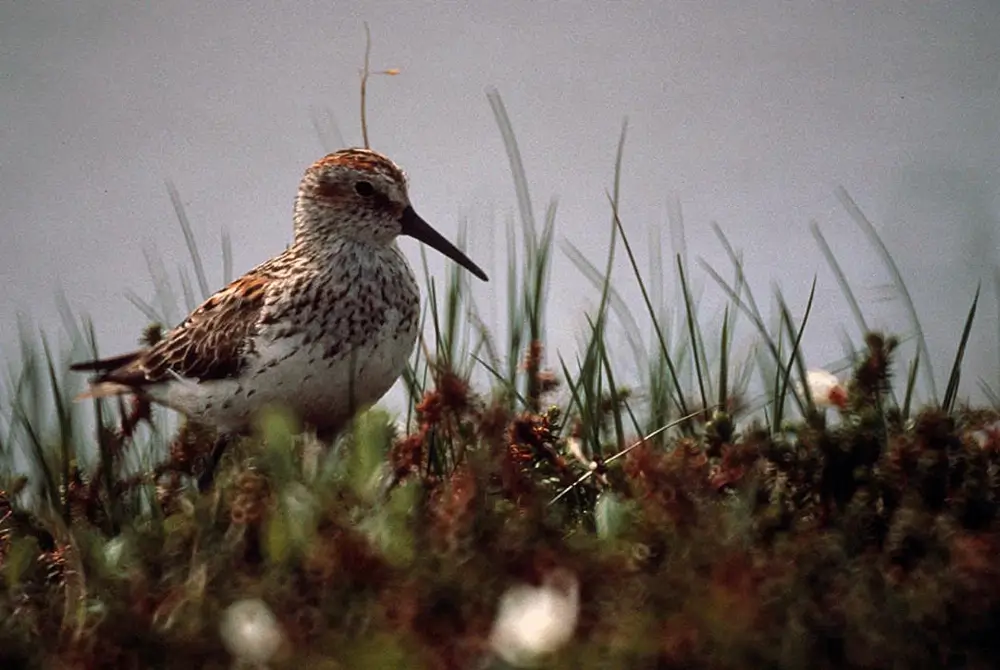
It is 5.5–6.7 inches (14–17 cm) in length and has a wingspan of 13.8–14.6 inches (35–37 cm). It has white undersides, a long bill with a little droop at the end, long legs, and slightly webbed feet.
In the summer, its crown and upper back are a rusty brown. It has a black line on its rump that runs to its tail. In the winter, its crown and upper back are gray.
Males and females look alike, but the female is a little larger and has a slightly longer bill.
Habitat
In breeding season, the western sandpiper is found on coastal tundras. In the winter, it is found on mudflats, beaches, lakes, ponds, and flooded fields.
Diet
On its breeding ground, the western sandpiper eats mostly flies and beetles along with other insects, spiders, and small crustaceans.
During migration and in the winter, its diet depends on where it is. In coastal areas, it eats crustaceans, small mollusks, marine worms, and insects. Inland, it eats mostly insects.
Life Cycle
The male sings and flies over the nesting territory to attract a mate. He also may approach a female in a crouched position and make a trilling call. The male makes several scrapes in the ground and lines them with sedges, lichen, and leaves. The female chooses one of the scrapes as her nesting site.
The female western sandpiper lays 3-5 eggs. Both the male and the female incubate the eggs. The female may leave before the eggs hatch, and the male will take over incubating the eggs.
The chicks hatch in 20-22 days and can feed themselves right after hatching. If the female stays, both parents care for the chicks. If she leaves shortly after the chicks hatch, the male will care for the chicks. The chicks fledge when they are 19-21 days old.
The western sandpiper has a lifespan of 7-8 years.
Behavior
During migration, the western sandpiper may gather in large flocks made up of hundreds of birds.
Did You Know?
Support for NatureWorks is provided by:
The Western Sandpiper in NH
The western sandpiper does not breed in New Hampshire, but it has been known to show up in the state as a vagrant.
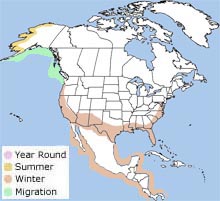
The western sandpiper breeds in western Alaska and winters along the Pacific Coast from Oregon to Peru, along the Atlantic Coast from New Jersey south to South America, and along the Gulf Coast.