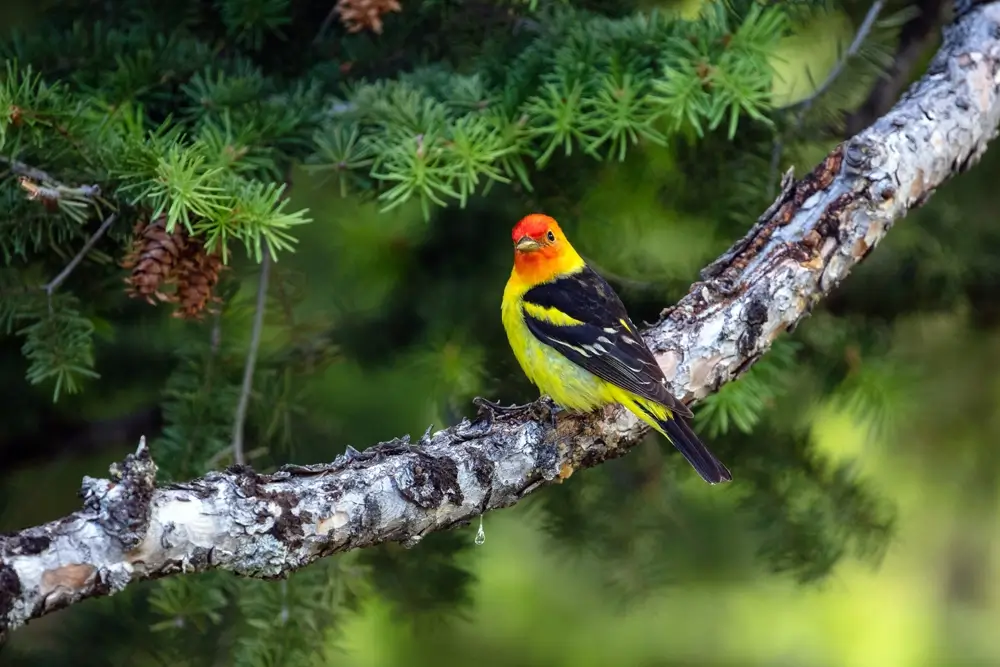
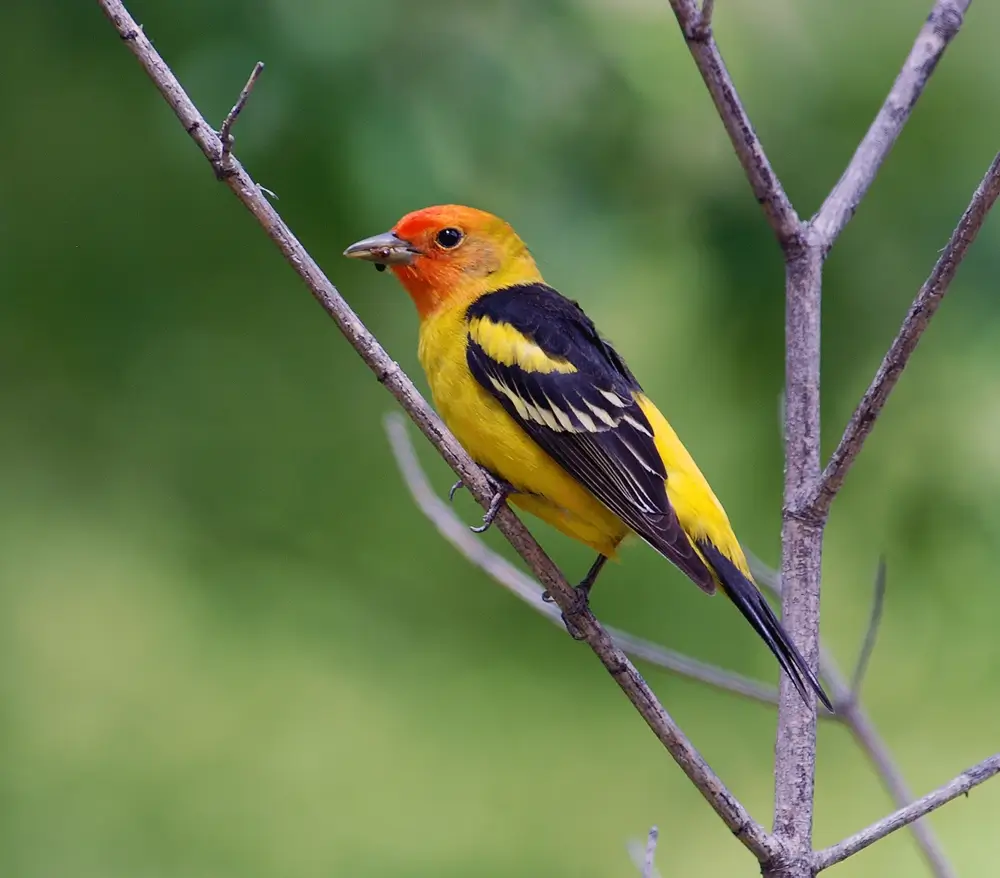
The western tanager is 6.3-7.5 inches (16-19 cm) with a wingspan of 11.5 inches (29 cm).
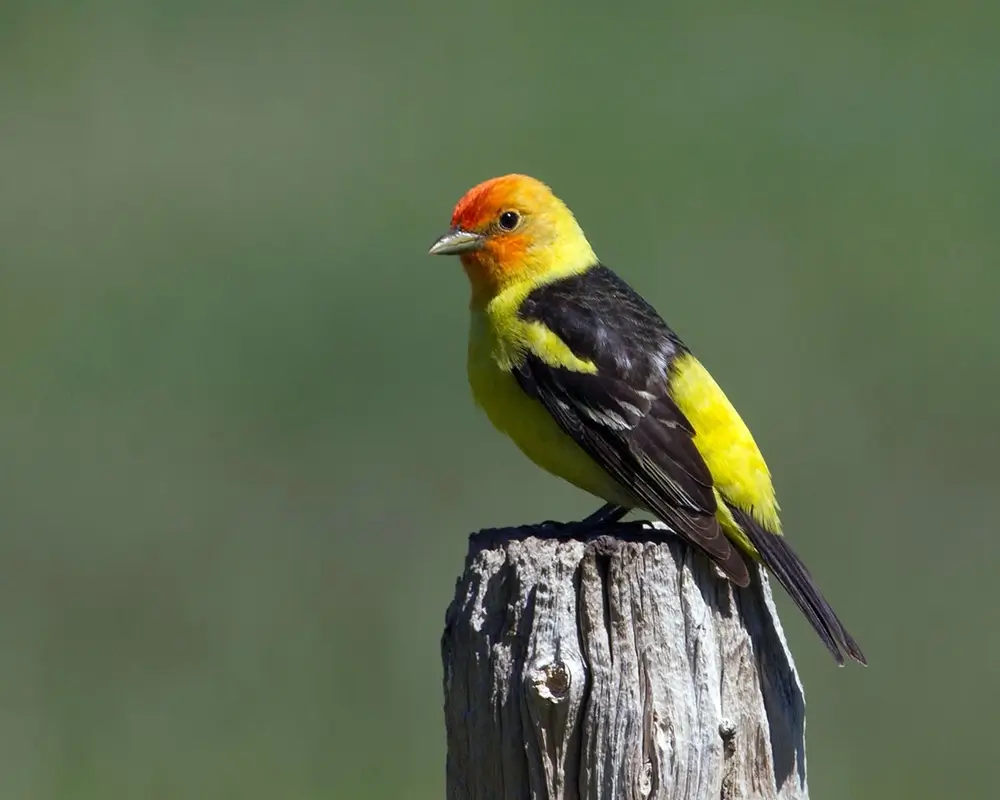
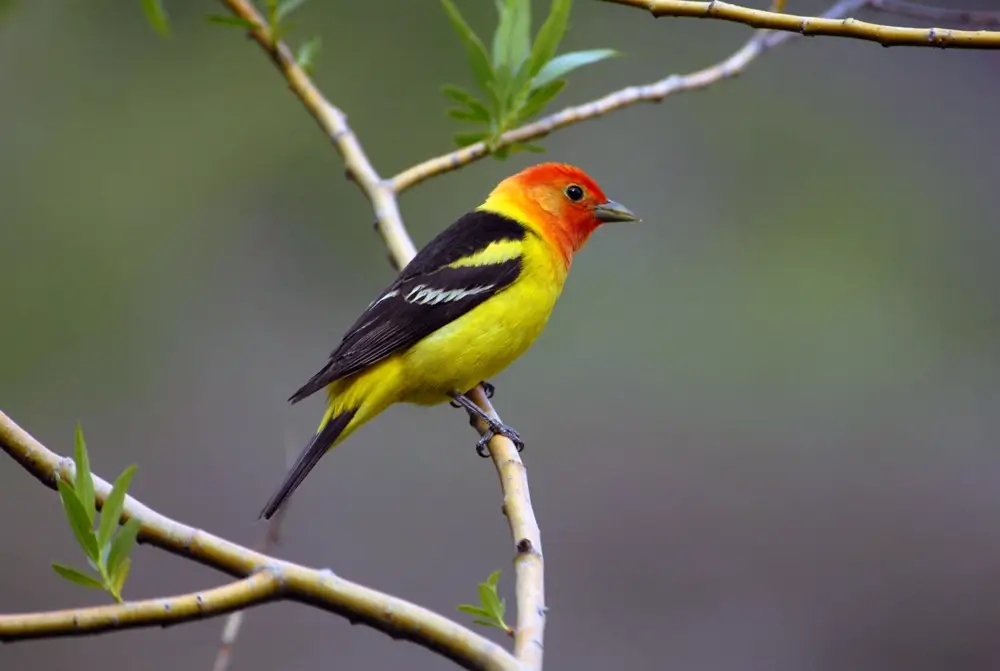
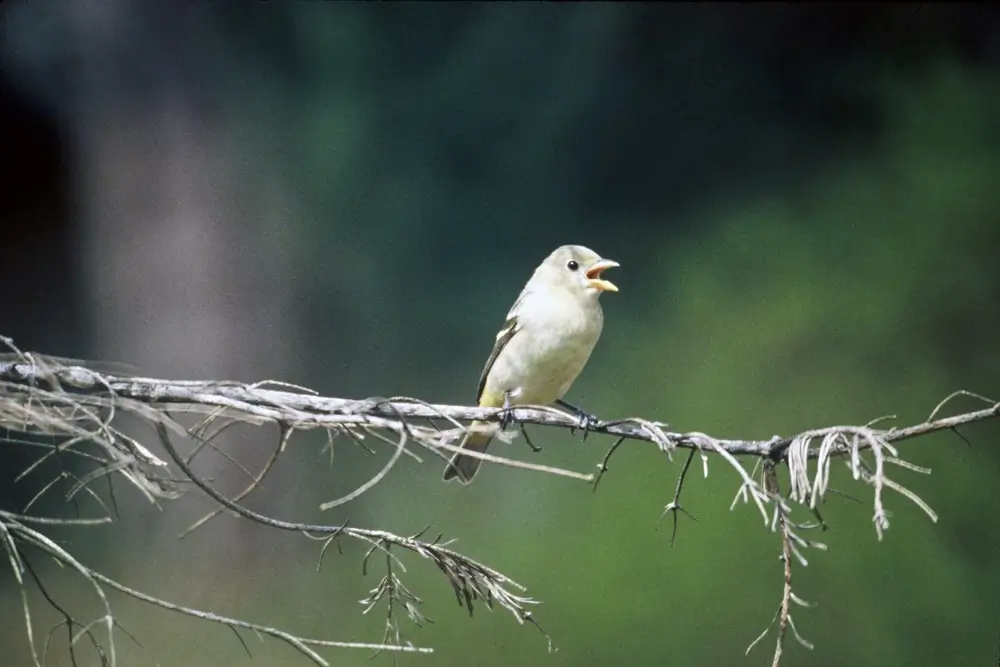
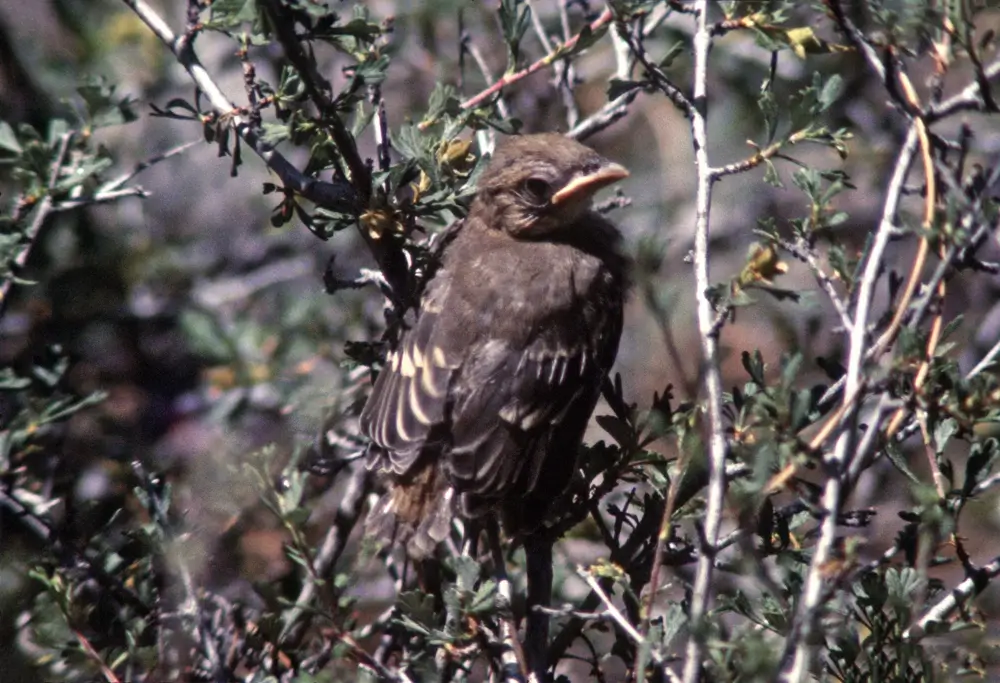
The male western tanager has a bright red head, a bright yellow body, and black wings. The female western tanager is greenish-yellow on top and yellow on her underside. Both males and females have two wing bars. The top wing bar is yellow and the bottom one is white.
Habitat
The western tanager breeds in open coniferous forests and mixed deciduous-coniferous forests. It is found at elevations of up to 10,000 feet (3,048 m).
It winters in open mountain pine woodlands and in parks and gardens.
Diet
The western tanager eats fruits and insects. It forages for food in the trees and shrubs. It also catches insects in the air.
Life Cycle
The female western tanager lays 3-5 eggs in a cup-shaped nest made of woven bark, grass, and weeds. The nest is placed in the fork of a tree. The female incubates the eggs.
The eggs hatch in about two weeks. Both parents care for the chicks.
The western tanager has an average lifespan of around 8 years.
Behavior
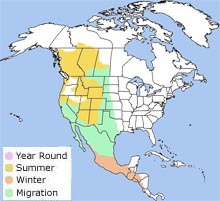
The western tanager is a long-distance migrator. Every year, it travels between its wintering grounds in Mexico and Central America to its breeding grounds in western North America.
The western tanager is found in the western United States and Canada. It breeds from southern Alaska and the Northwest Territories of Canada south through the western United States.
It winters in Mexico and South America and occasionally in Southern California.