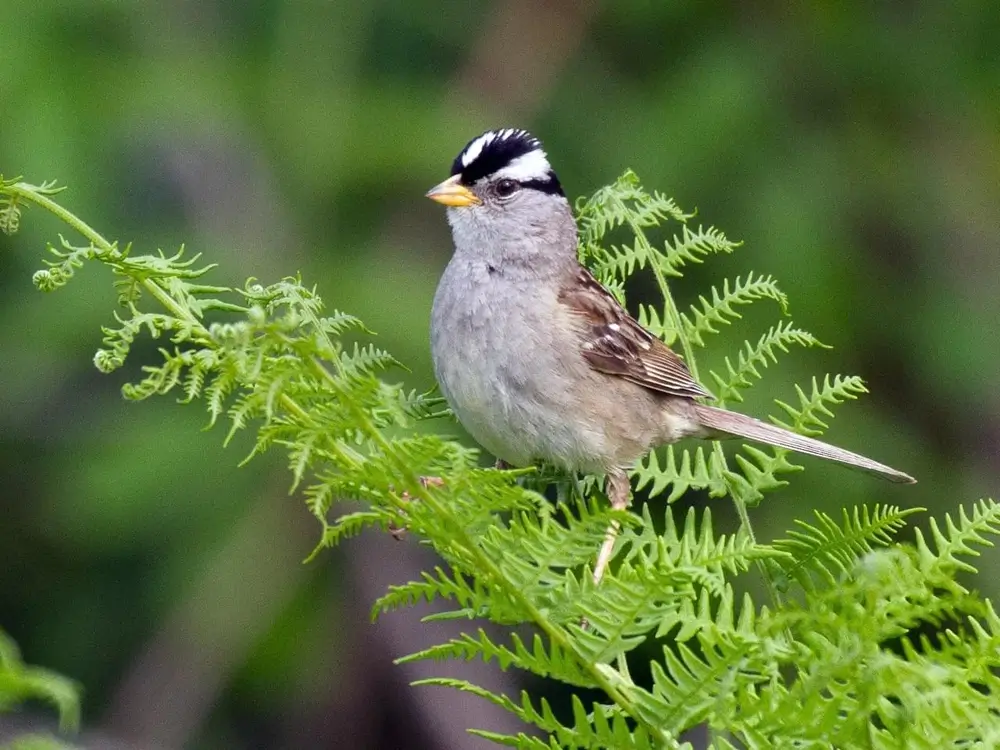
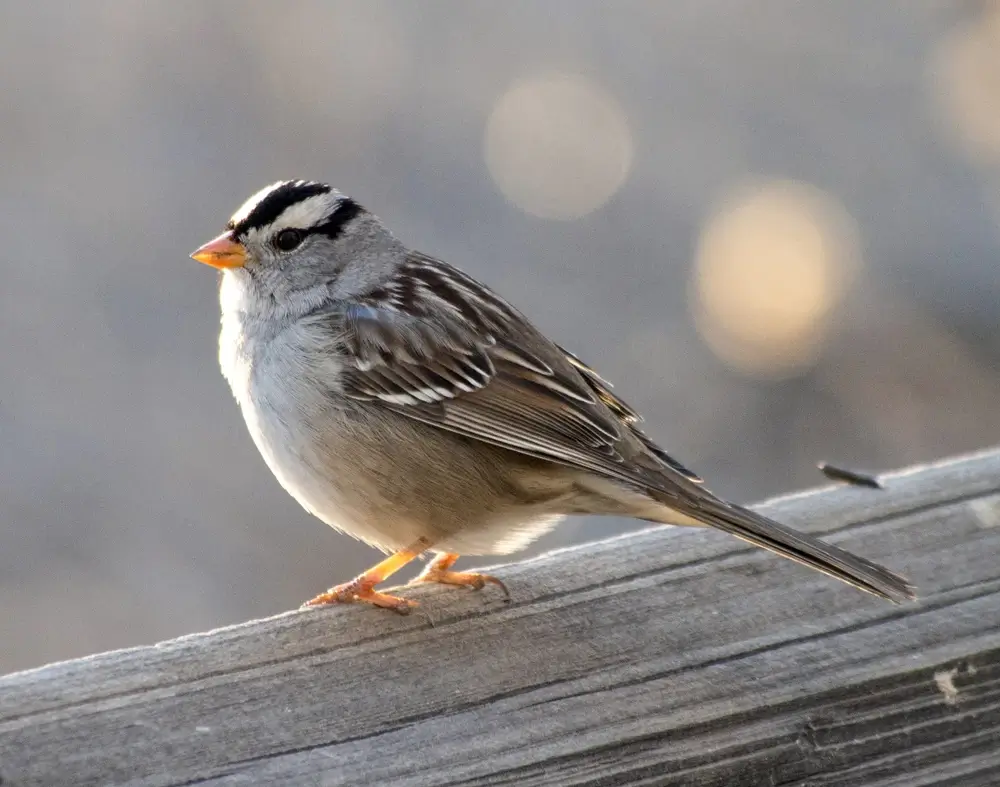
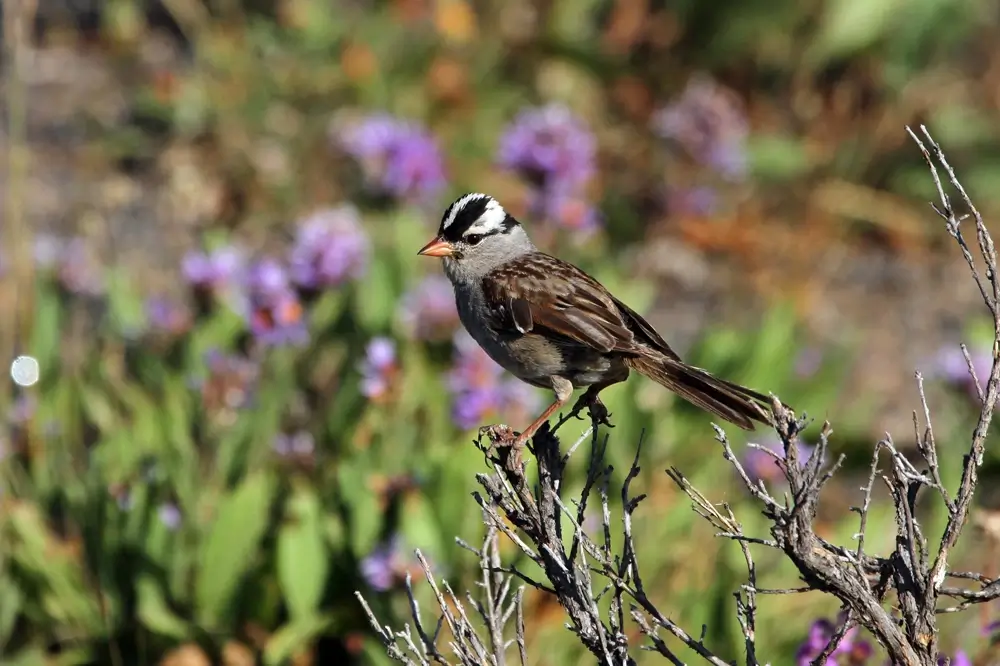
The white-crowned sparrow is 6-7 inches (15.2-17.8 cm) in length with a wingspan of 8-9 inches (20.3-22.9 cm).
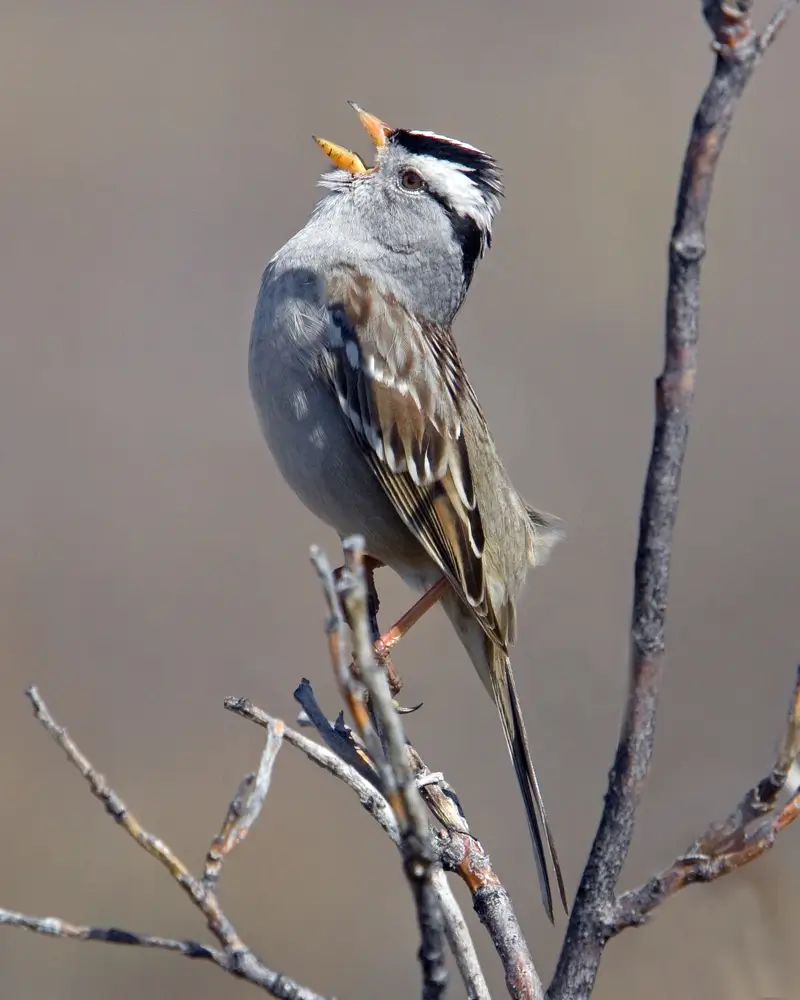
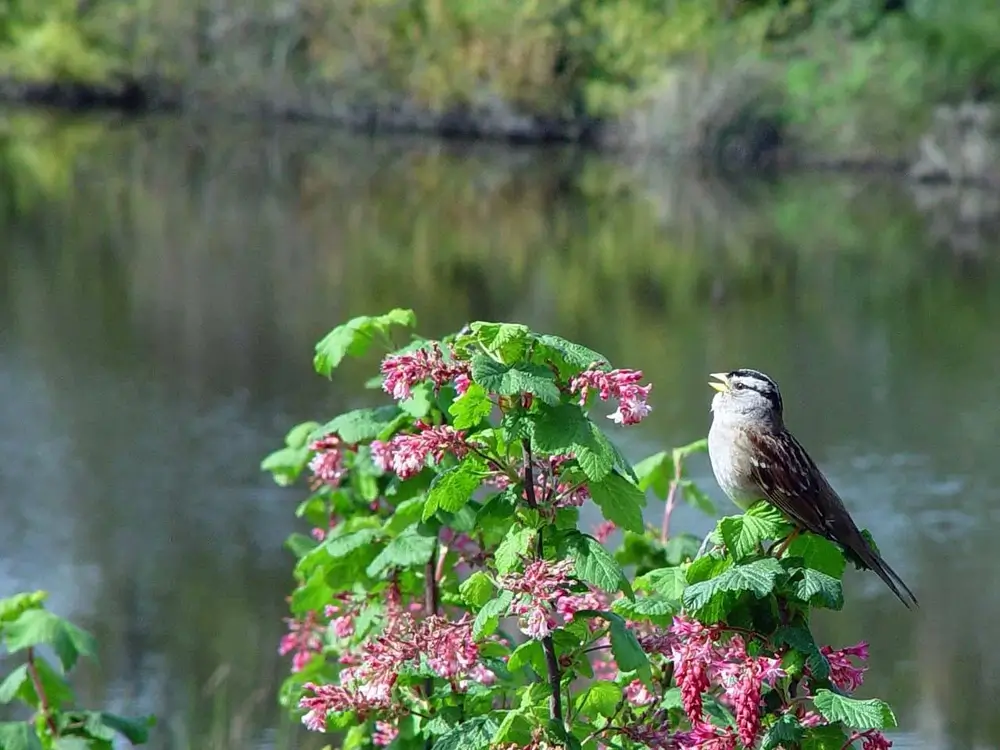
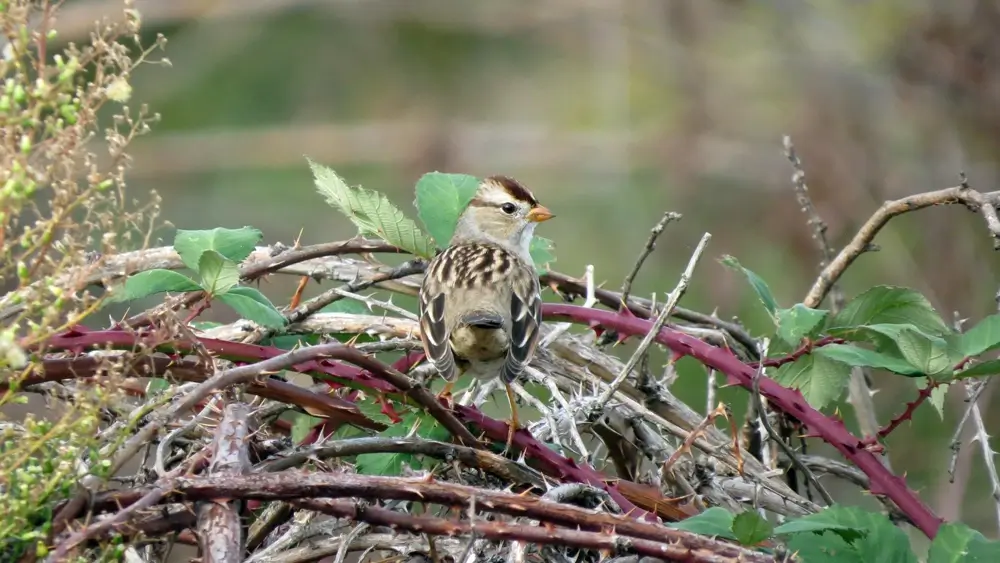
It has two black stripes that run along the crown of its head and behind its eyes, and a white stripe on its forehead that runs between the two black stripes. It has a pearly gray breast and belly and brown streaked upper parts. It has thin white bands on its wings, a long tail, yellowish legs, and a small pinkish-orange bill
Habitat
The white-crowned sparrow breeds in the tundra, in coniferous forests, and in alpine meadows. It is very adaptable. It likes habitats with tall coniferous trees and grassy areas with some cover. It winters in open woods and gardens.
Diet
The white-crowned sparrow eats seeds, buds, grass, and fruit. It mainly feeds on the ground in areas with some cover. It scratches the ground with its feet to uncover food. It may also eat some insects.
Life Cycle
The male white-crowned sparrow arrives at the breeding grounds first. He aggressively protects his territory. If he is threatened, he puffs out his chest, his crown feathers stand up, and he sings loudly.
The female lays 3-7 eggs in a cup-shaped nest made of sticks, leaves, bark, feathers, pine needles, and grass. The nest is placed on the ground or in a shrub.
The female incubates the eggs. Incubation takes about 12 days. The male brings food to the nest for the chicks. The chicks fledge 10 days after hatching.
The white-crowned sparrow has a lifespan of around 16 months.
Behavior
Different groups of white-crowned sparrows have different “dialects.” When a male white-crowned sparrow is young, it learns the song of its region from listening to the birds around it. A bird that lives at the edge of two areas may even learn the song of both regions.
Did You Know?
Scientists frequently study the white-crowned sparrow to learn more about how birds learn songs and how songs can vary depending on where a bird lives.
Support for NatureWorks Redesign is provided by:
The White-Crowned Sparrow in NH
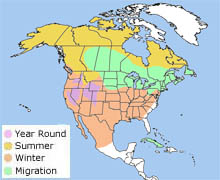
The white-crowned sparrow does not breed in New Hampshire, but it can be spotted in the state during its migration.
The white-crowned sparrow breeds from Alaska eastward across northern Canada and into the western mountains to northern New Mexico and southern California.
It winters from southern British Columbia, Canada, east to Michigan and New York, south to the Gulf Coast and Mexico.