The white-rumped sandpiper is a small shorebird 6-7 inches (15.24-17.8 cm) in length with a 16-17 inch (40.6-43.2 cm) wingspan.
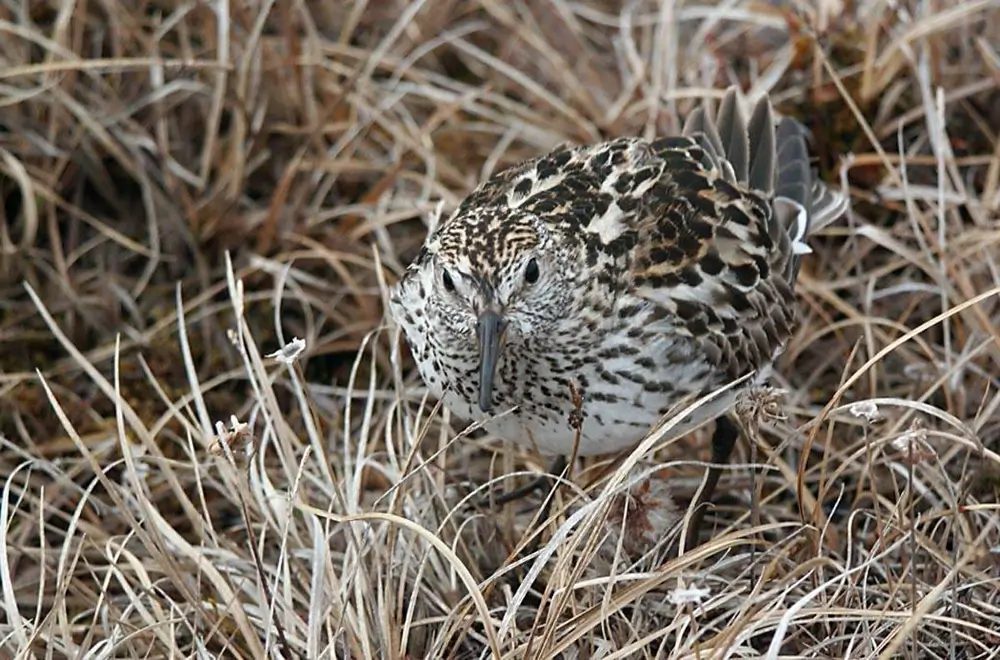
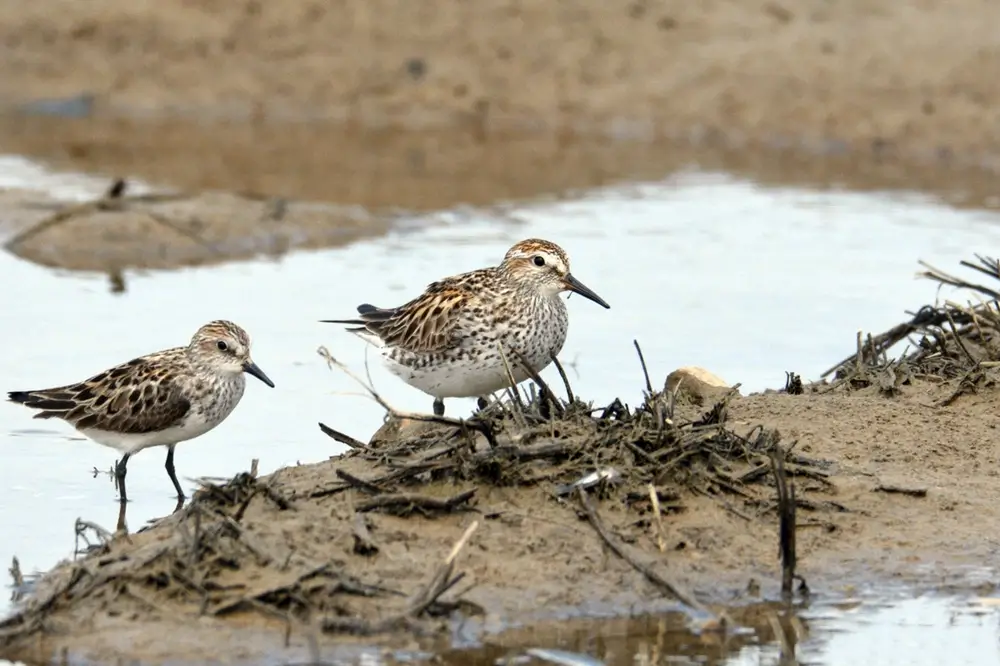
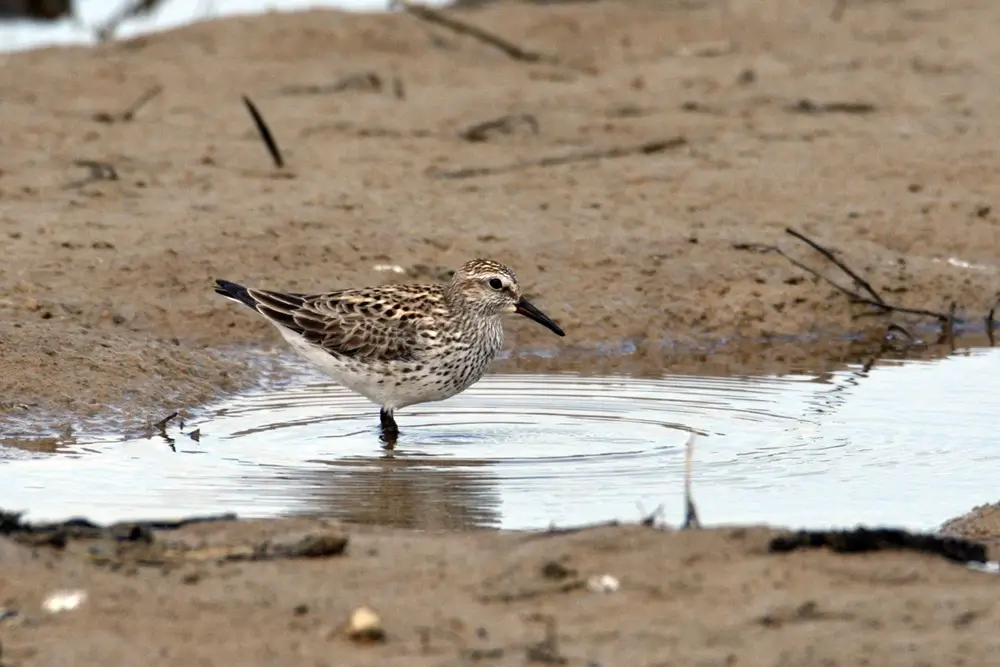
It has a short, pointed, black bill; a white stripe over its eyes; long black legs; a medium-sized neck; and a brown back marked with black. It has a brown-streaked breast and a white belly and rump.
Its pointed wingtips extend beyond its tail when it is at rest. In the non-breeding season, it is a grayish brown. Males and females look alike.
Habitat
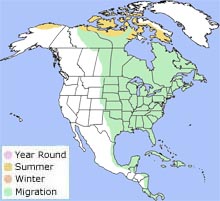
The white-rumped sandpiper breeds on the tundra. In the winter and during migration, it is found in marshes, on the shores of lakes and ponds, in flooded fields, on beaches, and on mudflats.
Diet
The white-rumped sandpiper forages on the ground or in the water for food. It eats insects, larvae, seeds, worms, mollusks, and crustaceans.
Life Cycle
The female white-rumped sandpiper lays 4 eggs in a grass-lined depression in the ground. The female incubates the eggs for 20-21 days. The chicks fledge when they are 16-17 days old.
The white-rumped sandpiper can live up to years in the wild.
Behavior
The white-rumped sandpiper is a long-distance migrator. It migrates in large flocks from the Arctic regions of Canada and Alaska to Argentina at the tip of South America.
Did You Know?
Support for NatureWorks is provided by:
The White-Rumped Sandpiper in NH
The white-rumped sandpiper does not breed in New Hampshire, but it can be spotted in the state during its migration.