The willow ptarmigan is a small grouse. It is 14–17 inches (35–43 cm) in length with a wingspan of 24–26 inches (60–65 cm).
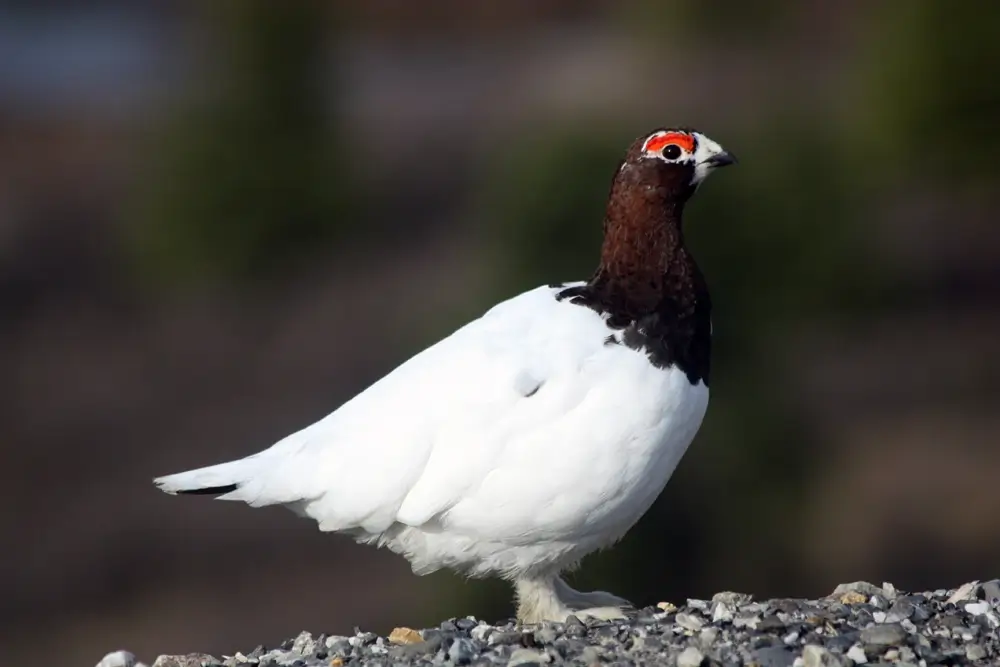
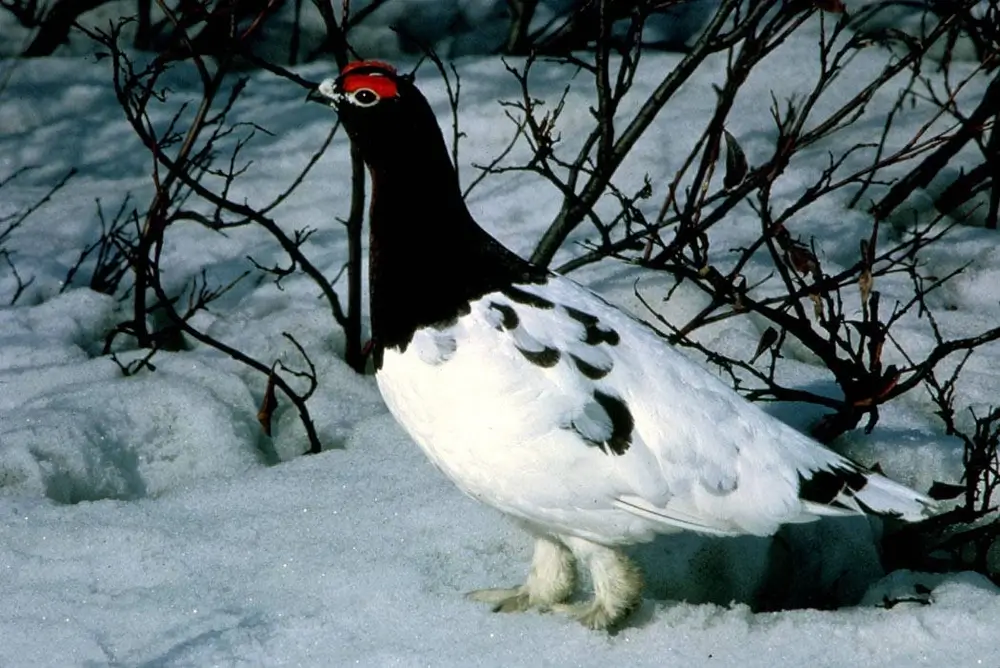
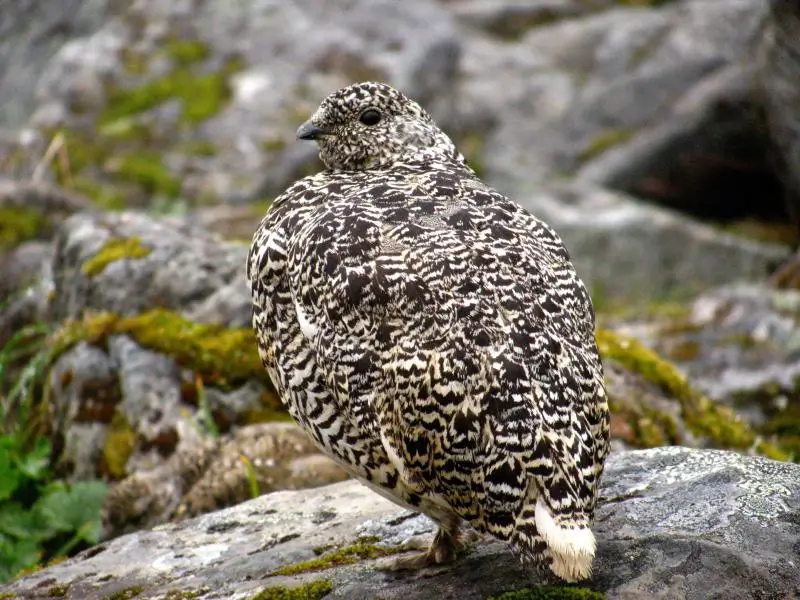
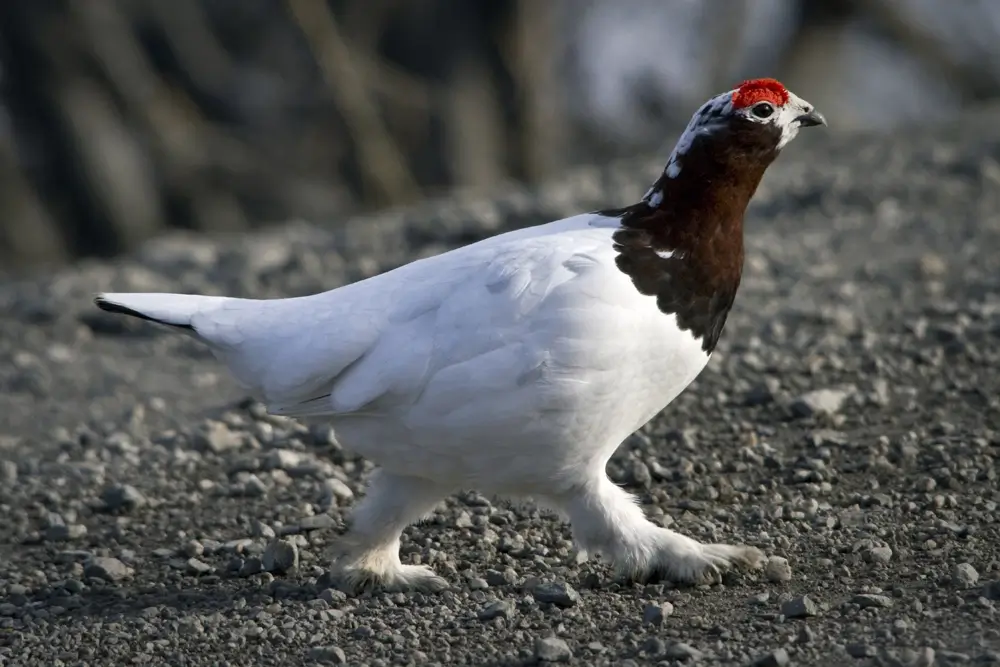
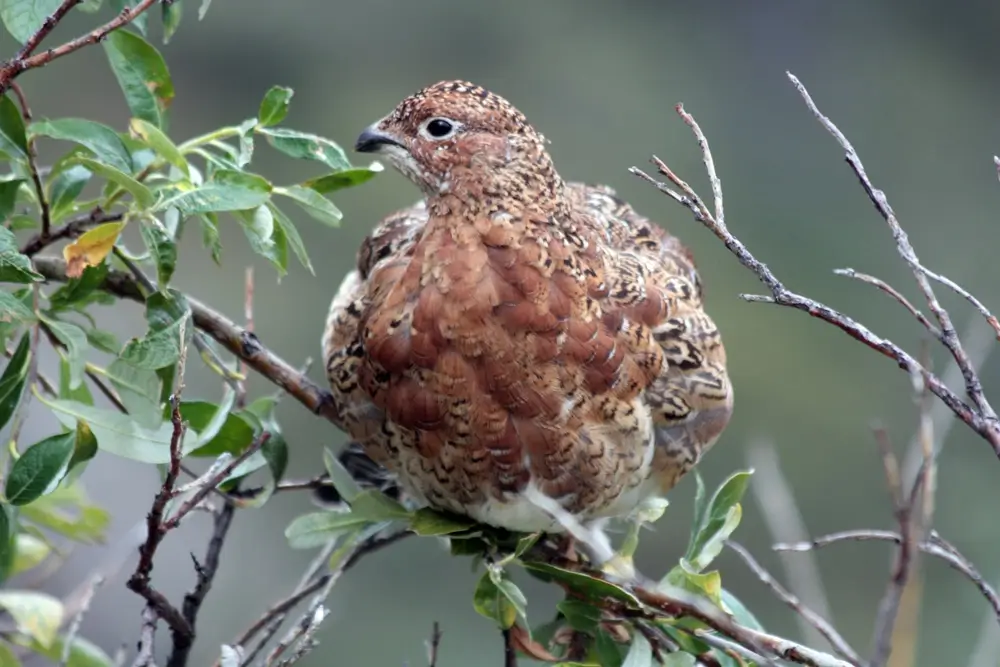
It has a red comb over its eyes. The comb is larger in the spring and summer. It has rusty brown feathers on its back, neck, and head, mixed with white feathers on its wings and stomach.
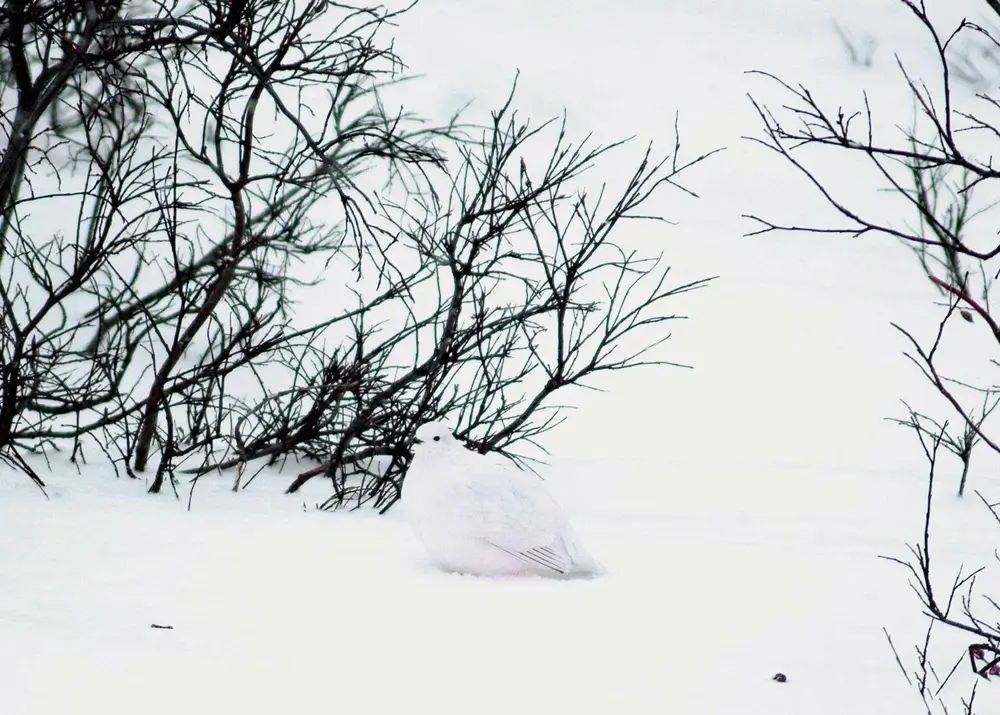
In the winter, it has feathers on its legs and feet that help protect it from the cold and snow. In the winter, it is all white except for a few black feathers on its tail.
Habitat
The willow ptarmigan is found in the tundra and in thickets with alder and willow trees.
Diet
In the summer, the willow ptarmigan eats flowers, buds, and insects.
In the winter, it eats twigs and buds from willows and alders.
Life Cycle
The female willow ptarmigan lays 7-10 eggs in a hollowed-out area on the ground that is lined with feathers and grass. She tries to find a place sheltered by rocks, plants, or logs. The male guards the nesting area while the female incubates the eggs.
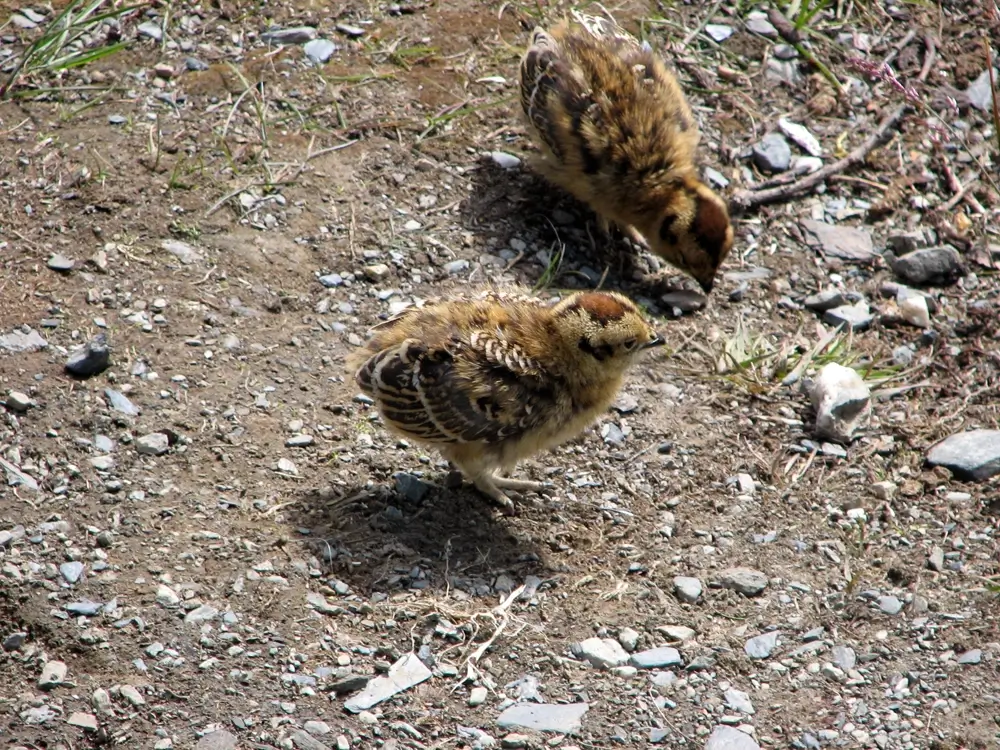
The chicks hatch after about 3 weeks, and they fledge when they are 10-12 days old.
The willow ptarmigan has a lifespan of 2-9 years in the wild.
Behavior
In the winter, the willow ptarmigan often flies into snow banks and nestles in the snow to sleep. By flying into the banks instead of walking, they don’t leave tracks for predators to follow.