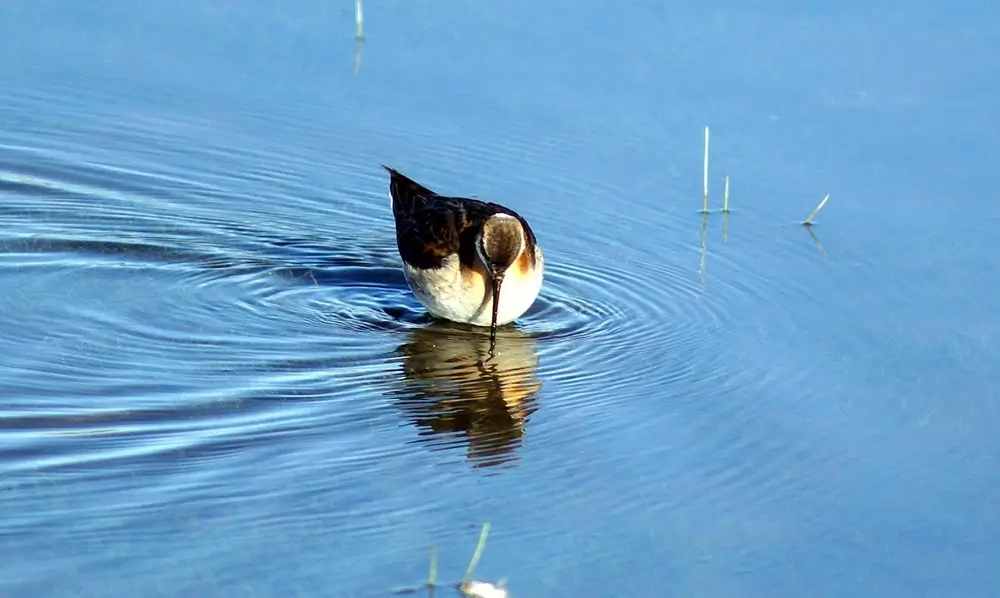
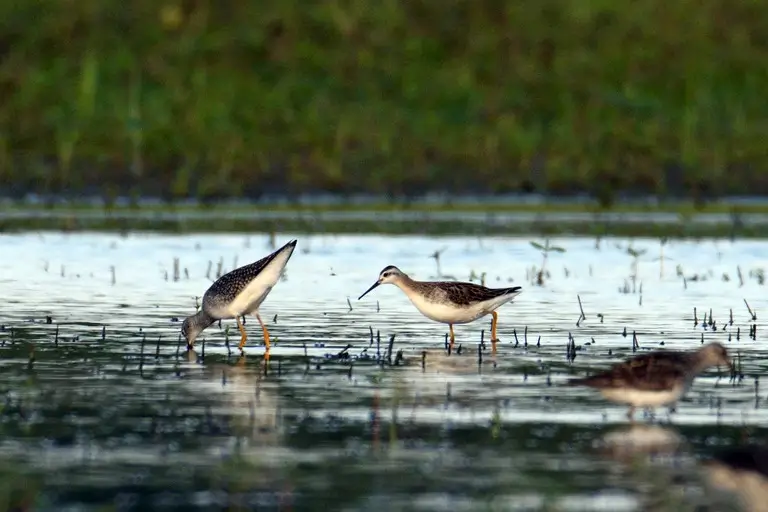
Wilson’s phalarope is 7.1 to 9.4 inches (18–24 cm)in length with a wingspan of 14 to 17 inches (35–43 cm).
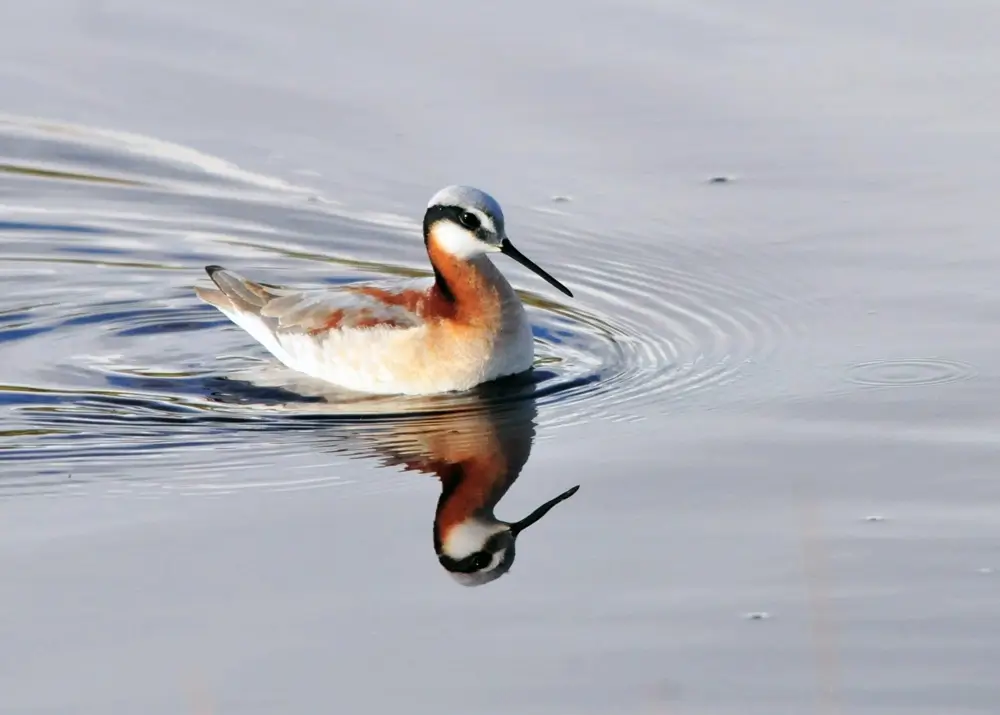
It has a long, pointed black bill and long black legs. During the breeding season, the female has a dark gray back and brown and black wings. She has a gray head, white cheeks, and a black stripe that runs across her eyes to her bill. She has a light, reddish-brown throat and neck and a white belly and rump.
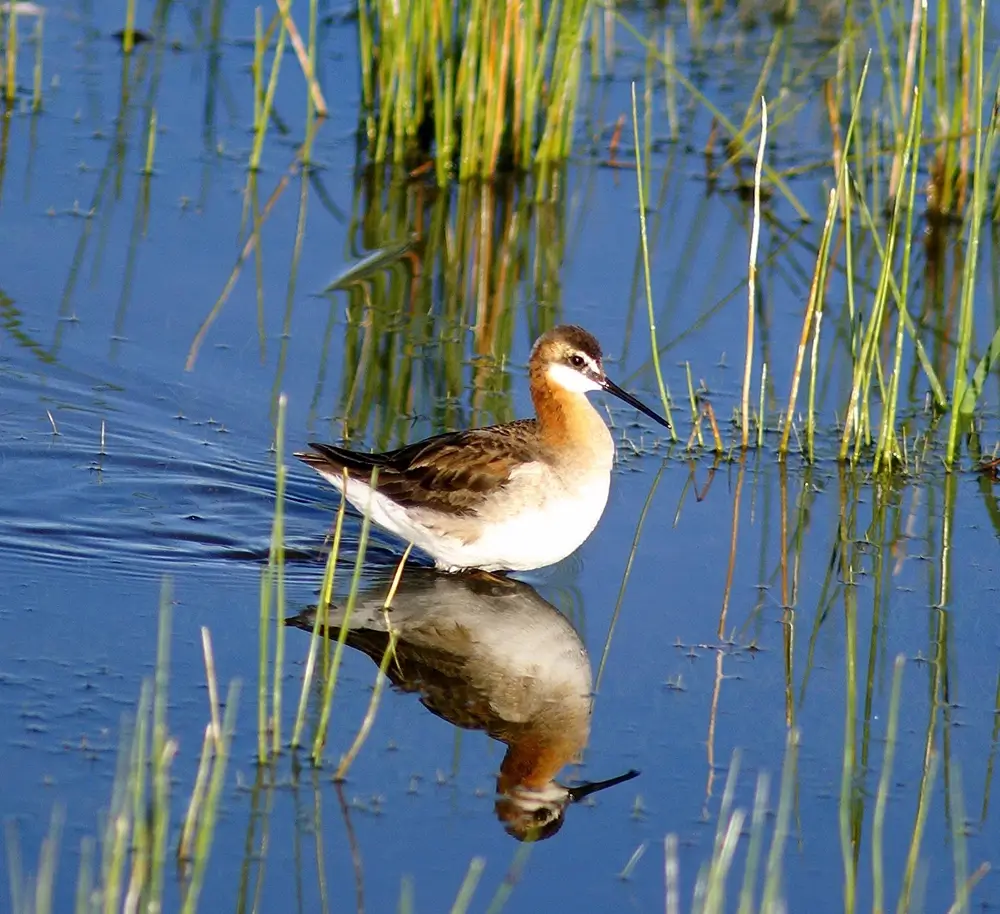
The male is grayish-brown on his back and wings and has a white face, neck, breast, and undersides. He has a black stripe that runs from his eyes to his bill. The back of his neck is brown.
During the non-breeding season, both the male and the female have yellow legs and are gray above and white on their undersides.
Habitat
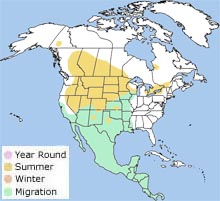
Wilson’s phalarope is found in prairie potholes and freshwater marshes during the breeding season. During migration, it is found on ponds, flooded fields, mudflats, marshes, coasts, and lake and river shores. In the winter, Wilson’s phalarope is found on ponds and lakes.
Diet
Wilson’s phalarope doesn’t dive for food; it picks it off the surface of the water. It eats insects, worms, some seeds, and small crustaceans.
Wilson’s phalarope, like the red phalarope and the red-necked phalarope, swims in circles to create whirlpools to bring food up to the water’s surface.
Life Cycle
Like the red phalarope and the red-necked phalarope, the male and the female Wilson’s phalarope switch traditional roles during the breeding season. The female Wilson’s phalarope arrives at the breeding ground first and establishes a breeding territory.
She tries to attract a mate by stretching out her neck, puffing out her feathers, and calling out. The male creates a scrape in the ground and lines it with grass. The nest is usually well-hidden in vegetation.
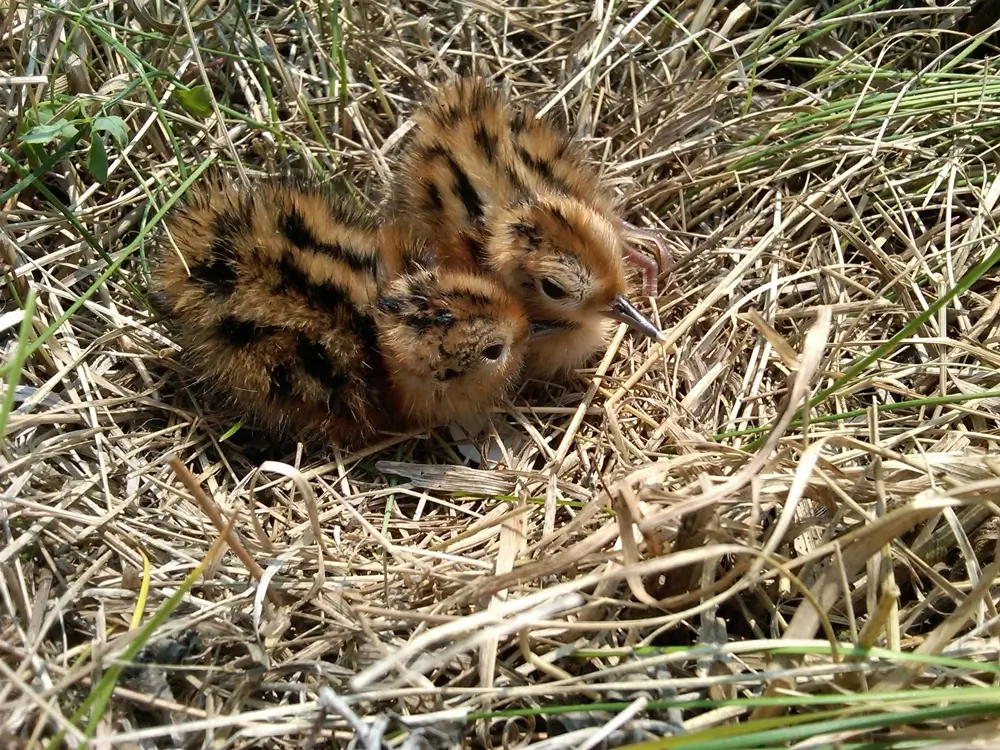
The female lays 4 eggs and then leaves. Sometimes she even tries to attract another mate and may have a second brood. The male incubates the eggs for 23 days and then cares for the chicks. The chicks are precocial and leave the nest and feed themselves shortly after hatching.
Wilson’s phalarope has a lifespan of up to 10 years in the wild.
Behavior
Unlike the red phalarope and the red-necked phalarope, Wilson’s phalarope spends no time at sea.