Wood Thrush

Hylocichla mustelina

Kingdom
Phylum
Class
Order
Family
Genus

Characteristics

The wood thrush is 7.5-8.5 inches (19-21.6 cm) in length with a wingspan of 11.8-13.4 inches (30-34 cm).

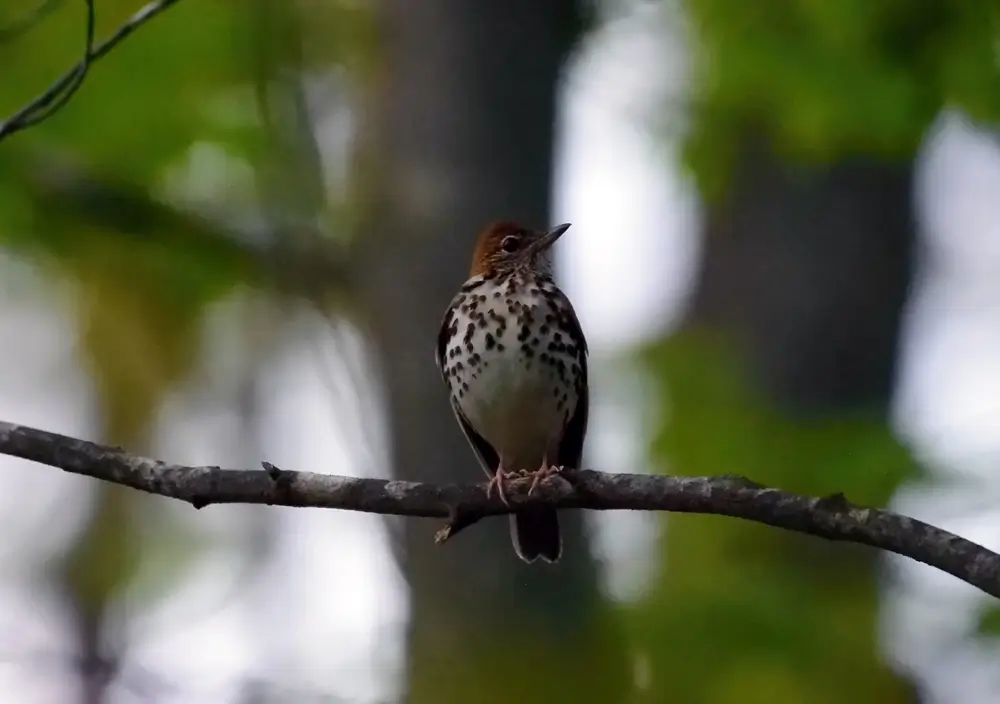
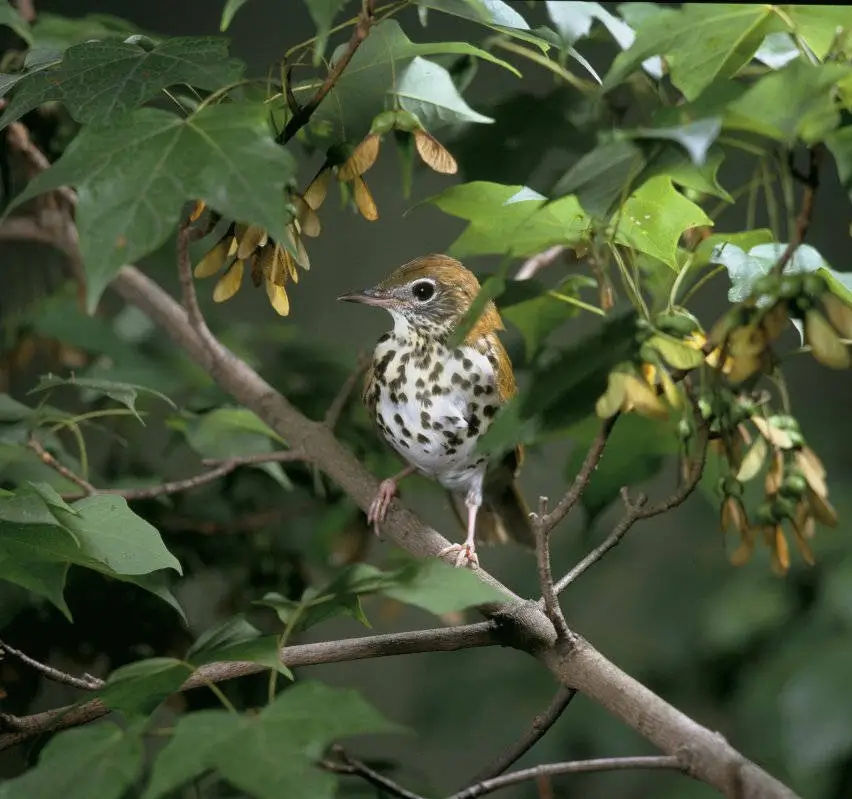
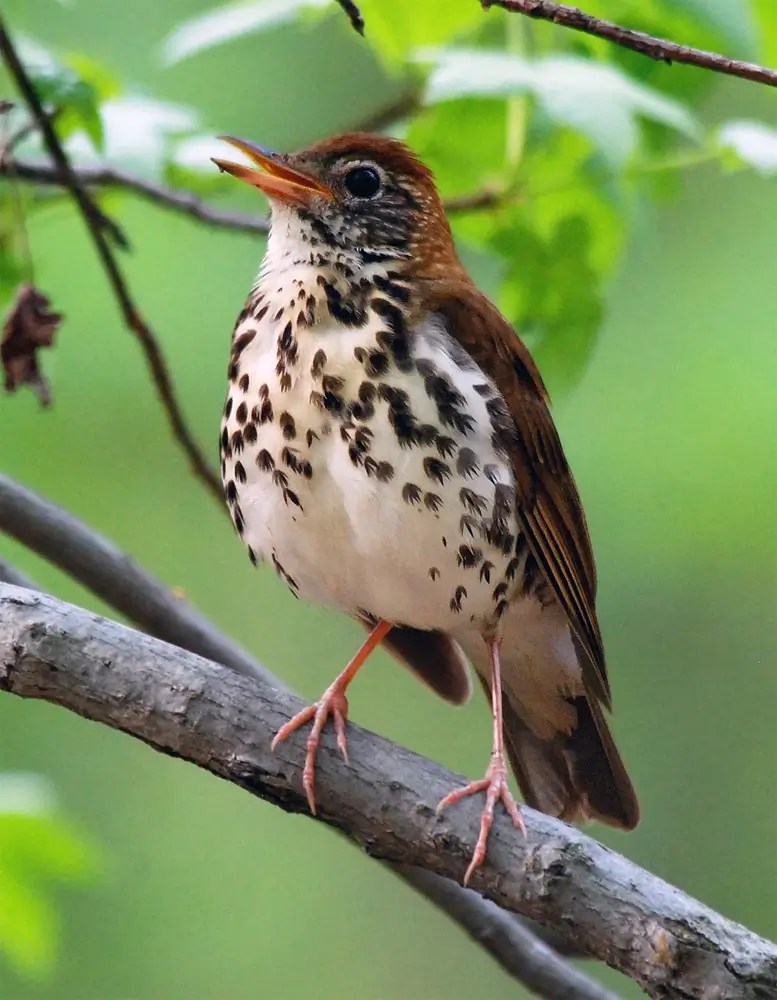
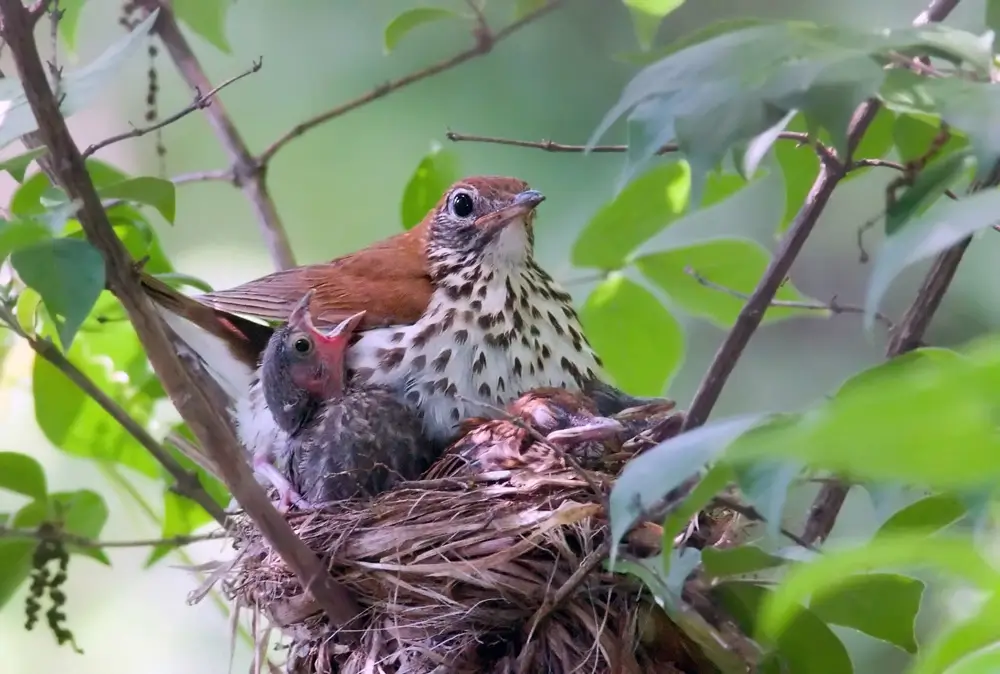
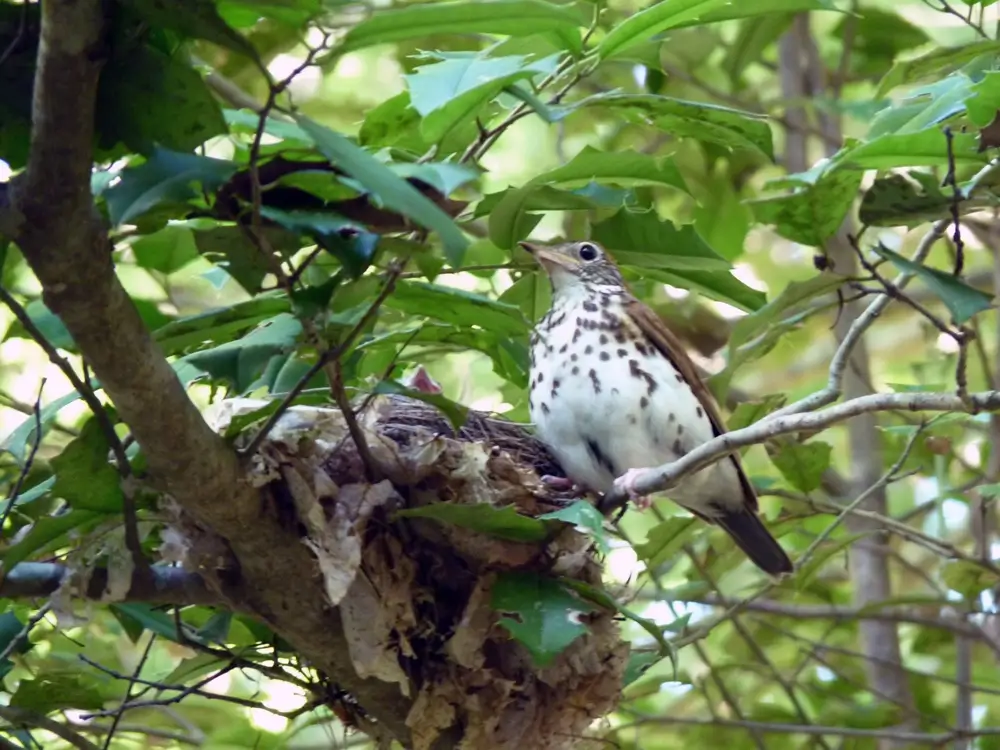
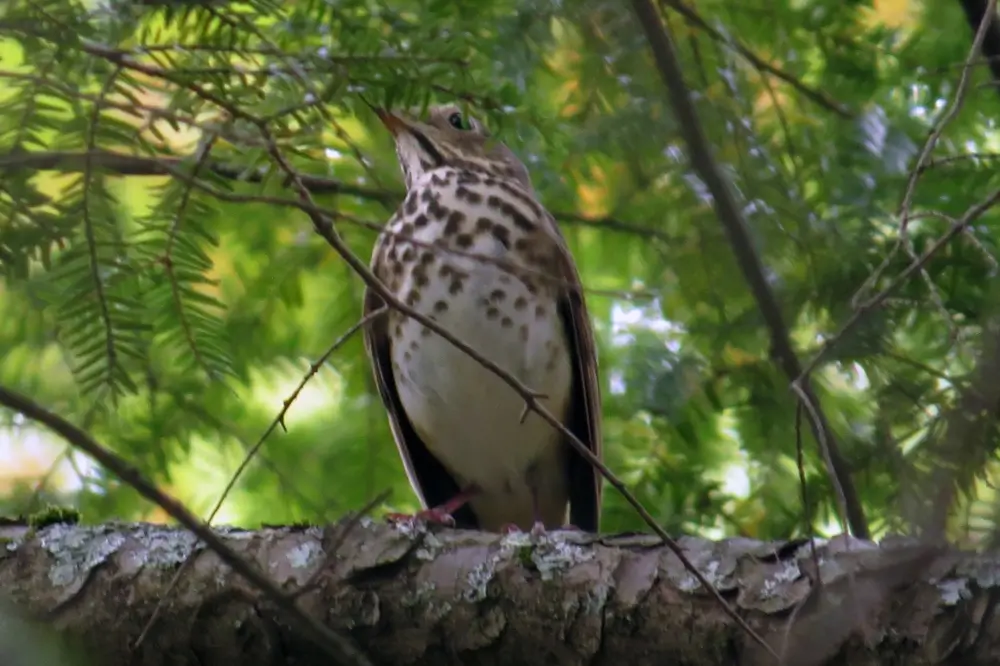
The wood thrush’s head, back, and wings are brick red in color. It has a white belly speckled with dark spots.

Its red coloring helps it stay camouflaged in the leaf litter while it hunts for insects on the forest floor.

Habitat

The wood thrush lives in deciduous and mixed forests. It prefers a habitat where there is a mix of large trees and younger trees to make up the understory, shade on the ground, and lots of leaf litter on the ground.

Diet

The wood thrush is an omnivore. It eats insects and fruit. During the breeding season, it feeds on insects that live in leaf litter on the ground, such as spiders, beetles, flies, woodlice, and ants.

In preparation for migration, the wood thrush feeds on fruit such as blueberry, holly, elderberry, Virginia creeper, pokeweed, and dogwood.

Life Cycle

The female wood thrush builds a nest in the lower branches of a small tree or shrub. She forms the nest out of grass, leaves, and stems, weaving the walls until they are 2-6 inches  (5.1-15.2 cm) high and 4-6 inches (10.2-15.2 cm) across. She then lines the inside of the nest with mud and covers the bottom with fine roots.

She lays 3-4 turquoise eggs. The eggs are incubated for 12-15 days. Upon hatching, the chicks stay in the nest for another two weeks. The wood thrush usually lays 3-4 eggs twice each summer. She makes a new nest for each brood.

The wood thrush has a lifespan of 2-9 years in the wild.

Behavior

The male sings a clear, ee-oh-lay that is easily heard throughout its forest home in the spring and early summer. In most songbird species, males will answer a rival’s call with the same song. The wood thrush almost always matches a rival’s song with a different song.

Did You Know?

Although the wood thrush is still common throughout our forests, its population is declining. Scientists believe that one reason is the cowbird.

Adult cowbirds often lay eggs in a wood thrush’s nest. The young cowbird is larger than a wood thrush chick and demands more space and food.

In some habitats, scientists have found at least one cowbird egg in nearly every wood thrush nest.


Support for NatureWorks Redesign is provided by: 

The Wood Thrush in NH

The wood thrush breeds across New Hampshire, although it is less common in the White Mountains and is not found at higher elevations. It migrates south in the fall.

World Status: Least Concern

Listen Here

Mike Nelson, xeno-canto.org
wood thrush

Range

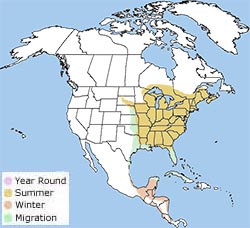
A migratory bird, the wood thrush travels from the eastern United States to Central America each year.

In the summer, the wood thrush breeds in the eastern half of the United States from southeastern Canada down through Northern Florida.

It spends winters in the lowland tropical forests of Central America.