Woodchuck

Marmota monax

Kingdom
Phylum
Class
Order
Family
Genus

Characteristics

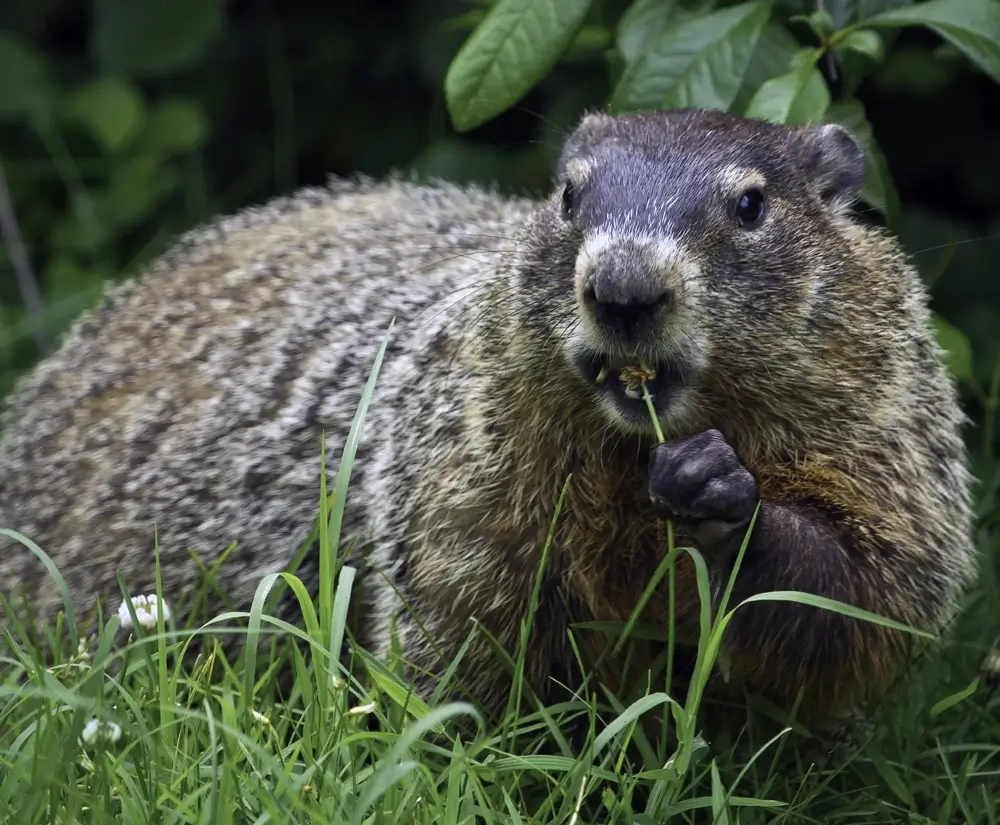
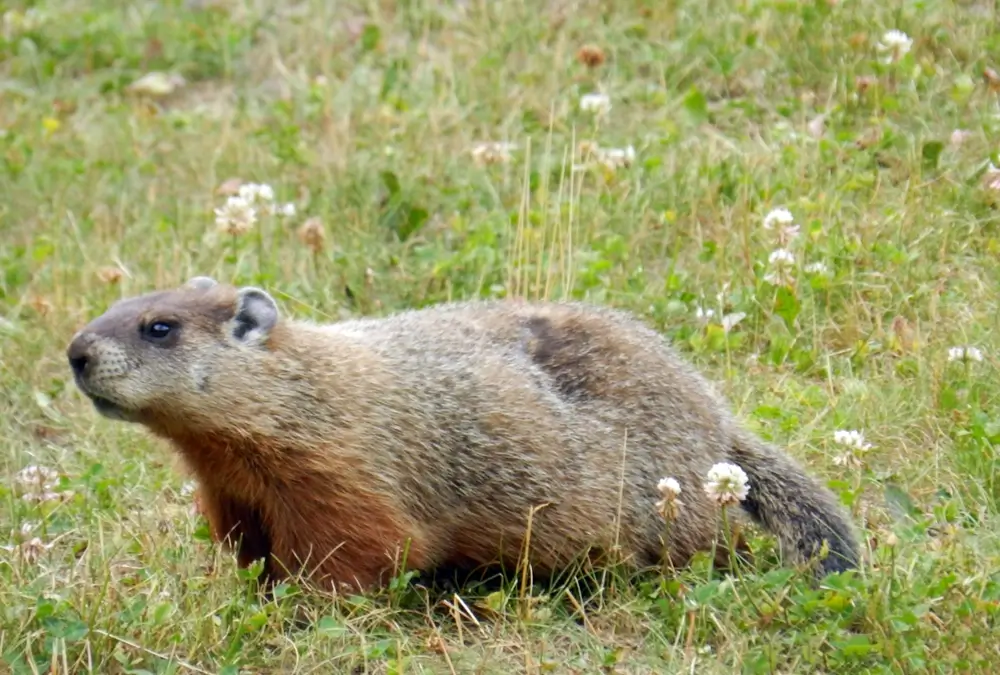
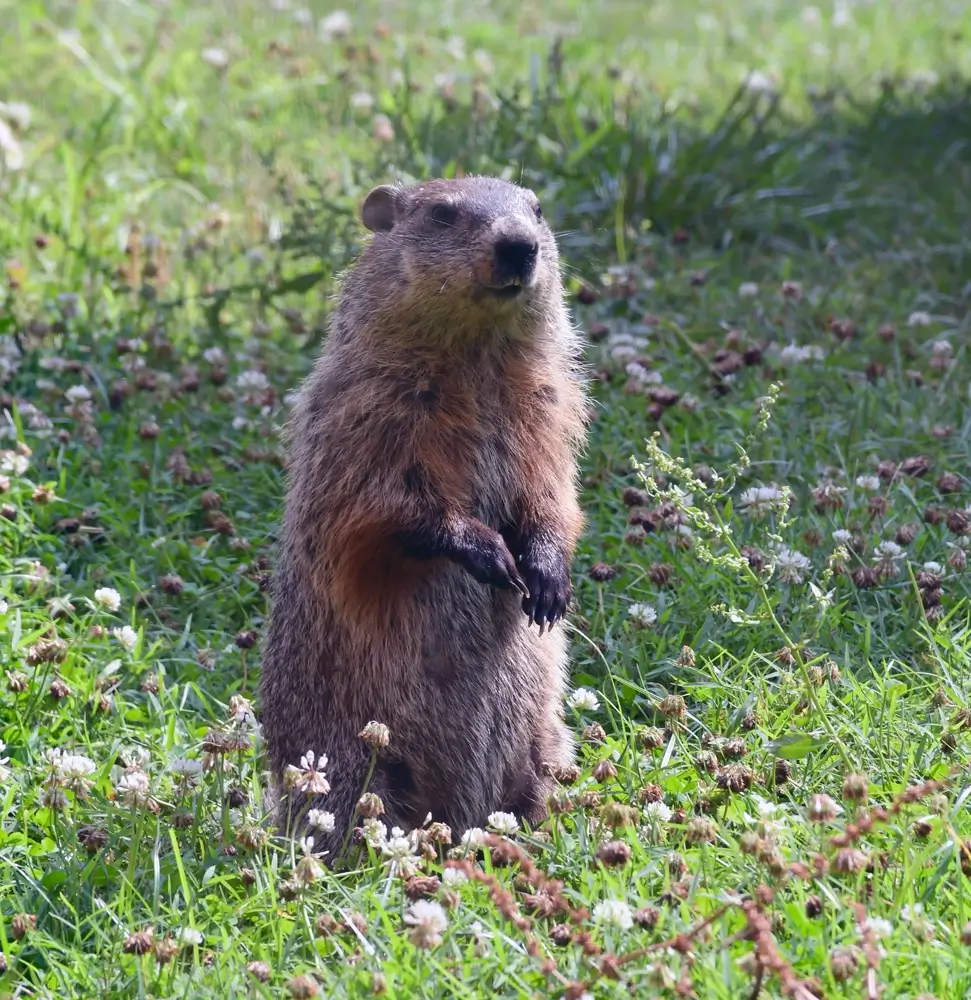
The woodchuck, also known as a groundhog, is the size of a large cat. It is 17-32 inches (43-81 cm) long and weighs 5-14 pounds (2.3-6.4 kg).

It has a body built for burrowing with short, powerful legs; sharp, curved claws; a rounded head; and fur-covered ears designed to keep out dirt. It has long, sharp front teeth that will grow too long if it doesn’t wear them down by chewing on things.


Habitat

The woodchuck is found in a variety of habitats, including fields, forests, hedgerows, and pastures.

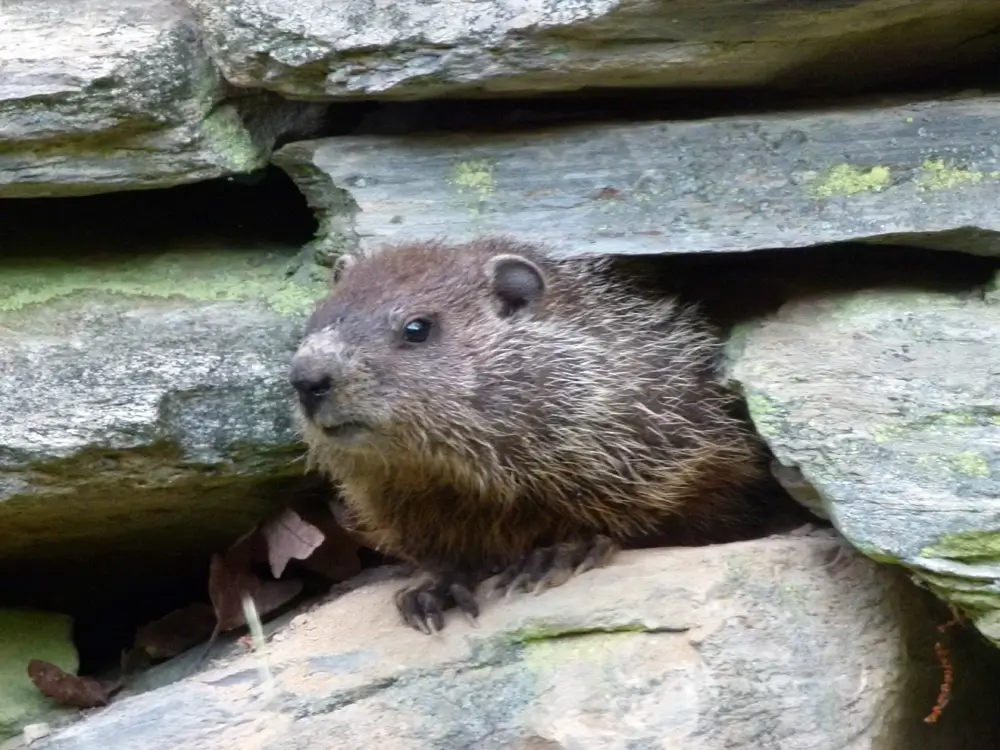
Woodchucks are burrowing animals and make both summer and winter burrows. Their summer burrows are usually close to a food source. Their winter burrow is made in a place where they can hibernate. Woodchuck burrows usually have more than one entrance and multiple chambers, including one they use as a bathroom. Burrows can be anywhere from 6-80 feet in length and can have more than one level. Woodchucks use their burrows for sleeping, protection, as a place to raise their pups, and for hibernation.

Woodchucks are true hibernators. They hibernate from late winter to early spring. During hibernation, both their heart rate and body temperature drop dramatically. Their body temperature can drop from 99 °F (37.2 °C) to 40 °F (4.4 °C), and their heart rate can drop from 100 beats per minute to as few as 4 beats per minute. While they are dormant during long periods of hibernation, they do wake up for 2-3 day periods during hibernation.

Diet

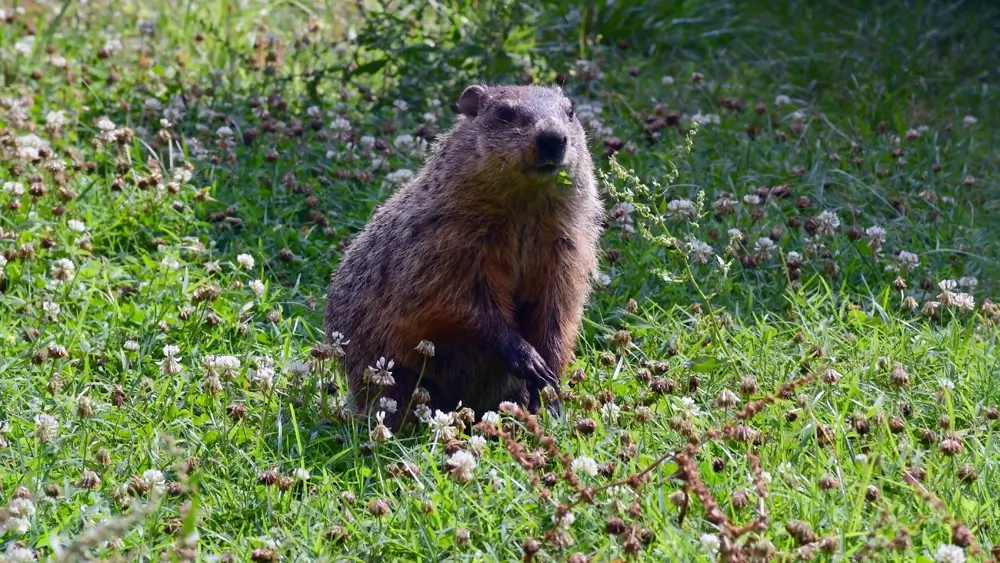
Woodchucks are diurnal. They forage for food in the morning and in the afternoon. They eat plants like alfalfa, clover, and dandelions as well as insects, tree bark, leaves, and bird eggs. Woodchucks eat as much food as they can in the spring and summer so they can build up fat reserves for when they hibernate in the winter.

When the woodchuck is eating, it often looks up to check for predators. Its burrow is usually very close to where it feeds, so it can scurry back to safety if it spots a predator. When it is outside but not feeding, it will stand on its hind legs and keep a lookout for predators.

Life Cycle

The woodchuck first mates when it is two. It mates shortly after it comes out of hibernation in the early spring. The female gives birth to 3-5 pups in her burrow. The pups are cared for by the female and are weaned when they are about 44 days old. They leave their mother when they are around two months old.

In the wild, woodchucks live 2-6 years. In captivity, they can live to be 10 years old. Predators of the woodchuck include wolves, coyotes, foxes, dogs, bears, mountain lions, bobcats, hawks, and eagles.

Behavior

The woodchuck uses its vocalizations to scare away predators and other woodchucks and to warn other woodchucks of predators. The woodchuck usually retreats to its burrows when it is threatened, but it can also climb trees to avoid predators.

Did You Know?

The woodchuck is also known as the groundhog and the whistle pig. The name woodchuck has nothing to do with chucking wood; it more than likely comes from the Algonquian word for the woodchuck, wuchak.

The name whistle pig does come from the woodchuck’s whistling vocalization. The woodchuck also barks, yips, and chatters.


Support for NatureWorks Redesign is provided by: 

The Woodchuck in NH

In New Hampshire, the woodchuck can be found throughout the state in yards, meadows, fields, pastures, and in grassy areas along highways.

World Status: Least Concern
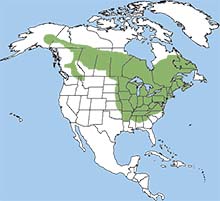
woodchuck range

Range

The woodchuck is found across much of the eastern U.S. and across much of southern Canada. It is also found in Alaska.