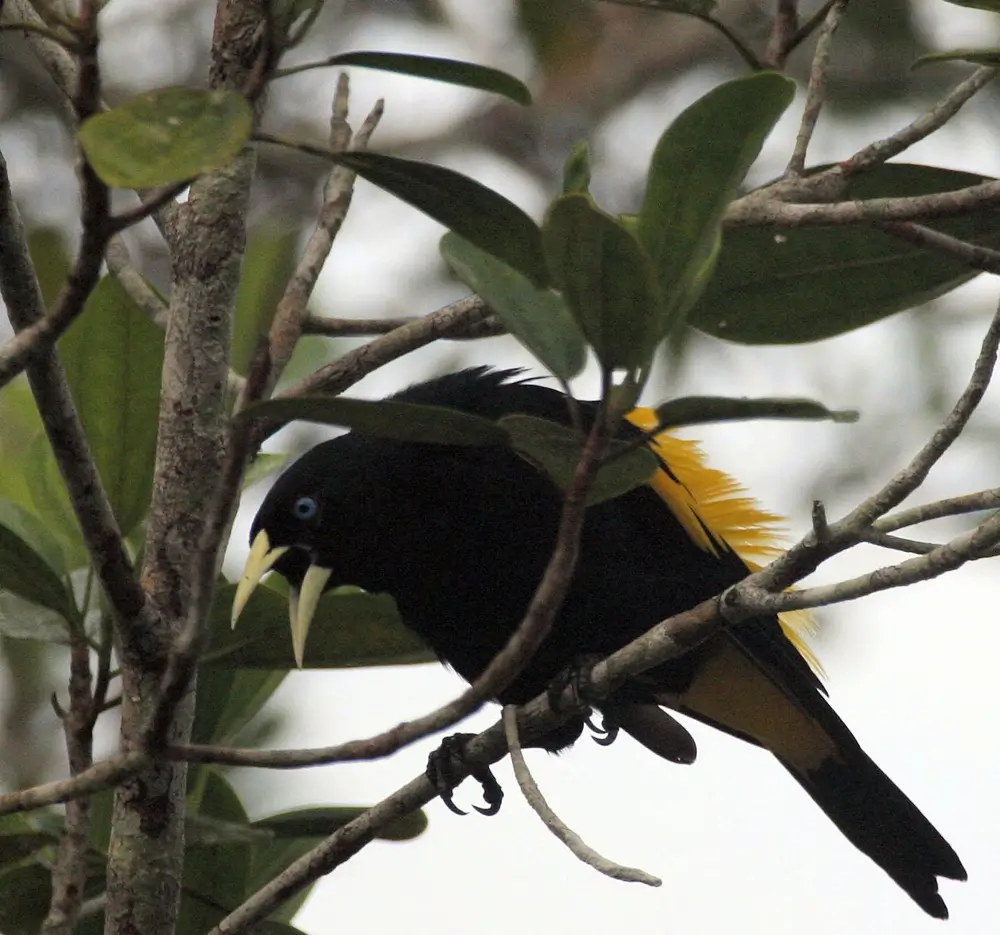
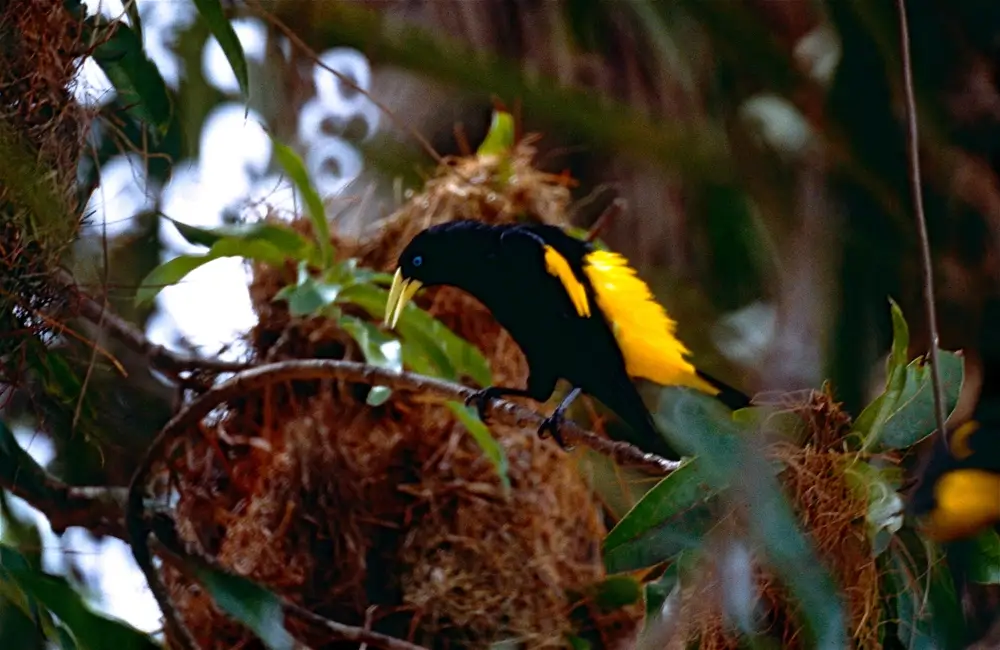
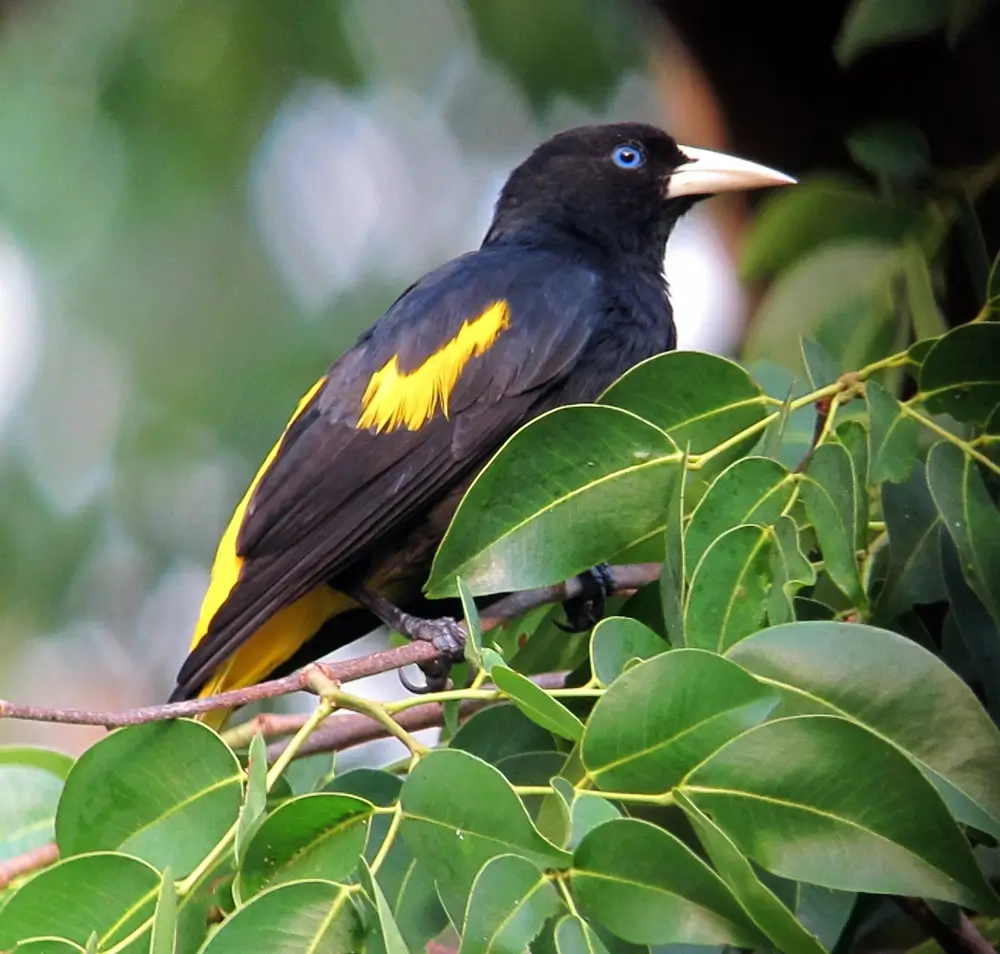
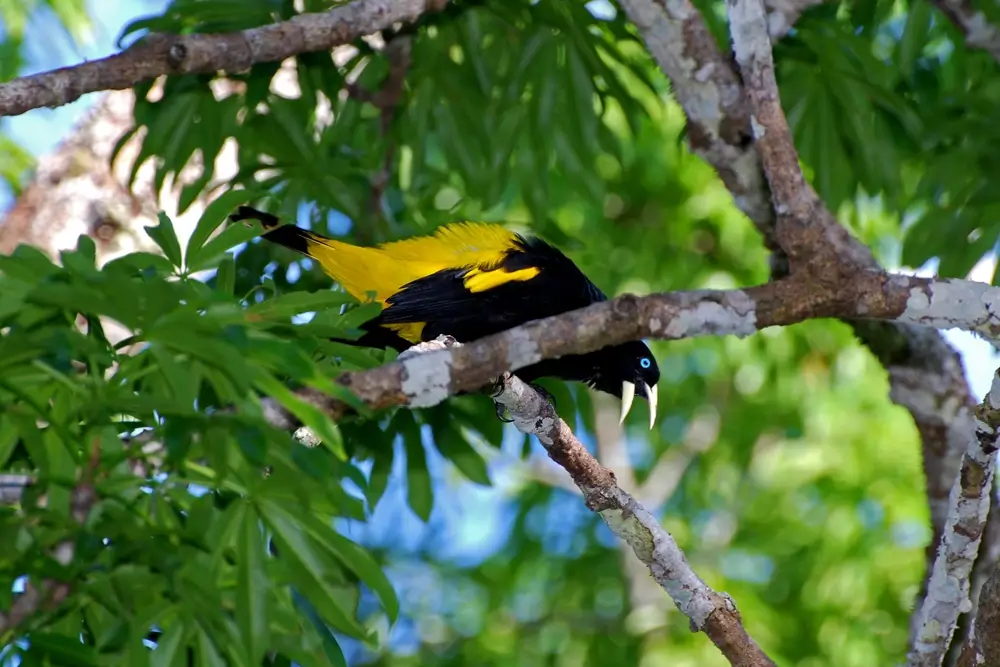
The yellow-rumped cacique is a long, slim perching bird 9-11 inches (23-28 cm) in length. It has a black body with a yellow rump, a yellow patch on its wings, and yellow at the base of its tail. It has blue eyes and a long, pointed yellow bill. Females are a little smaller than males, and they are a little duller in color.
Habitat
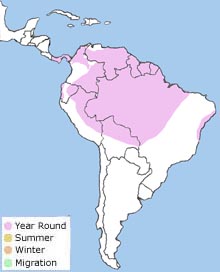
The yellow-rumped cacique is found in open woodlands, mangrove forests, and cultivated areas with open fields.
Male yellow-rumped caciques court females by flapping their wings and displaying their yellow feathers. The female cacique builds a long, bag-like nest of plant fibers in a tree. The nests are usually built in tall trees that have an active wasp nest. The wasps help keep predators away. Caciques nest in colonies that can have up to 100 nests.
The female lays 1-3 eggs. She incubates them for about 2 weeks and feeds them after they hatch. Male yellow-rumped caciques keep watch over the nesting colony and alert the colony if there is a threat. The chicks fledge when they are a little over a month old.
The yellow-rumped caciques have a lifespan of 7-14 years.
Behavior
The yellow-rumped cacique has a variety of calls and even mimics other bird calls.