

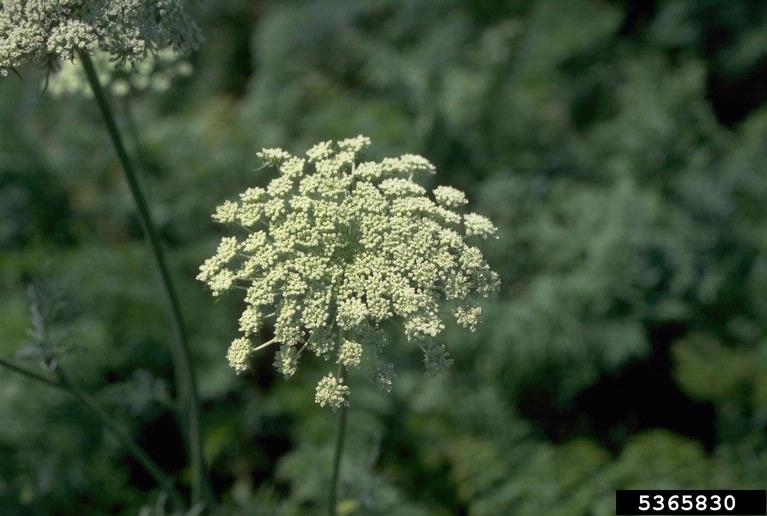
There are about 3,000 species in this family, most of them are herbs. They have thick clusters of tiny five-petalled flowers and hollow stems. (Carrot)
There are about 3,000 species in this family, most of them are herbs. They have thick clusters of tiny five-petalled flowers and hollow stems. Most plants in this family grow in the Northern Hemisphere in temperate regions. Leaves usually alternate and are feathery. Some plants in this family like hemlock are toxic. Other plants like carrots, celery and parsley are very useful. Plants include parsley, coriander, fennel, dill, caraway, cumin, anise, celery, parsnip, carrots, water hemlock and poison hemlock.
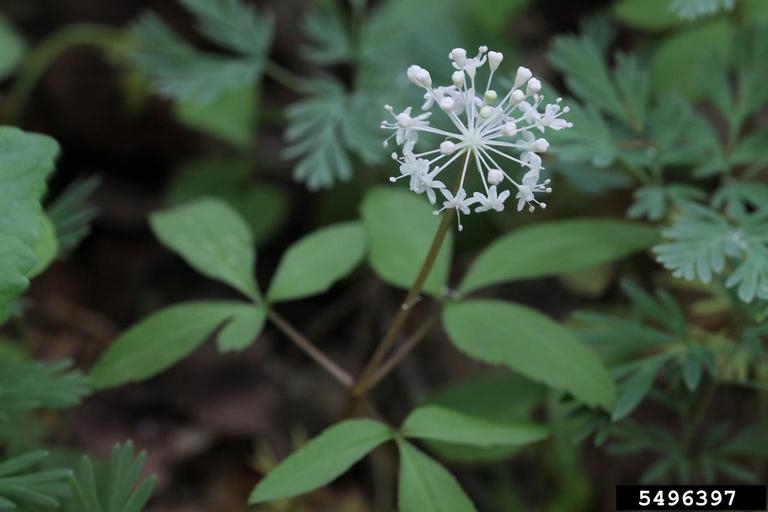
There are 700 species of shrubs, vines, trees and herbs in this family. (Dwarf Ginseng)
There are 700 species of shrubs, vines, trees and herbs in this family. Most are found in Southeast Asia and tropical America. Plants include ginseng, English ivy, and the rice-paper plant.
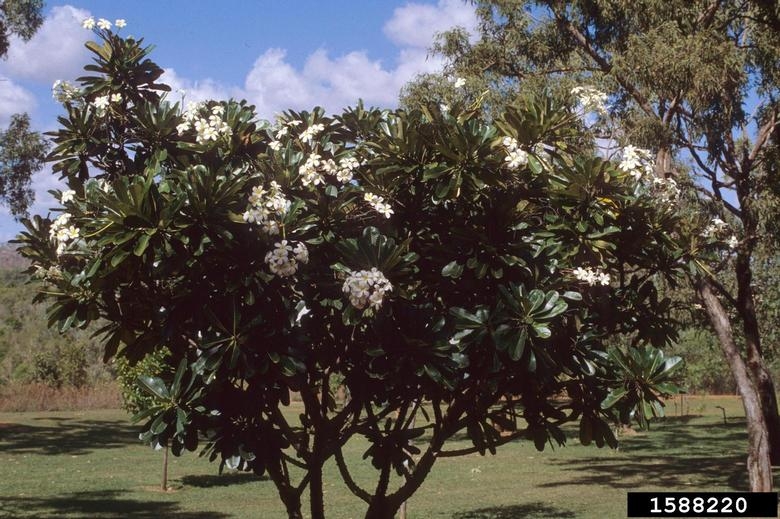
Most of the species in this group are found in the Old World tropics and in Australia. (Frangipani)
This family has only recently been added to the apiales order. It includes about 250 species of evergreen trees and shrubs. Most of the species in this group are found in the Old World tropics and in Australia.
