

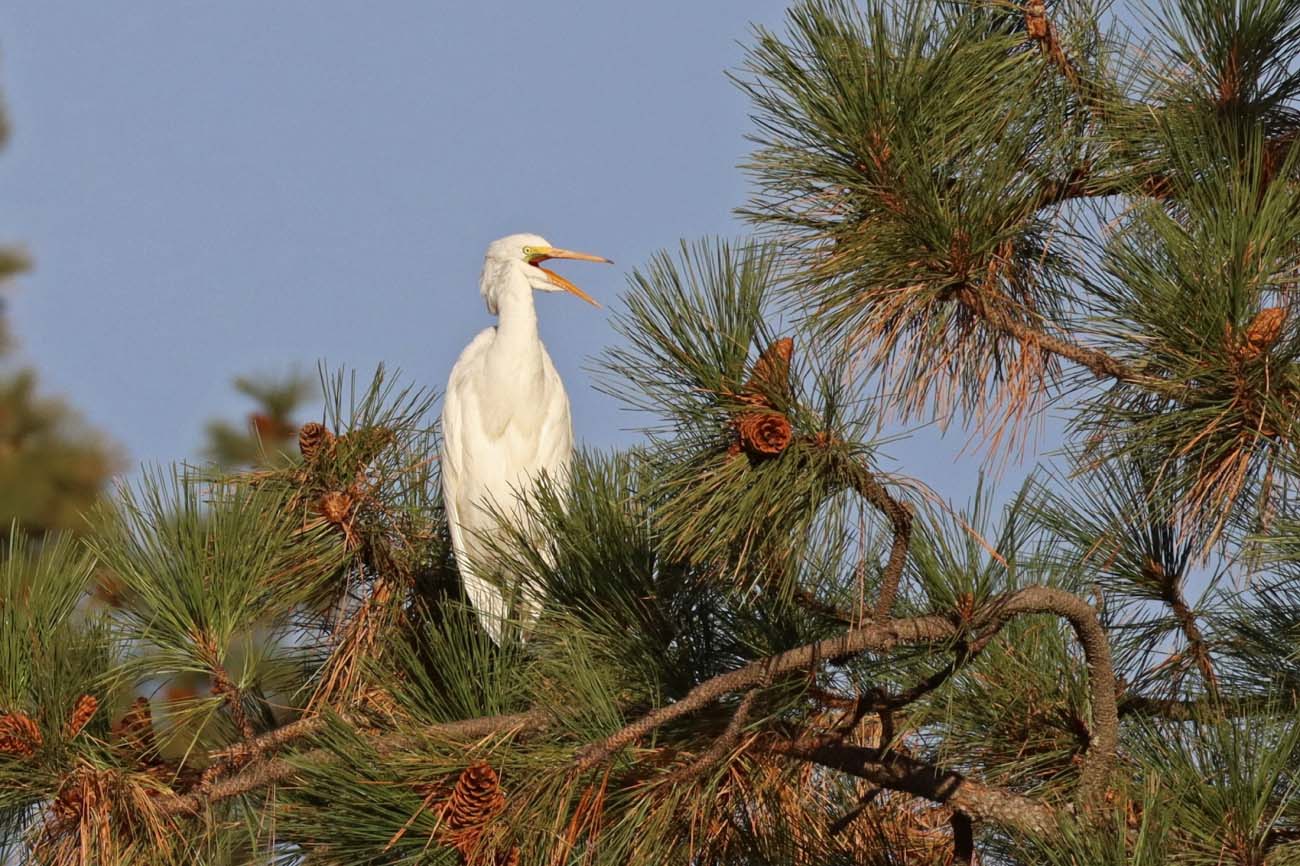
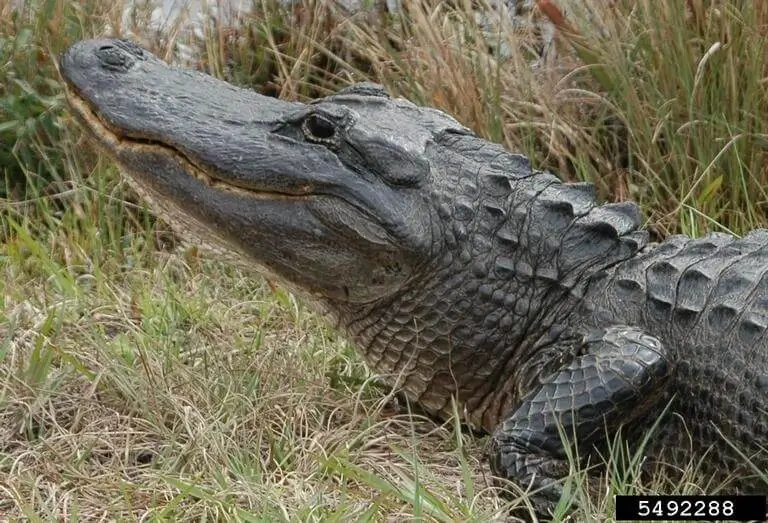
Male American alligators use a combination of sounds and displays to get the attention of females when they want to mate.
Male American alligators use a combination of sounds and behaviors to get a female’s attention during mating season. A male may roar and make vibrations in the water by slapping his head against the surface.
He may also tap, nudge, or gently push the female with his snout to encourage her attention and signal that he is ready to mate.
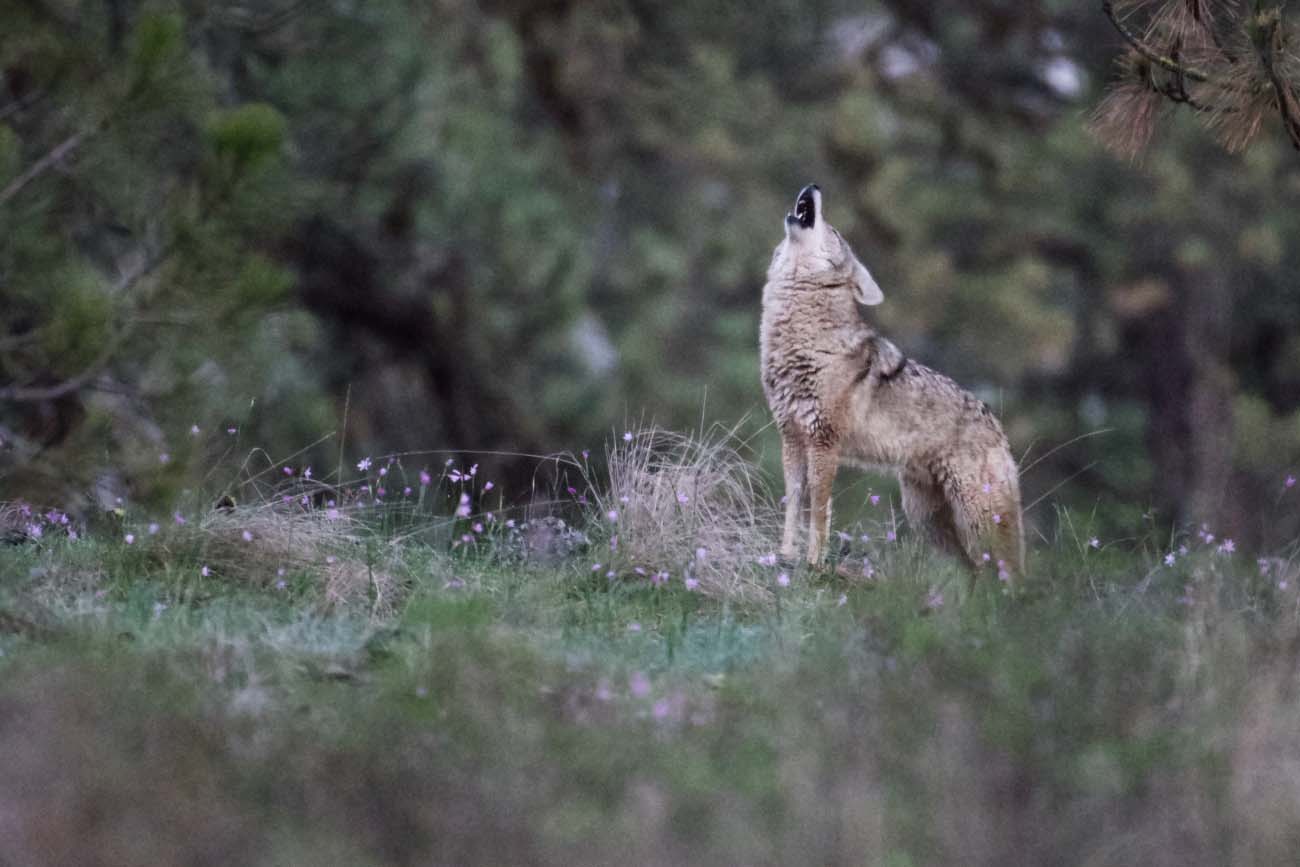
The coyote is a very vocal animal.
Some animals use different sounds for different situations. Coyotes are among the noisiest animals in North America. They communicate using a mix of barks, yips, and howls. These sounds can have different meanings depending on the situation.
Coyotes may howl to mark their territory, warn others to stay away, or to help members of their pack find each other. They also use yips and barks when they are playing, hunting, or responding to nearby threats.

Red squirrels will make a series of loud rattles, screeches and yips to warn off intruders.
Many animals vocalize when an intruder comes too close or enters their territory. You have probably heard a dog start barking when someone approaches its house or yard. This barking is a warning signal meant to scare away strangers and protect its space.
Red squirrels do something similar. They produce a mix of loud rattles, screeches, and yips to warn off intruders. These sounds help alert other squirrels to danger and can also signal to an intruder that they have been spotted. Vocal warnings are an important way animals defend their territory without having to fight.
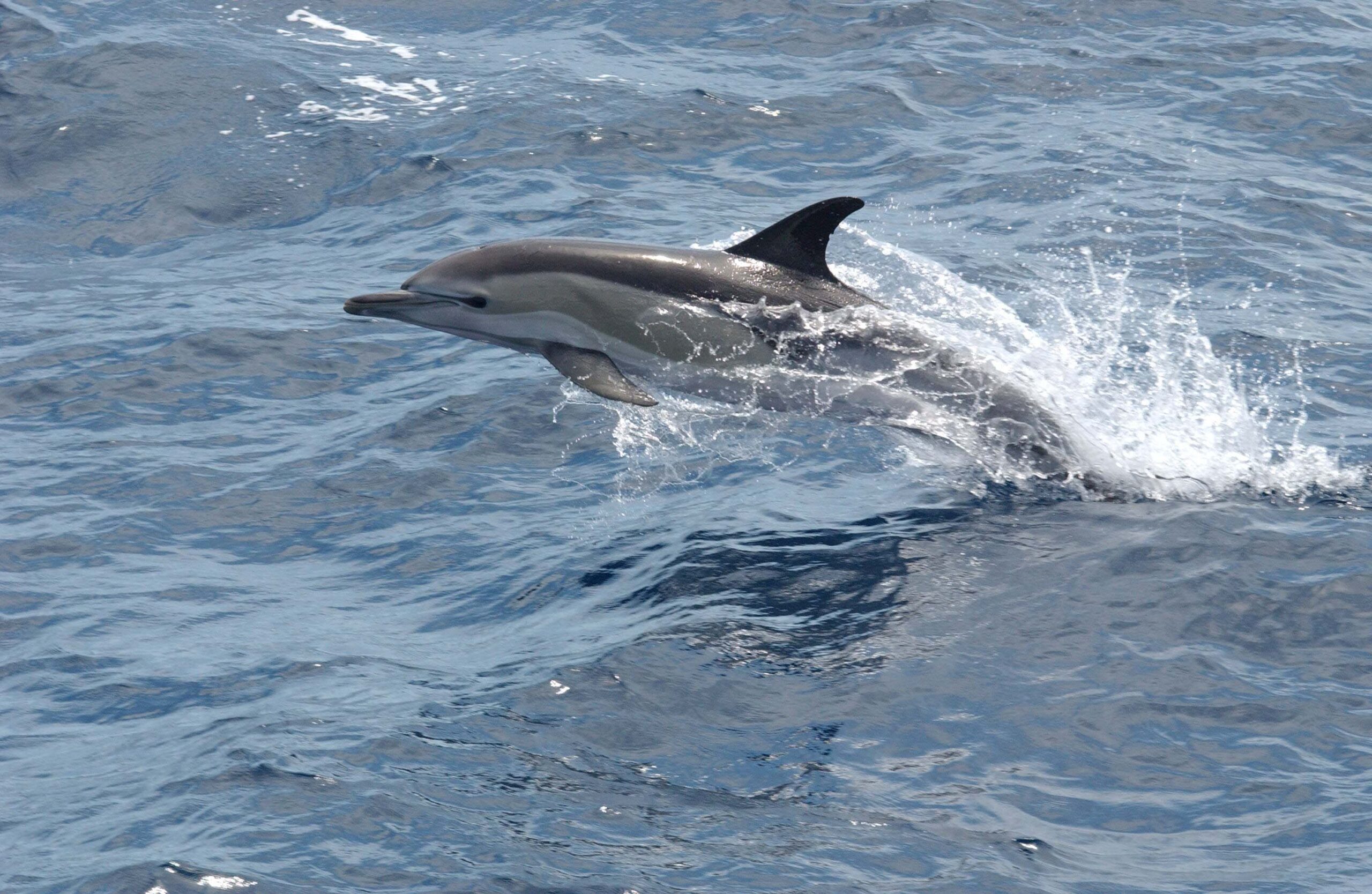
Dolphins use a wide range of sounds, including clicks, whistles, and other vocalizations.
Dolphins use a wide range of sounds, including clicks, whistles, and other vocalizations. Some scientists think these may function like a form of language, and researchers are still studying whether humans could one day communicate with dolphins. Each dolphin also has a unique “signature whistle” that works like a name, helping others identify it.
Dolphins also use sound for echolocation to find food and navigate. They produce clicking sounds using air sacs near their forehead. These sounds travel through the water, bounce off objects, and return to the dolphin. By listening to the echoes, dolphins can locate and identify the size and shape of nearby objects, including fish.
