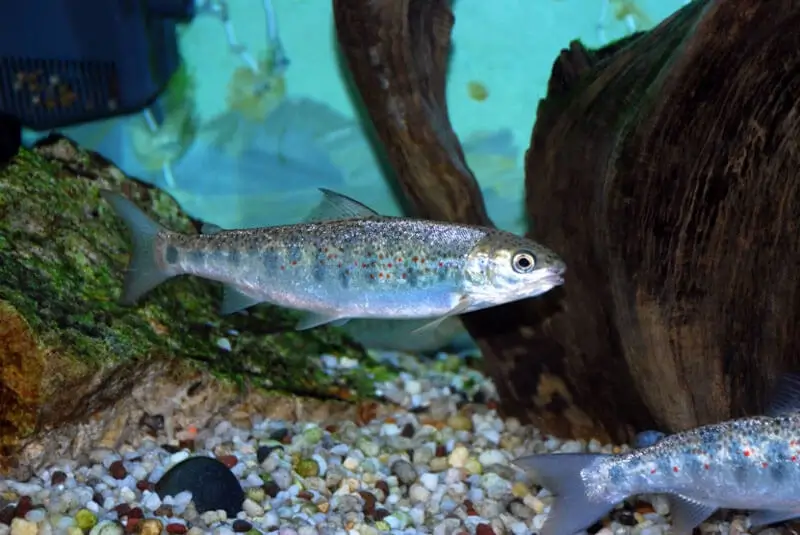
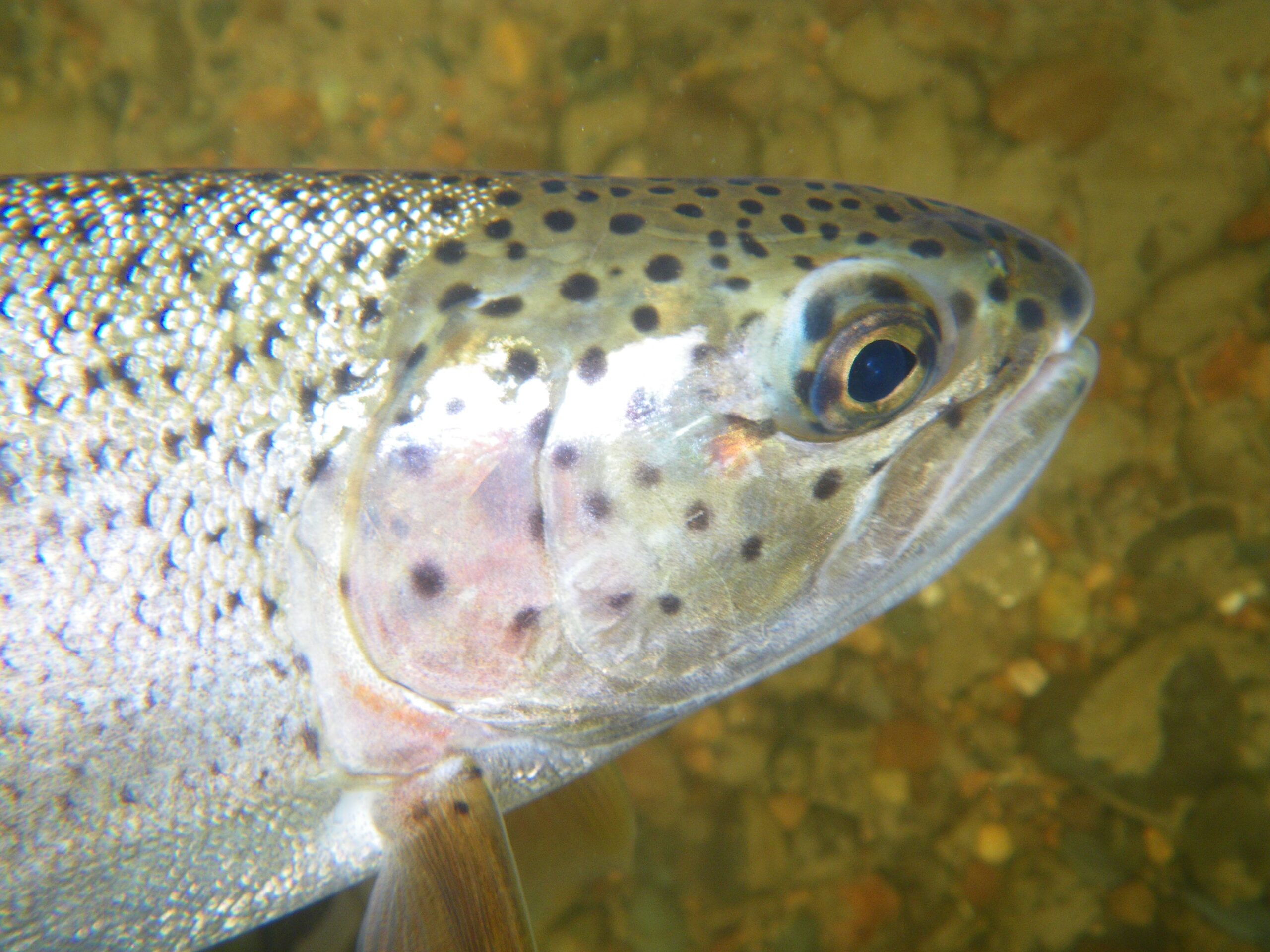
Fish like this rainbow trout use air, but they do it in a different way than land animals. Fish pull water into their mouths and then pump the water over their gills.
Fish need oxygen to live, just like land animals, but they get it differently. Instead of breathing air with lungs, most fish breathe using special organs called gills.
Fish take in water through their mouths and then push it out over their gills. Gills are made of thin, feathery structures filled with tiny blood vessels. As water flows over the gills, dissolved oxygen passes through the thin gill membranes into the fish’s bloodstream.
At the same time, carbon dioxide (a waste gas) moves from the fish’s blood and into the water. This process allows fish to get the oxygen they need to survive underwater without ever coming to the surface to breathe air.
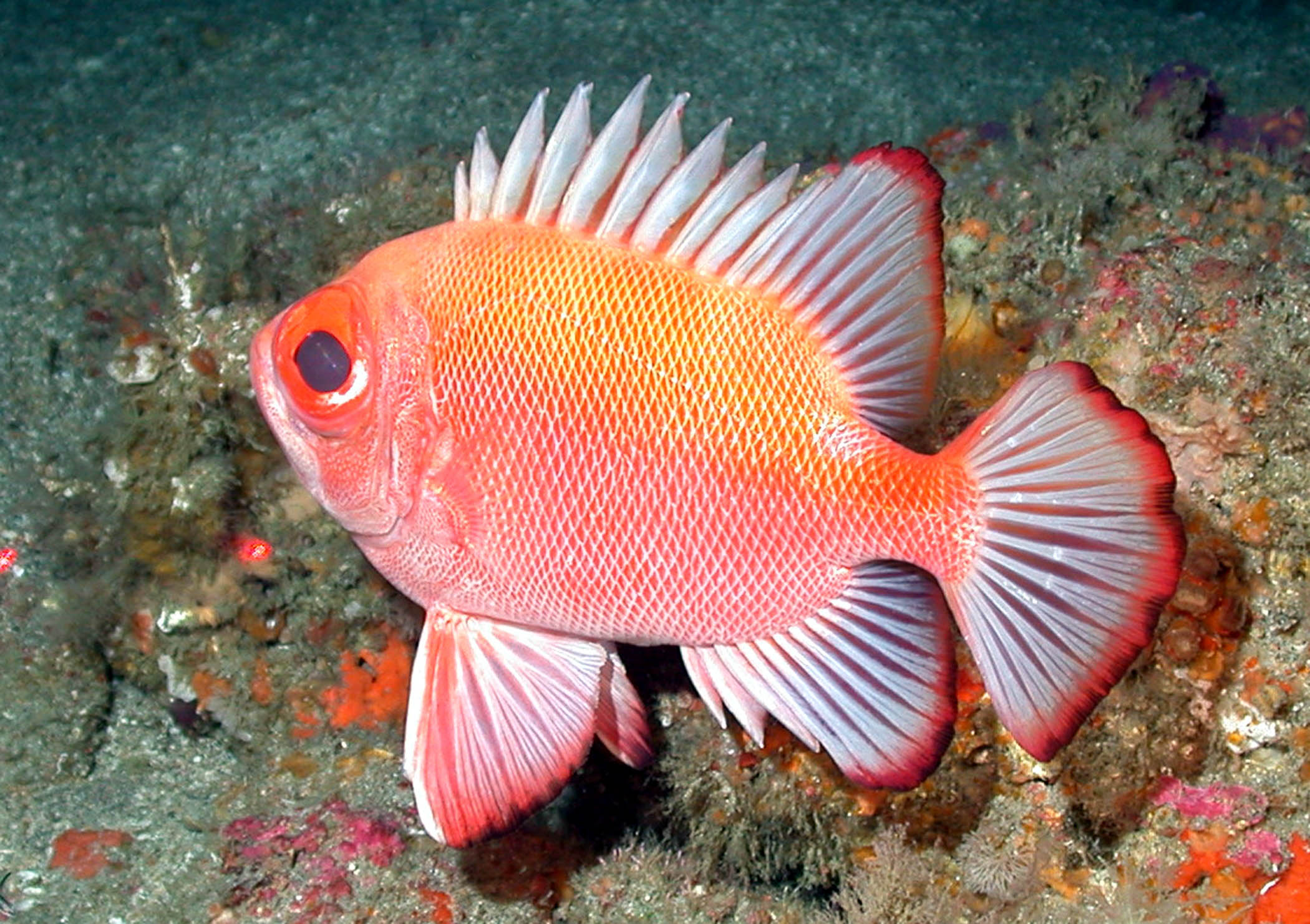
This short bigeye has distinctive fins.
Fish have several different types of fins that help them move, steer, and stay balanced in the water. Most fish have a caudal fin, also called the tail fin, which pushes them forward as they swim. They also have a dorsal fin on their back that helps keep them stable and prevents them from rolling over. On each side of their body are pectoral fins, which are used for steering, stopping, and sometimes even moving backward.
Many fish also have other fins, such as pelvic fins (located on the underside) that help with balance, and an anal fin near the tail that adds extra stability while swimming.
In addition to fins, most fish have a special feature called the lateral line that runs along each side of their body. The lateral line is a fluid-filled tube with tiny sensory cells that can detect vibrations and movements in the water. This allows fish to sense nearby objects, other fish, and even predators—sometimes without seeing them. It helps them avoid danger, find food, and swim smoothly in schools (groups) without bumping into each other.