

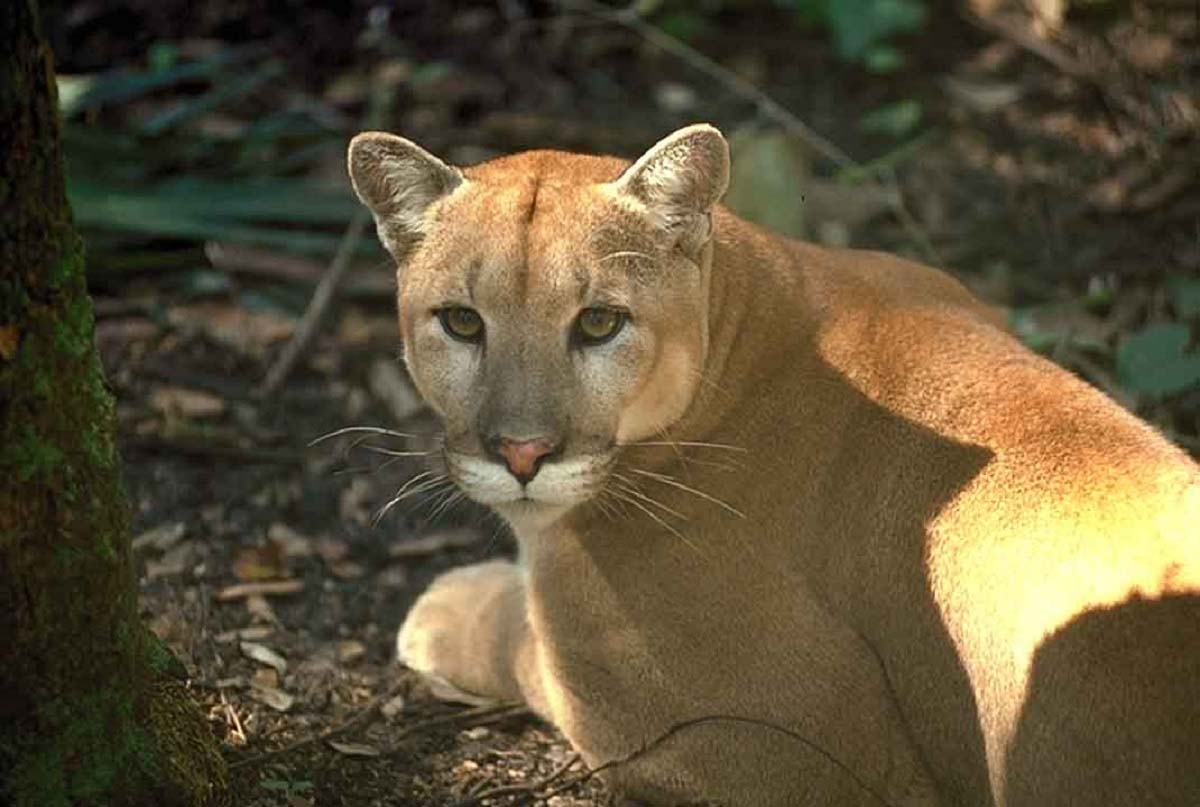
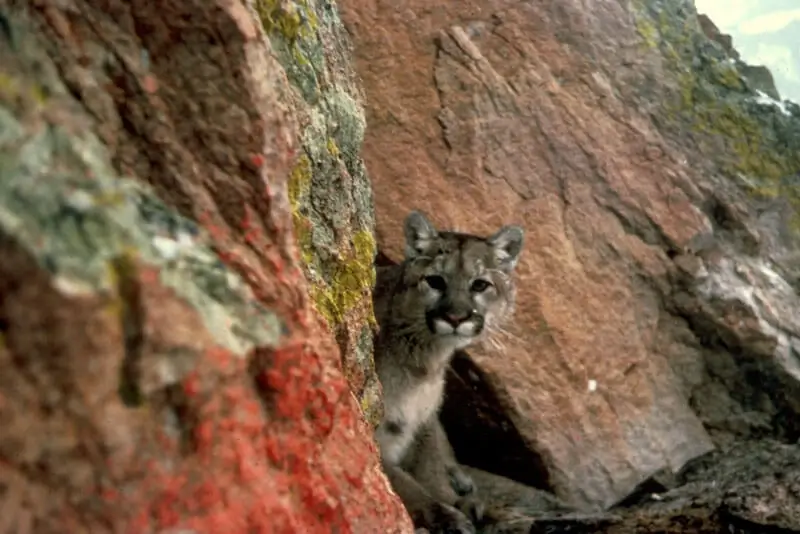
Animals often use chemical communication to mark territory.
Animals often use chemical communication to mark their territory. They leave behind pheromones, which are special chemical signals that other animals can detect. One way they do this is by creating scent posts. A scent post is an object or spot that an animal marks with its scent.
Scent posts help establish the boundaries of an animal’s territory. The mountain lion is a solitary animal that prefers to live and travel alone. A male mountain lion’s territory can be more than 100 square miles (about 259 km²). To mark it, the male often scrapes up piles of pine needles, dirt, or leaves with its hind feet and then urinates on the pile to leave a strong scent signal.
The Canada lynx also uses scent posts to mark its territory. It urinates on trees and tree trunks and may also leave claw marks. While claw marks are a visual signal, they can also carry chemical information. Many animals have scent glands in their paws and claws, so when they scratch a tree, they leave behind a scent that other animals can detect.

Snakes use their forked tongues to "taste" or collect pheromones of prey animals that are in the air.
Snakes use their forked tongues to help them “smell” the world around them in a very special way. When a snake flicks its tongue out, it is collecting pheromones from the air, ground, or nearby objects. These chemicals can come from prey animals, predators, or other snakes.
After the tongue is pulled back into the mouth, it touches a special organ in the roof of the mouth called Jacobson’s organ (also known as the vomeronasal organ). This organ analyzes the chemicals gathered by each tip of the forked tongue. Because the tongue is split into two tips, the snake can compare signals from both sides, which helps it figure out the direction the scent is coming from.
This system allows snakes to track prey, find mates, and detect danger—even when they cannot see well or when it is dark.
In a way, a snake’s tongue works like a built-in chemical detector, giving it detailed information about its environment.
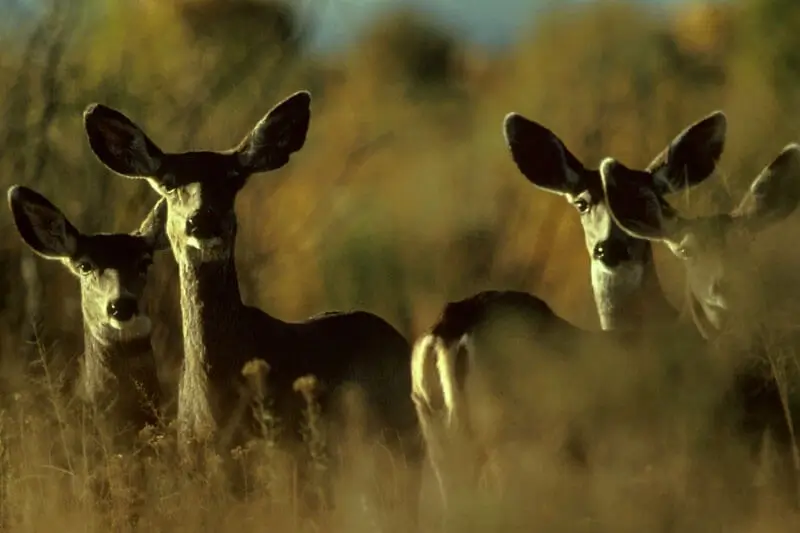
The mule deer has scent glands on its hind legs right above its hooves.
Some animals use scent to recognize family members, and mule deer are a good example. They have scent glands on the backs of their hind legs, just above their hooves. These glands produce unique smells that help deer identify one another.
Fawns often find their mothers by sniffing these glands, which helps them stay close and safe. Mule deer also sniff each other’s hind legs when they are in groups to recognize individuals and communicate.
Scent can also show emotion or behavior. When male mule deer become aggressive, the hair around their scent glands may stand up, signaling tension or dominance.
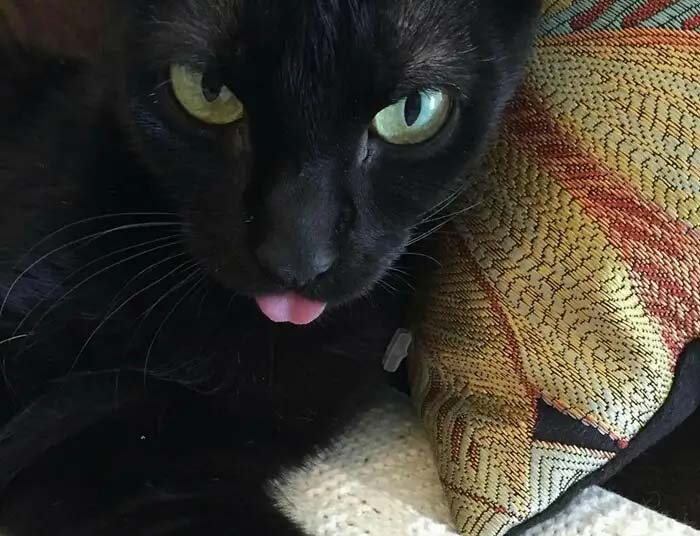
Domestic cats have scent glands near their mouths, on their foreheads and at the base of their tails.
Have you ever seen a house cat rubbing its head up against someone? It is marking its territory. Domestic cats have scent glands near their mouths, on their foreheads, and at the base of their tails. They use these glands to mark territory.
When other cats smell the scent, they know that another cat has marked its territory. Male domestic cats mark their mating territory by urinating. The next time you see a cat rubbing up against something, you’ll know that it is claiming it as its property.
