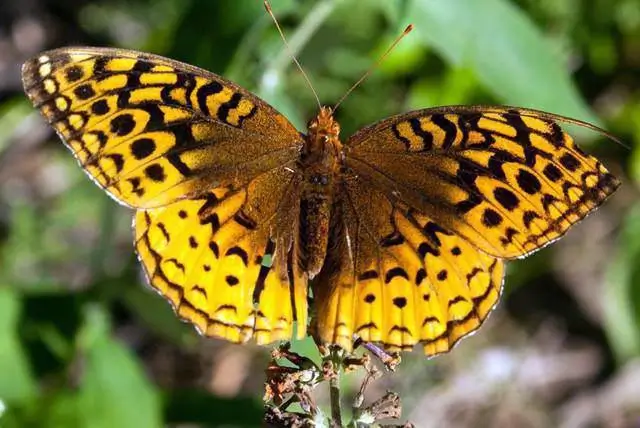
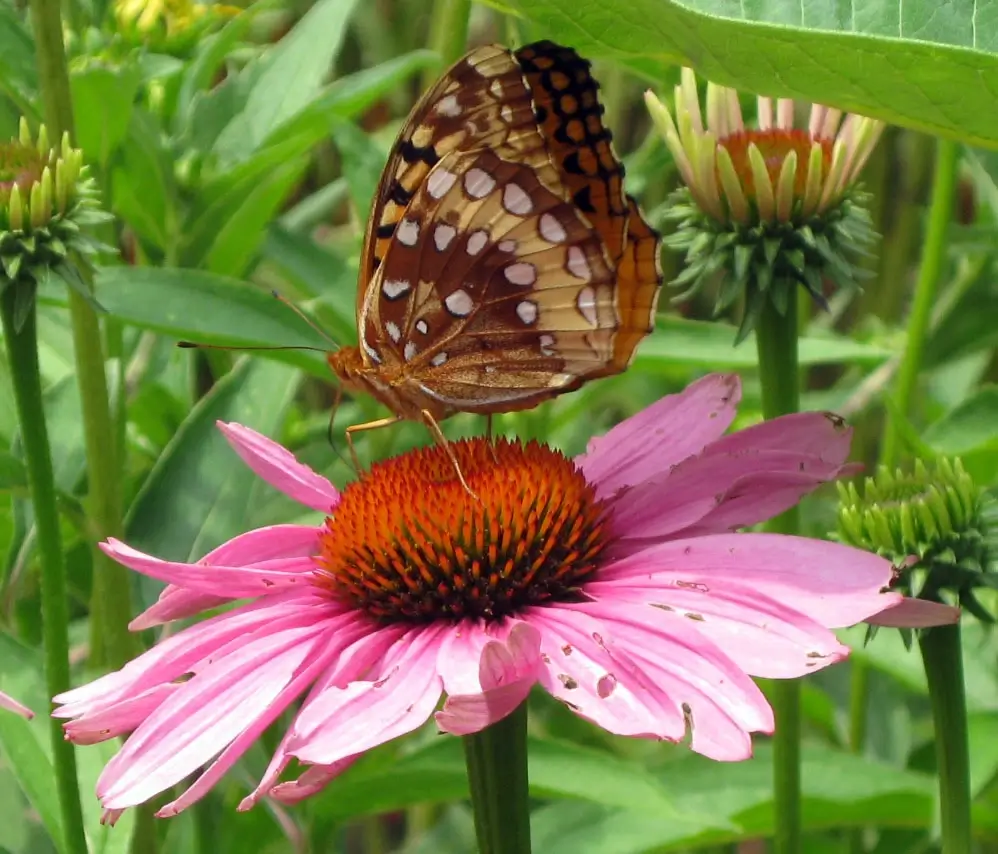
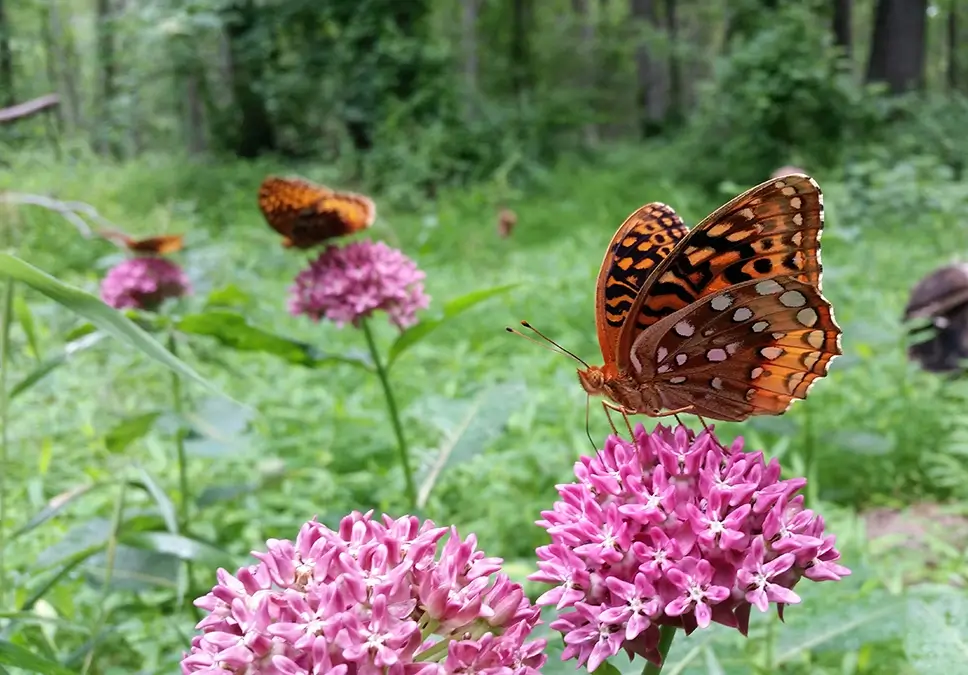
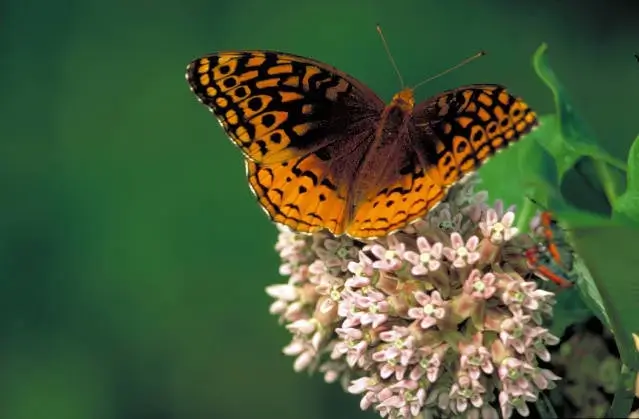
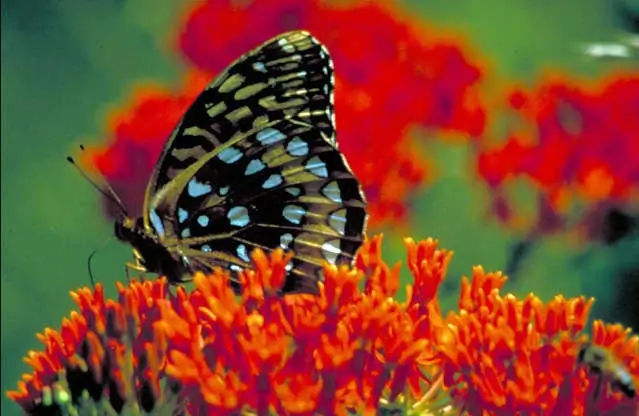
The wingspan of the great spangled fritillary is 2.5 to 4 inches (6.4-10.2 cm).
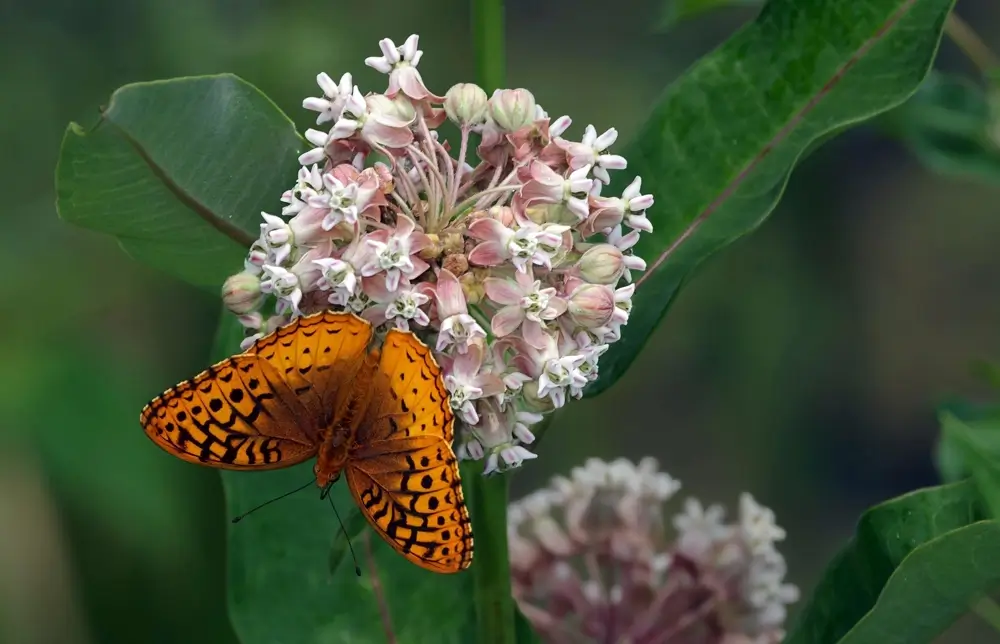
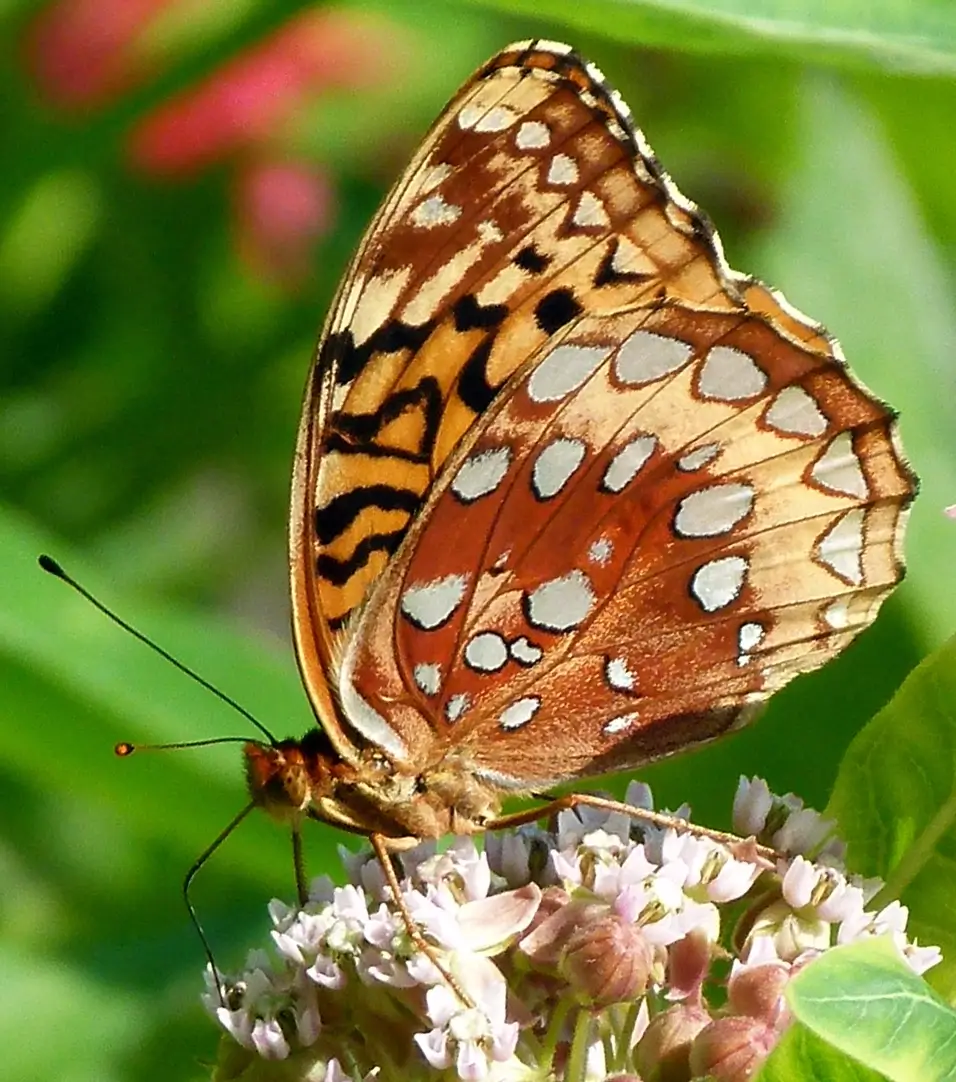
It has scalloped orange forewings and hindwings. Females are a darker orange than males. It has black spots on the upper side of its wings and silver spots on the underside.
Habitat
The great spangled fritillary is found in open, moist places, including fields, pine and oak woods, conifer forest openings, and meadows.
Diet
The great spangled fritillary caterpillar eats the leaves of various violet species. They eat at night. During the day, the caterpillar hides under the leaves.
Adults eat the nectar from many species of flowers, including milkweeds, thistles, violets, ironweed, dogbane, mountain laurel, verbena, vetch, bergamot, red clover, joe-pye weed, and purple coneflower.
Life Cycle
The great spangled fritillary mates in June or July. The female lays her pale brown eggs on or near violets in August and September.
The caterpillars are black with orange-tipped spines. They overwinter until spring, when they eat young violet leaves.
Behavior
Did You Know?
Support for NatureWorks Redesign is provided by:
The Great Spangled Fritillary in NH
The great spangled fritillary is found across New Hampshire.
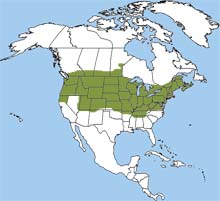
The great spangled fritillary is found from southern British Columbia east to the Canadian Maritimes and south to central California and Northern Georgia.