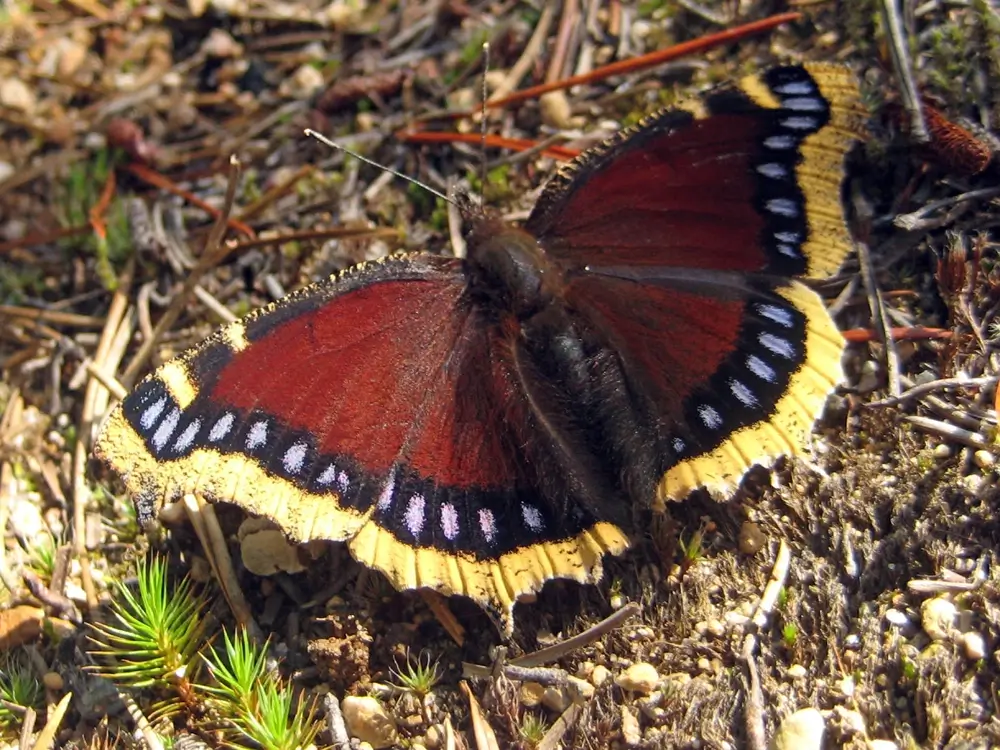
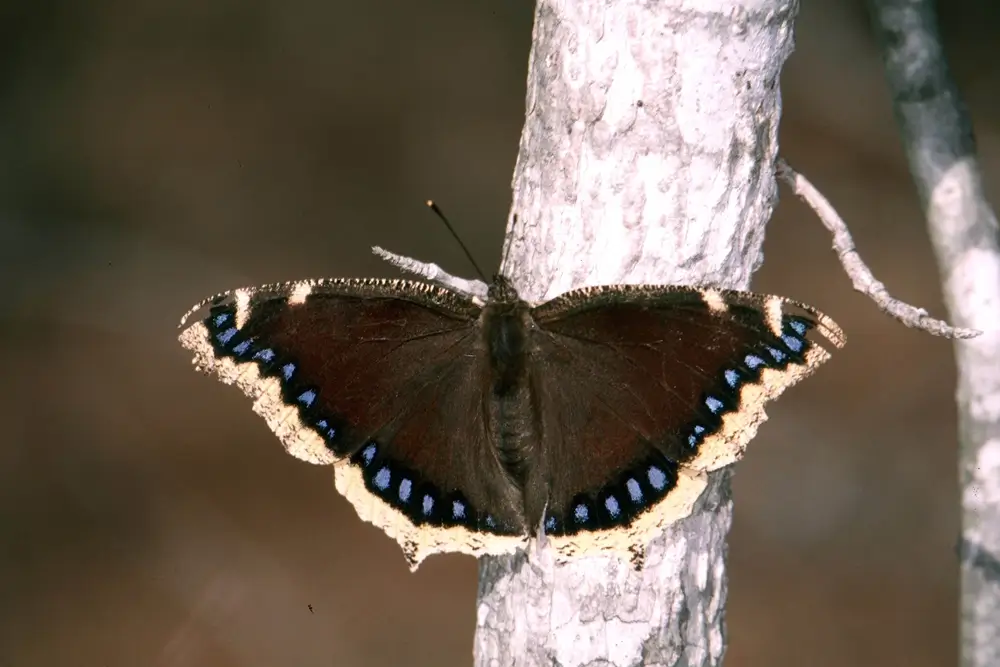
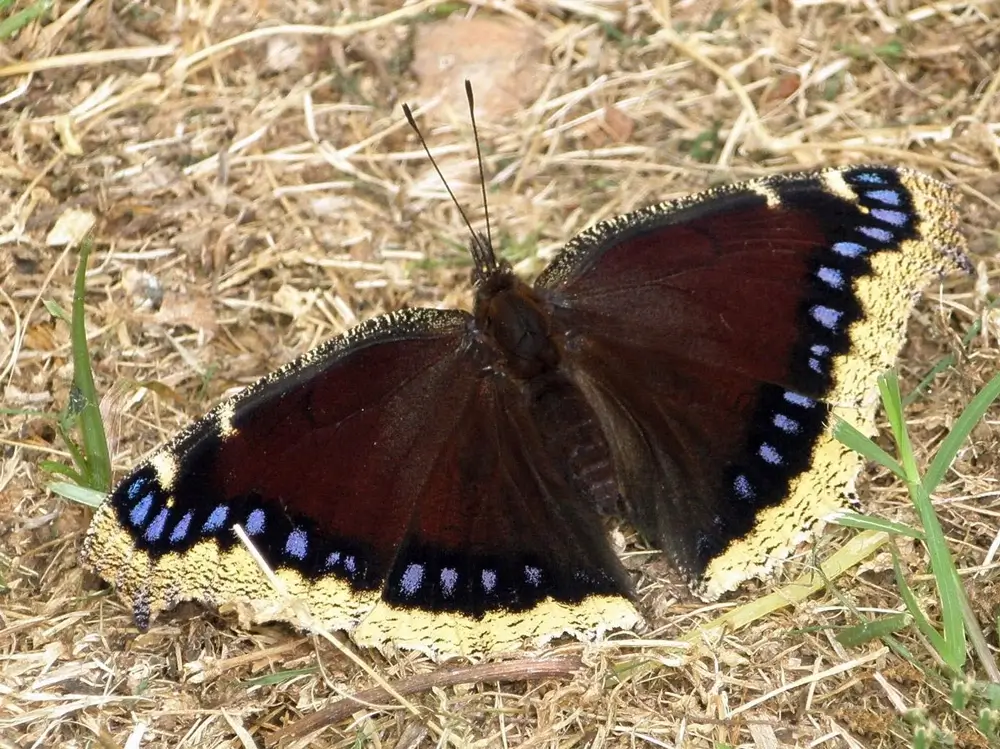
The wingspan of the mourning cloak is 3 to 3.5 inches (7.6-8.9 cm). It has ragged and scalloped maroon-brown wings with bright blue spots and a band of yellow at the edges.
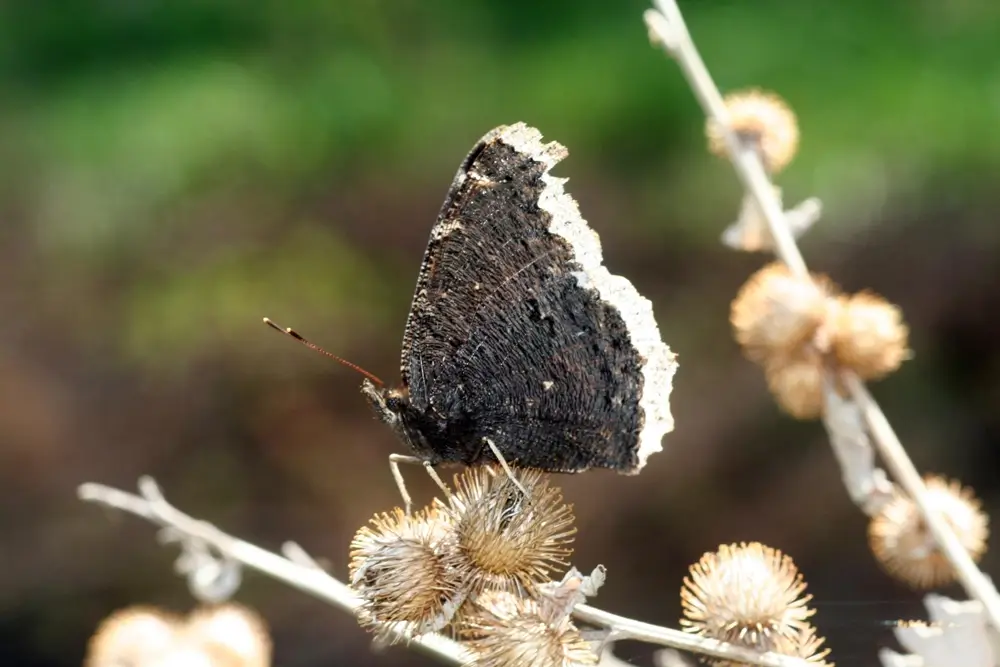
The undersides of its wings are blackish-brown, edged by a brownish-yellow border. When it is at rest on a tree with its wings folded, it is perfectly camouflaged.
Habitat
The mourning cloak is found in sunny glades, forest borders, parks, gardens, open woodlands, streams, lakes, ponds, and groves.
Diet
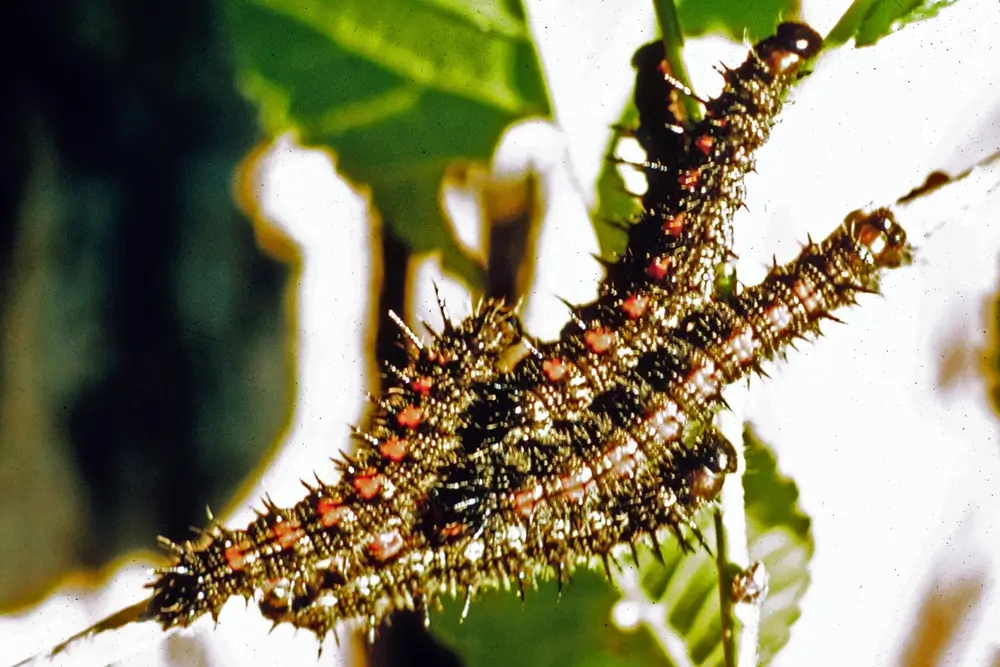
The caterpillar of the mourning cloak feeds in groups on the leaves of deciduous trees, including the willow, elm, hackberry, aspen, cottonwood, poplar, rose, birch, hawthorn, and mulberry.
The adult butterfly feeds on tree sap and rotting fruit. It may also eat nectar from flowers.
Life Cycle
Mourning cloaks mate in early spring. The female mourning cloak lays pale yellow eggs in clusters on or around twigs. The eggs are usually laid on host trees like willow, elm, hackberry, cottonwood, poplar, rose, birch, hawthorn, and mulberry.
When the caterpillars hatch, they eat the leaves of the host plant. The caterpillars pupate and emerge as butterflies in June or July. Adult butterflies hibernate in the winter and emerge and mate in the spring. Some groups may migrate.
Behavior
Did You Know?
The mourning cloak gets its name from the dark cloaks people would wear when they were mourning someone who had died.
Support for NatureWorks Redesign is provided by:
The Mourning Cloak in NH
The mourning cloak is found throughout New Hampshire.
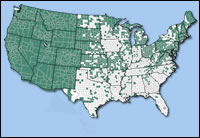
The mourning cloak is found throughout North America from Canada to southern South America. It is rare in the Gulf states and in Florida. It is also found in Europe and Asia.