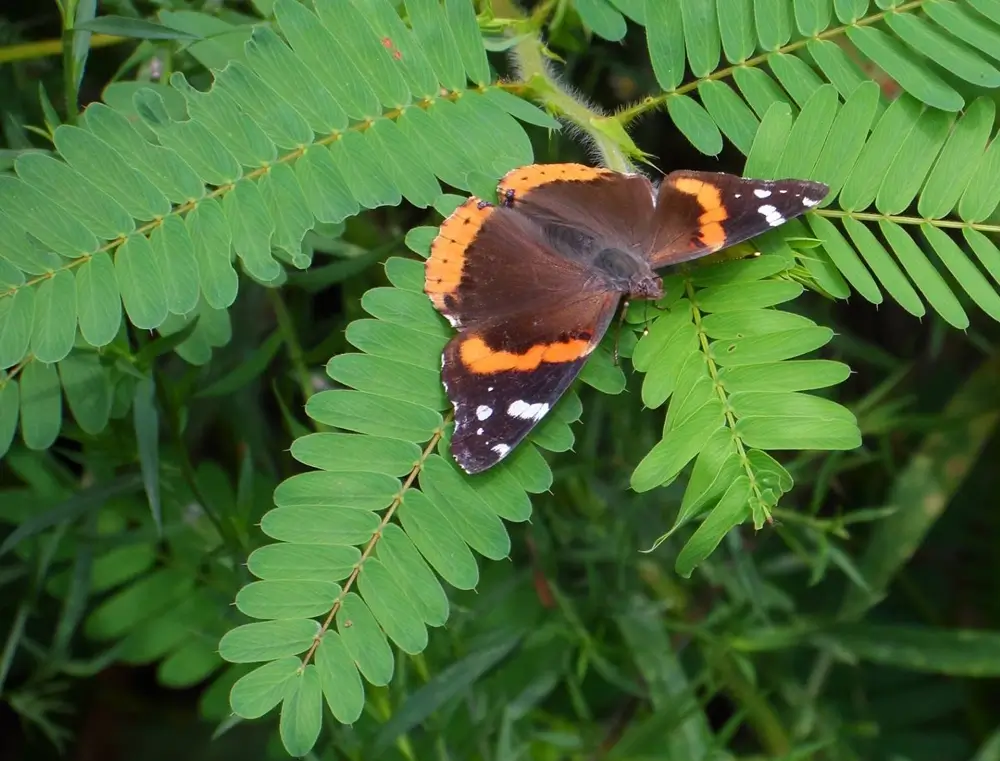
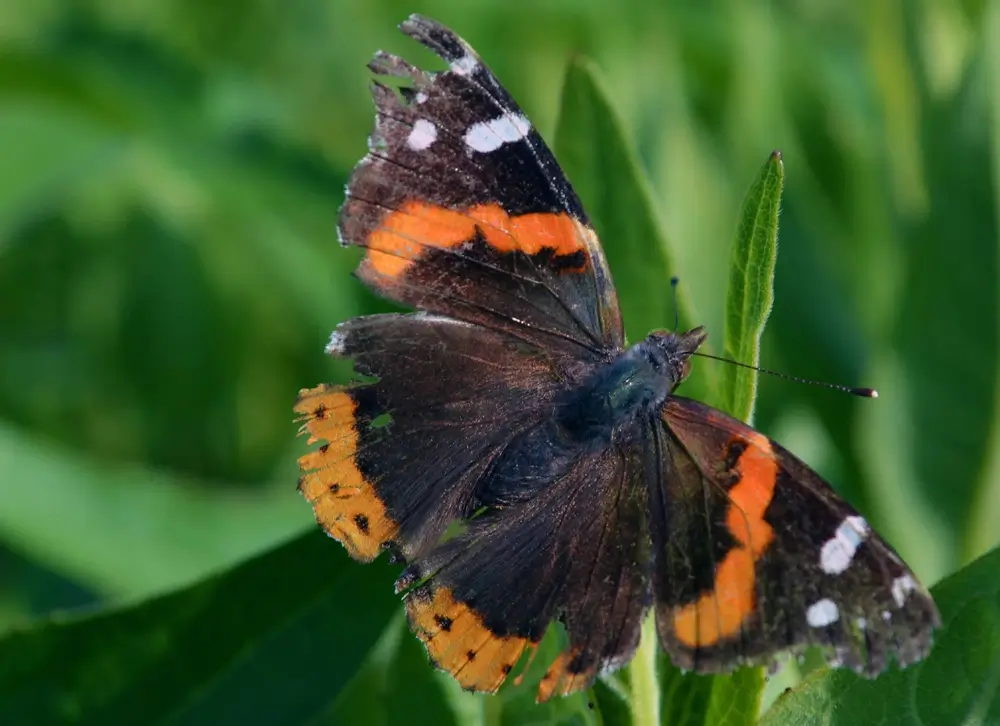
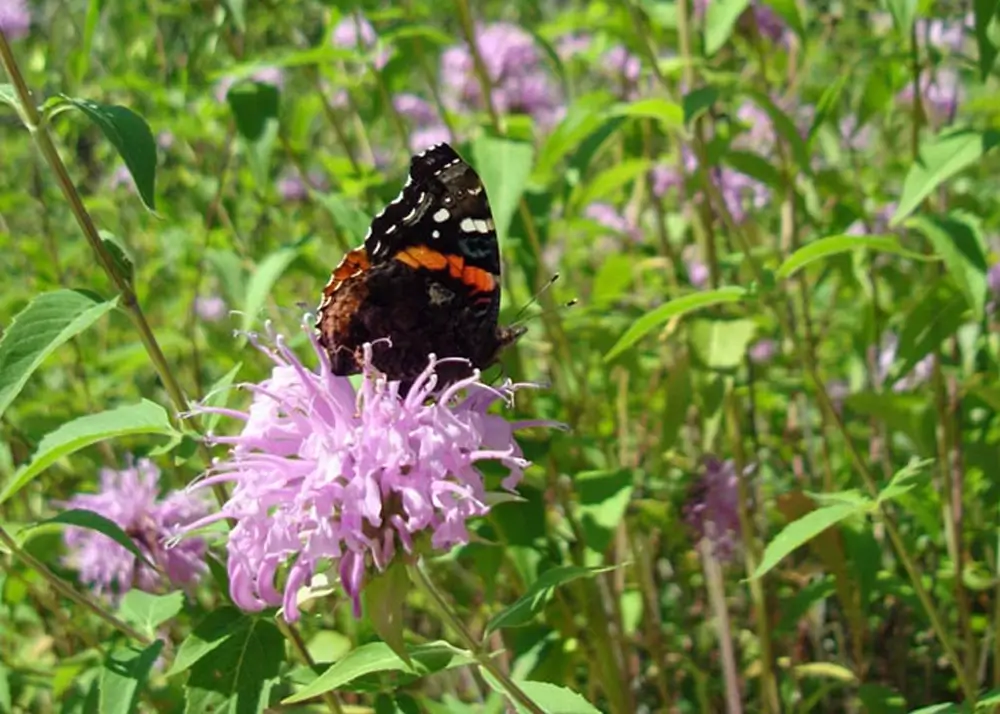
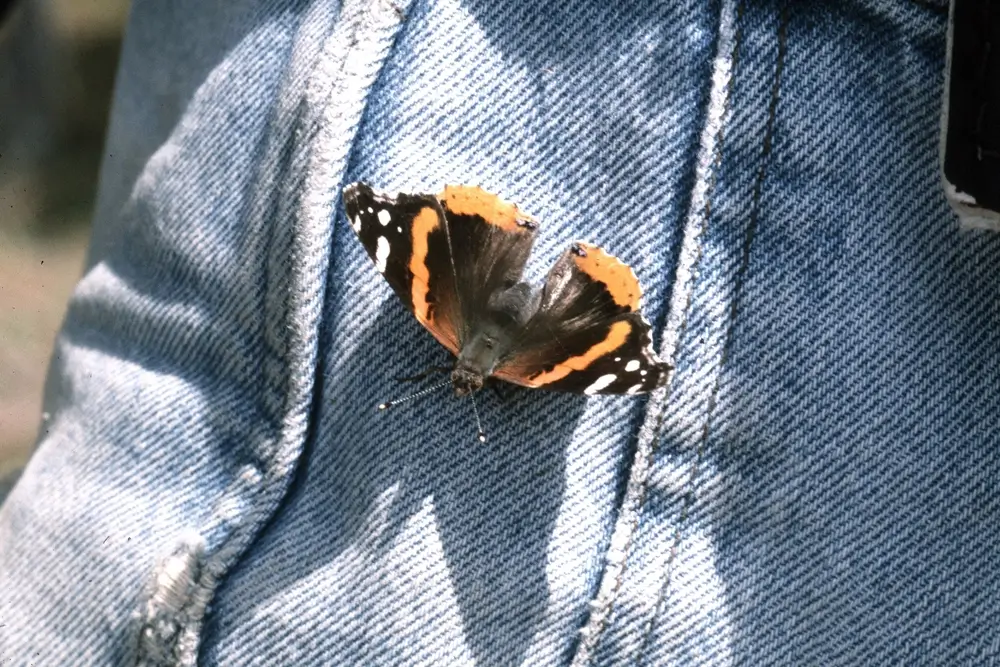
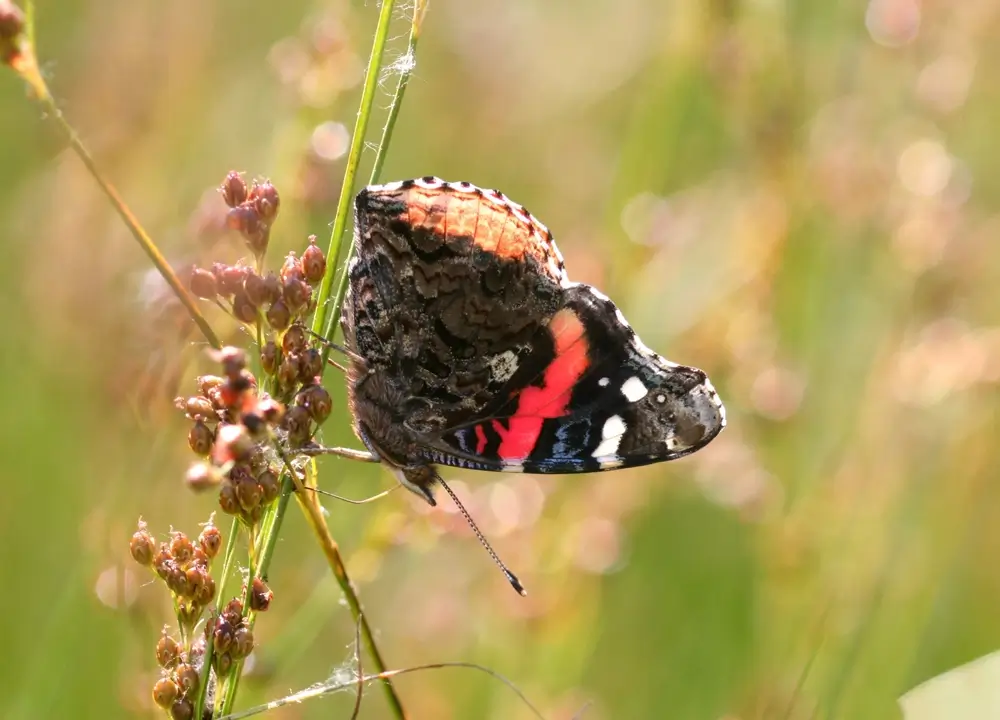
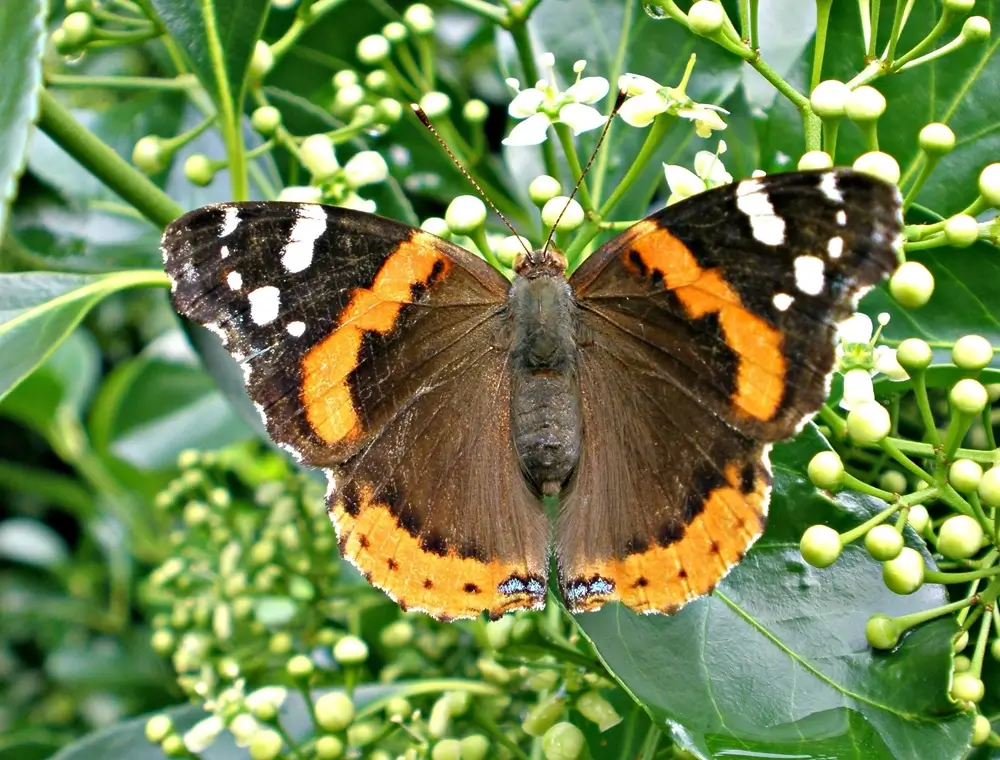
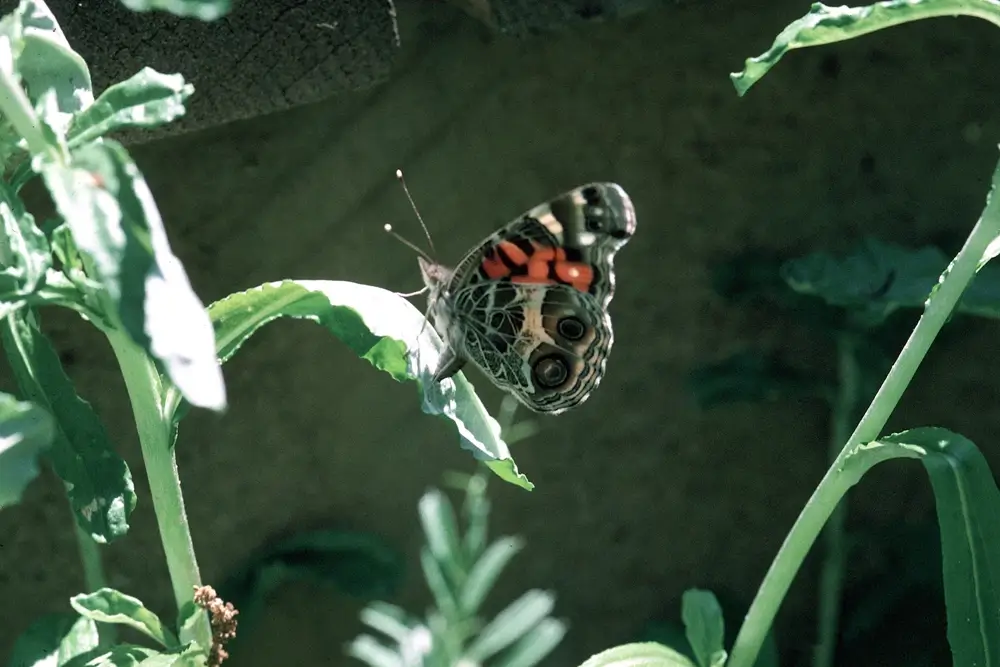
The red admiral has a wingspan of 2.75 to 3 inches (7-7.6 cm). It has scalloped black to brown wings on its upperside with reddish-orange bands and white spots on its wingtips. Its underside is a mottled blue, brown, and black.
Habitat
The red admiral is found in moist woods and forests, yards, parks, meadows, marshes, and fields.
Diet
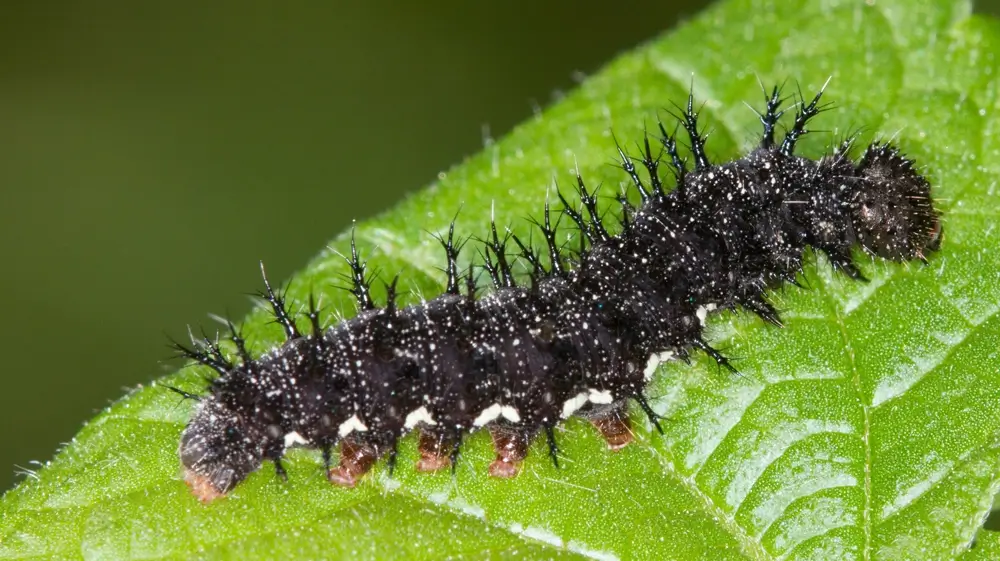
The red admiral caterpillar eats plants in the Urticaceae, or nettle family. Adult red admirals usually eat rotting fruit, tree sap, and bird droppings, although they sometimes eat the nectar of flowers like daisies, asters, goldenrod, butterfly bush, and milkweed.
Life Cycle
The female red admiral lays greenish eggs on a host plant, usually a nettle. The red admiral caterpillar encases itself inside a host plant’s leaf by wrapping the leaf in silk. It then feeds on the leaf.
In colder climates, the red admiral may have only one brood. In warmer climates, it may have as many as three broods. It lives year-round in warmer climates, and it migrates from colder areas.
Behavior
The red admiral is known as a people-friendly butterfly; it often lands and perches on humans.
Did You Know?
Support for NatureWorks Redesign is provided by:
The Red Admiral in NH
The red admiral is found throughout New Hampshire.
The red admiral is found from northern Canada south to Guatemala. It is also found in Hawaii, the Caribbean, New Zealand, Europe, Northern Africa, and Asia.