

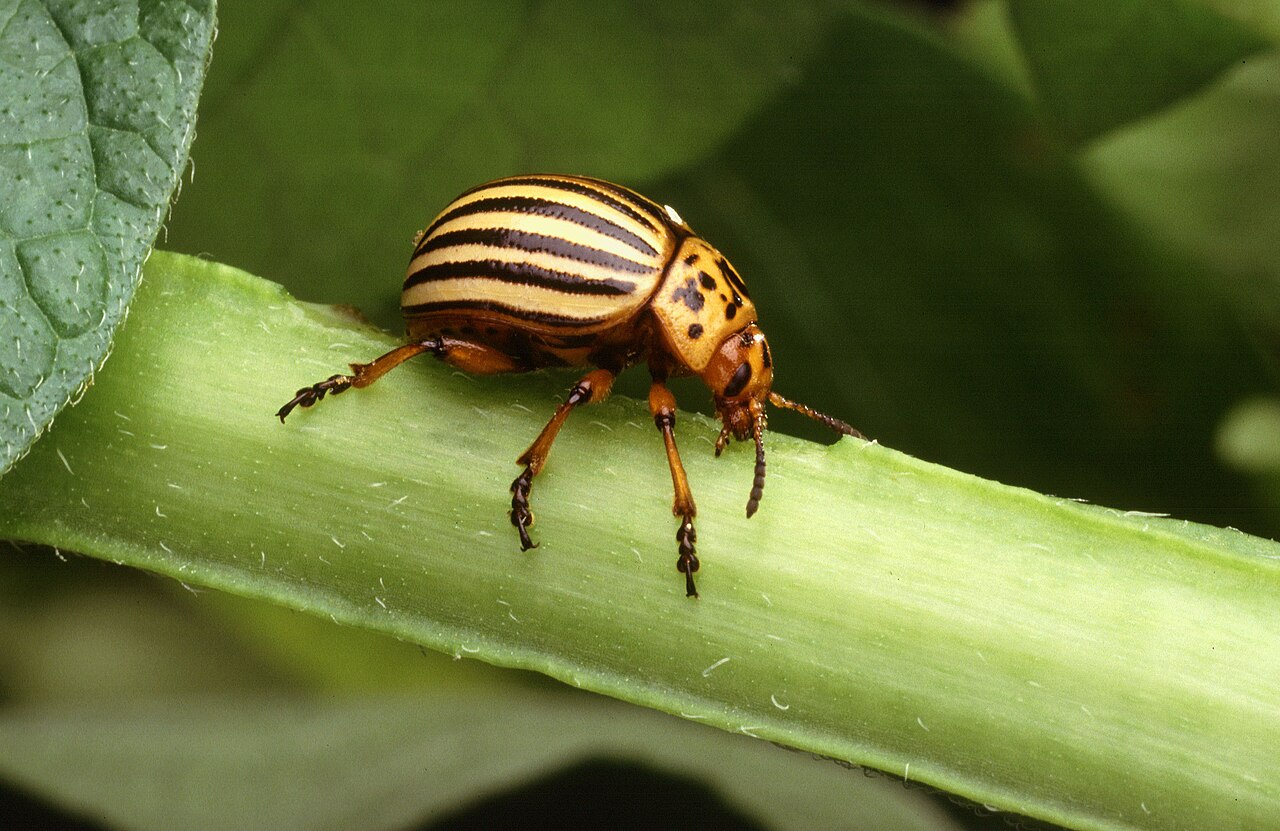
Colorado potato beetle (Leptinotarsa decemlineata)
DDT was first synthesized (made by combining simpler substances through a chemical reaction) in 1874 by Austrian chemist Othmar Zeidler, but at that time, its insect-killing properties were not known or understood.
That changed in 1939 when Swiss scientist Paul Hermann Müller discovered that DDT was extremely effective at killing insects. His discovery was so significant for public health that he was awarded the Nobel Prize in Physiology or Medicine in 1948 “for his discovery of the high efficiency of DDT as a contact poison against several arthropods.”
During World War II, DDT became widely used by the military and public health officials. It was sprayed to control mosquitoes and lice, which helped stop the spread of serious diseases such as malaria and typhus in soldiers and civilian populations. Because it worked quickly, was easy to apply, and killed many disease-carrying insects, DDT was often described as a “miracle chemical” during this time.
After the war, starting around the mid-1940s, DDT use expanded into agriculture. Farmers used it on crops to control destructive insects like tobacco budworms, potato beetles, and other pests that could damage or destroy harvests.
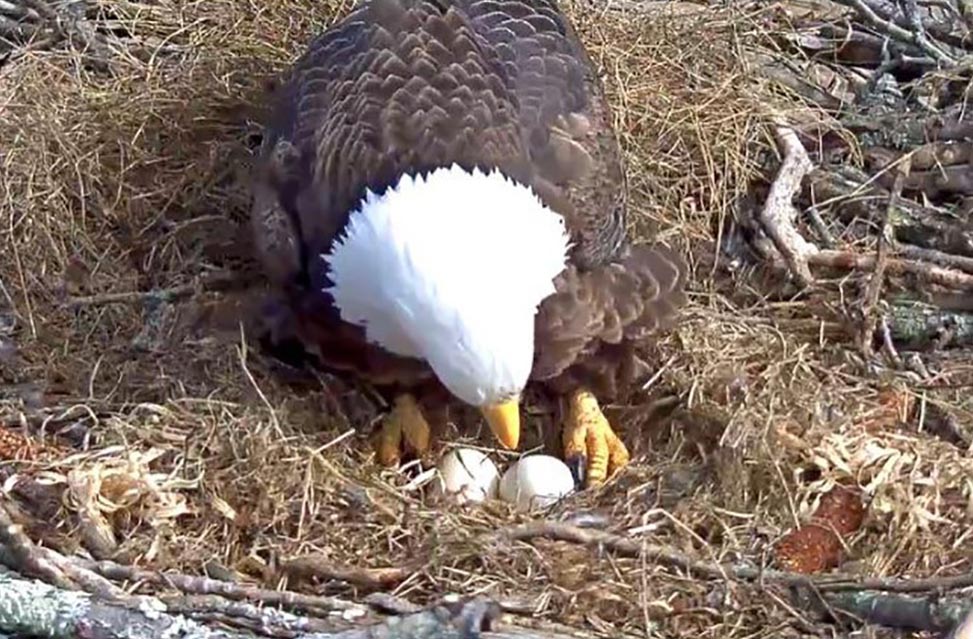
A bald eagle rolls its eggs over.
DDT made it harder for birds to absorb calcium, which led to thinner eggshells. As a result, many eggs broke before they could hatch.
This was especially harmful to birds like eagles and ospreys, which lay only 1–3 eggs at a time. Losing even one egg could greatly reduce their populations.
BIOMAGNIFICATION
One reason DDT was so damaging is that it does not break down in the bodies of animals. Instead, it builds up every time an animal is exposed to it. This buildup is called accumulation, and it leads to biomagnification.
Biomagnification is when a chemical becomes more concentrated as it moves up the food chain.
Small animals pick up small amounts of DDT, and predators eat many of those animals. As a result, top predators end up with the highest levels of DDT in their bodies.
Birds of prey like bald eagles, osprey, and peregrine falcons were especially affected because they ate many contaminated animals, causing DDT to build up to dangerous levels in them.
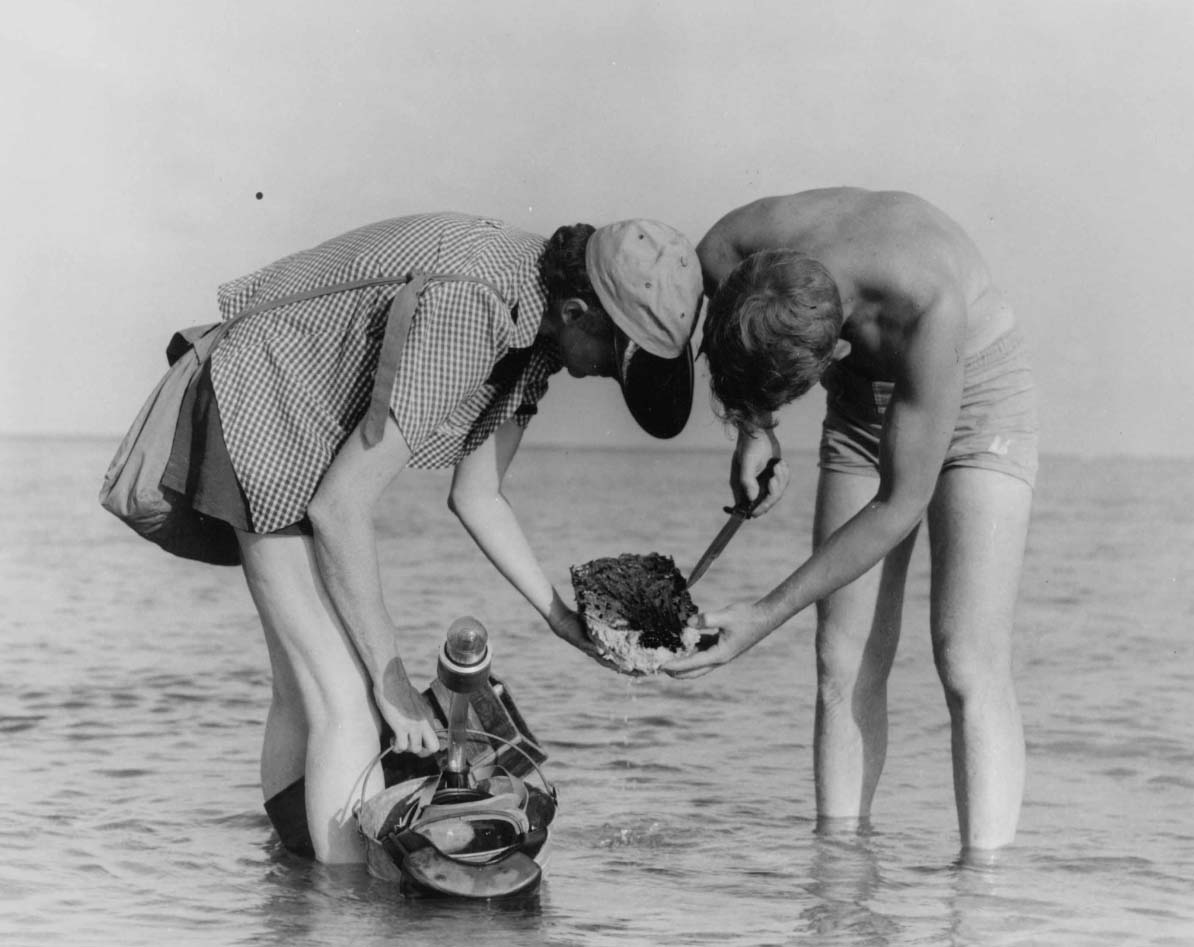
Rachel Carson and Robert W. "Bob" Hines looking for snapping shrimp in a sponge in the Florida Keys, 1952.
In her book Silent Spring, Rachel Carson urged scientists and the government to carefully study pesticides and make sure they were used safely. She warned that chemicals like DDT could harm wildlife, people, and the environment if used without proper testing.
Her work got a lot of attention. The government held congressional hearings and ordered new scientific studies to better understand the effects of these chemicals. These studies showed that DDT caused serious problems for some birds, including thinning their eggshells. This made it harder for species like eagles and falcons to reproduce.
Because of these findings, the Environmental Protection Agency banned DDT in the United States in 1972.
Today, many people believe that the publication of Silent Spring marked the beginning of the modern environmental movement. It helped people see how human actions can affect nature and inspired new laws to protect the environment.
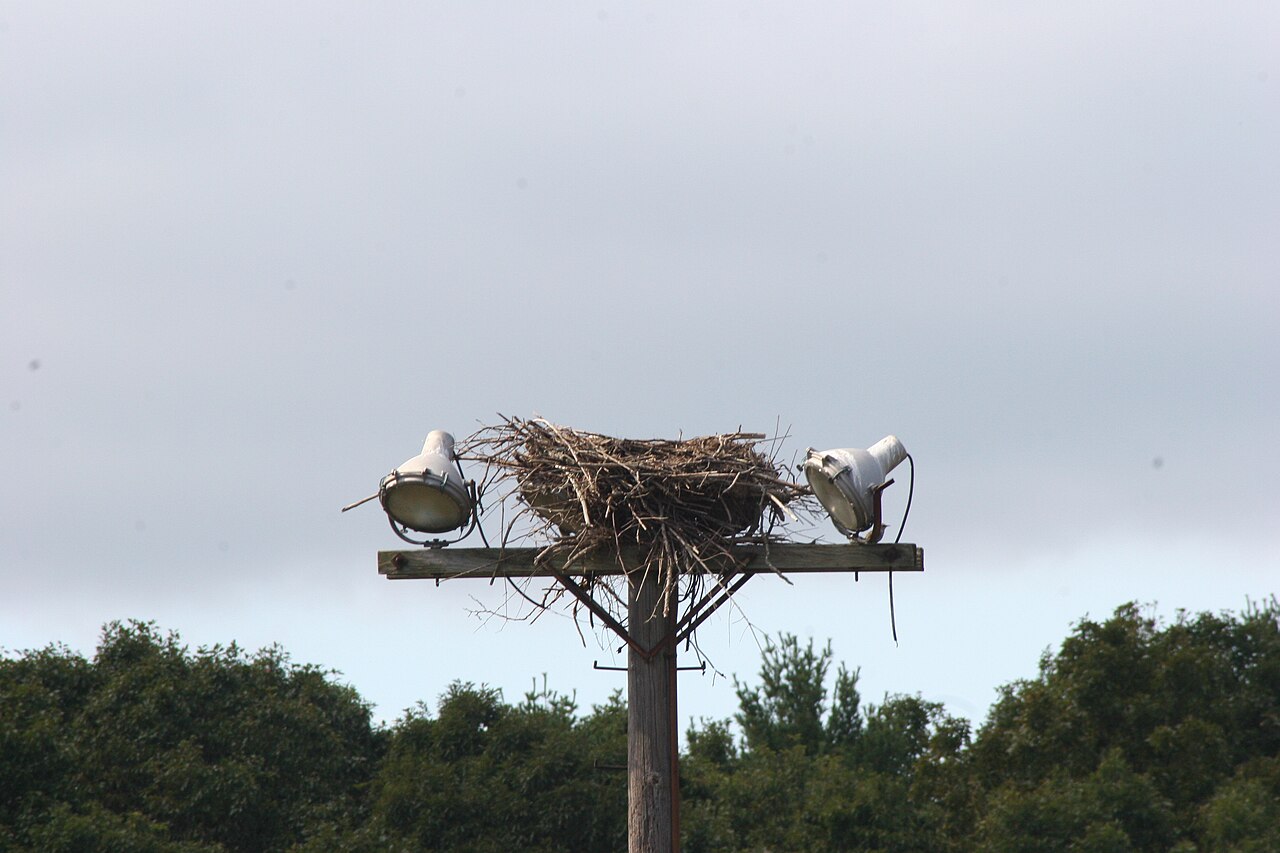
Osprey nest on light tower at Great Bay National Wildlife Refuge, Newington, NH.
Since the United States banned the pesticide DDT in 1972, the populations of birds of prey like the Bald Eagle and the Osprey have made an incredible comeback.
By 1963, there were only 417 nesting pairs of bald eagles left in the continental United States. Thanks to the ban on DDT, habitat protection, and conservation efforts, their numbers began to recover. By the early 2000s, there were more than 8,000 nesting pairs—and today, there are over 70,000 nesting pairs across the lower 48 states.
Ospreys also rebounded after DDT was banned. In 1981, there were about 8,000 breeding pairs in the United States. By 1994, that number had grown to 14,246 pairs, and their population has continued to increase in many areas. As of the early 2000s, there were around 20,000 nesting pairs.
In New Hampshire, there are about 120 nesting pairs of ospreys (the exact number can vary slightly from year to year). Today, osprey successfully raise young in several major watersheds, including the Androscoggin, Merrimack, Connecticut River, and Great Bay systems.
Having a place to breed is critical to the survival of species like the osprey. Learn more about this bird and what scientists are doing to help the osprey breed and thrive. VIEW
