

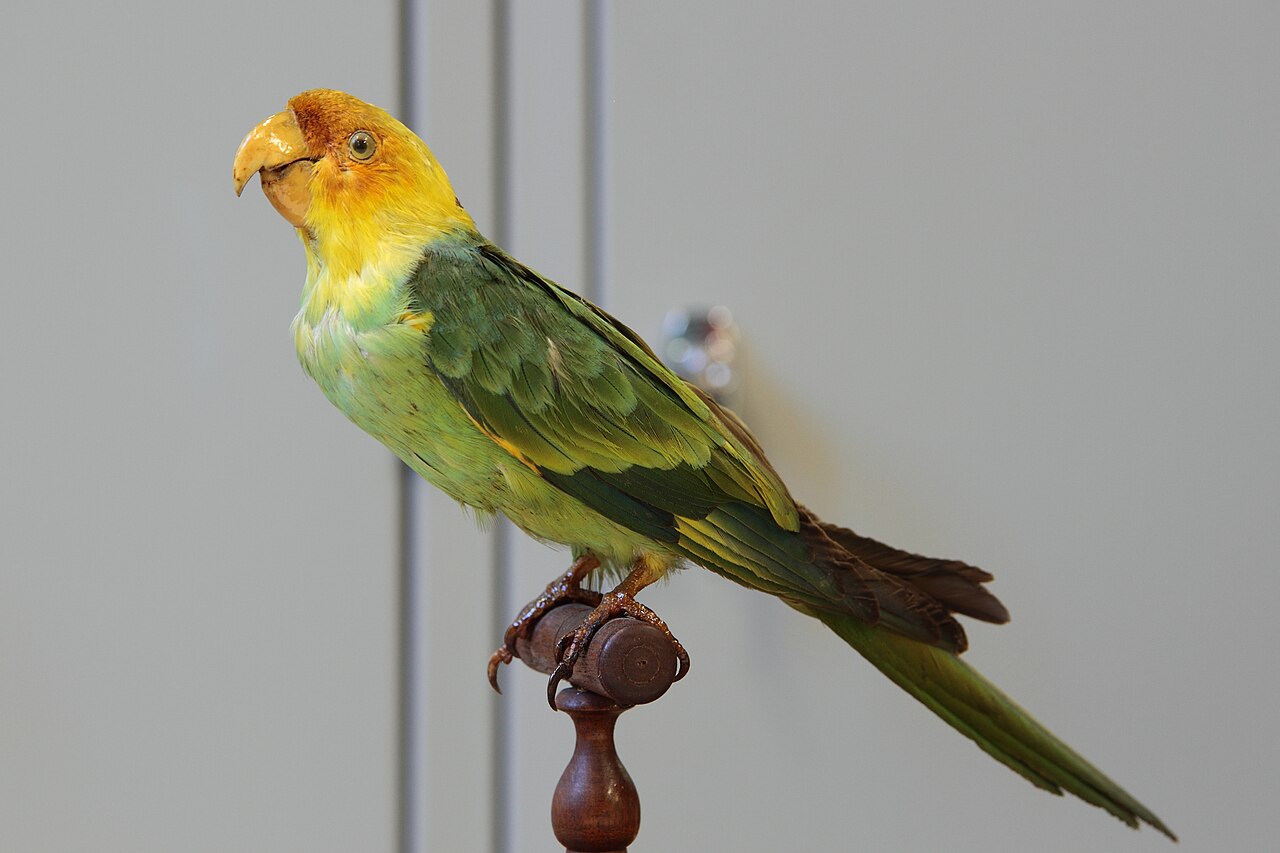
The Carolina parakeet was once common in the southeastern United States.
The Carolina parakeet was once common in the southeastern United States. The Carolina parakeet was a seed-eater that often ate seeds from fruit and grain crops. Farmers considered the parakeet a pest and killed them in large numbers. They were also often captured and kept as caged pets. They became extinct around 1920.
The heath hen was a prairie chicken subspecies once common along the eastern United States from Maine to Virginia. Overhunting and growing human populations reduced their numbers to fewer than 100 by 1907. A sanctuary on Martha’s Vineyard helped the population recover to about 800 by 1916, but a fire, harsh winter, and increased predators quickly reduced their numbers again.
Disease from domestic chickens further devastated the birds, leaving just 13 by 1927. The last heath hen died in 1932.
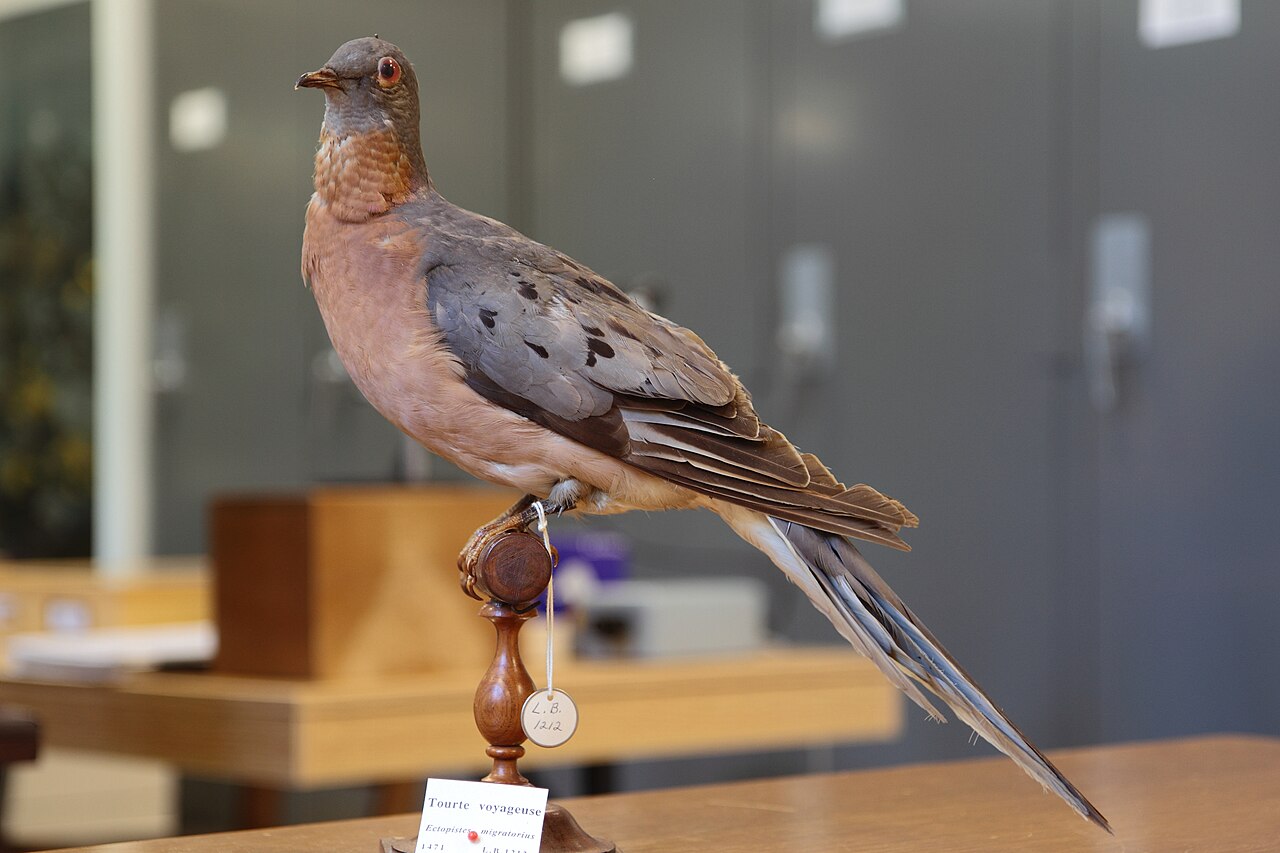
The passenger pigeon was a common bird in central and eastern North America. Scientists estimate that the population at one time may have numbered between three and five million birds. It lived in large colonies. It probably became extinct due to a combination of natural and man-made causes.
Hunting, along with a low reproduction rate, led to the bird’s extinction. The last known passenger pigeon died at the Cincinnati Zoo in 1914.
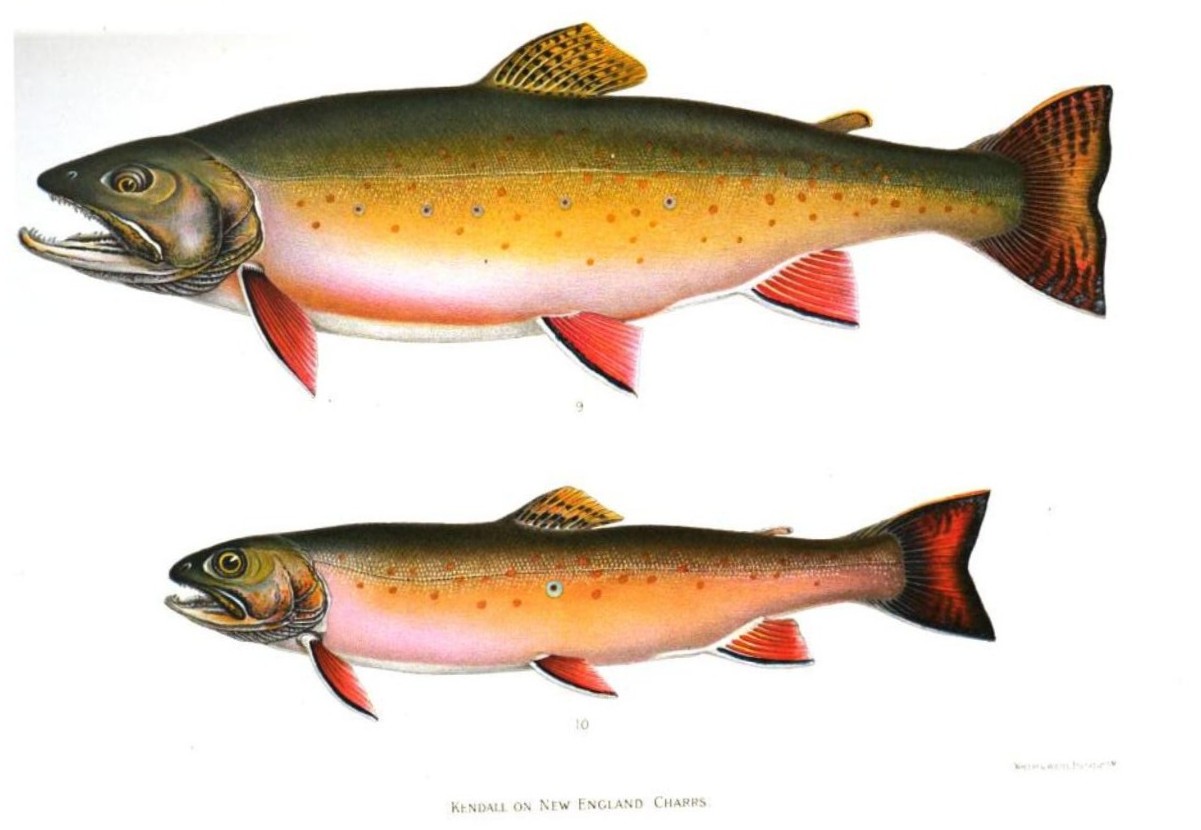
The silver trout was once found in New Hampshire.
A freshwater fish from New Hampshire lakes that became extinct due to overfishing and competition from introduced fish. It was found in the center of Dublin/Monadnock Pond for most of the year, migrating to the shallows to spawn during the fall. It was declared extinct in 1930.
The blackfin cisco, also known as the jumbo herring, was once found in Lakes Huron, Michigan, Ontario, and Superior. It was a silver fish with black fins and a black stripe on its spine. By the 1940s, its numbers had been greatly reduced due to overfishing. Predation by the sea lamprey, an introduced species, further reduced their number, and they became extinct by 1960.
The blue pike was once found in the Great Lakes region of the United States and Canada. Overfishing, pollution, and the introduction of non-native species led to its extinction in 1970.
This very large freshwater fish from China could grow to be over 20 feet long. It went extinct because of overfishing and dam construction.
Declared extinct in 2020, this small marine fish lived near Australia. It is the first modern marine bony fish known to go extinct, likely due to pollution, habitat loss, and invasive species.
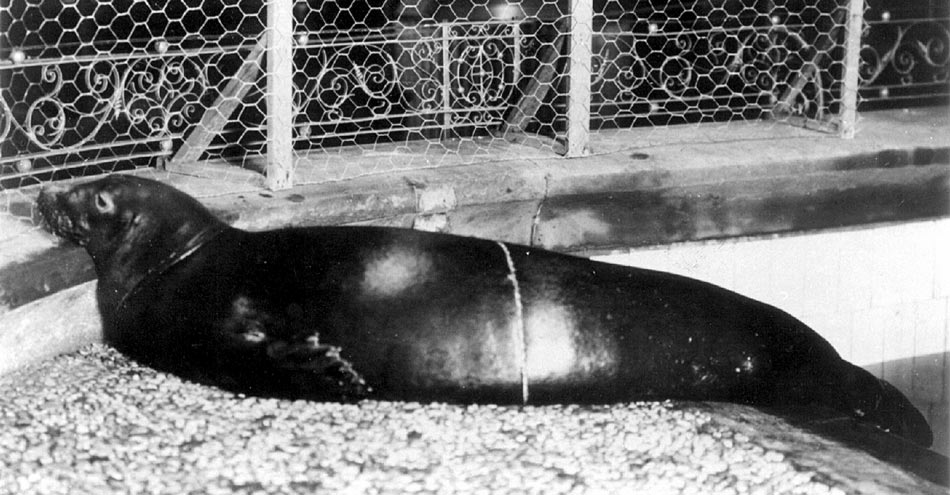
The last confirmed sighting of the Caribbean monk seal was in 1952, and it is now extinct.
The eastern elk once lived across much of the eastern United States, especially in forests and open areas. Heavily hunted by people, these large animals also lost habitat when it was replaced by farms and towns. By around 1880, the eastern elk had disappeared.
The sea mink lived along the rocky coasts of New England and eastern Canada. It was bigger than the American mink and likely a strong swimmer. People hunted the sea mink for its thick fur, and by the late 1800s, it had become extinct.
This seal lived in the warm waters of the Caribbean Sea and the Gulf of Mexico. It was hunted for its oil, meat, and skin. Human activity also disturbed the beaches where it rested. The last confirmed sighting was in 1952, and it is now extinct.
The Pyrenean ibex was a type of wild goat that lived in the mountains between Spain and France. It declined because of hunting and competition with farm animals. The last known ibex, named Celia, died in 2000. Scientists tried to clone it in 2003, but the clone only lived for a few minutes.
Steller’s sea cow was a huge ocean mammal that could grow up to 30 feet long. It lived in cold waters in the North Pacific Ocean. Because it moved slowly, hunters could easily catch it for food and oil. It became extinct just 27 years after it was first discovered by scientists in 1741.
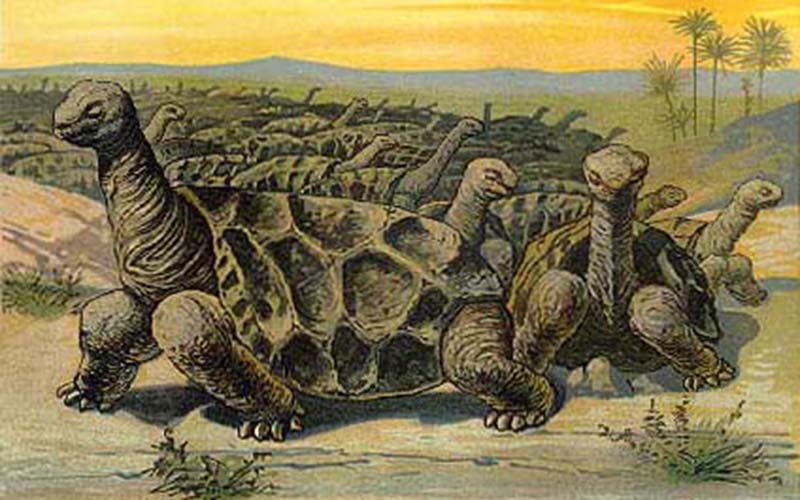
The Rodrigues Island giant tortoise went extinct in the late 1700s.
This rare snake lived only on Round Island near Mauritius. Its flexible jaws helped it prey uniquely. Last seen in the 1970s, it is now extinct. Introduced animals, such as goats and rabbits, destroyed their habitat by eating the island’s vegetation.
Found on Rodrigues Island in the Indian Ocean, this large tortoise went extinct in the late 1700s due to human hunting and invasive animals such as rats and pigs, which destroyed nests and ate eggs.
Found only on Christmas Island, this small was declared extinct in the wild in the 2010s, with the last individual dying in 2014. Invasive species, especially the yellow crazy ant, caused its decline.
This secretive lizard lived in Jamaica and likely went extinct in the 1800s. Habitat loss and introduced predators like cats and mongooses were the main causes.
