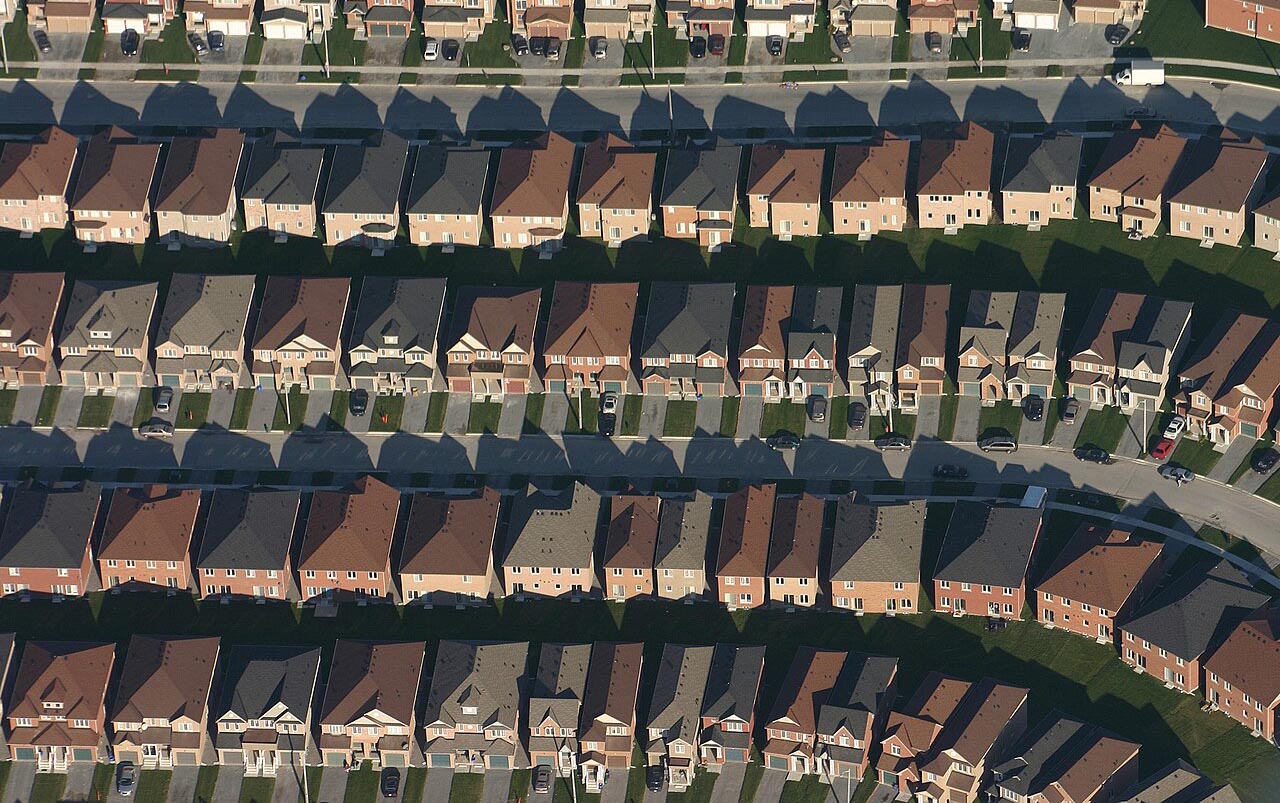
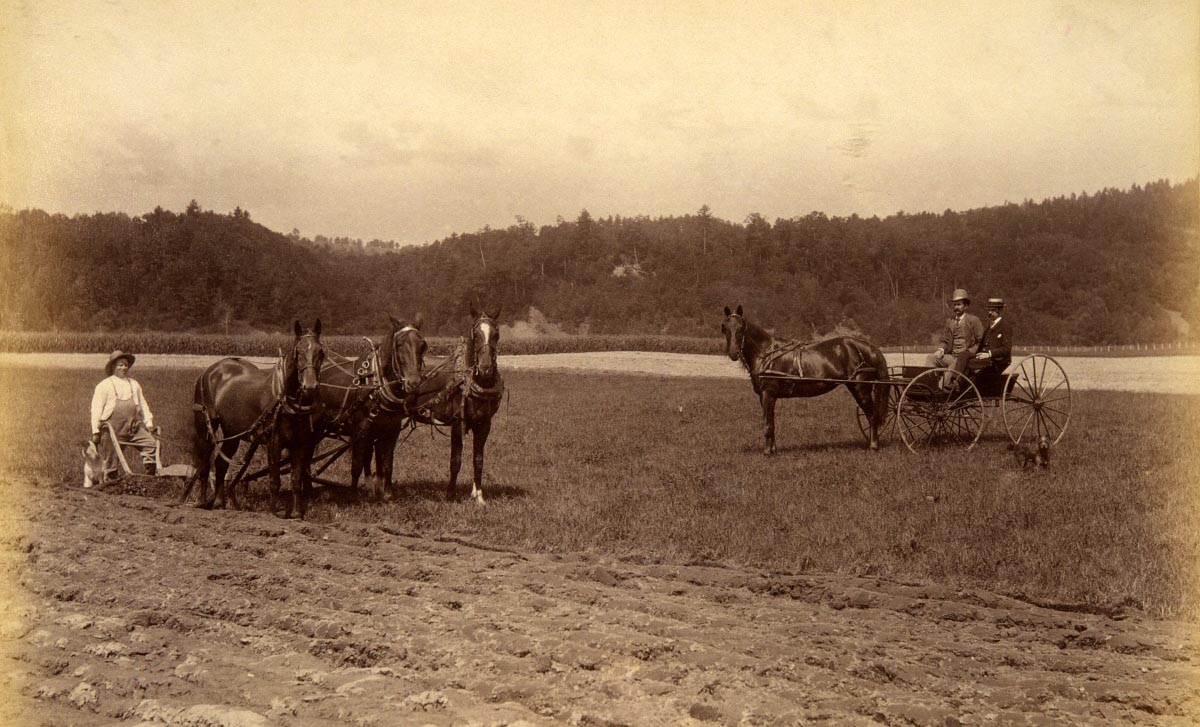
Farm in Charlestown, New Hampshire
In the 1700s and 1800s, most people lived either in cities or in rural (country) areas, but life was very different in each place.
In cities, people worked in factories, running shops, or providing services. Cities had markets where people could buy food, clothing, and other supplies.
However, cities did not produce everything people needed. Much of the food, raw materials, and fuel used in cities came from farms and forests in the countryside.
In rural areas, most people lived on farms. Farm families often grew their own food, raised animals, and made many of the things they needed, such as clothing or tools. They did not rely as much on stores as city residents did.
Farmers sometimes traveled to nearby towns or cities—often by wagon or on horseback—to sell extra crops like corn, wheat, or vegetables, and to buy items they could not make themselves.
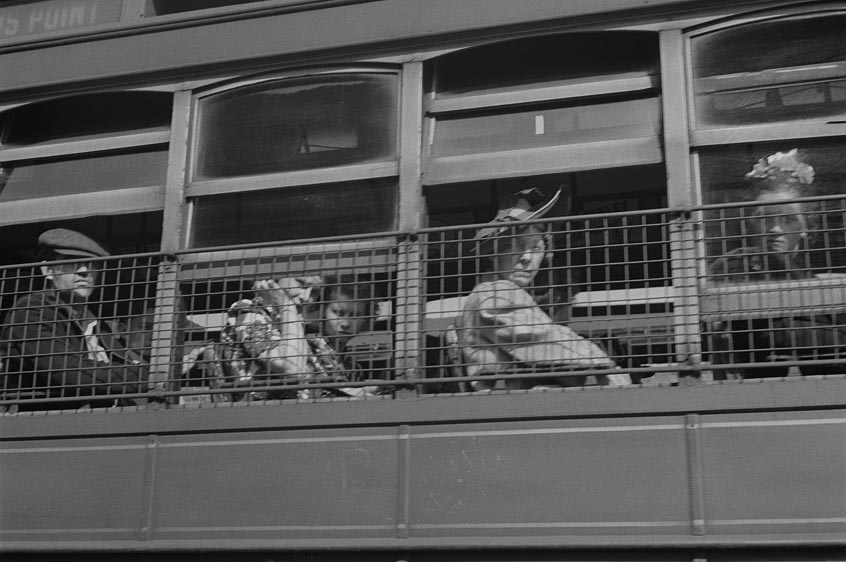
Trolley, 1917
With the development of trains and electric trolleys in the late 1800s, people were able to travel much faster and further than before. This made it possible for the first suburbs to grow along train and trolley lines. Instead of living crowded in cities, some families chose to move to areas just outside the city where there was more space, cleaner air, and quieter neighborhoods.
Even though they lived farther away, these residents could still travel into the city each day for jobs, shopping, or school. Because many people left their homes in the morning to work in the city and returned at night, suburbs are sometimes called bedroom communities.
In the early 1900s, the invention and growing popularity of cars—and the building of better roads and highways—helped suburbs grow even faster. People were no longer limited to living near train or trolley lines. Over time, this led to the spread of suburbs in many parts of the United States and other countries.
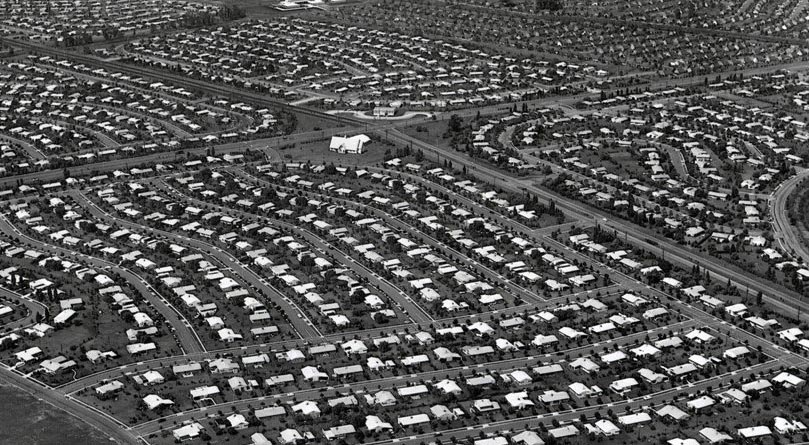
Levittown, PA, 1959
The end of World War II led to a huge growth in suburbs in the United States. Soldiers returning home were ready to settle down, get jobs, and start families. This time period is often called the “baby boom” because so many children were born.
The government helped make this possible. Programs like the GI Bill gave veterans low-interest home loans, making it easier and more affordable to buy houses. Because of this, many families chose to move out of crowded cities into newly built neighborhoods outside of them, called suburbs.
Between 1950 and 1956, suburban areas grew rapidly by about 46%. To make room for all these new homes, developers built large neighborhoods on land that had once been farms or forests. This changed the landscape of the country and shaped how many Americans live today.
Some groups of people, especially many Black families, were often prevented from buying homes in these suburbs due to unfair practices like discrimination in lending and housing.
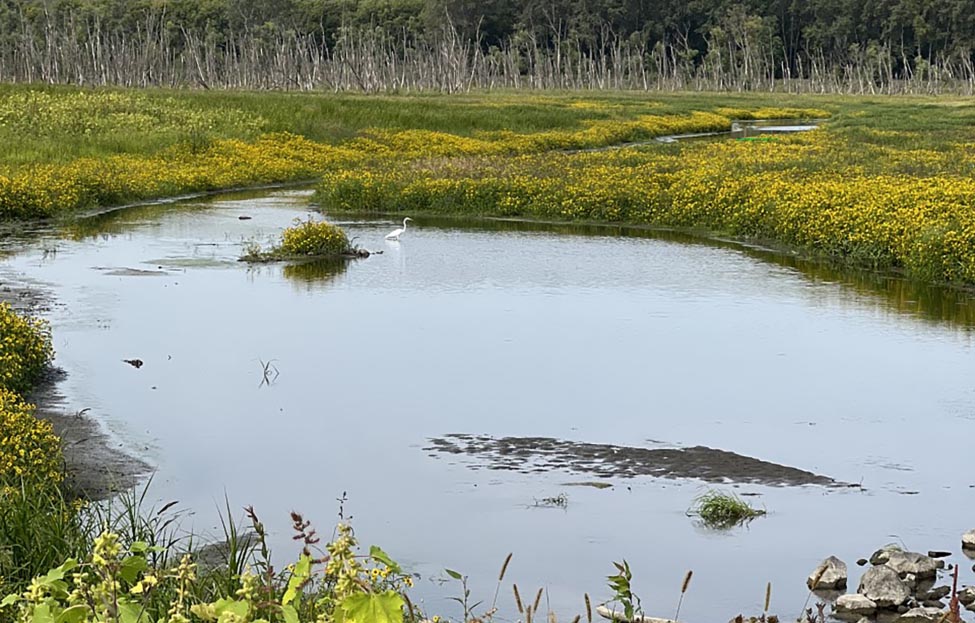
Swamp
As suburbs grew, more and more land was developed, roads were built, wetlands were drained, fields were paved, and houses were built. All of these changes in the landscape led to declines in the numbers of some wildlife species.
But developing farmland and forests for suburbs also led to gardens, bird feeders, lawns, bushes, trees, garbage cans, and fast food restaurants with dumpsters full of old food. Some species were better able to adapt to these changes in their habitat, and their numbers have stayed steady and in some cases increased.
The number of white-tailed deer in New Hampshire has grown dramatically since the 1800s. By the mid-19th century, there were fewer than 5,000 deer in the state. Today, there are more than 75,000.
This increase happened for a few important reasons. As farming declined in New Hampshire, many old fields grew back into forests—a process called forest succession. At the same time, some farmland was developed into suburbs. These changes created ideal habitats for deer.
White-tailed deer are herbivores. They browse on leaves, twigs, and other vegetation found close to the ground. Healthy deer populations depend on young, growing plants that are rich in nutrients. In a dense, undisturbed forest, limited sunlight reaches the ground, so fewer of these plants grow. Because of this, only a certain number of deer can survive there. Over time, deer populations naturally balance with the amount of food available.
However, when land is cleared for homes, roads, or logging, the forest canopy opens up. More sunlight reaches the ground, allowing new plants to grow. These young plants provide excellent food for deer. Suburban areas also offer extra food sources, such as gardens, shrubs, and ornamental trees planted by people.
With plenty of food and fewer natural predators—such as wolves or mountain lions—deer populations in suburban areas can grow very quickly. Hunting is also more limited in these areas, which can further increase deer numbers.
But having too many deer can cause problems. Some deer may not get the right balance of nutrients, leading to poor health. Diseases can spread more easily when deer live close together. Larger deer populations also increase the chances of car accidents involving deer, damage to gardens and landscaping, and a greater risk of humans being exposed to ticks that can carry Lyme disease.