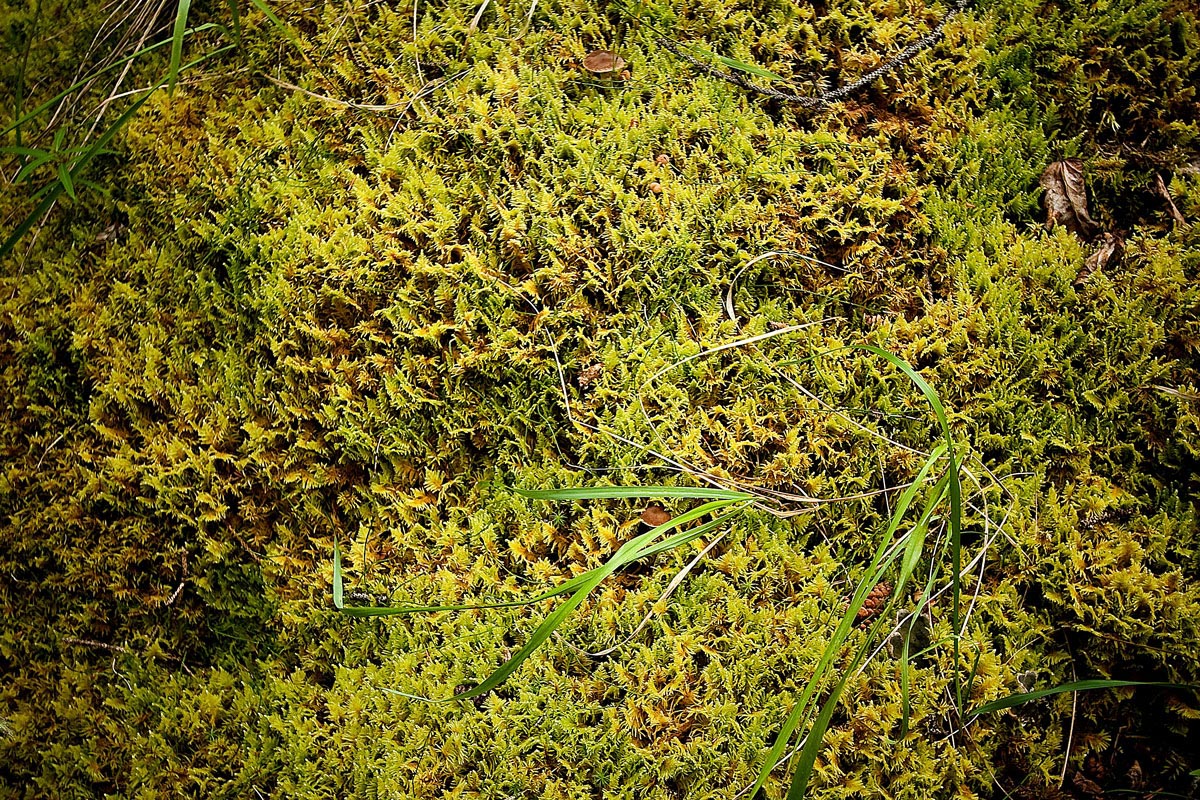
Bryophytes have no roots, leaves or stems. Moss and liverworts belong to this group. (sphagnum moss)
Bryophytes are simple plants without true roots, stems, or leaves. Mosses and liverworts are examples of bryophytes. They are non-flowering plants that often grow together in soft, green clumps. Instead of roots, they have thin, hairlike structures called rhizoids that help anchor them to the ground.
Because bryophytes lack stems or specialized tissues to move water, they dry out quickly. As a result, they are usually found in moist environments, such as forests, wetlands, and shaded areas.
Bryophytes can grow in many places around the world, but they are not found in saltwater environments.
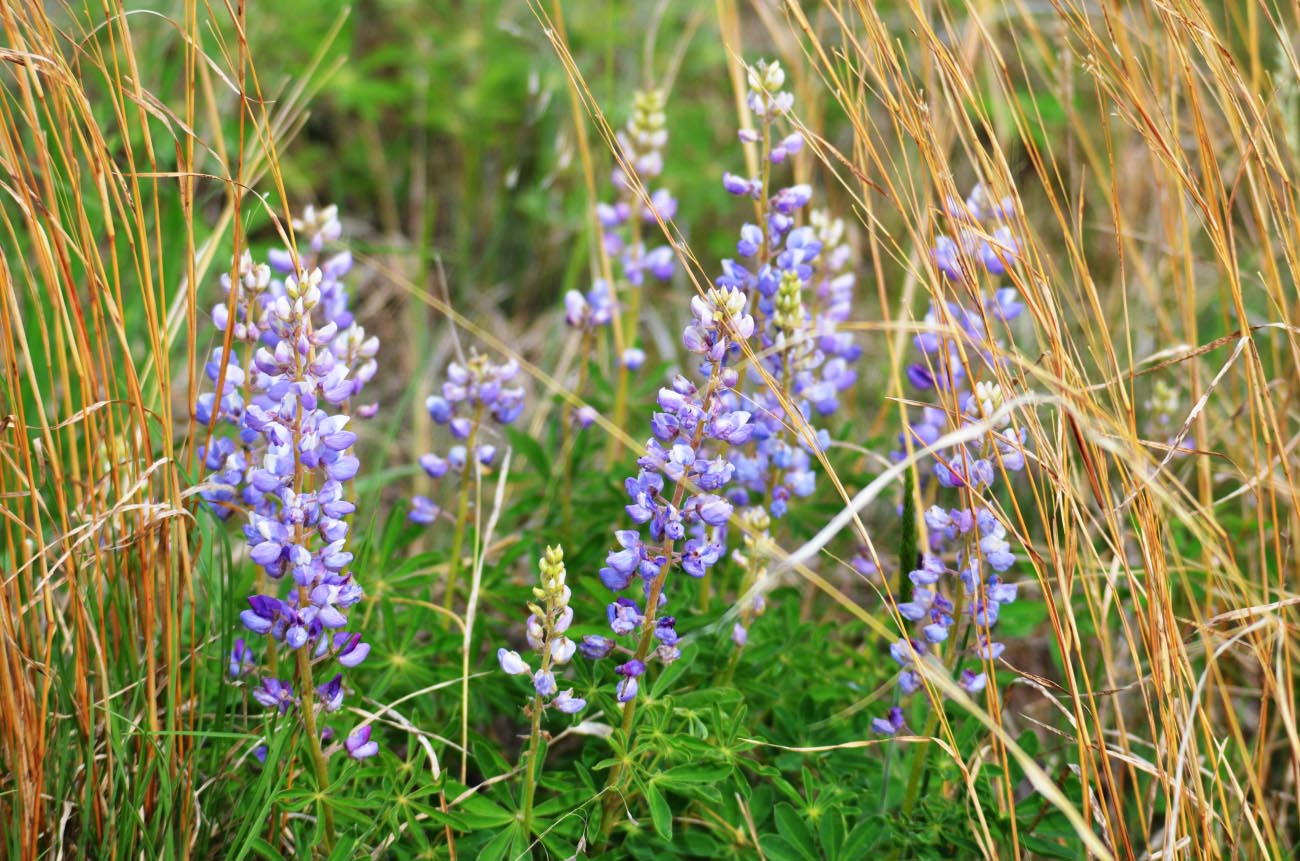
Vascular plants have some adaptations that help them survive. (wild lupine)
Unlike bryophytes, tracheophytes (also known as vascular plants) have tissues called xylem that transport water, and they have food-transporting tissues called phloem. Together, the xylem and the phloem are called vascular tissue. These plants have roots, stems, and leaves.
Tracheophytes have some adaptations that help them survive. They are covered with a waxy layer or cuticle that holds in water, and they have stomata or pores that help them take in and let out gases like carbon dioxide and oxygen.
Their roots take up water and nutrients from the soil and anchor them to the soil. Stems move water and nutrients to the plant’s leaves and the leaves capture the sunlight the plant needs for photosynthesis.