

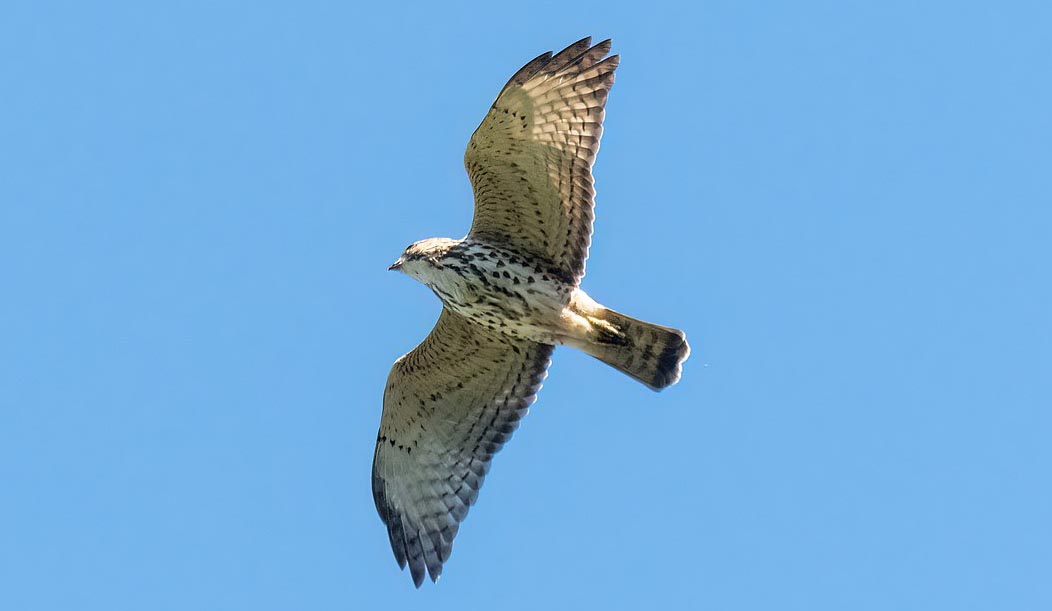
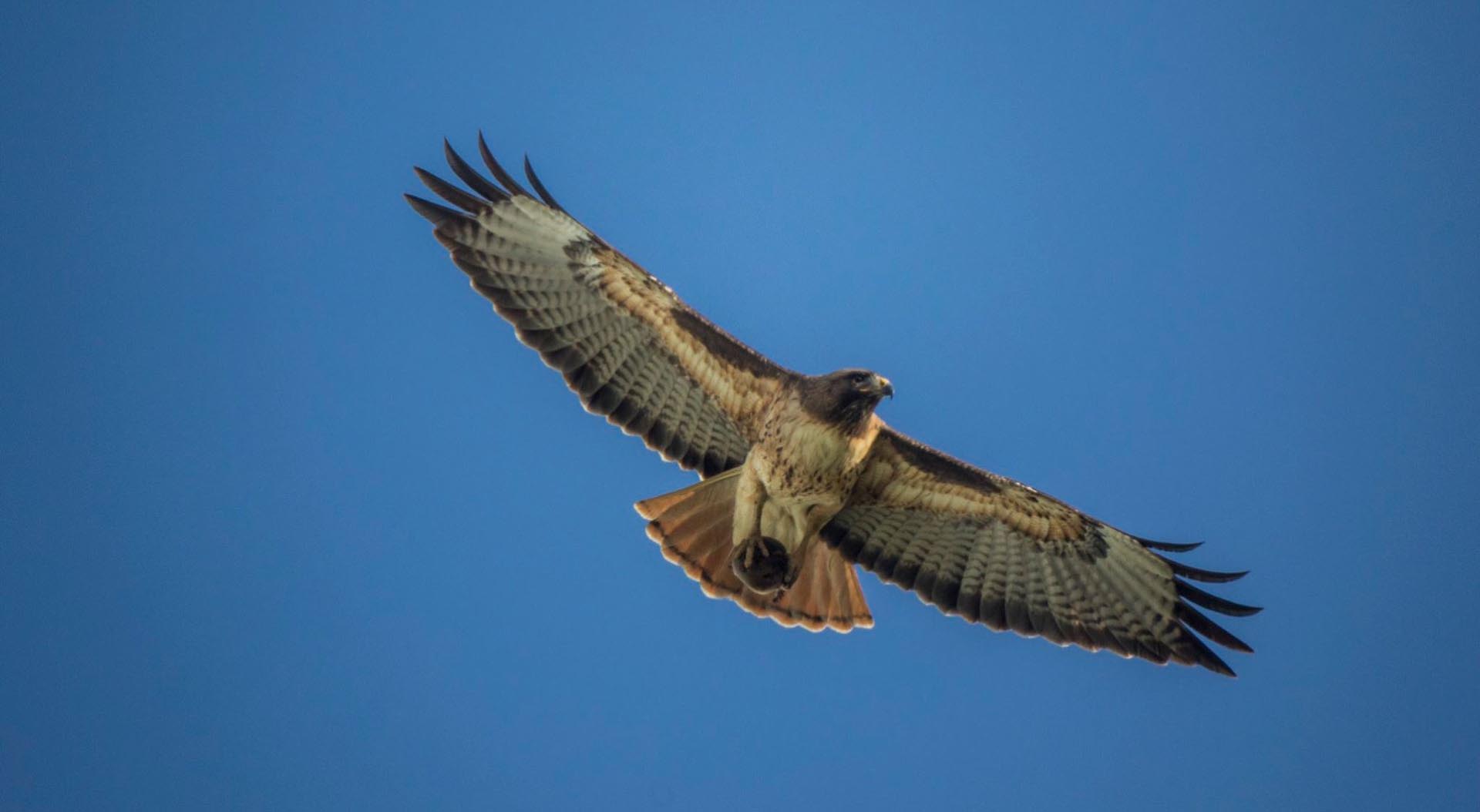
Riding a thermal.
Thermals are columns of warm, rising air that form when the sun heats the Earth’s surface. The warmed ground heats the air directly above it. As this air warms, it expands and becomes less dense (lighter) than the cooler air around it, causing it to rise.
As the air rises, it cools because temperatures are lower at higher altitudes. The air continues to rise until it reaches the same temperature as the surrounding air. At that point, it stops rising and begins to spread out. Some thermals can reach heights of up to a mile (1.6 km) or even higher on very warm days.
These rising columns of air are strong enough to lift small particles such as dust and water vapor, and even birds like hawks and eagles, high into the sky.
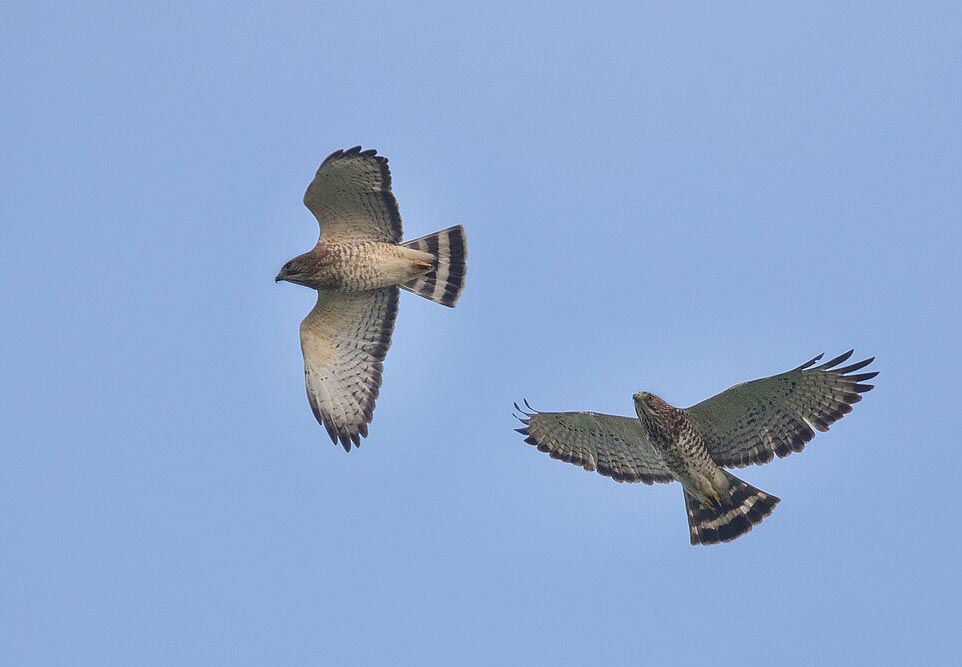
Pair of broad-winged hawks in flight.
A hawk will spread its wings wide and circle upward inside a thermal, letting the warm air lift it higher and higher—almost like riding an invisible elevator. When the thermal starts to cool and lose its lift, the hawk peels away and glides forward, barely flapping its wings.
It then searches for another thermal and repeats the process. By moving from one thermal to the next, the hawk can travel many miles as it makes its way south to its winter home, all while saving the energy it needs for the trip.
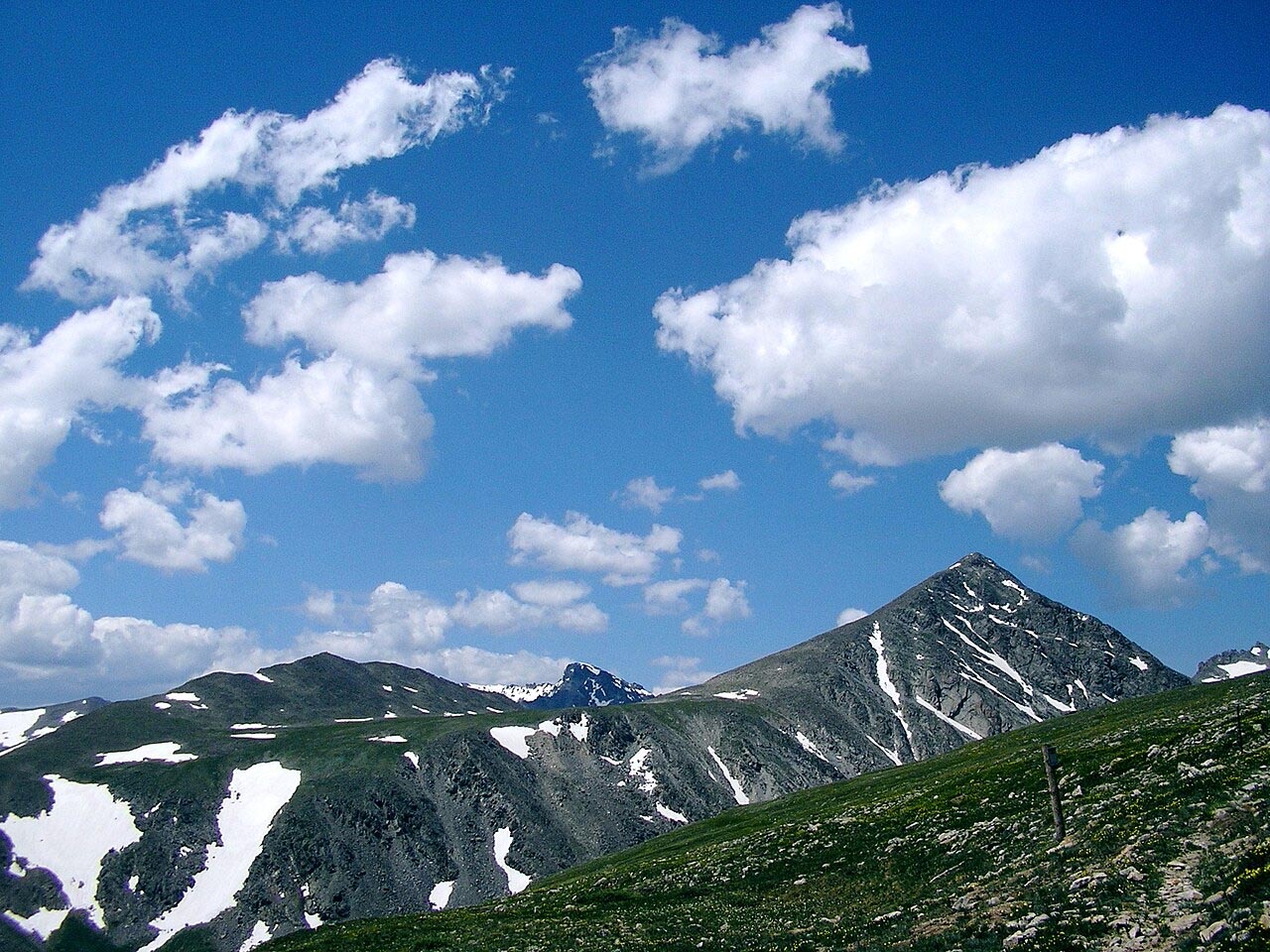
You often see cumulus clouds above thermals.
Thermals frequently form above mountains because the sun heats mountainsides unevenly. You often see cumulus clouds above thermals. As the air in a thermal cools, the water vapor in it condenses, forming cumulus clouds.
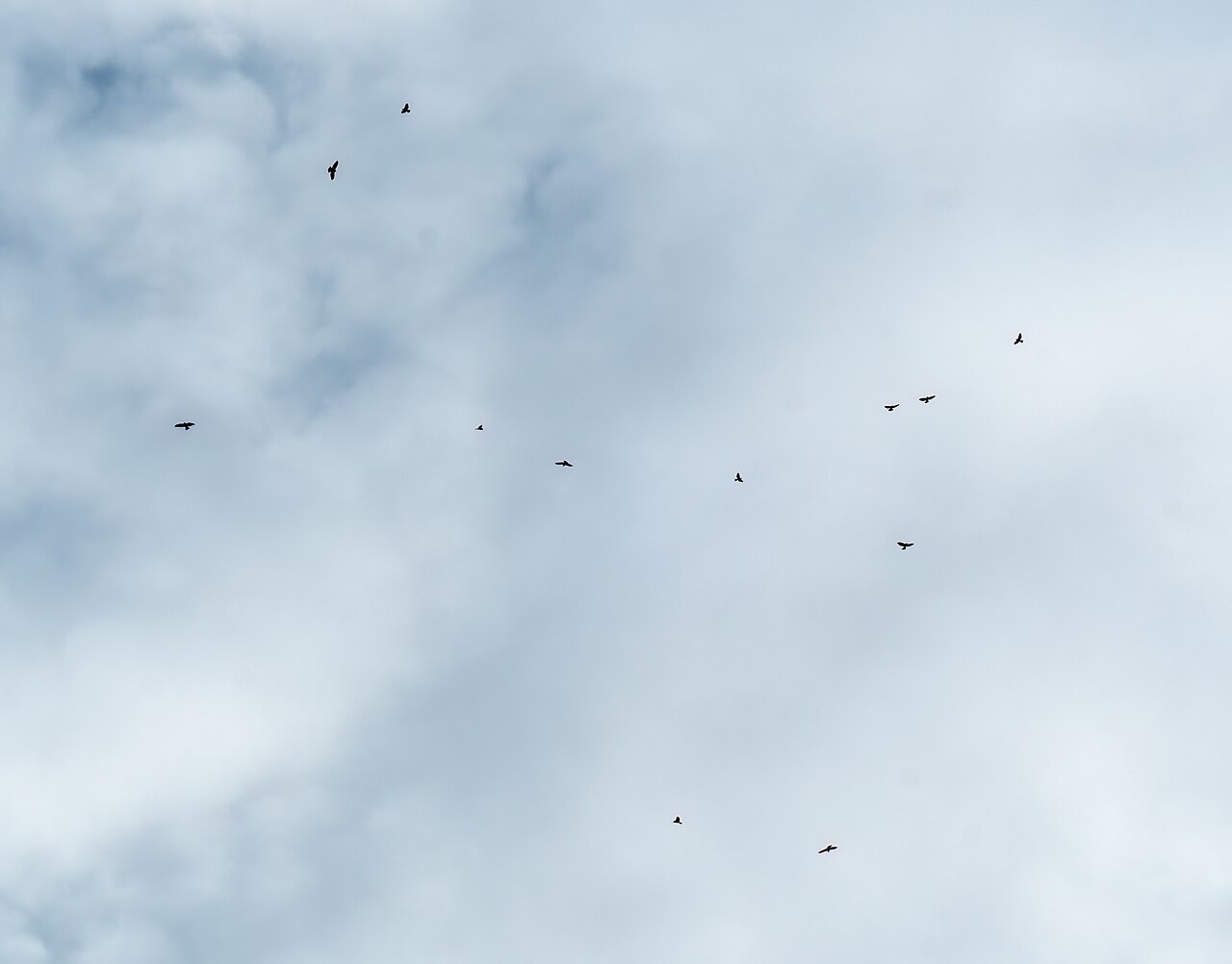
Kettle of broad-winged hawks migrating over Prospect Park in Brooklyn, NY.
Normally, broad-winged hawks are solitary birds, but they migrate in groups called kettles. They may form kettles because they are all riding the same thermals south. Kettles can contain up to 1,000 hawks.
