

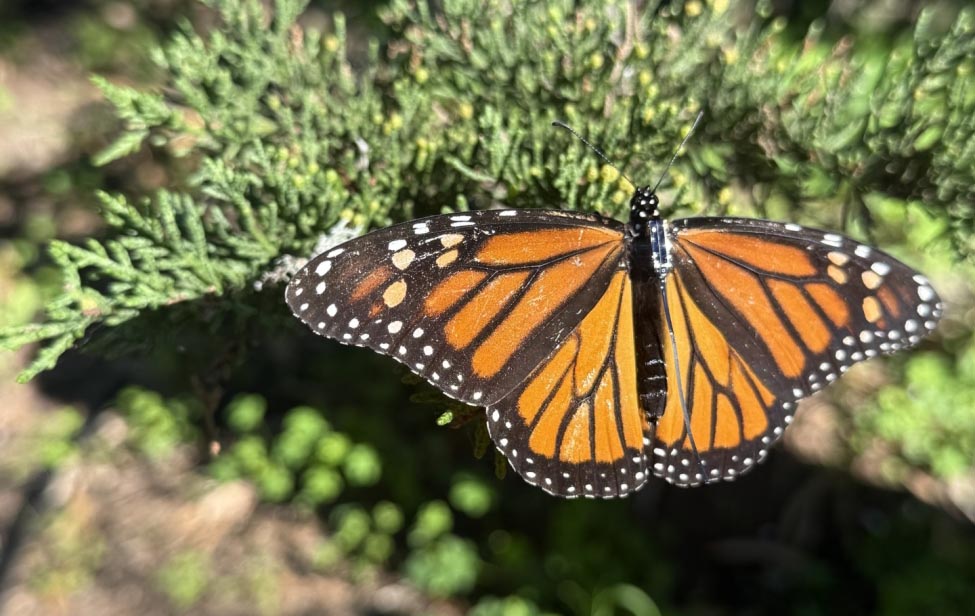
Monarch butterfly with a radio telemetry transmitter attached to its back along the central California coast.
Radio tracking technology can help determine exactly where an animal is at any moment in time and often what that animal is doing! Using the data collected from tracking devices, scientists can determine the day-to-day movements of an animal, the size of an animal’s home range, what other animals share an animal’s range, and the types of habitats an animal uses.
By analyzing all this data, scientists can learn new ways to help control animal populations, determine what impact development might have on an animal population, and determine if there are enough individuals of a particular species in an area to allow for reproduction.
To learn more about animals and their behavior, scientists use a combination of techniques. These include observing animals in the wild and in captivity, conducting laboratory research, and using tracking technology. Together, these methods help scientists better understand what animals need to survive and thrive in their environments.
There are three types of radio tracking systems used today. VHF Radio Tracking, Satellite Tracking, and Global Positioning System (GPS) Tracking.
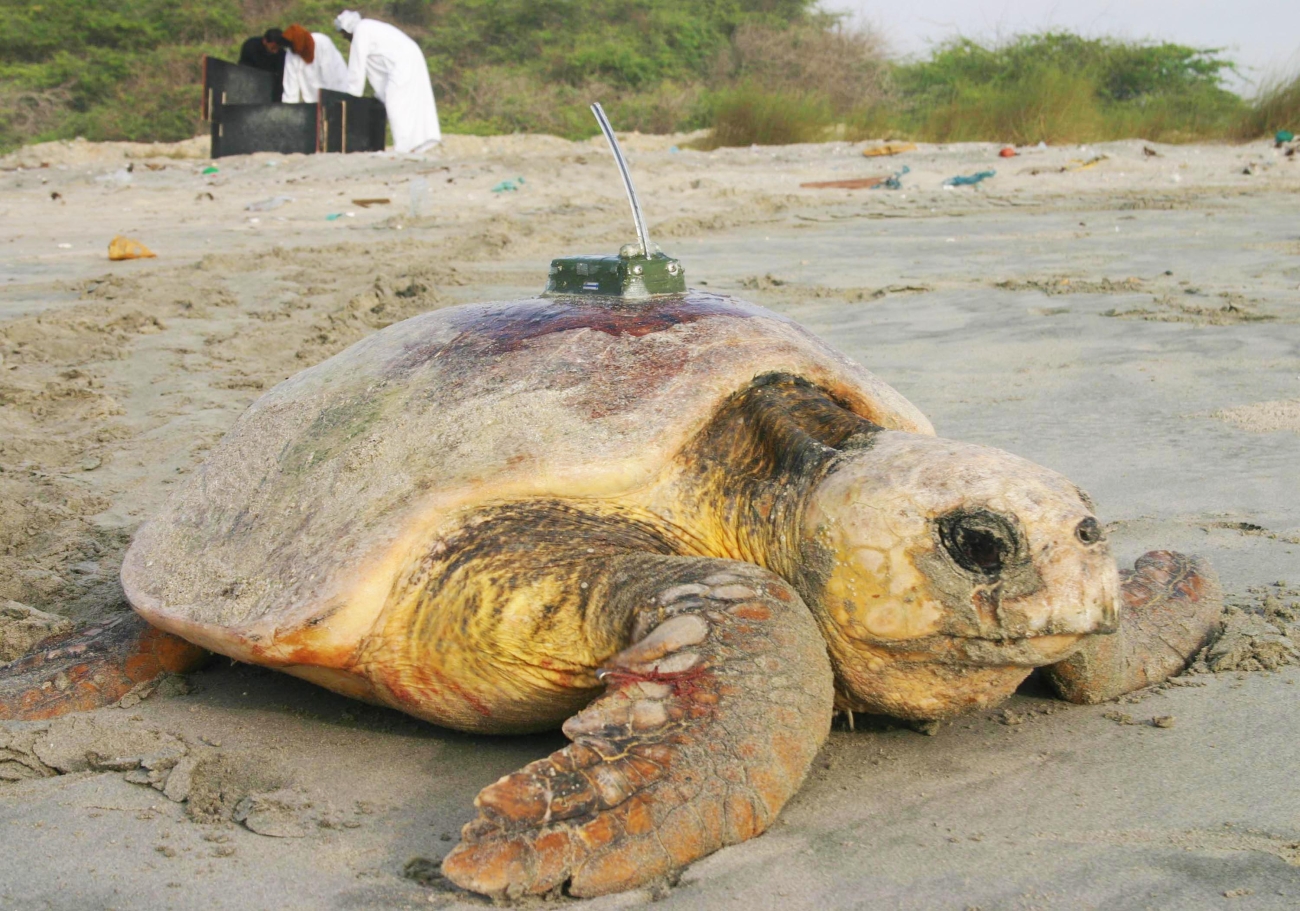
A loggerhead sea turtle at Masirah Island in Oman.
This loggerhead turtle is heading out to sea, but scientists will be able to track its movements using the signal from the transmitter on its back that is relayed to a satellite. It’s a lot easier to track a loggerhead this way than by swimming after it.
Satellite tracking is similar to VHF radio tracking, but instead of a radio signal being sent to a radio receiver, a signal is sent to a satellite. With satellite tracking, scientists don’t have to be near the animal to pick up its signal. They can track the animal using a computer. Satellite tracking is especially useful for following animal movements over long distances.
Some species are tracked using satellite technology to help scientists better understand and protect them.
For example, blue whales are monitored to map their migration routes and identify important feeding areas. African elephants are tracked to study their movements and help prevent poaching by monitoring migration corridors.
Polar bears are also tracked to observe how shrinking sea ice—caused by climate change—affects their behavior and survival.

Tracking salmon with radio telemetry.
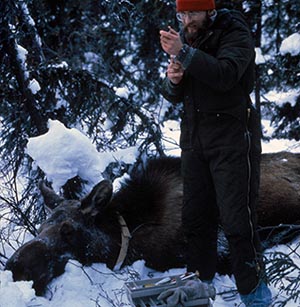
Scientists have been using VHF radio tracking since 1963. To use this method, a small radio transmitter is attached to an animal. Often, the animal is safely sedated first so scientists can work carefully and minimize stress. While the animal is asleep, researchers also collect important information about its health and condition.
Once the transmitter is in place, it sends out a radio signal. Scientists use a radio antenna and receiver to pick up that signal. To locate the animal, they must be close enough for the antenna to detect the transmission.
This works much like a car radio. A radio station sends out a signal, and your car’s antenna picks it up. When the receiver is tuned to the right station, it turns that signal into music or talk. In the same way, scientists “tune in” to the transmitter’s signal to track the animal’s location.
Researchers can follow these signals from the ground, from a vehicle, or even from an airplane, allowing them to track animal movements over time.
In the past, radio transmitters were fairly large and could only be used on bigger animals. Today, advances in technology have made transmitters much smaller and lighter. Scientists can now track small animals, and some transmitters can even be implanted under the skin or safely swallowed, depending on the study.
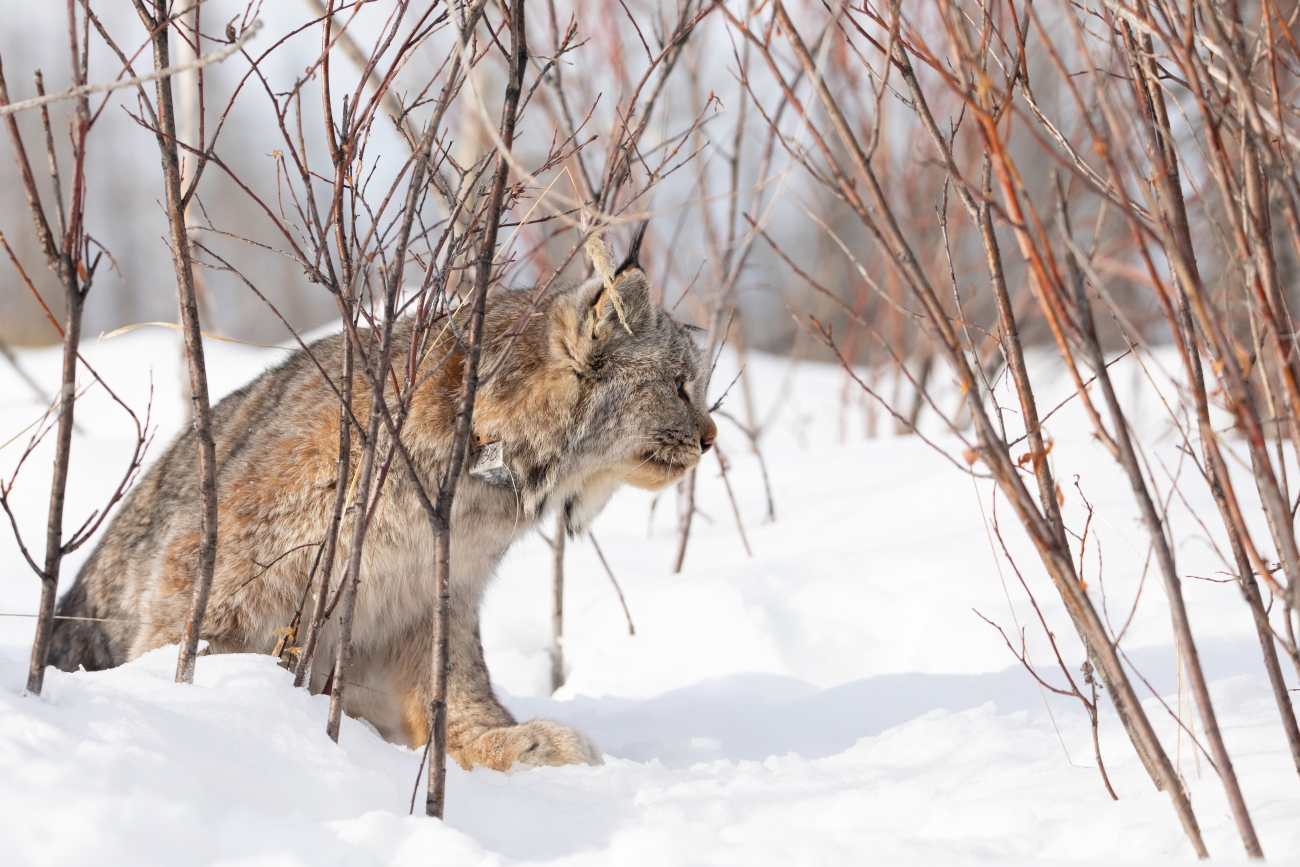
Female lynx with a GPS collar.
GPS tracking is one of the newest technologies used to study wildlife. In this method, a small radio receiver—rather than a transmitter—is placed on the animal. The receiver picks up signals from satellites and uses an onboard computer to calculate the animal’s location and movement. The collected data is then sent back to another set of satellites, which relay the information to scientists.
In the past, tracking small animals was difficult because the devices were too large and heavy. Today, scientists are developing smaller, lighter equipment. Some GPS receivers are even solar-powered and small enough to be safely attached to a bird.
