

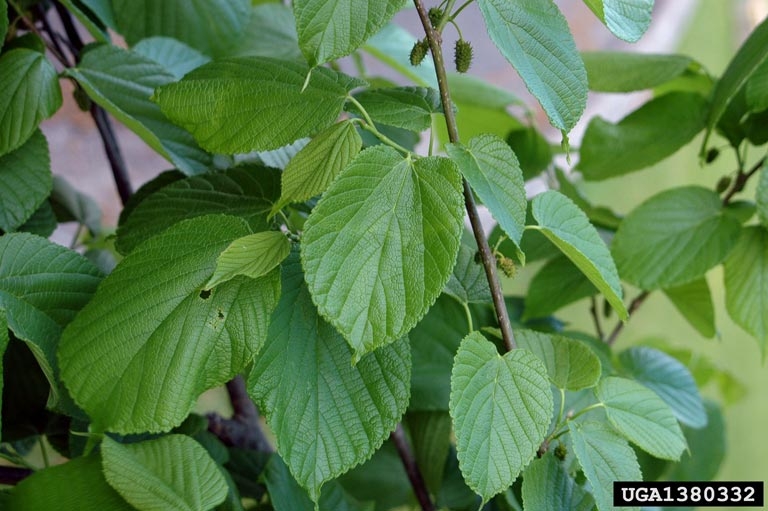
Plants in the mulberry family are found in tropical and subtropical regions. (Red Mulberry)
There are about 1,000 species of trees and shrubs in this family. They are found in tropical and subtropical regions and contain a milky latex. The plants in this family have alternate leaves and small, petalless male or female flowers. Many of the plants in this family have edible fruit.
Species include the fig, mulberry, banyan, Indian rubber tree, and breadfruit plants.
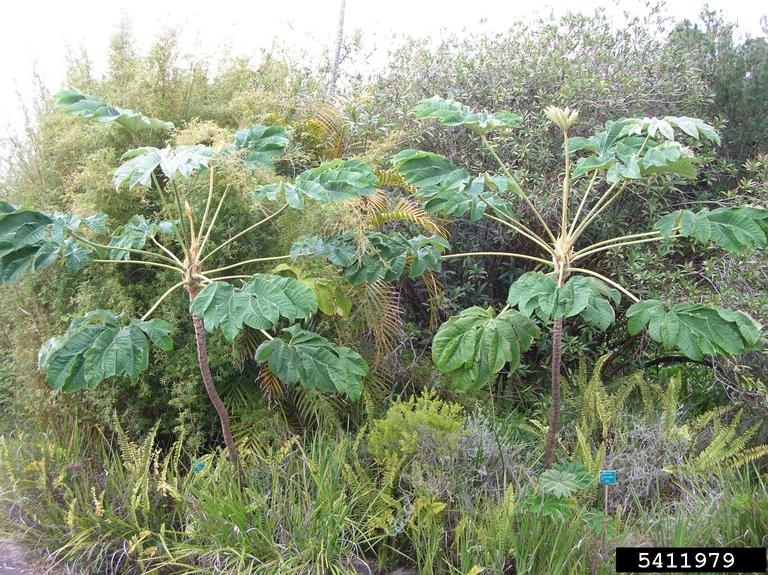
is native to Mexico and Central and South America. It was introduced to Hawaii in the 1920s.
There are 300 species of trees, shrubs, and woody vines in this family. Male and female flowers are on separate plants. Species in this family include trumpet trees, which are native to Mexico and Central and South America. They were introduced to Hawaii in the 1920s.
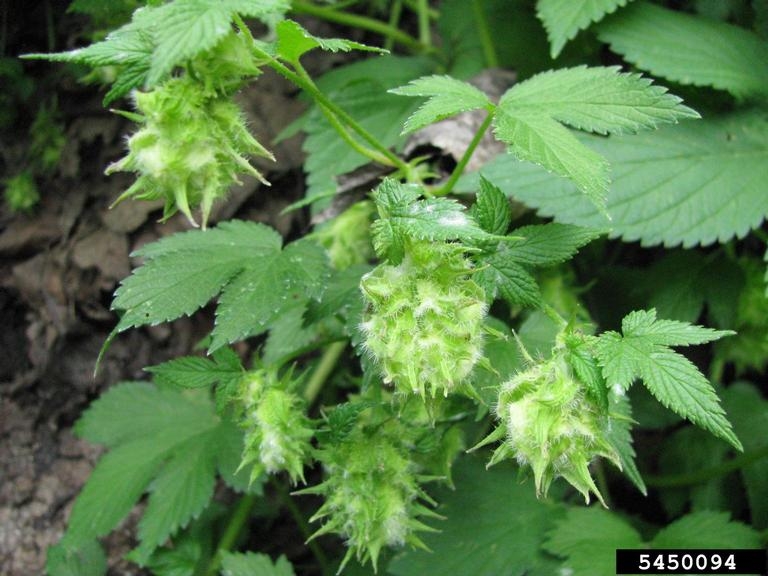
Japanese Hop (Humulus japonicus) is a plant native to East Asian countries.
There are around 110 species of trees, shrubs, climbing vines, and herbs in this family. They are found in the Northern Hemisphere. Plants include hemp and Japanese hop (Humulus japonicus).
Japanese Hop is a plant native to East Asian countries such as China, Japan, Korea, and Vietnam. It was brought to North America in the late 1800s as an ornamental plant, meaning it was grown mainly for decoration.
Over time, it spread beyond gardens and can now be found growing in the wild in some areas.
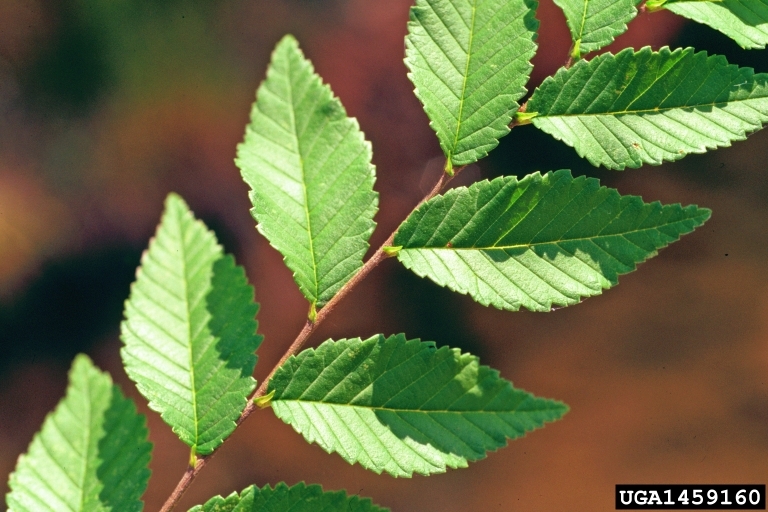
The leaves of the plants in this family, like the Siberian Elm, have serrated edges.
There are about 140 species in this plant family. The leaves usually grow in an alternating pattern along the stem and often have serrated (toothed) edges.
The flowers can be arranged in different ways. In some species, male and female flowers grow on the same plant, either together or separately.
The fruit is called a samara. A samara is a small, one-seeded fruit with a wing that helps it spin and float in the wind, like a tiny helicopter seed.
Plants in this family include American Elm (Ulmus americana), English Elm (Ulmus procera), Chinese Elm (Ulmus parvifolia), Siberian Elm (Ulmus pumila), Zelkova trees and shrubs, and Hackberry trees.
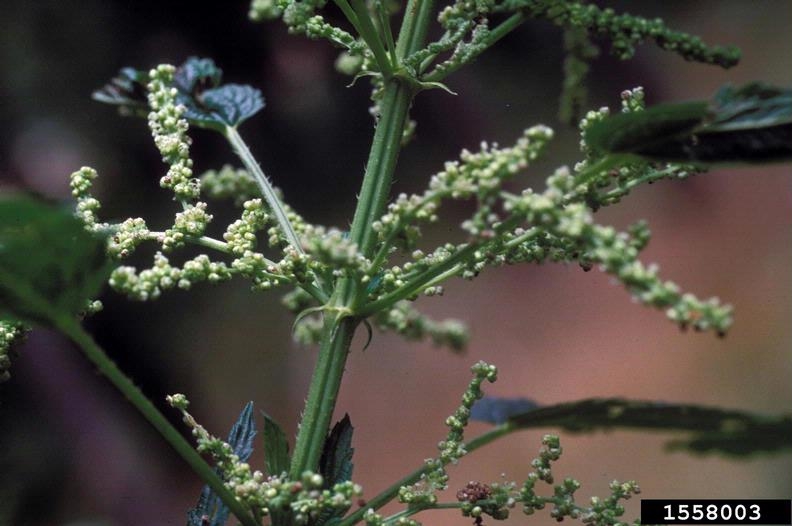
Many of the plants in this family, like the European Stinging Nettle, Many of these plants have stinging hairs on their stems and leaves.
There are between 800 and 1,000 species in this family. Most of the plants in this family are herbs, although there are some shrubs, small trees, and vines. Most grow in temperate regions. Many of these plants have stinging hairs on their stems and leaves. Plants in the family include European Stinging Nettle (Urtica dioica), the Australian Nettle Tree (Dendrocnide moroides), Baby Tears (Soleirolia soleirolii ), and trumpet trees.
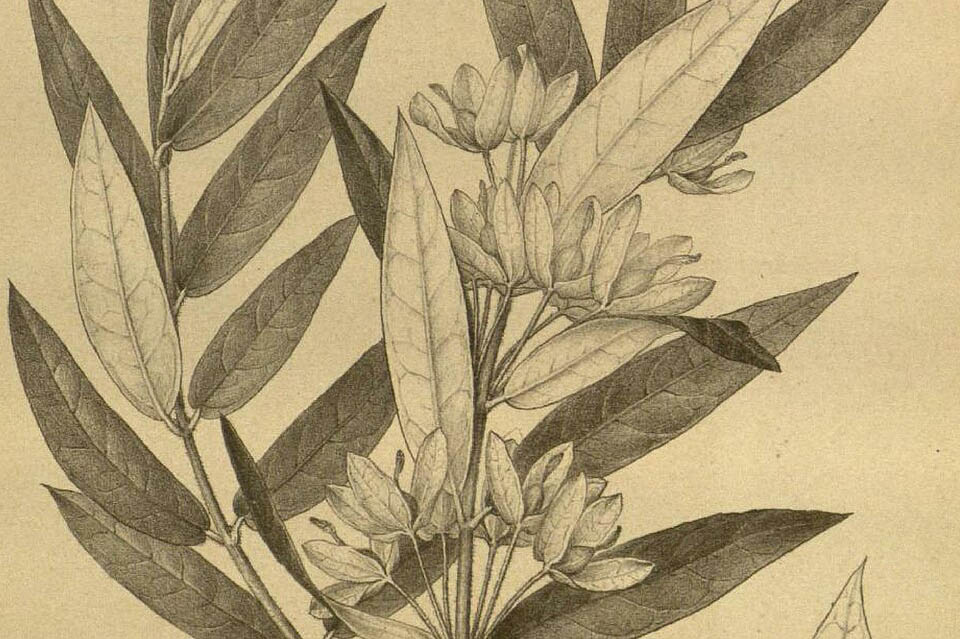
The Barbeya oleoides is native to the mountains of Somalia, Ethiopia, and the Arabian Peninsula.
This family has one species of small tree, the Barbeya oleoides. It is native to the mountains of Somalia, Ethiopia, and the Arabian Peninsula.
