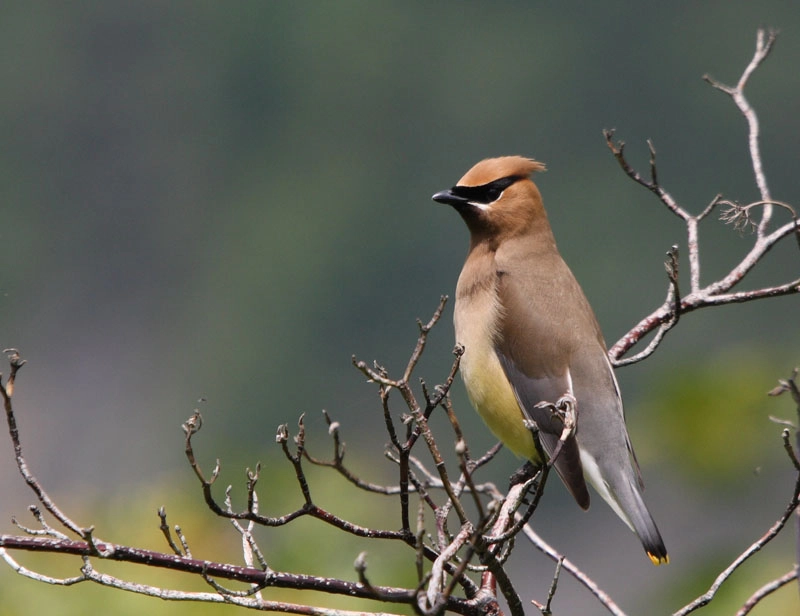
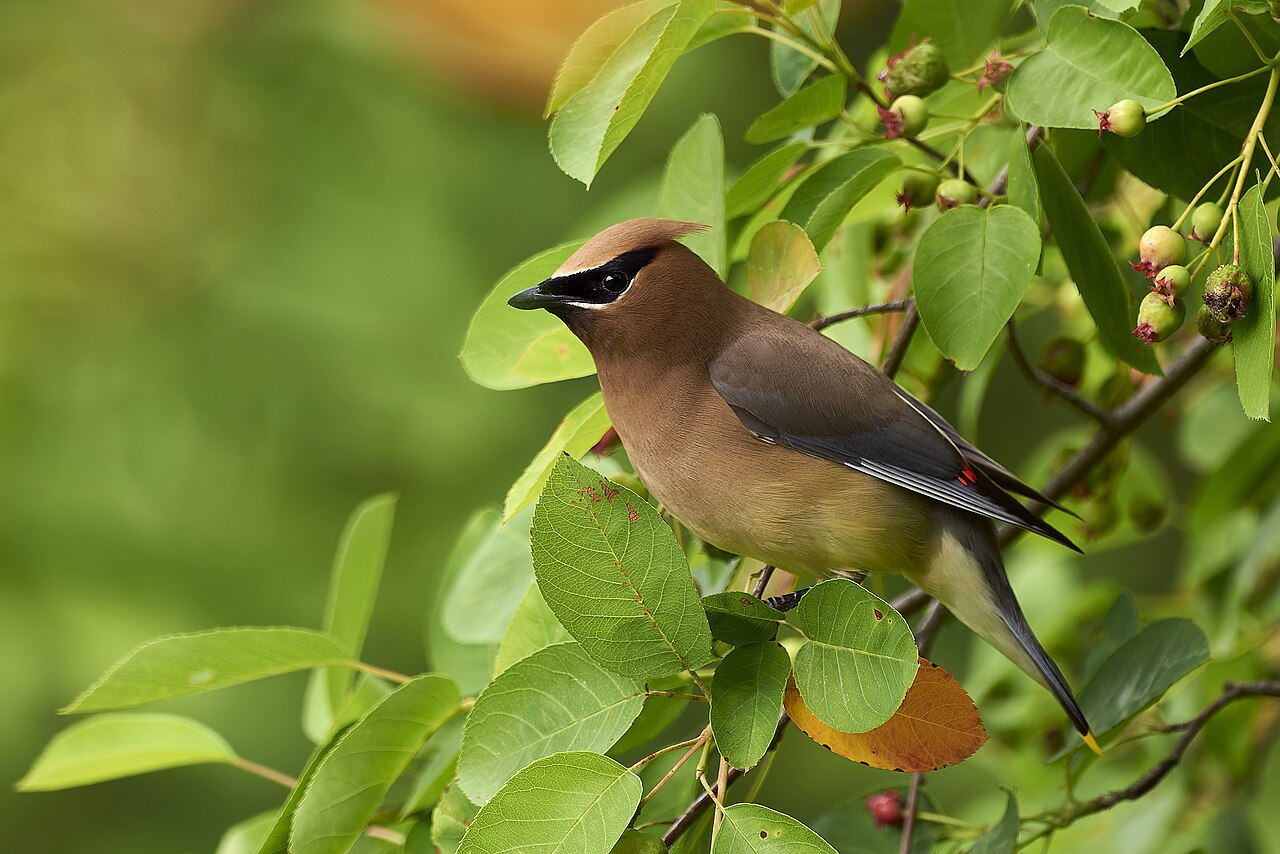
There are three species of waxwings. These birds have soft brownish-gray feathers, pointed crests on their heads, and black masks across their eyes.
Two species are found in North America: the Cedar Waxwing(Bombycilla cedrorum) and the Bohemian Waxwing(Bombycilla garrulus).
The Bohemian Waxwing breeds across northern Canada, Alaska, and northern Eurasia. In winter, it sometimes moves south into the northern United States, especially the Rocky Mountain and northern Great Plains states. The Cedar Waxwing is found across most of North America and extends south through Mexico and Central America to Panama.
Both North American species have bright red, wax-like tips on some of their wing feathers and a yellow band on the tip of the tail. The Japanese Waxwing (Bombycilla japonica), found in eastern Asia, also has red wax-like wing tips and a yellow-tipped tail.
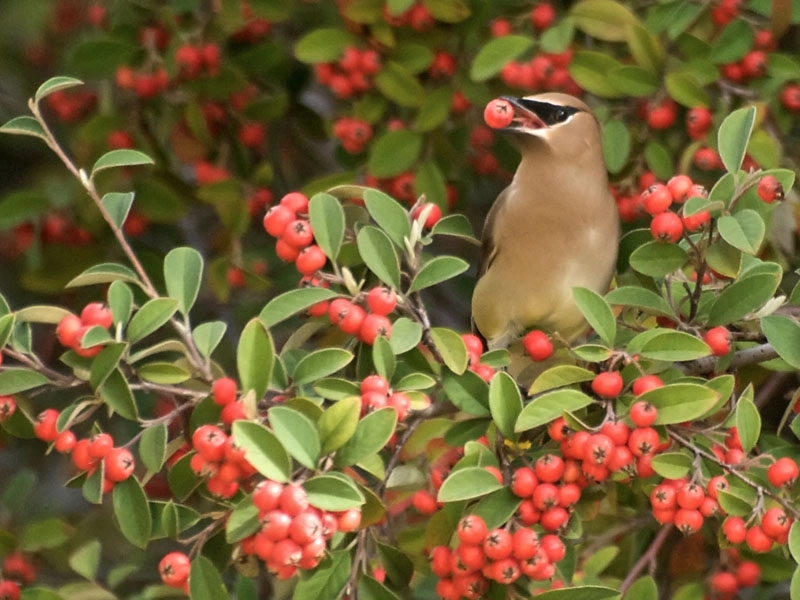
Waxwings live in forests, woodlands, orchards, and other areas with fruit-bearing trees and shrubs. They eat berries and insects. They often travel in large flocks, moving from one berry bush or tree to another until all the fruit is gone before flying on to the next food source.
Cedar Waxwing (Bombycilla cedrorum)
The Cedar Waxwing's breeding range runs from the southern half of Canada to the northern half of the United States. The cedar waxwing's winter range stretches from the United States and Mexico south to Panama. The cedar waxwing breeds in Nw Hampshire. IUCN Redlist Status: Least Concern
Cedar Waxwing (Bombycilla cedrorum)
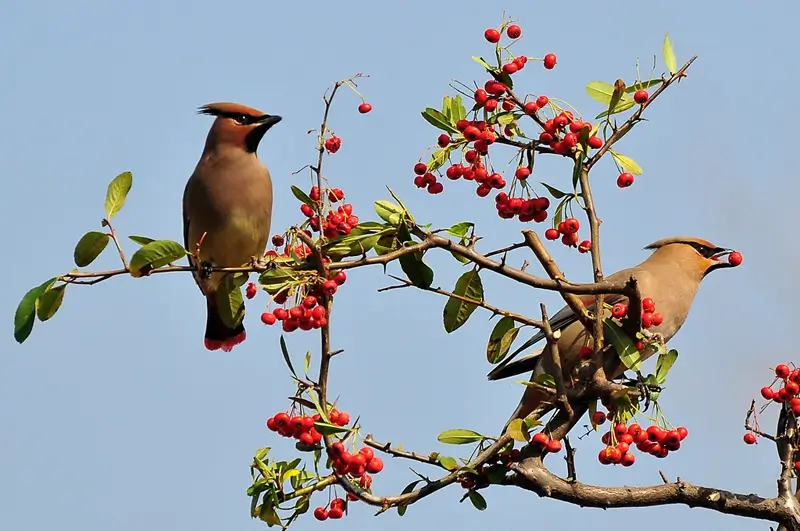
The Cedar Waxwing is mostly frugivorous. That means it is a fruit eater. Most of its diet is made up of berries, especially in the winter. IUCN Redlist Status: Least Concern
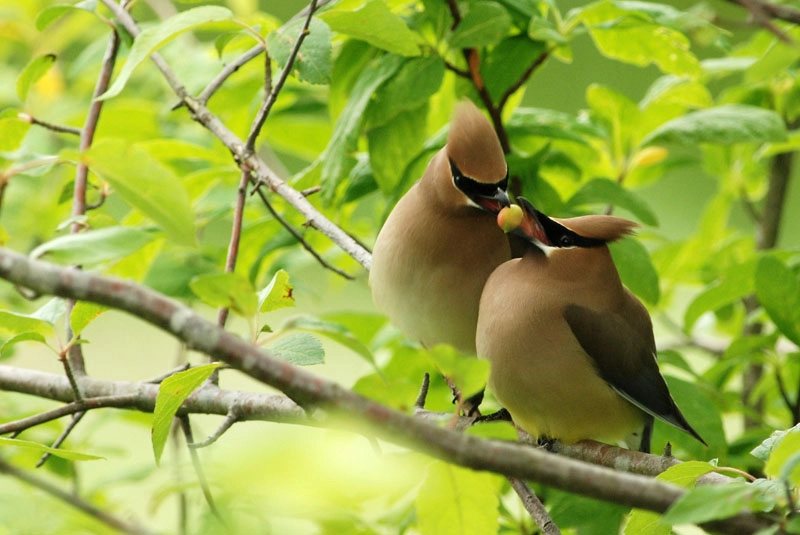
Cedar Waxwing (Bombycilla cedrorum)
The male Cedar Waxwing courts a female by doing a hopping dance and passing berries or pieces of fruit to the female. If the female is interested, she does a hopping dance and passes the fruit or berry back to the male. IUCN Redlist Status: Least Concern
Bohemian Waxwing (Bombycilla garrulus)
The Bohemian Waxwing's breeding range runs from Alaska east to Manitoba, Canada. In the winter, it can be found in areas between the U.S. and Canadian border and as far south as Nevada, Utah, and Nebraska in the West. IUCN Redlist Status: Least Concern
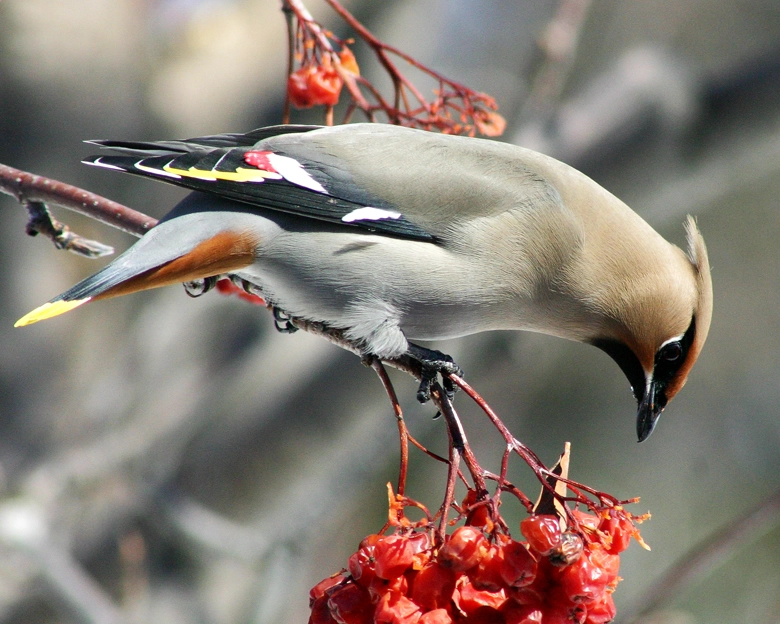
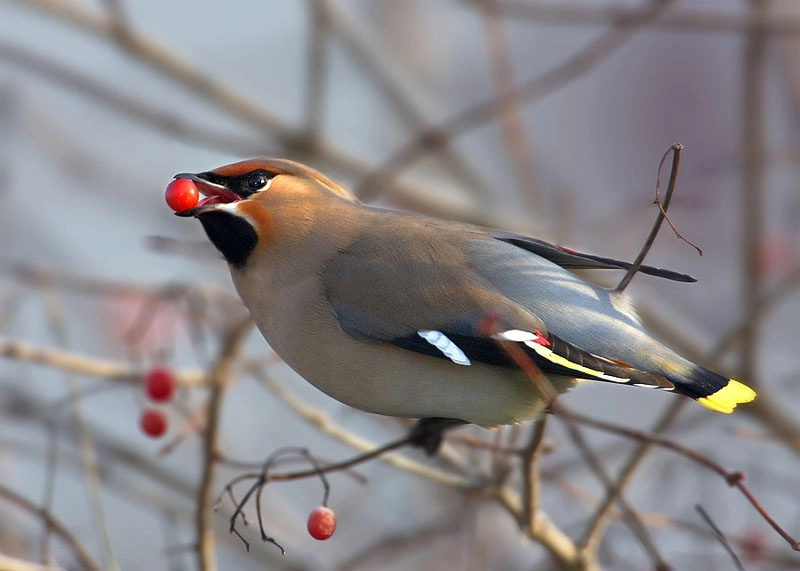
Bohemian Waxwing (Bombycilla garrulus)
The Bohemian Waxwing has white and yellow edges on its wings and a waxy yellow tip on its tail. The cedar waxwing looks similar to the bohemiasn waxwing, but it does not have white edges on its wings or the reddish color under its tail. IUCN Redlist Status: Least Concern
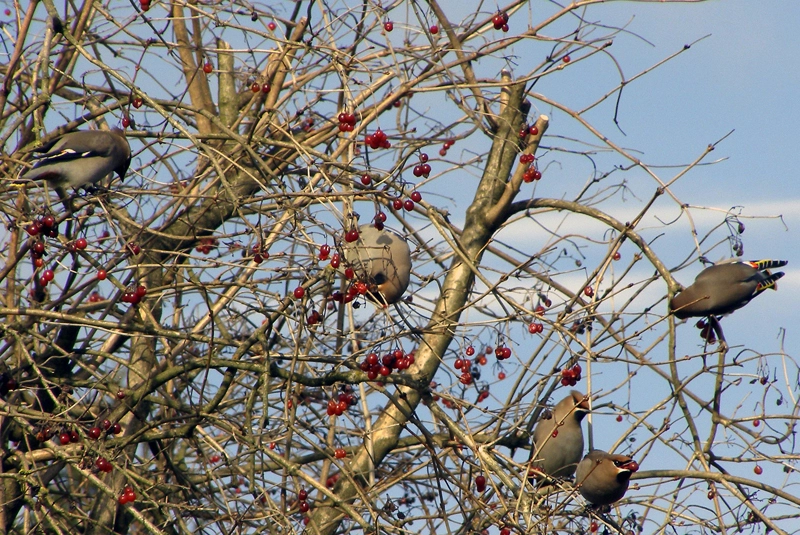
Bohemian Waxwing (Bombycilla garrulus)
Bohemian Waxwings are non-territorial and often travel in flocks of 50-300 birds or more birds. They often appear in a spot with a good crop of berries. When they have eaten all the berries, they move on. IUCN Redlist Status: Least Concern
Japanese Waxwing (Bombycilla japonica)
The Japanese Waxwing is found in China, Japan, North and South Korea, Russia, and Taiwan. IUCN Redlist Status: Near Threatened
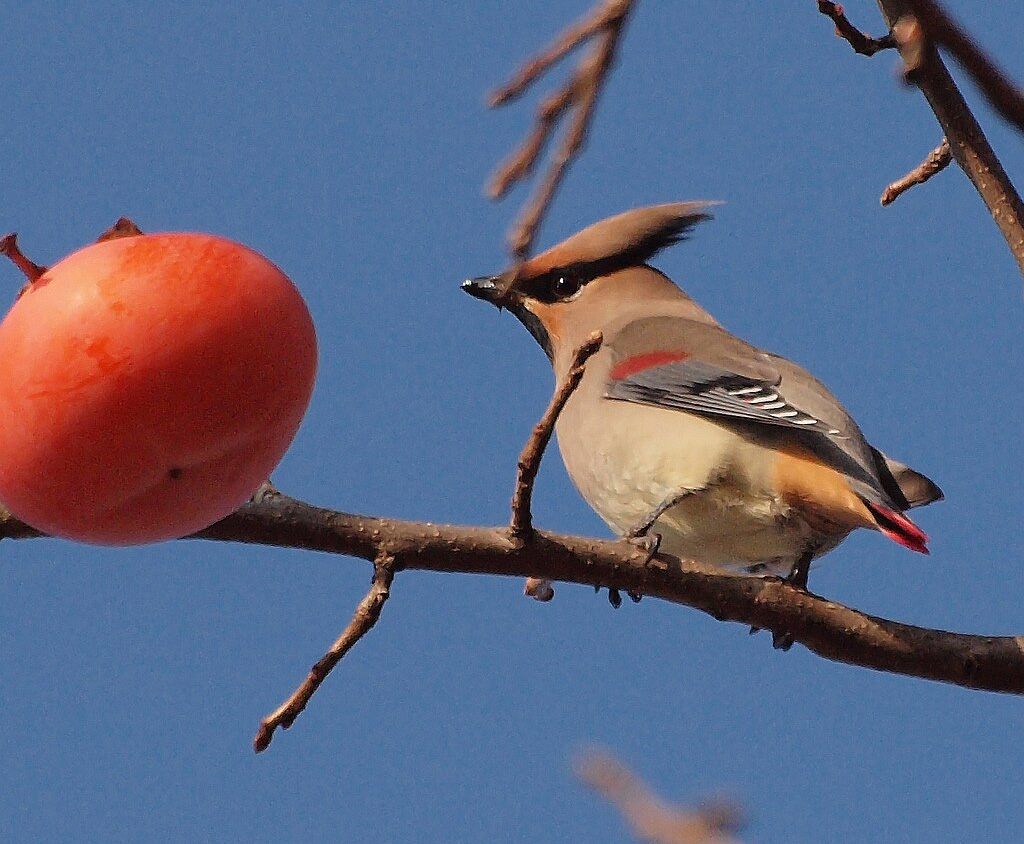
Japanese Waxwing (Bombycilla japonica)
The Japanese Waxwing has the same waxy red tips on its wings and a waxy tip on its tail feathers. IUCN Redlist Status: Near Threatened