

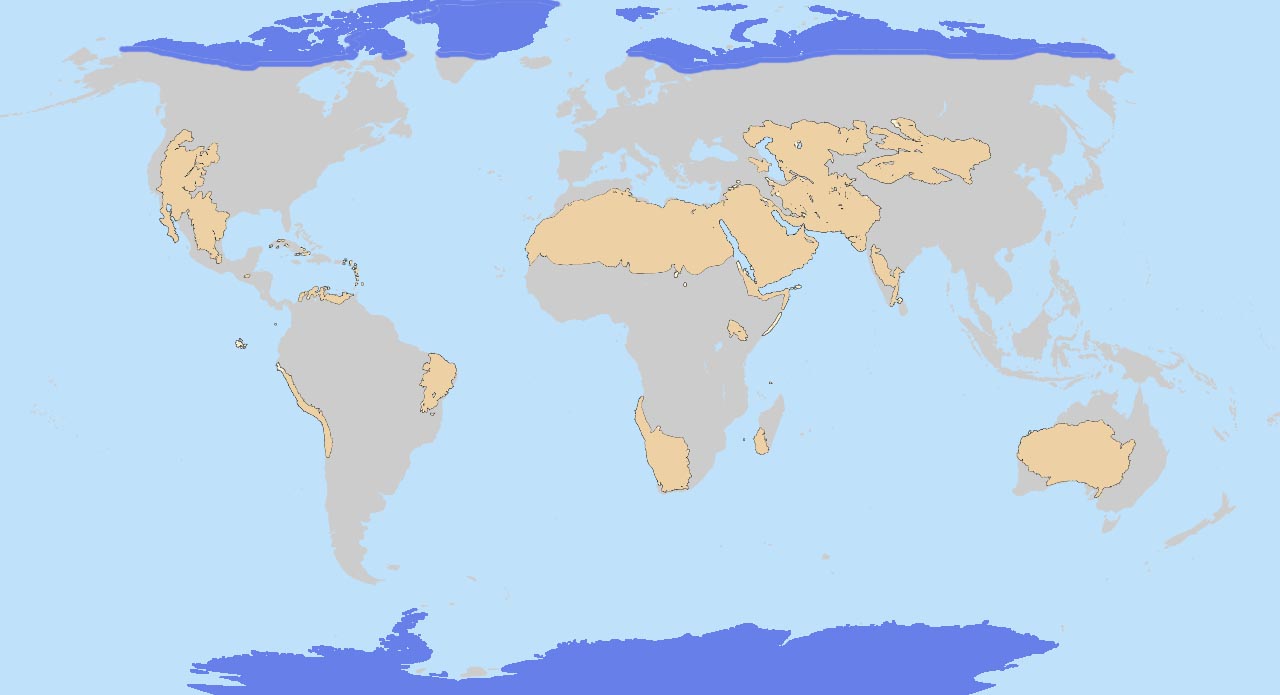
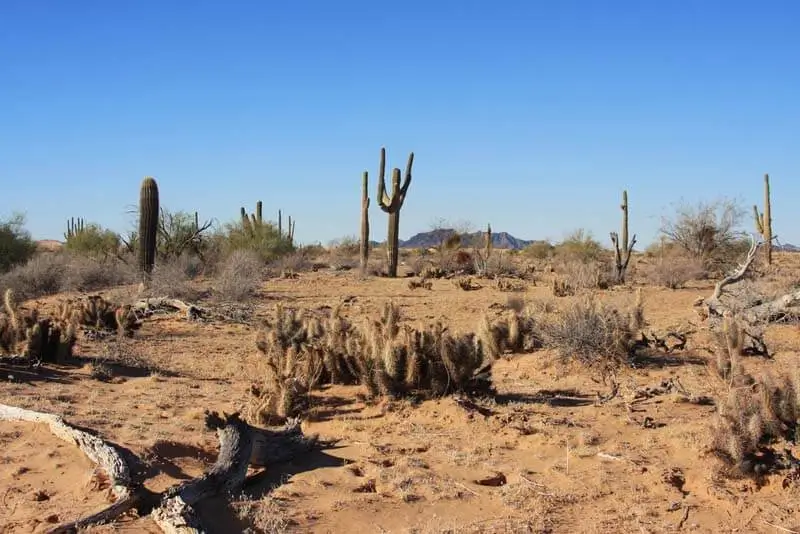
Subtropical deserts are the hottest deserts.
Subtropical deserts, also known as hot deserts, are the hottest deserts. They are found in Asia, Australia, Africa, and North and South America. In the United States, the Chihuahuan, Sonoran, and Mojave deserts are all subtropical.
Subtropical deserts are very hot and dry in the summer and cooler, but still dry, in the winter. Rainfall happens in short bursts. The air is so hot and dry in these deserts that sometimes rain evaporates before it even has a chance to hit the ground! The soil in subtropical deserts is usually either sandy or coarse and rocky.
Plants and animals in subtropical deserts must be able to withstand high temperatures and limited moisture. Shrubs and small trees in the subtropical desert usually have leaves adapted to retain moisture. Animals in subtropical deserts are usually active at night, when it is cooler.
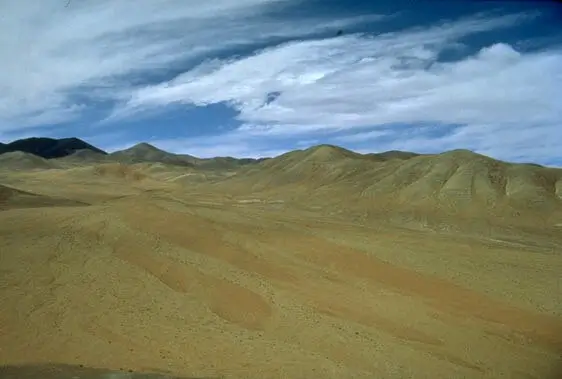
Coastal deserts occur in cool to warm areas along the coast.
Coastal deserts form along the western edges of continents in regions between about 20° and 30° latitude. These areas usually have cool winters and long, warm summers. Even though they are near the ocean, they receive very little rainfall.
Strong winds blowing along the coast move in an easterly direction, which keeps moist ocean air from reaching the land. As a result, clouds and rain rarely form over these deserts. Two well-known examples of coastal deserts are the Namib Desert in Africa and the Atacama Desert in South America.
Animals in coastal deserts have special adaptations that help them survive with very little water. Many are active at night, when temperatures are cooler.
Some animals, like lizards and insects, get moisture from the food they eat. Others, such as small mammals, live in burrows to stay cool during the day.
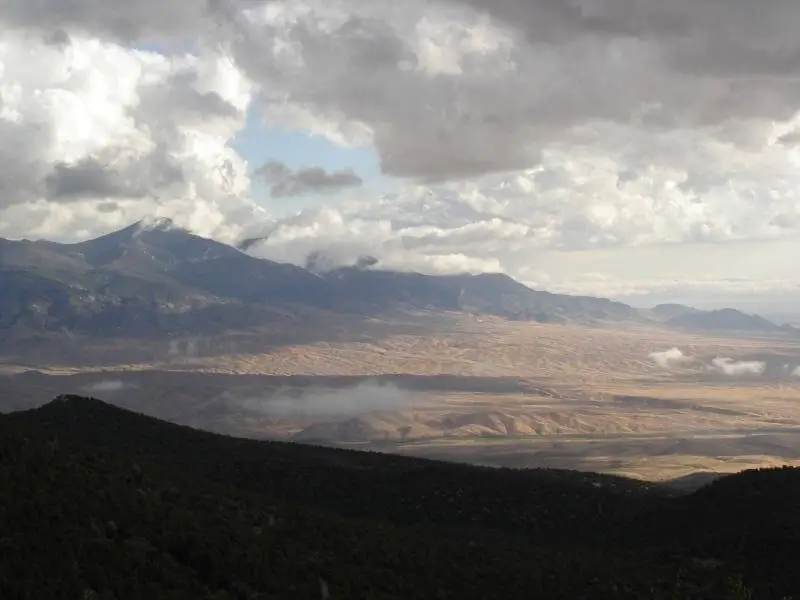
Cold winter deserts are also known as semi-arid deserts.
Cold winter deserts are also known as semi-arid deserts. They have long, dry summers and cold winters with low rain or snowfall. In the United States, the Great Basin, the Colorado Plateau, and the Red Desert are all cold winter deserts. Other cold winter deserts include the Gobi Desert in China and Mongolia, and the Patagonian Desert in Argentina.
The lack of rainfall in cold winter deserts is often caused by the rainshadow effect. The rainshadow effect occurs when a high mountain range prevents moisture from reaching an area. The Himalayan Mountains prevent rainfall from reaching the Gobi Desert.
Polar deserts are found in the Arctic and Antarctic regions. Like hot deserts, they receive very little precipitation. Even though they are covered in ice and snow, they are still considered deserts because they are so dry, usually getting less than 10 inches (25 cm) of precipitation each year.
These regions are extremely cold, with temperatures often staying below freezing all year. The ground is usually frozen solid, a condition called permafrost. Strong winds can make the air feel even colder and can blow snow into large drifts.
Even in these harsh conditions, some life can survive. Animals like polar bears in the Arctic and penguins in Antarctica are specially adapted to live in the cold. Plants are rare, but mosses, lichens, and a few tough grasses can grow during the short summer.
Although polar deserts look very different from hot, sandy deserts, they share one important feature: both are very dry environments.