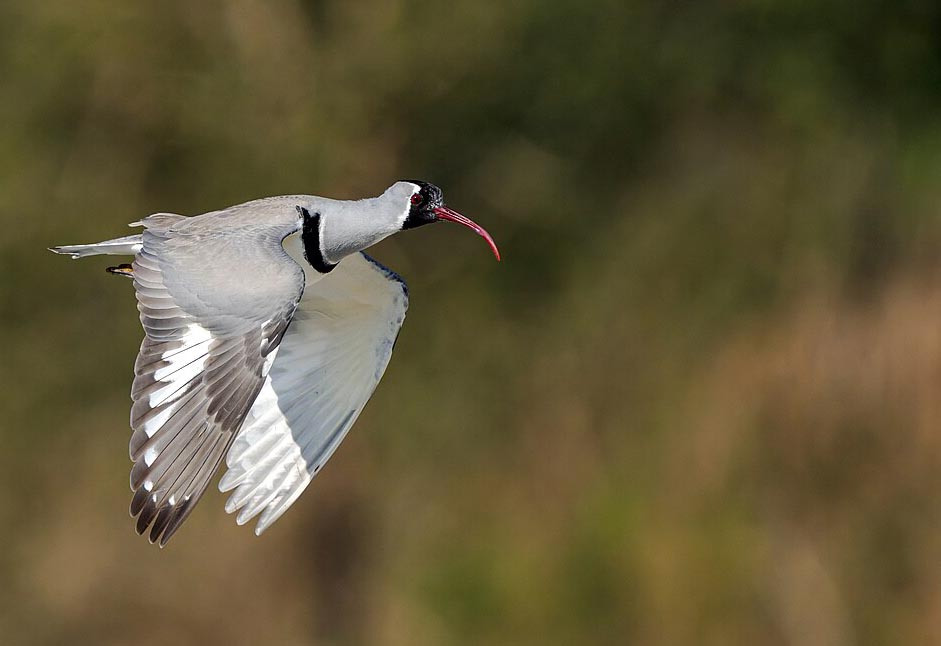
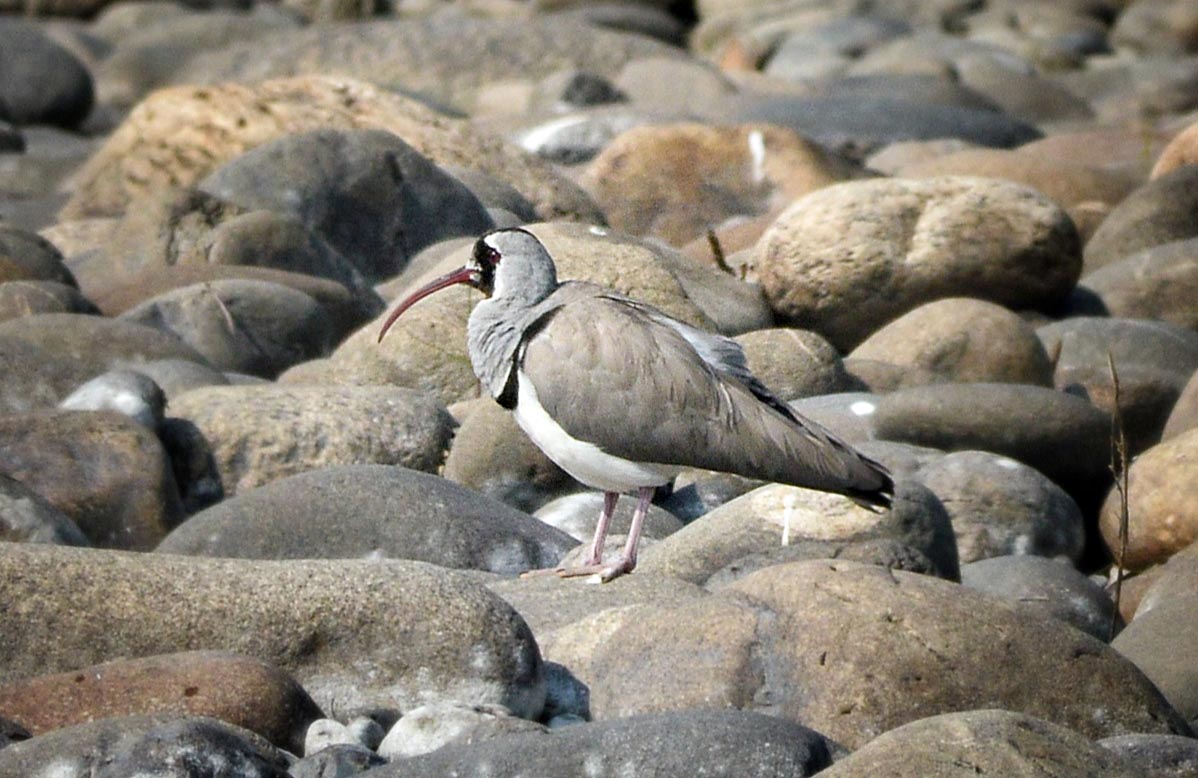
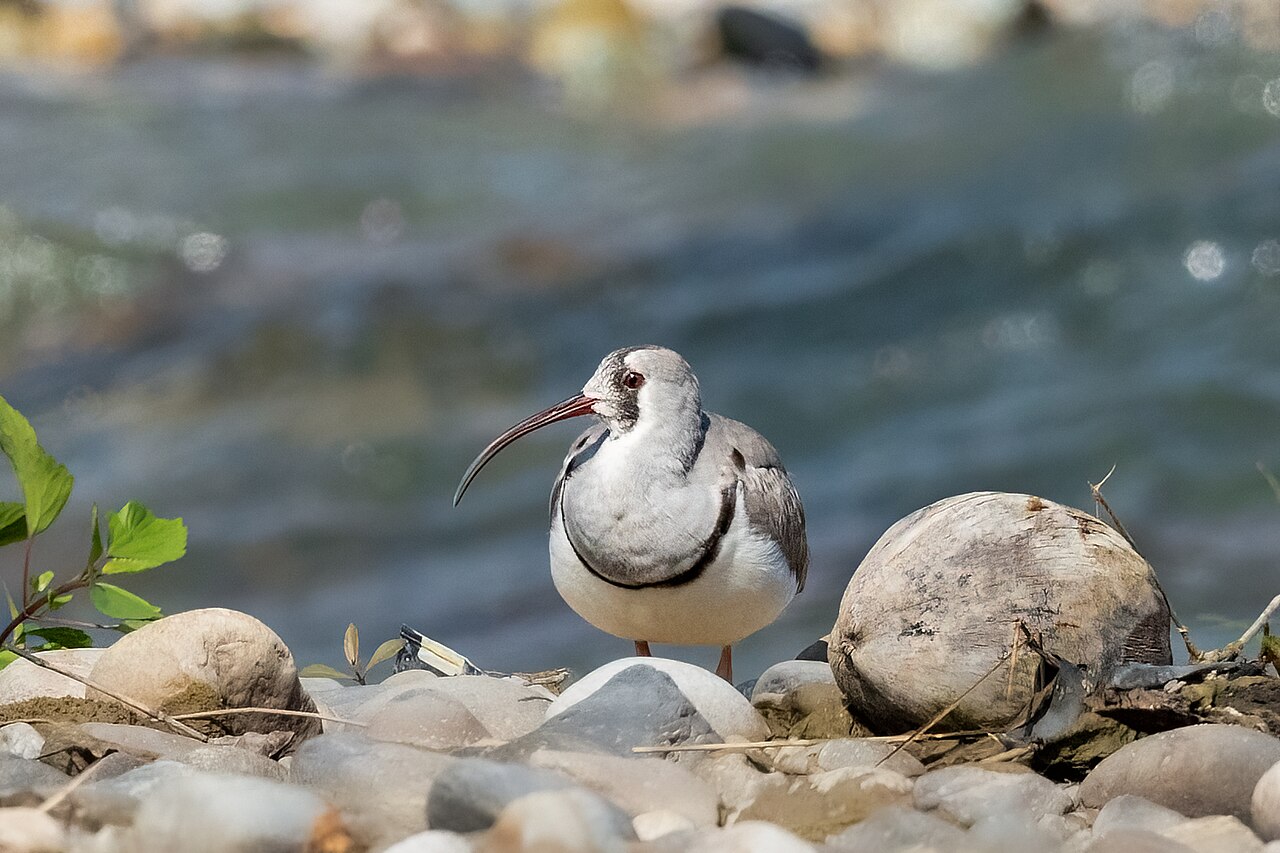
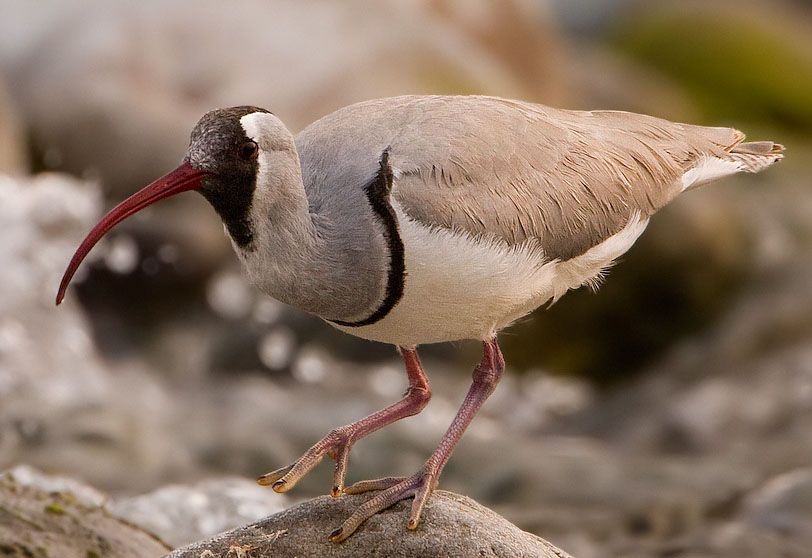
The ibisbill (Ibidorhyncha struthersii) is the only species in this bird family. It lives in the high mountain regions of Central and South Asia, including parts of Afghanistan, Bhutan, China, India, Kazakhstan, Kyrgyzstan, Myanmar, Nepal, Pakistan, Russia, Tajikistan, Turkmenistan, and Uzbekistan.
Ibisbills are usually found along fast-flowing rivers and streams at high elevations. They have a long, downward-curved pink bill, a gray body, a white belly marked with a black breast band, and a black face.
Using its long bill, the ibisbill probes among rocks and gravel to find insects, insect larvae, worms, and other small invertebrates. It may also occasionally eat small fish.
For much of the year, ibisbills are usually seen alone or in pairs, although they may gather in small groups outside the breeding season.
The nest is a shallow scrape in gravel or sand along a riverbank. The female usually lays 3–4 eggs, and both parents take turns incubating them and caring for the chicks after they hatch.
Ibisbill (Ibidorhyncha struthersii)
The Ibisbill is found in South Central Asia in Afghanistan, Bhutan, China, India, Kazakhstan, Kyrgyzstan, Myanmar, Nepal, Pakistan, Russia, Tajikistan, Turkmenistan, and Uzbekistan. IUCN Redlist Status: Least Concern
Ibisbill (Ibidorhyncha struthersii)
The Ibisbill uses its long bill to probe under rocks for small fish and invertebrates. IUCN Redlist Status: Least Conern
Ibisbill (Ibidorhyncha struthersii)
Except during the breeding season, the Ibisbill is a solitary bird. IUCN Redlist Status: Least Concern