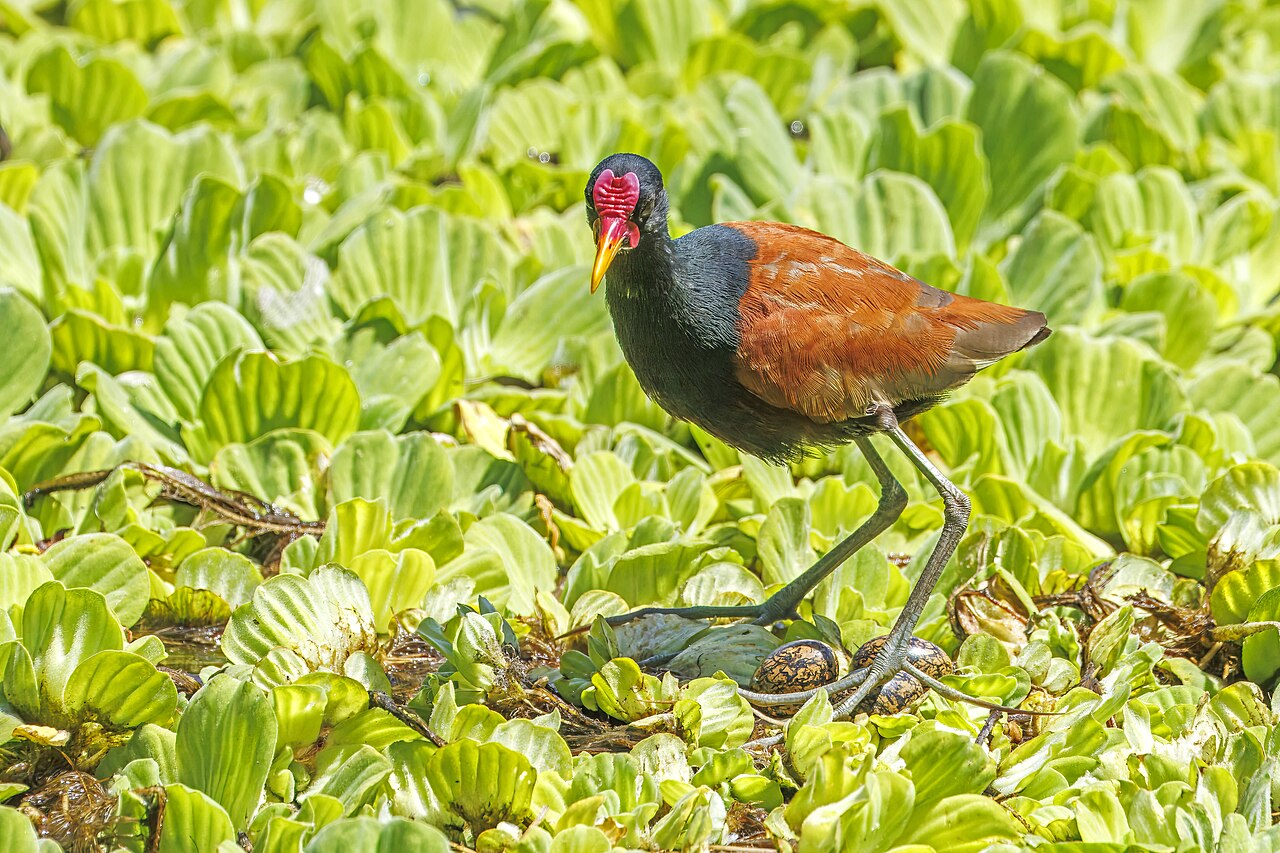
Jacanas are found in tropical and subtropical wetlands around the world.
Jacanas are wading birds with long legs and exceptionally large feet. Their four long toes help spread their weight so they can walk across floating aquatic vegetation such as lily pads. They feed mainly on insects and other invertebrates, but they may also eat seeds and other small aquatic organisms.
Jacanas are known for their unusual breeding behavior. In most species, females are larger and more brightly colored than males and may mate with several males during a breeding season.
The males build nests on floating vegetation, incubate the eggs, and care for the chicks after they hatch. The chicks are precocial and leave the nest soon after hatching and are able to walk across floating plants with their oversized feet.
If danger threatens, a male jacana may carry small chicks beneath his wings while running or flying to safety.
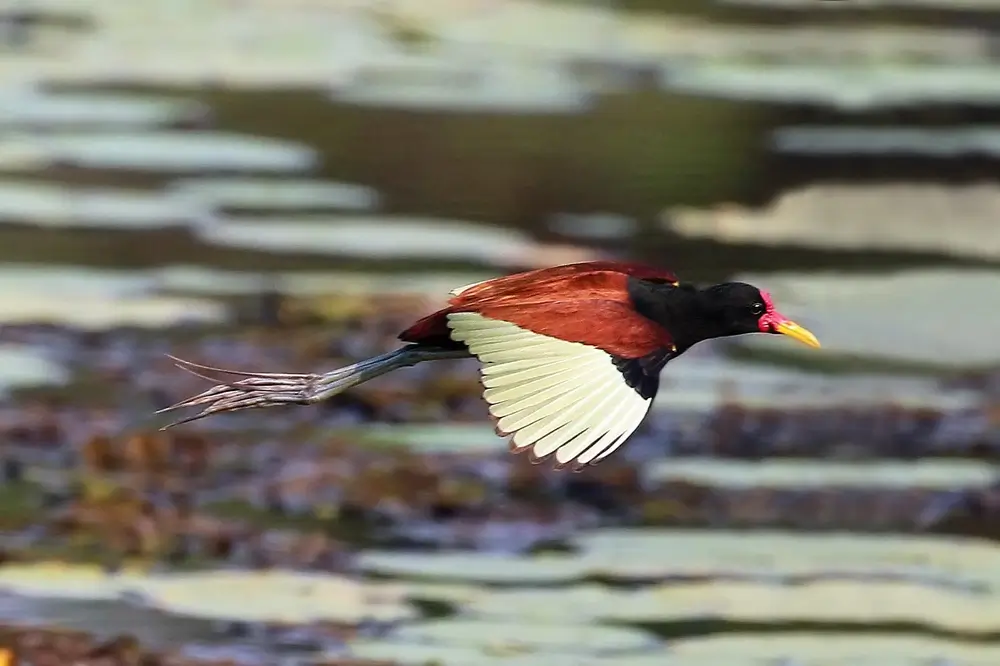
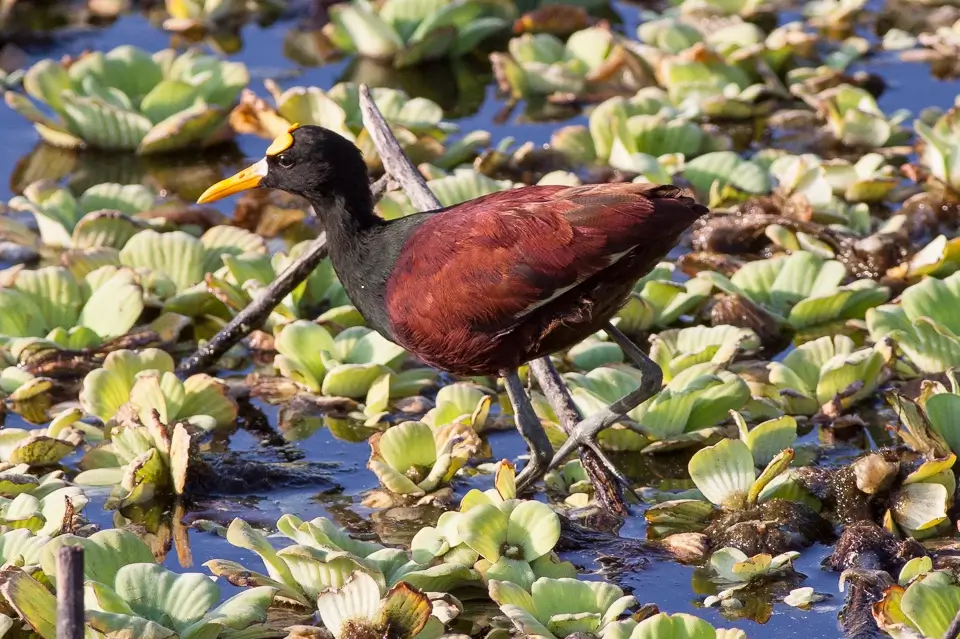
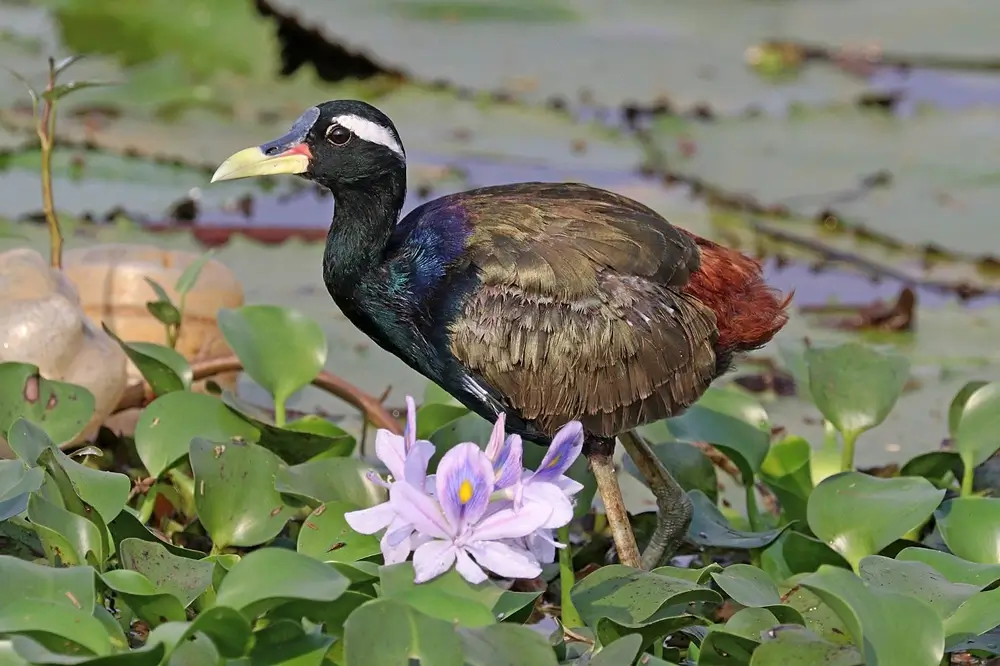
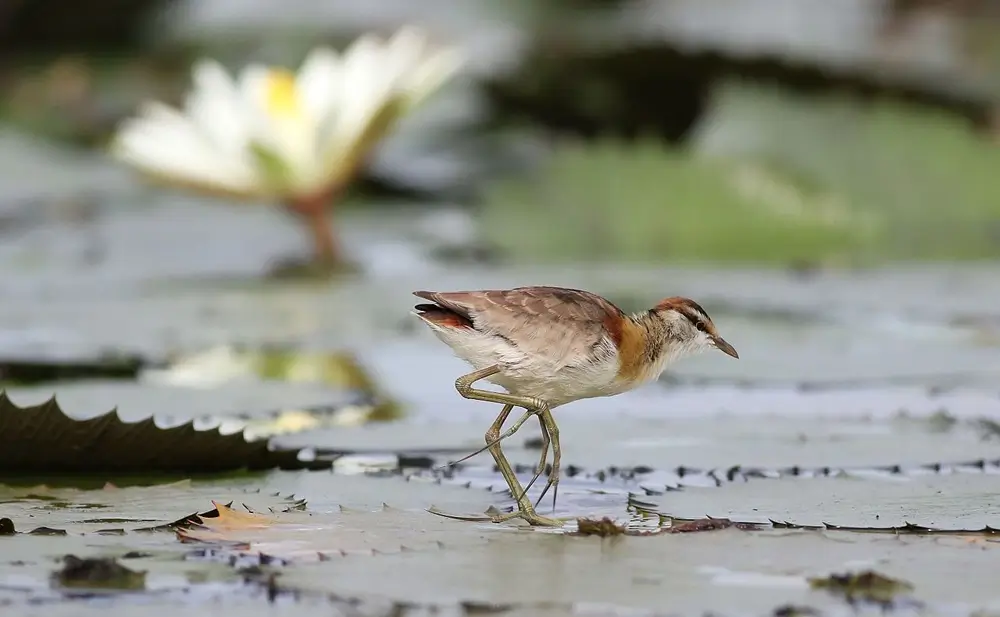
There are eight species in this family: the Lesser Jacana (Microparra capensis), African Jacana (Actophilornis africanus), Madagascar Jacana (Actophilornis albinucha), Northern Jacana (Jacana spinosa), Comb-crested Jacana (Irediparra gallinacea), Bronze-winged Jacana (Metopidius indicus), Pheasant-tailed Jacana (Hydrophasianus chirurgus), and the Wattled Jacana (Jacana jacana).
The Northern Jacana and Wattled Jacana are found in Central and South America. The Northern Jacana’s range extends northward into southern Texas, where it is the only jacana regularly found in the United States.
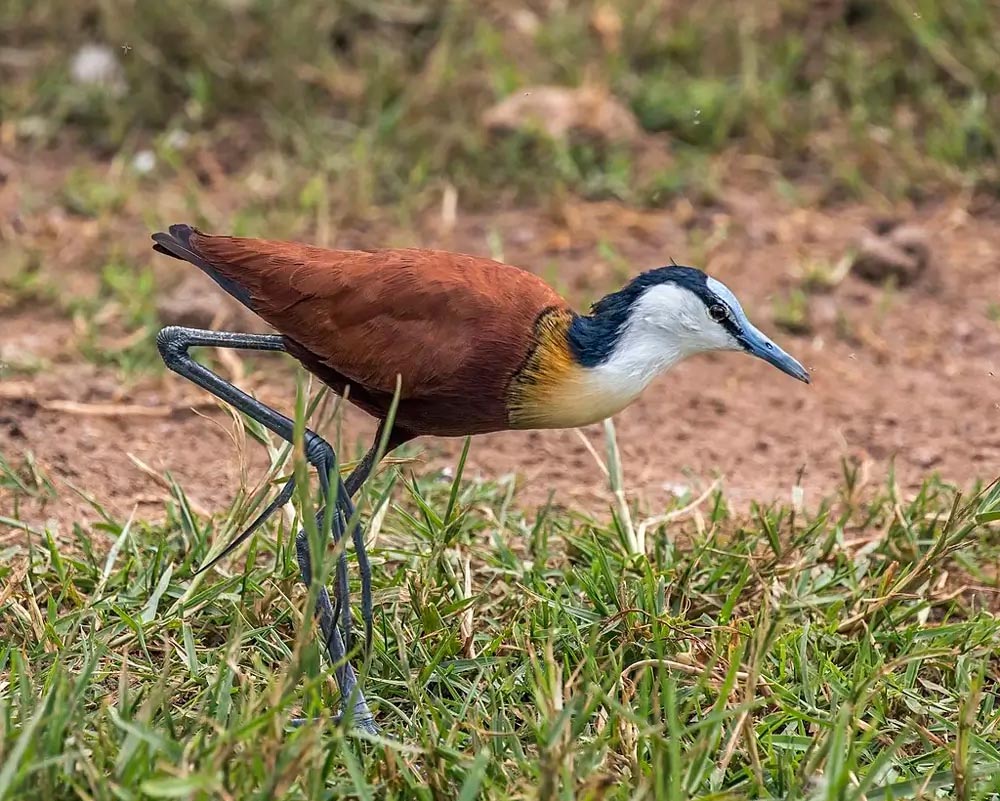
African Jacana (Actophilornis africanus)
The African Jacana is found across most of Sub-Saharan Africa. IUCN Redlist Status: Least Concern
Madagascar Jacana (Actophilornis albinucha)
The Madagascar Jacana is found in Madagascar. IUCN Redlist Status: Endangered
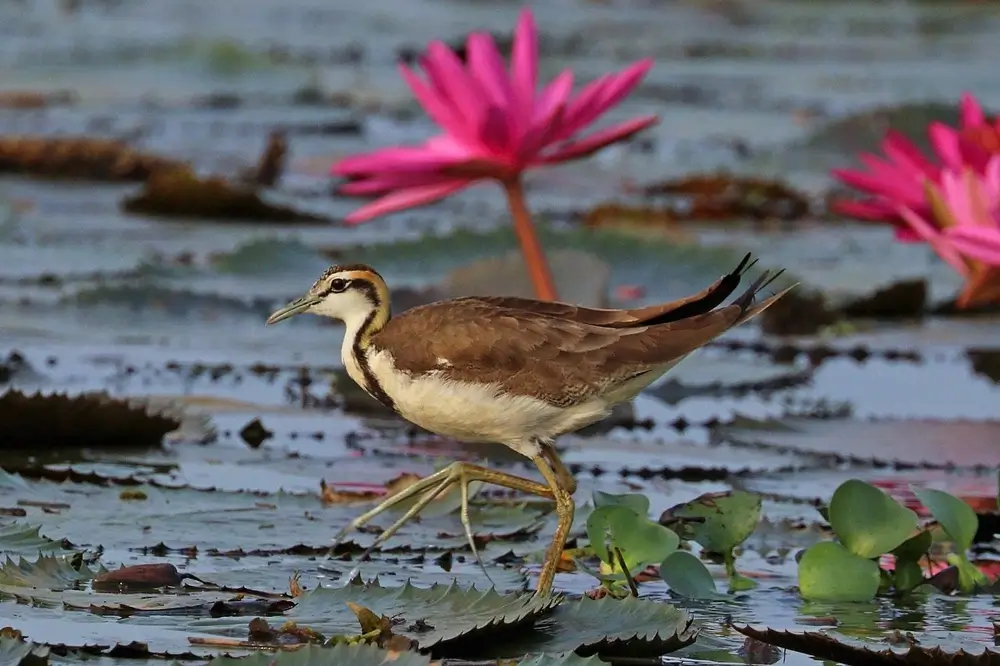
Pheasant-tailed Jacana (Hydrophasianus chirurgus)
The Pheasant-tailed Jacana is found in Bangladesh, Cambodia, China, India, Indonesia, Japan, Laos, Malaysia, Myanmar, Nepal, Oman, Pakistan, Philippines, Singapore, Sri Lanka, Taiwan, Thailand, and Vietnam. IUCN Redlist Status: Least Concern
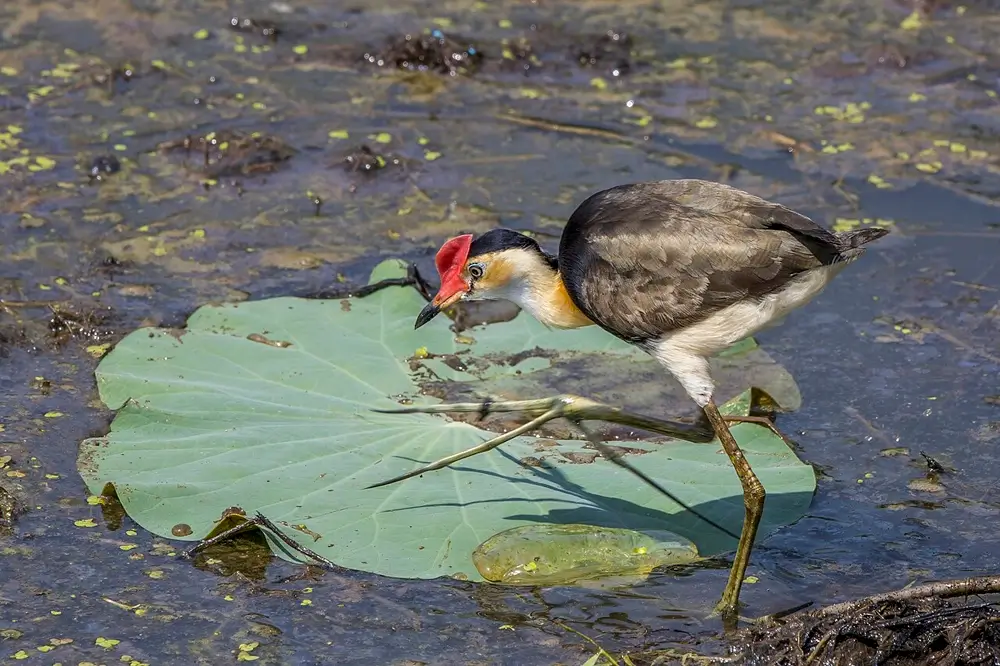
Comb-crested Jacana (Irediparra gallinacea)
The Comb-crested Jacana is found in Australia, Indonesia, Malaysia, Papua New Guinea, the Philippines, and East Timor. IUCN Redlist Status: Least Concern
Wattled Jacana (Jacana jacana)
The Wattled Jacana is found in Central and South America. IUCN Redlist Status: Least Concern
Northern Jacana (Jacana spinosa)
The Northern Jacana is found in Mexico, Central America, and the Caribbean. IUCN Redlist Status: Least Concern
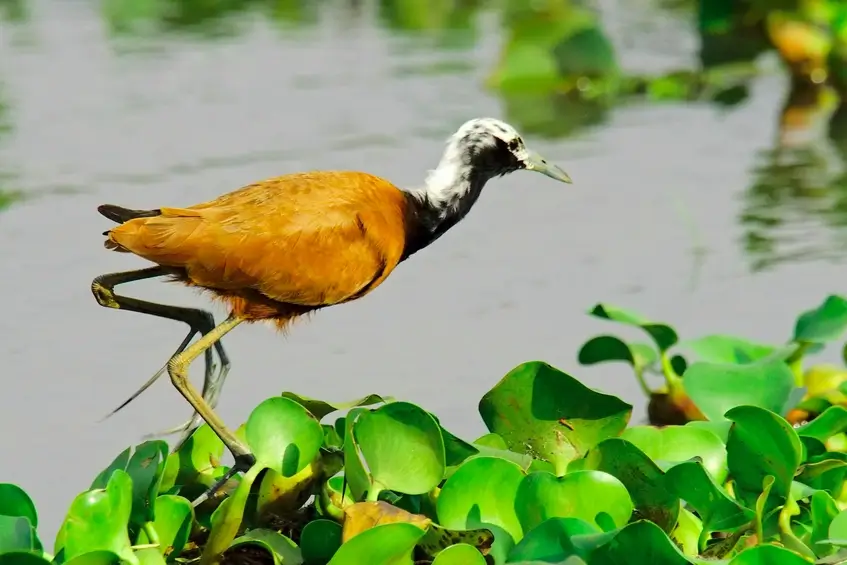
Bronze-winged Jacana (Metopidius indicus)
The Bronze-winged Jacana is found in Bangladesh, Cambodia, China, India, Indonesia, Lao s, Malaysia, Myanmar, Nepal, Pakistan, Thailand, and Vietnam. IUCN Redlist Status: Least Concern
Lesser Jacana (Microparra capensis)
The Lesser Jacana is found in scattered locations across Sub-Saharan Africa. IUCN Redlist Status: Least Concern