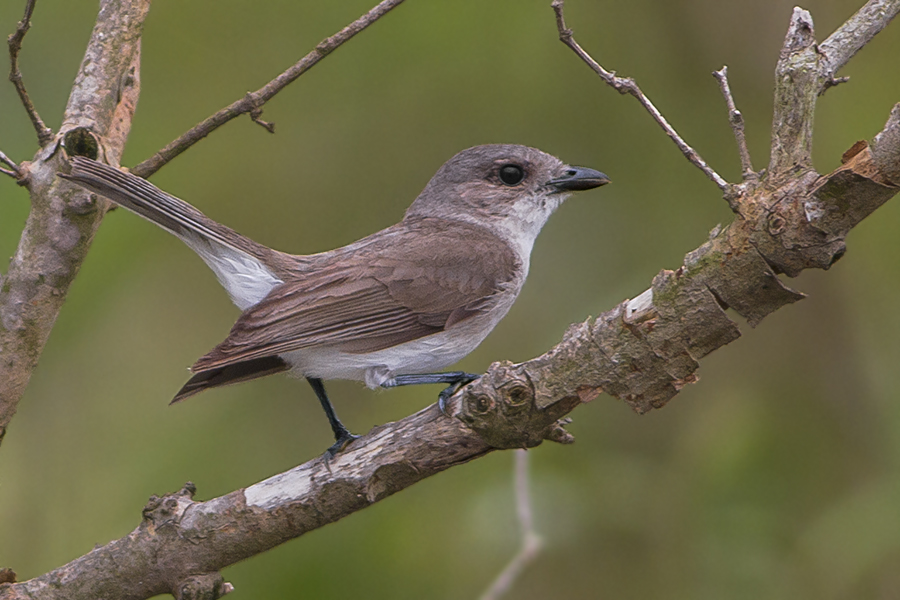
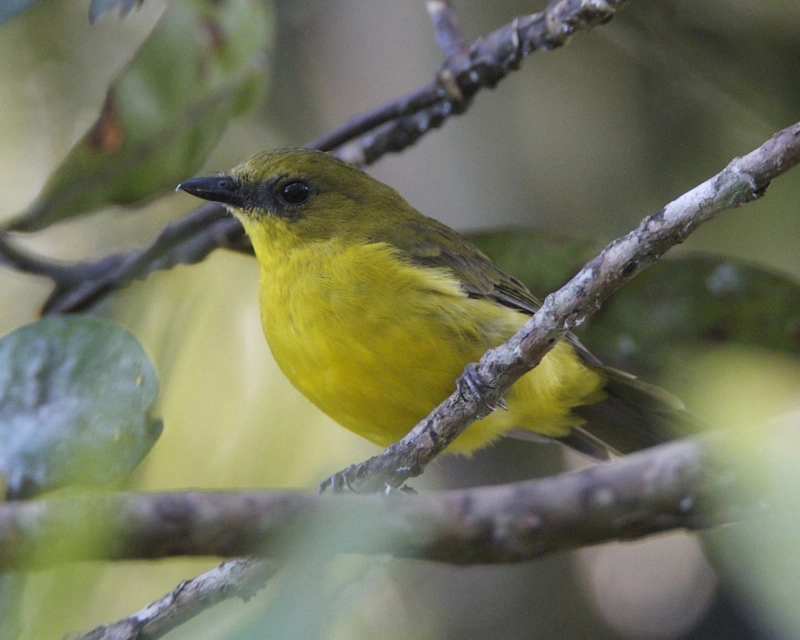
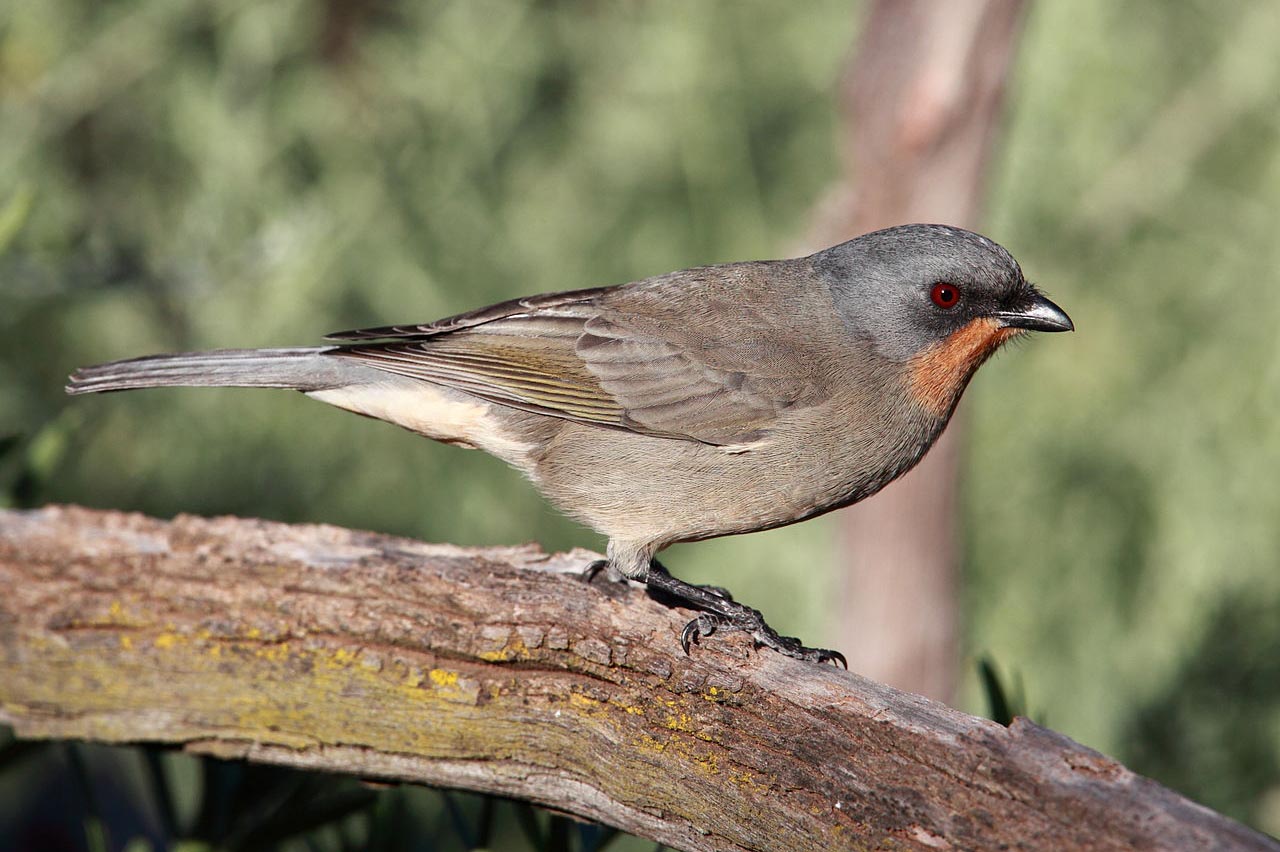
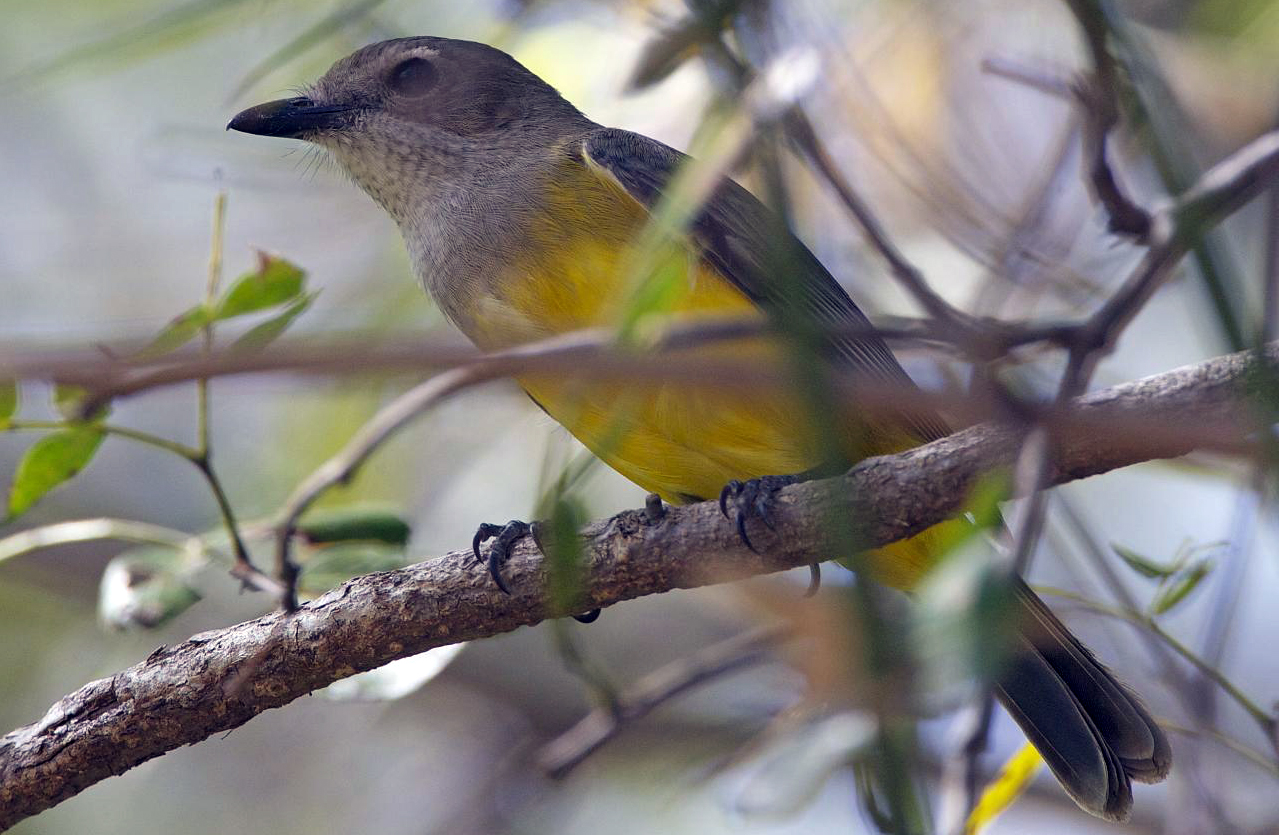
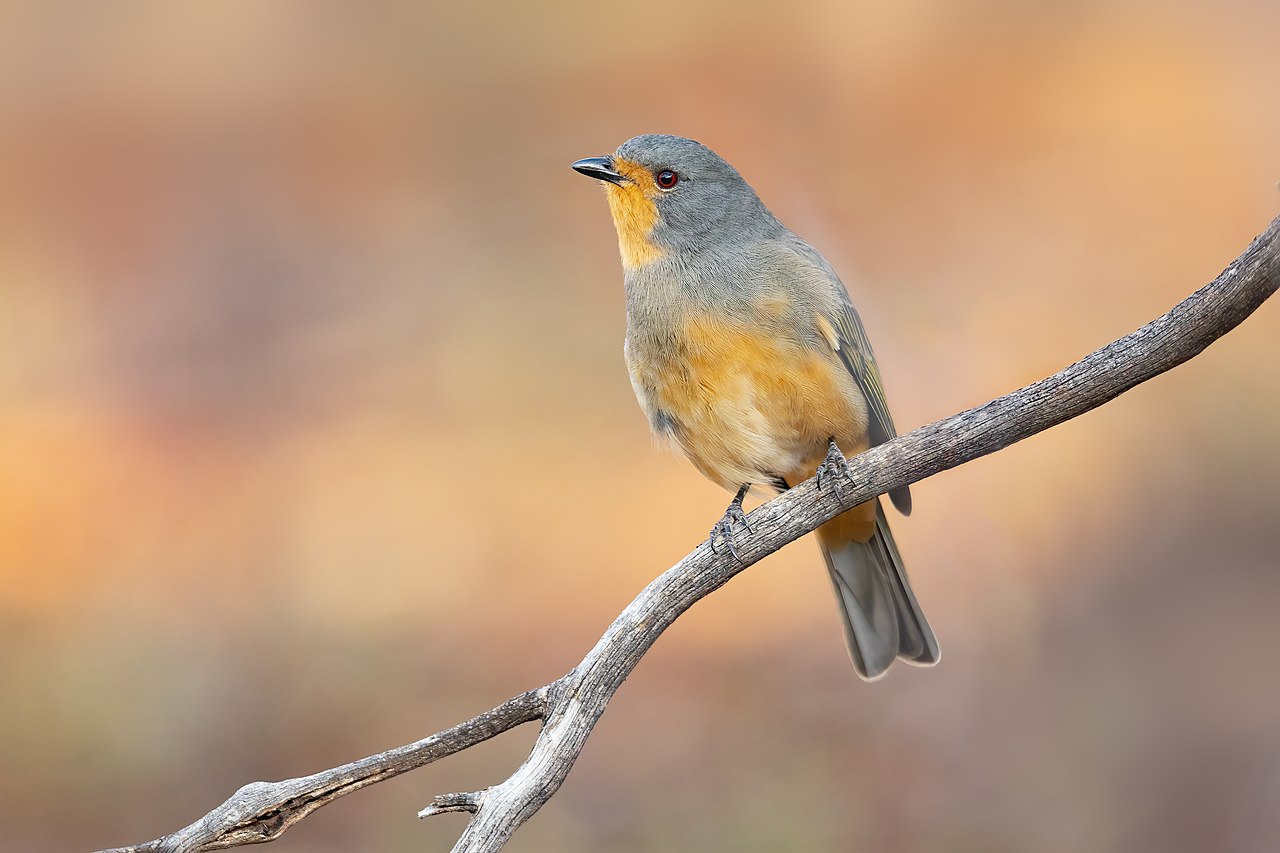
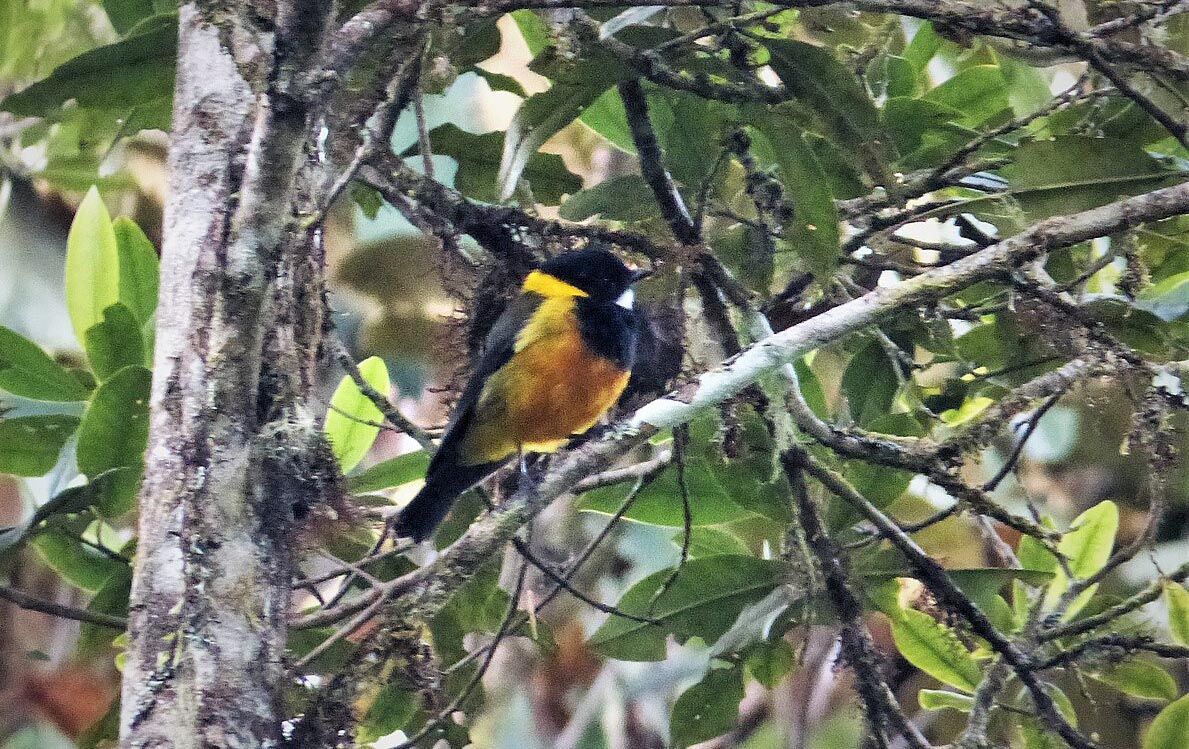
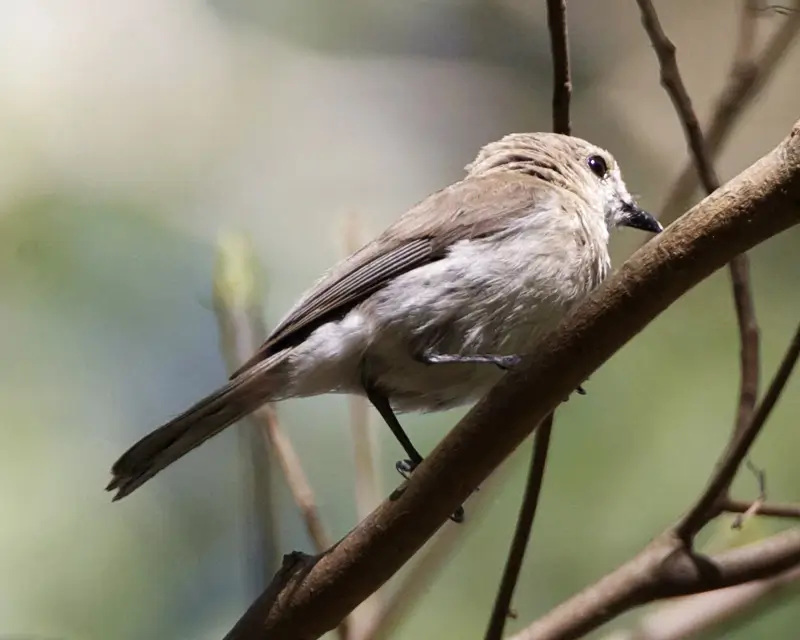
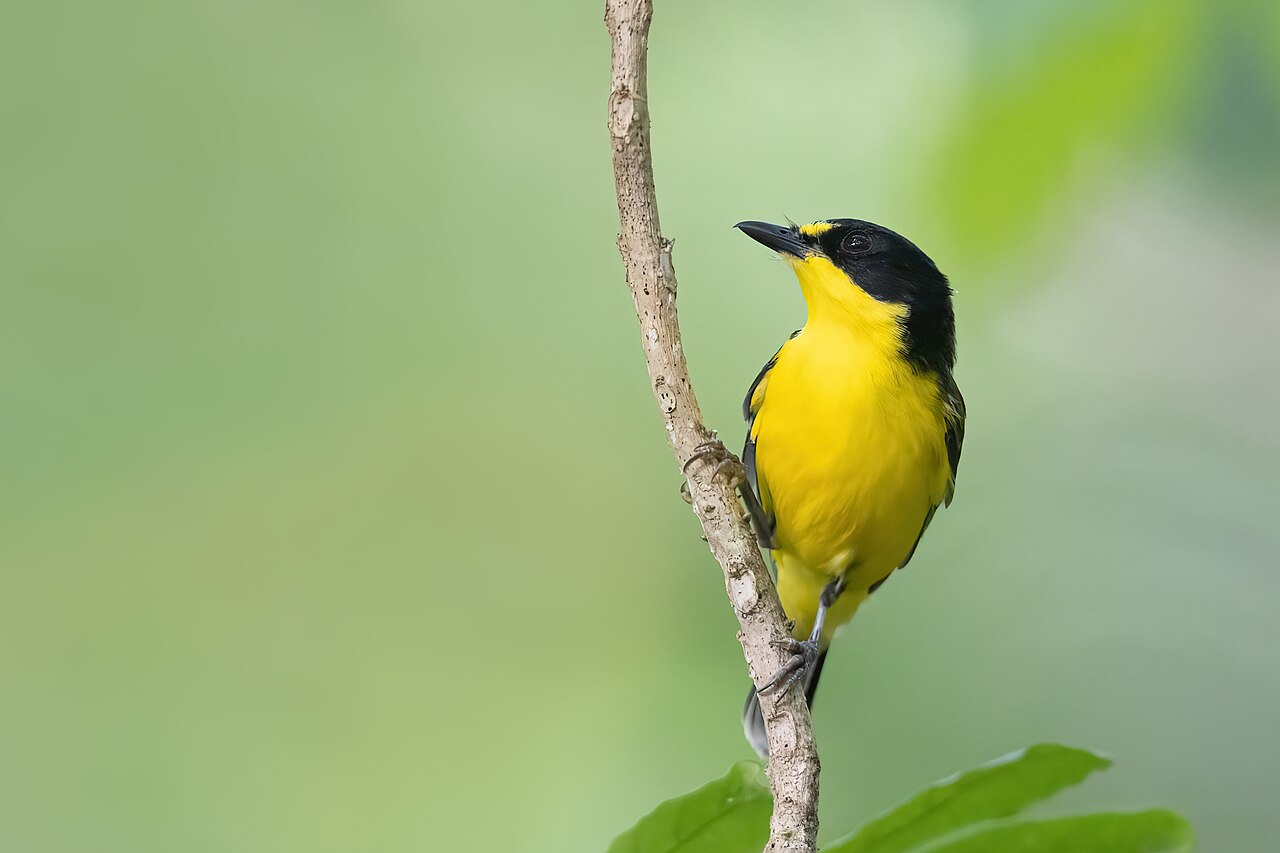
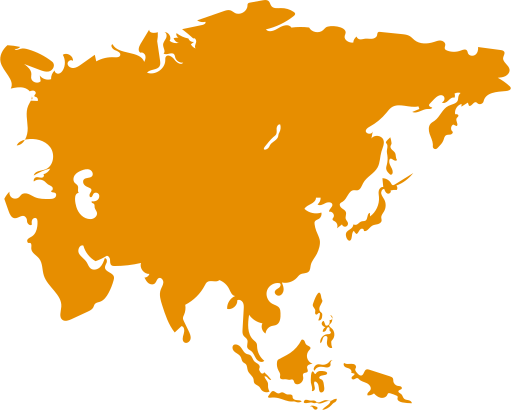
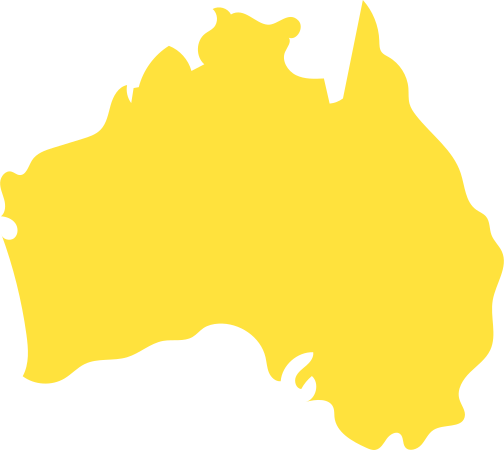
There are about 60 species of birds in the Pachycephalidae, or whistler and shrike-thrush family. They are found mainly in Australia and New Guinea, as well as parts of South and Southeast Asia, Indonesia, and islands in the southwestern Pacific.
These birds are small to medium-sized, generally measuring about 5–11 inches (12.7–27.9 cm) long. Many have large, rounded heads and strong, thick bills. Their wings and tails vary among species, and some have distinctive crests.
Many pachycephalids are olive, brown, gray, or greenish above and lighter underneath, helping them blend in with their surroundings. However, some species are more brightly colored. They live in many different habitats, including forests, woodlands, shrublands and grasslands.
Most members of this family eat insects and other small invertebrates. They search for food among leaves and branches, in shrubs and sometimes on the ground. Some species also eat fruit.
Many pachycephalids are known for their loud, clear, and sometimes elaborate songs and calls. Their musical voices are one reason many members of the family are called whistlers.
Bower's Shrike-thrush (Colluricincla boweri)
Bower's Shrike-thrush is found in Australia. IUCN Redlist Status: Vulnerable
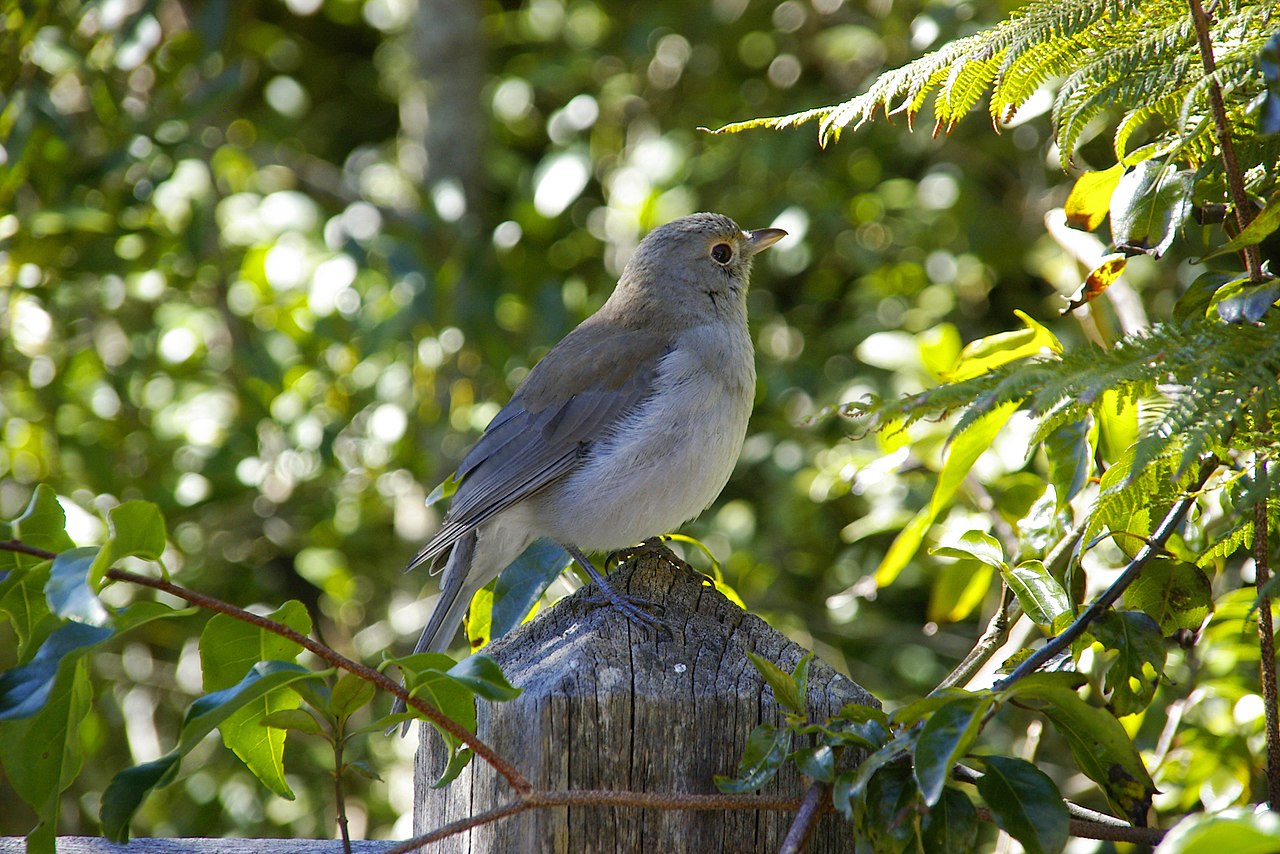
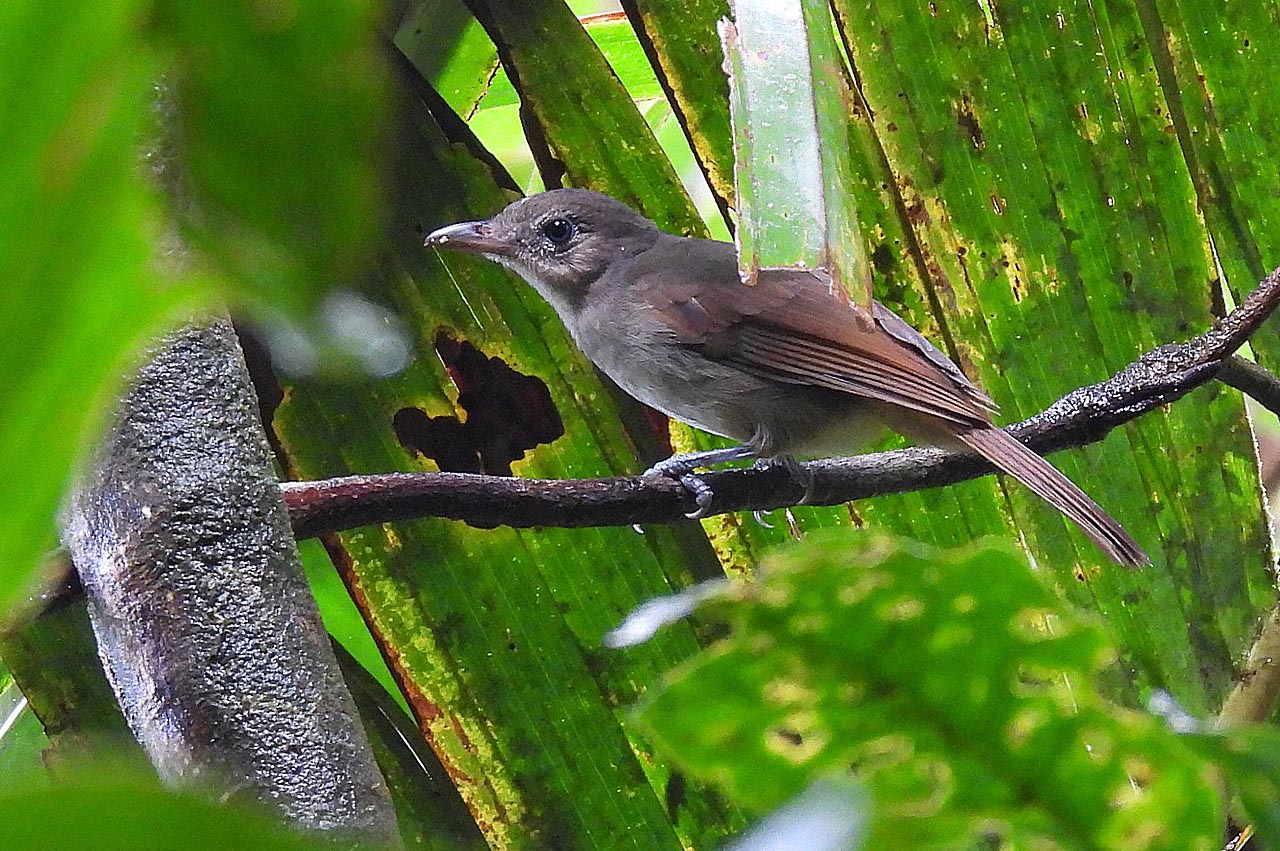
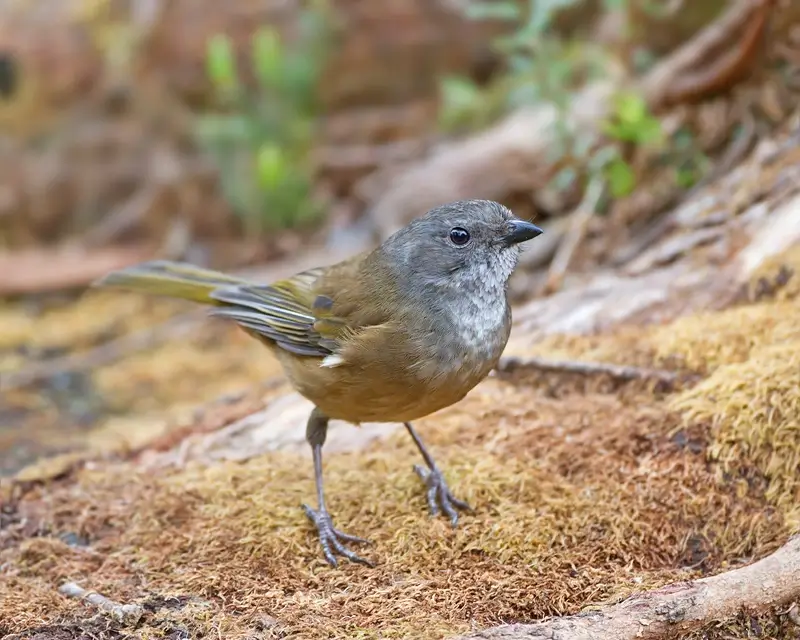
Gray Shrike-thrush (Colluricincla harmonica)
The Gray Shrike-thrush Australia, Indonesia, and Papua New Guinea. IUCN Redlist Status: Least Concern
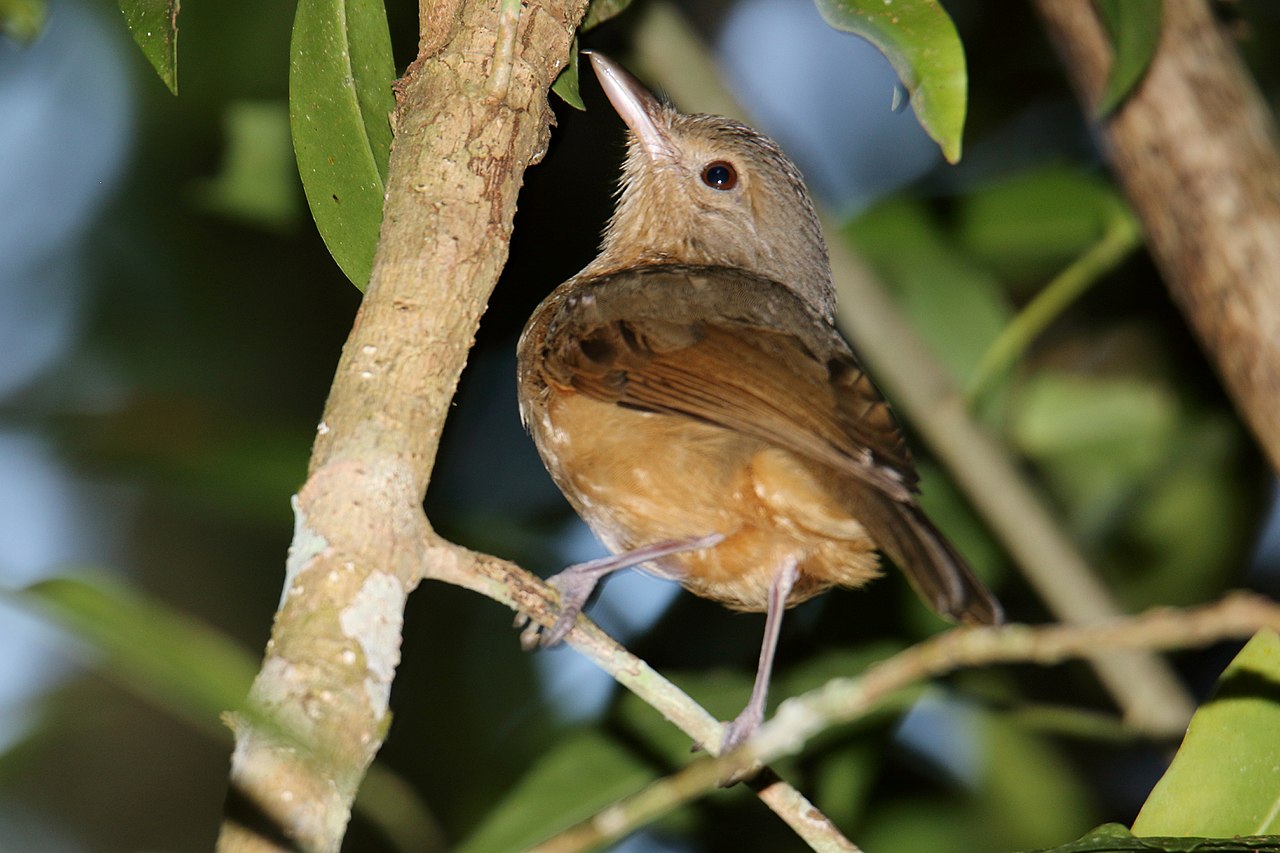
Little Shrike-thrush (Colluricincla megarhyncha)
The Little Shrike-thrush is found in Australia, Indonesia, and Papua New Guinea. IUCN Redlist Status: Least Concern
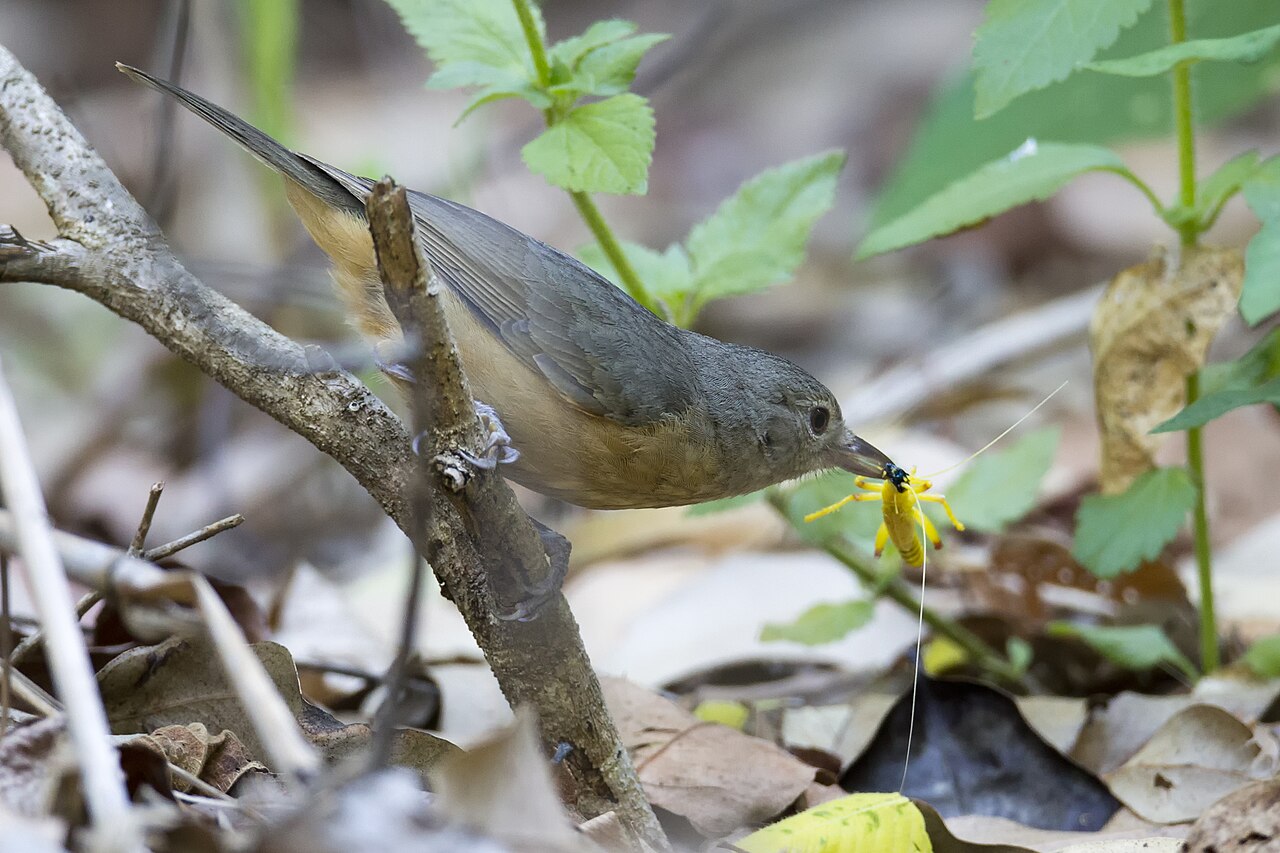
Sooty Shrike-thrush (Colluricincla tenebrosa)
The Sooty Shrike-thrush is found in Indonesia and Papua New Guinea. IUCN Redlist: Least Concern
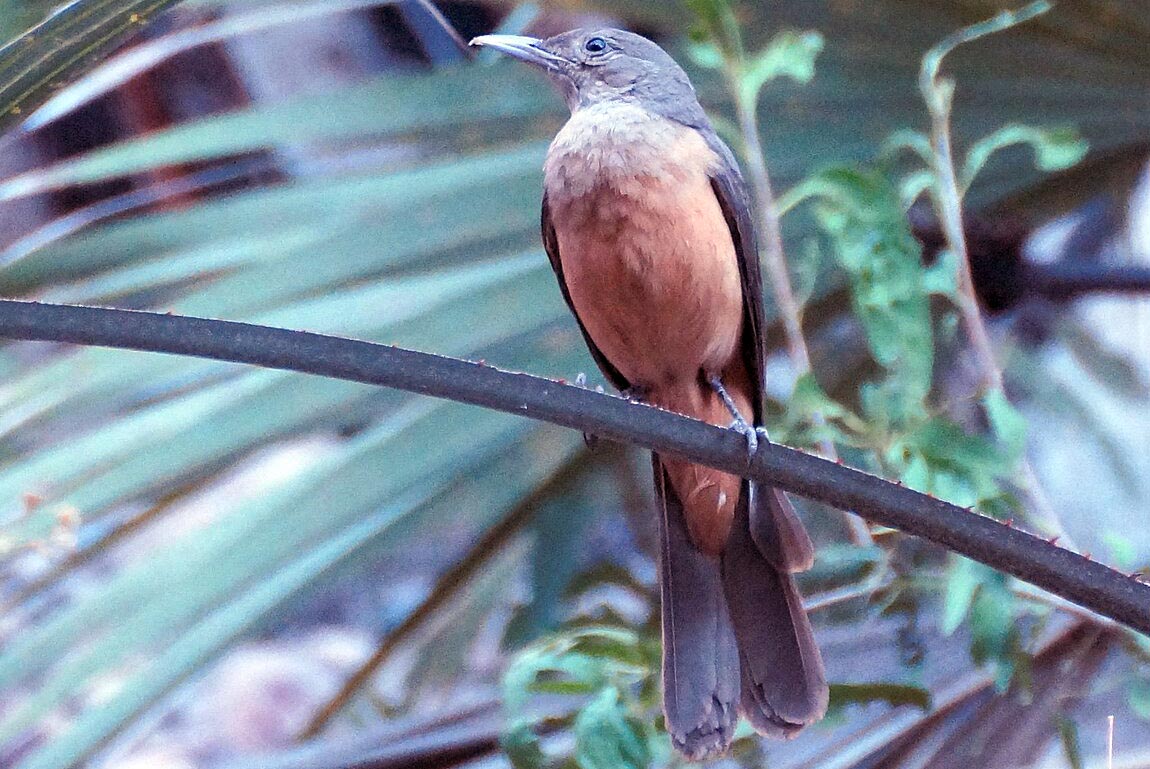
Sandstone Shrike-thrush (Colluricincla woodwardi)
The Sandstone Shrike-thrush is found in Australia. IUCN Redlist Status: Least Concern
Sangihe Whistler (Coracornis sanghirensis)
The Sangihe Whistler is found in Sulawesi) in Indonesia. IUCN Redlist Status: Critically Endangered
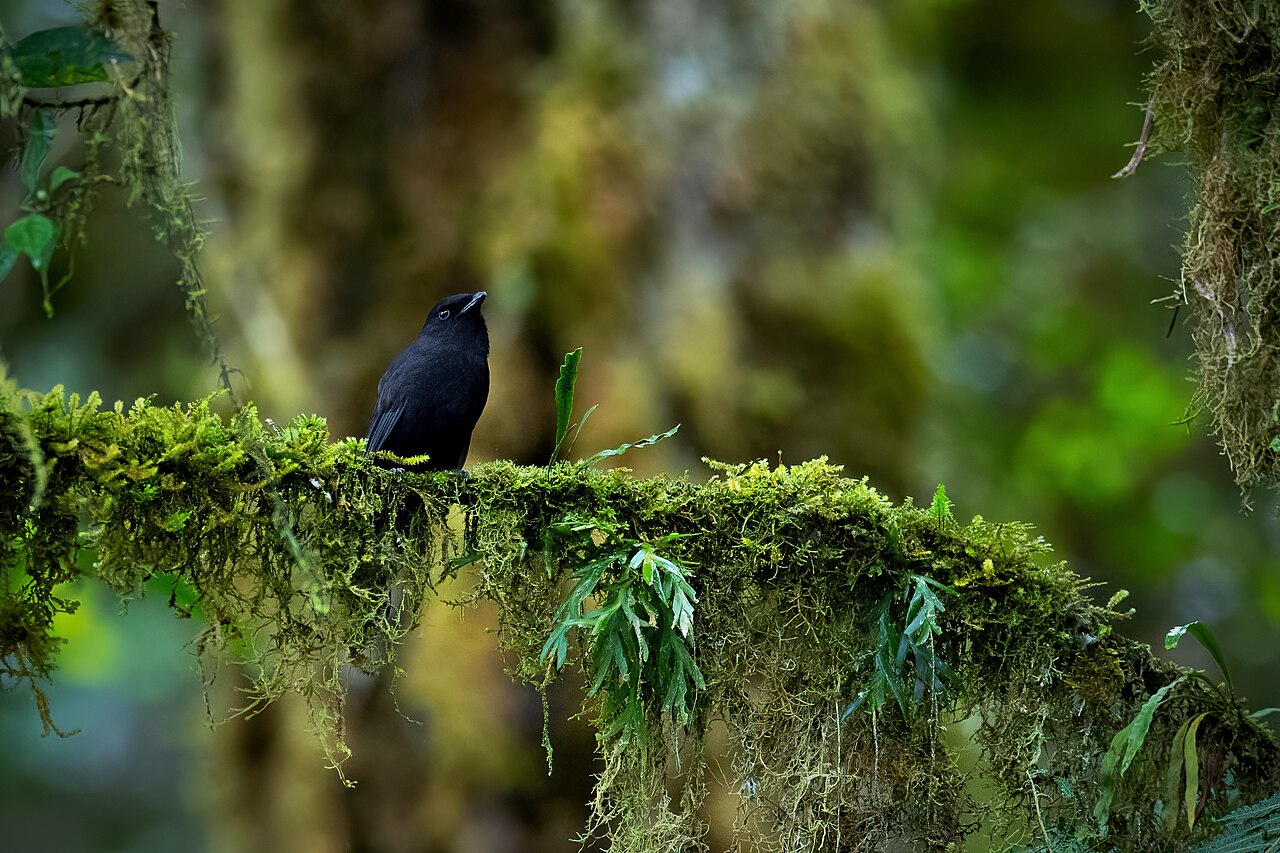
Black Pitohui (Melanorectes nigrescens)
The Black Pitohui is found in Indonesia and Papua New Guinea. IUCN Redlist Status: Least Concern
Green-backed Whistler (Pachycephala albiventris)
The Green-backed Whistler is found in the Philippines. IUCN Redlist Status: Least Concern
Wallacean Whistler (Pachycephala arctitorquis)
The Wallacean Whistler is found in Indonesia. IUCN Redlist: Least Concern
New Caledonian Whistler (Pachycephala caledonica)
The New Caledonian Whistler is found in New Caledonia. IUCN Redlist Status: Least Concern
Mangrove Whistler (Pachycephala cinerea)
The Mangrove Whistler is found in Singapore, Bangladesh, Brunei Darussalam, Cambodia, India, Indonesia, Laos, Malaysia, Myanmar, the Philippines, Thailand, Vietnam. IUCN Redlist Status: Least Concern
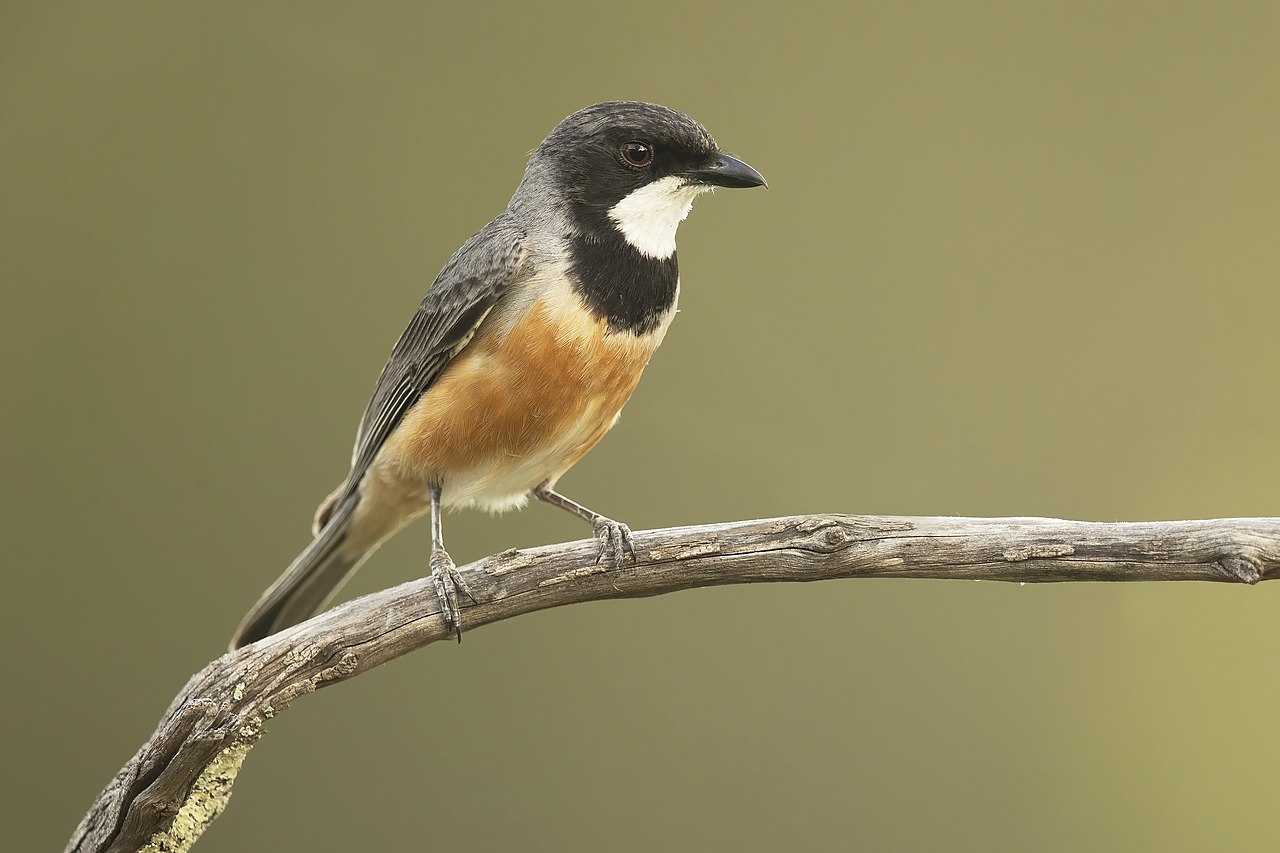
The Rusty-breasted Whistler is found in Indonesia and Timor-Leste. IUCN Redlist: Least Concern
Drab Whistler (Pachycephala griseonota)
The Drab Whistler is found in Indonesia. IUCN Redlist: Least Concern
White-vented Whistler (Pachycephala homeyeri)
The White-vented Whistler is found in Malaysia and the Philippines. IUCN Redlist: Least Concern
Bornean Whistler (Pachycephala hypoxantha)
The Bornean Whistler is found in Indonesia and Malaysia. IUCN Redlist Status: Least Concern
Gilbert's Whistler (Pachycephala inornata)
Gilbert's Whistler is found in Australia. IUCN Redlist Status: Least Concern
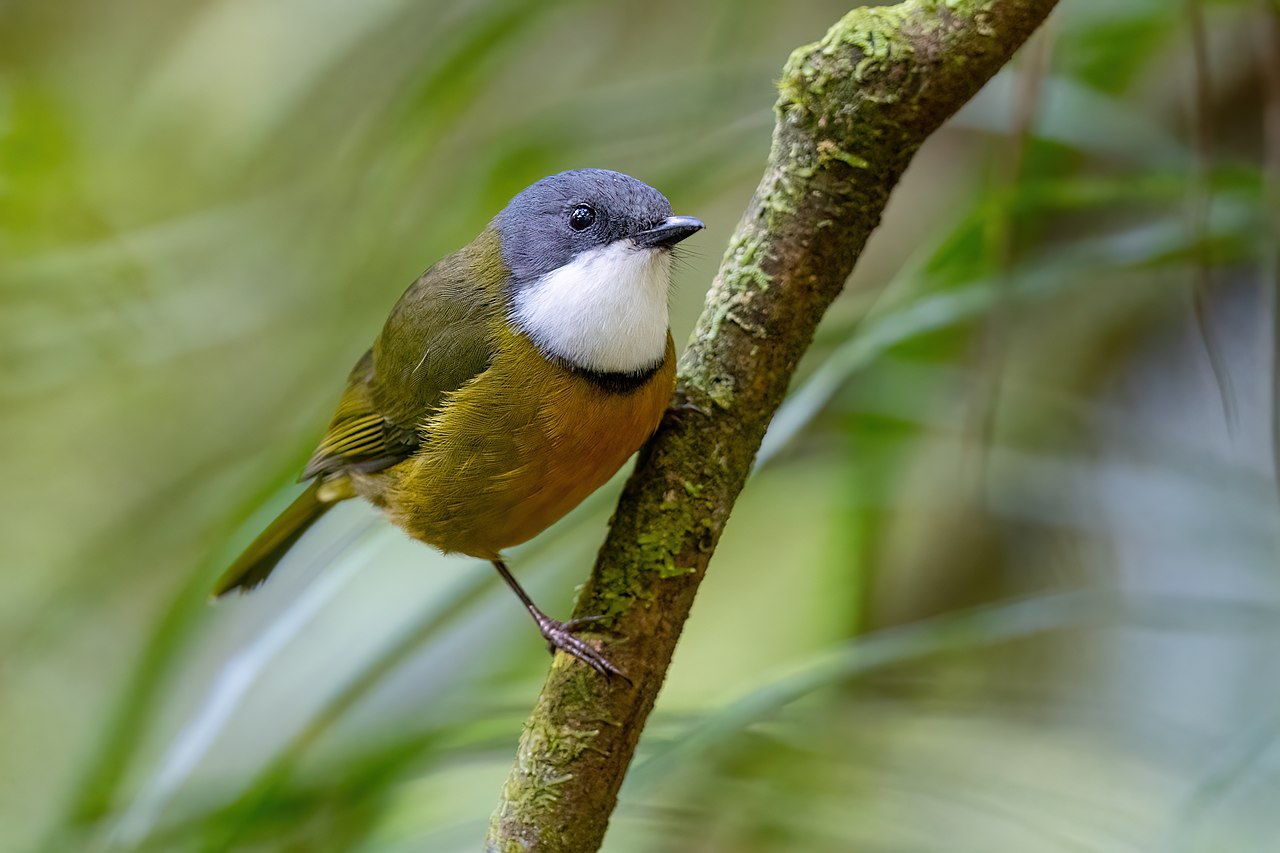
White-breasted Whistler (Pachycephala lanioides)
The White-breasted Whistler is foundin northern Australia. IUCN Redlist Status: Least Concern
White-bellied Whistler (Pachycephala leucogastra)
The White-bellied Whistler is foundin Papua New Guinea. IUCN Redlist Status: Leat Concern
Lorentz's Whistler (Pachycephala lorentzi)
Lorentz's Whistler is found in Indonesia and Papua New Guinea. IUCN Redlist Status: Least Concern
Black-tailed Whistler (Pachycephala melanura)
The Black-tailed Whistler is found in Australia. IUCN Redlist Status: Least Concern
Black-chinned Whistler (Pachycephala mentalis)
The Black-chinned Whistler is found in Indonesia. IUCN Redlist: Least Concern
Vogelkop Whistler (Pachycephala meyeri)
The Vogelkop Whistler is found in Indonesia. IUCN Redlist: Least Concern
Brown-backed Whistler (Pachycephala modesta)
The Brown-backed Whistler is found in Papua New Guinea. IUCN Redlist Status: Least Concern
Bare-throated Whistler (Pachycephala nudigula)
The Bare-throated Whistler is found in Indonesia. IUCN Redlist: Least Concern
Olive Whistler (Pachycephala olivacea)
The Olive Whistler is found in Australia. IUCN Redlist Status: Least Concern
Fawn-breasted Whistler (Pachycephala orpheus)
The Fawn-breasted Whistler is found in Indonesia and Timor Leste. IUCN Redlist: Least Concern
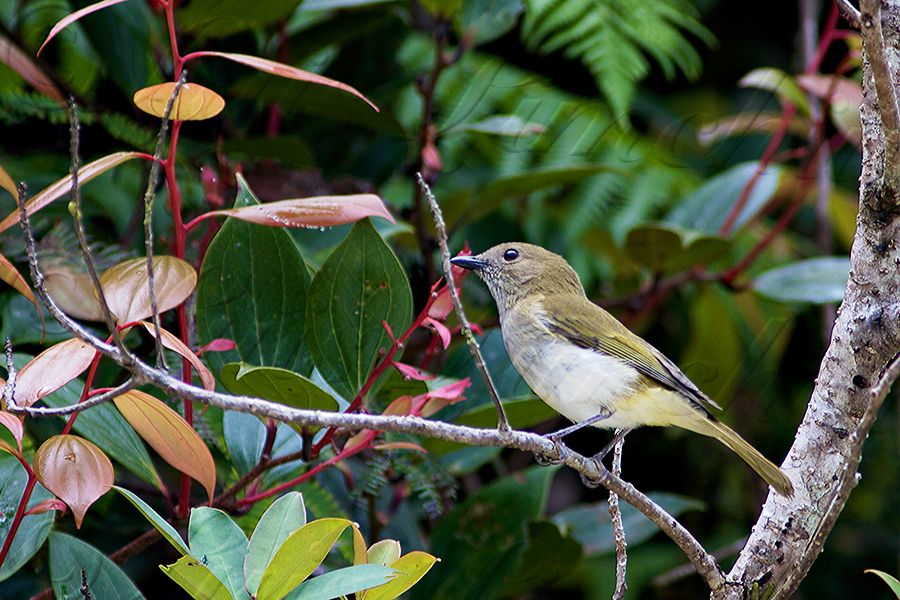
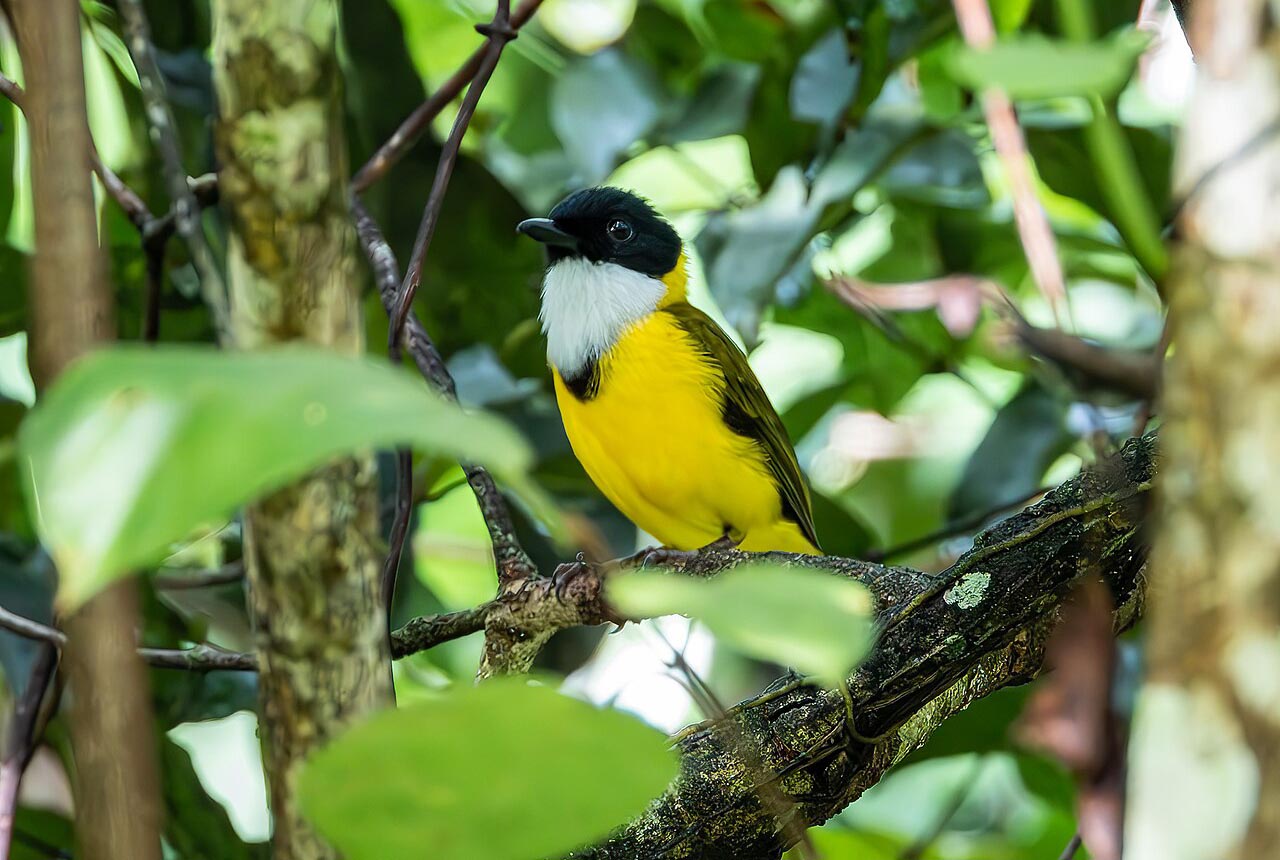
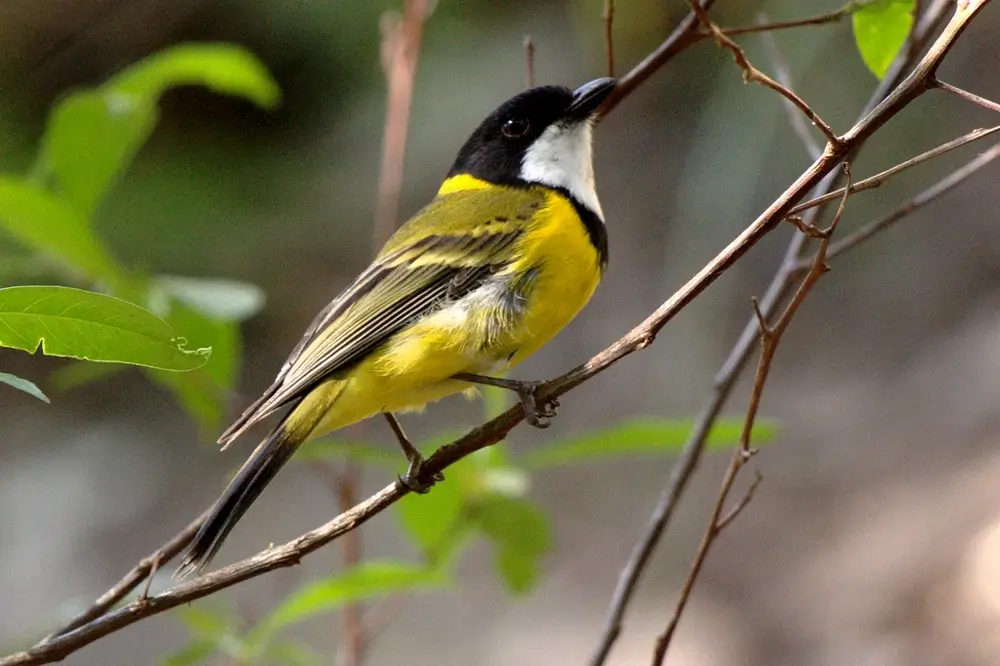
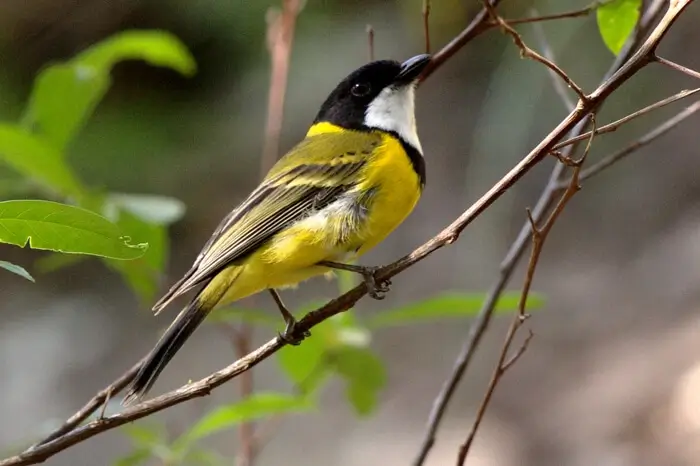
Golden Whistler (Pachycephala pectoralis)
The Golden Whistler is found in Australia, Fiji, Indonesia, Norfolk Island, Papua New Guinea, Solomon Islands, Timor-Leste, and Vanuatu. IUCN Redlist Status: Least Concern
Island Whistler (Pachycephala phaionota)
The Island Whistler is found in Indonesia. IUCN Redlist Status: Least Concern