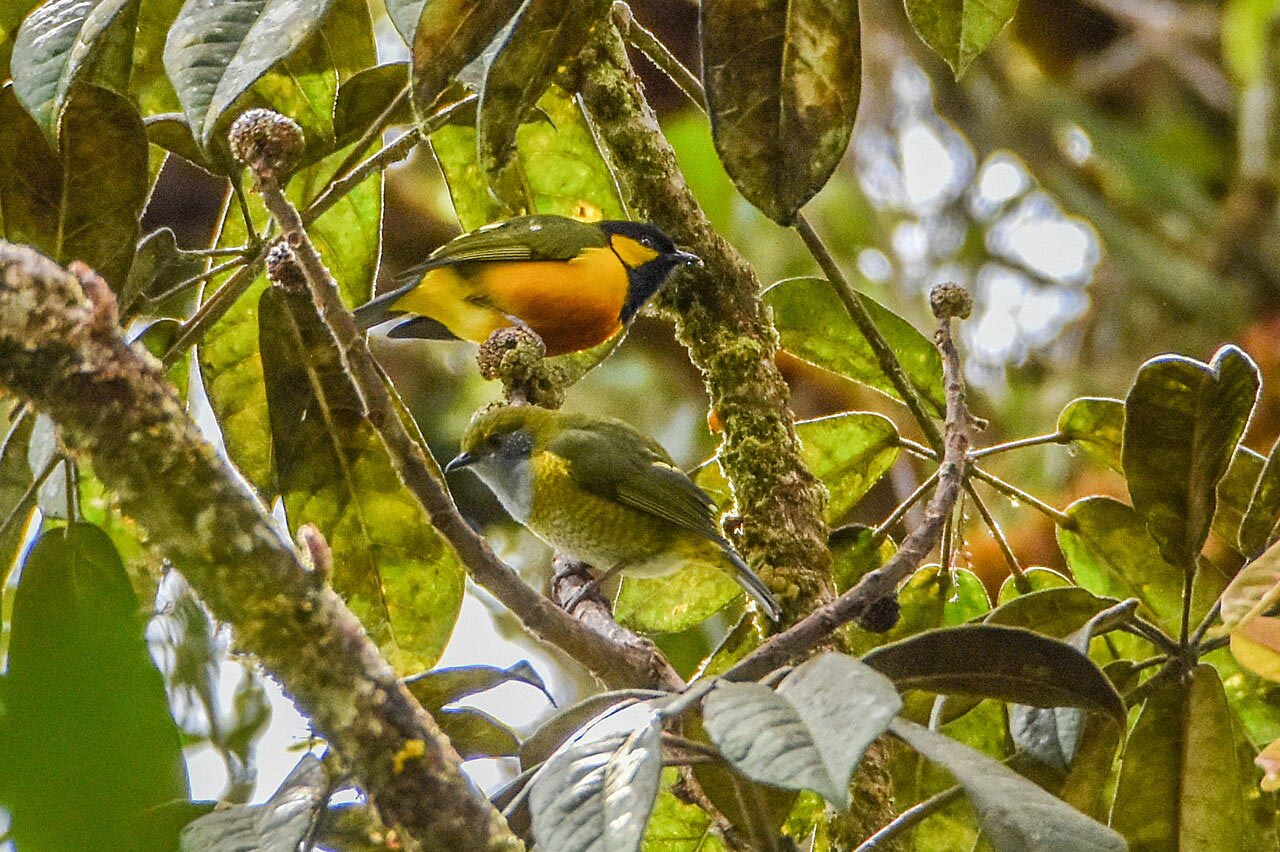
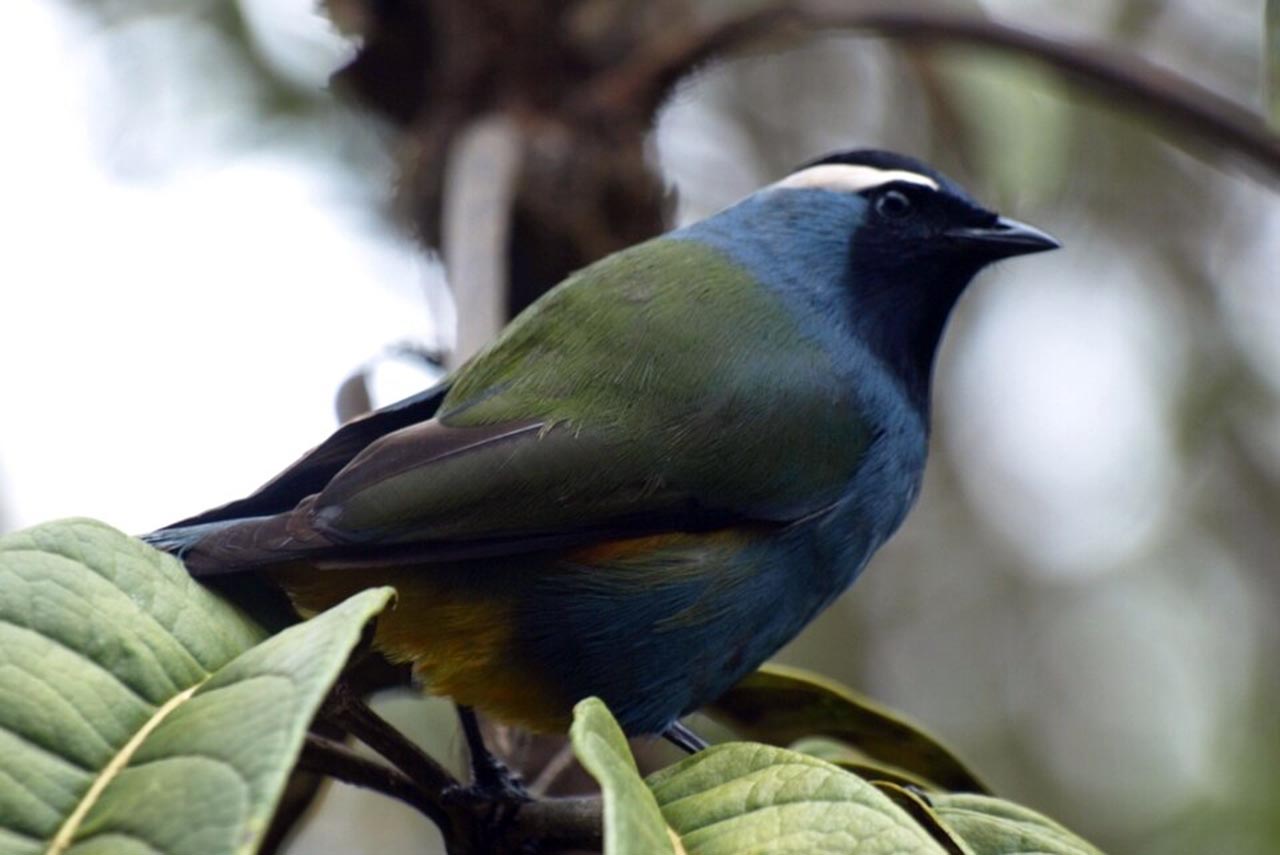
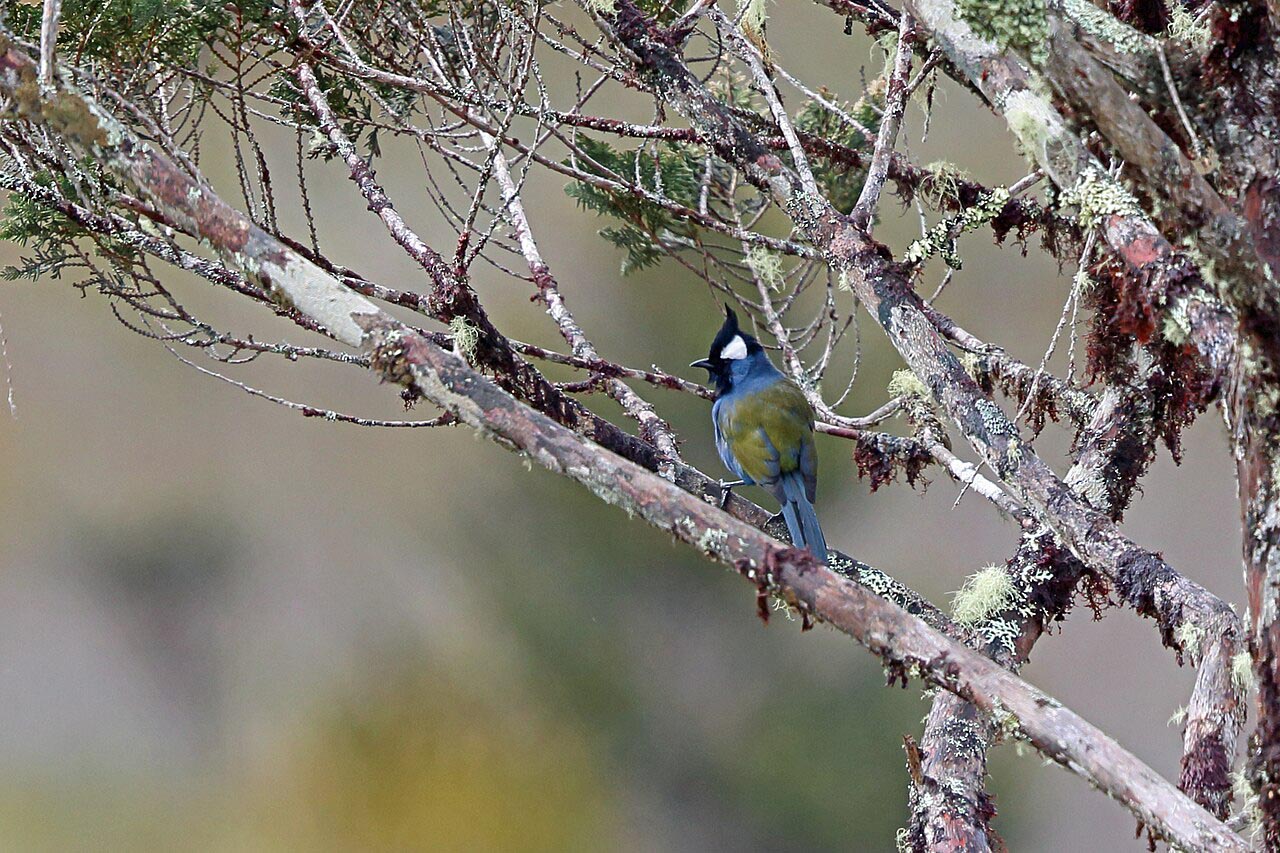
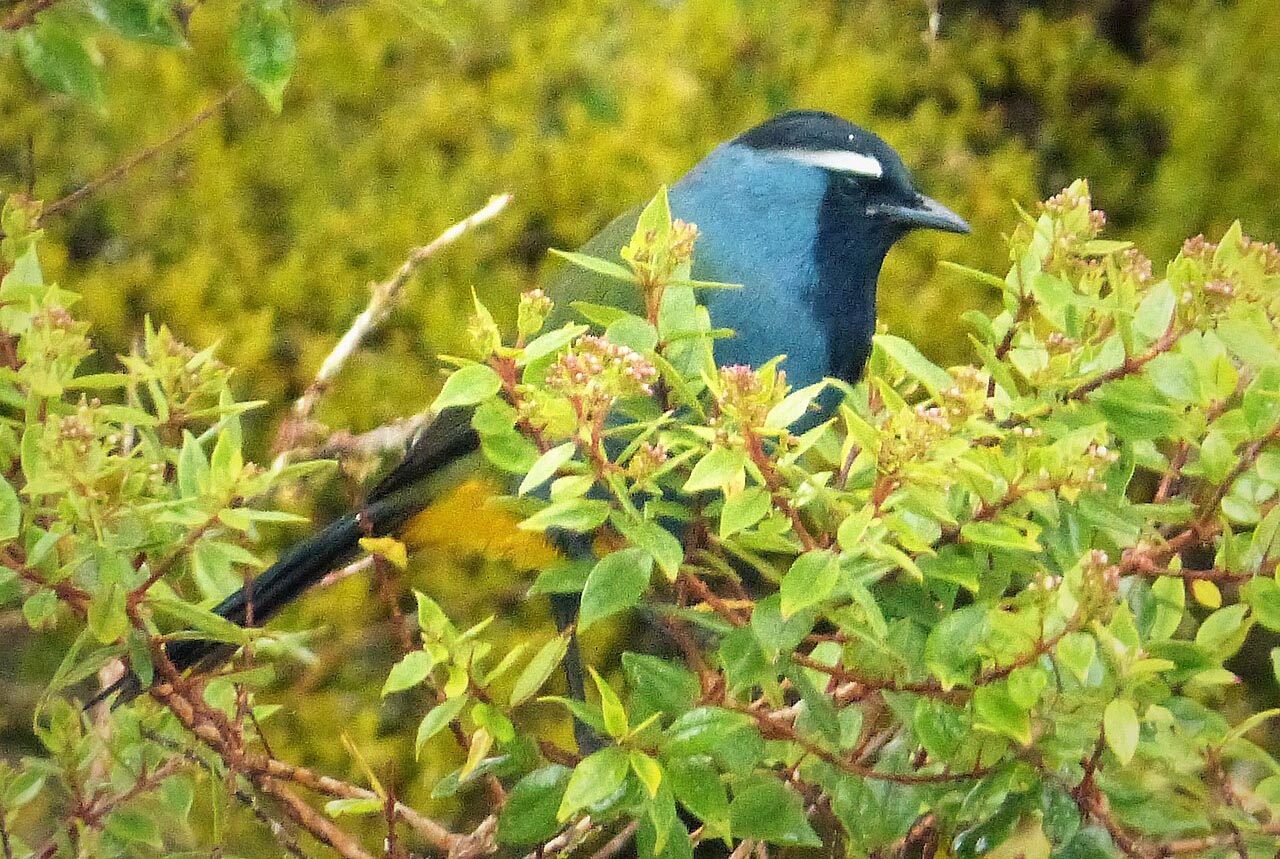
The painted berrypecker family is a small family of colorful birds found only on the island of New Guinea. There are three species: the Tit Berrypecker (Oreocharis arfaki), Eastern Crested Berrypecker (Paramythia montium), and Western Crested Berrypecker (Paramythia olivacea).
Painted berrypeckers live mainly in mountain forests, especially cool, wet forests where trees are covered with moss. The Crested Berrypeckers can also live in high-elevation forests and shrublands where the trees are short and twisted. Most live at high elevations in the mountains of New Guinea, although the Tit Berrypecker can sometimes be found at lower elevations.
These birds spend much of their time in trees searching for food. They eat mostly fruits and berries. They may also eat flowers and small insects. Painted berrypeckers often search for food in pairs or small groups.
Painted berrypeckers are small to medium-sized birds. The Tit Berrypecker is about 4.7–5.5 inches (12.0–14.0 cm) long. The larger Crested Berrypeckers are about 7.5–9 inches (19.0–22.0 cm) long. They have rounded wings, short, strong bills, and colorful feathers in shades of green, blue, and yellow. The Crested Berrypeckers have a noticeable crest of feathers on their heads.
Tit Berrypecker (Oreocharis arfaki)
The Tit Berrypecker is found in the mountain forests of New Guinea, including both the Indonesian and Papua New Guinean parts of the island. It lives mainly in moist tropical and subtropical mountain forests, often at high elevations. IUCN Red List Status: Least Concern.
Eastern Crested Berrypecker (Paramythia montium)
The Eastern Crested Berrypecker is found in high mountain regions of the island of New Guinea. IUCN Redlist Status: Least Concern
Western Crested Berrypecker (Paramythia olivacea)
The Western Crested Berrypecker is found in shrublands and forested mountain regions of the Indonesian half of the island of New Guinea. IUCN Redlist Status: Least Concern
The Eastern Crested Berrypicker is one of three birds found in this family. Image Credit: gailhampshire from Cradley, Malvern, U.K, CC BY 2.0 , via Wikimedia Commons