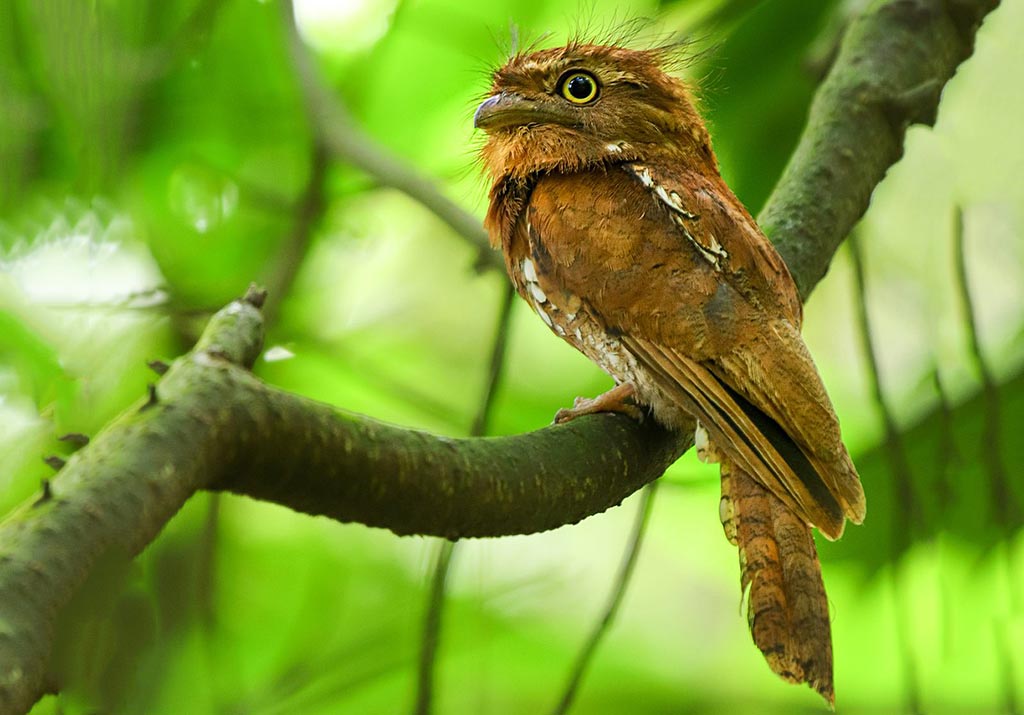
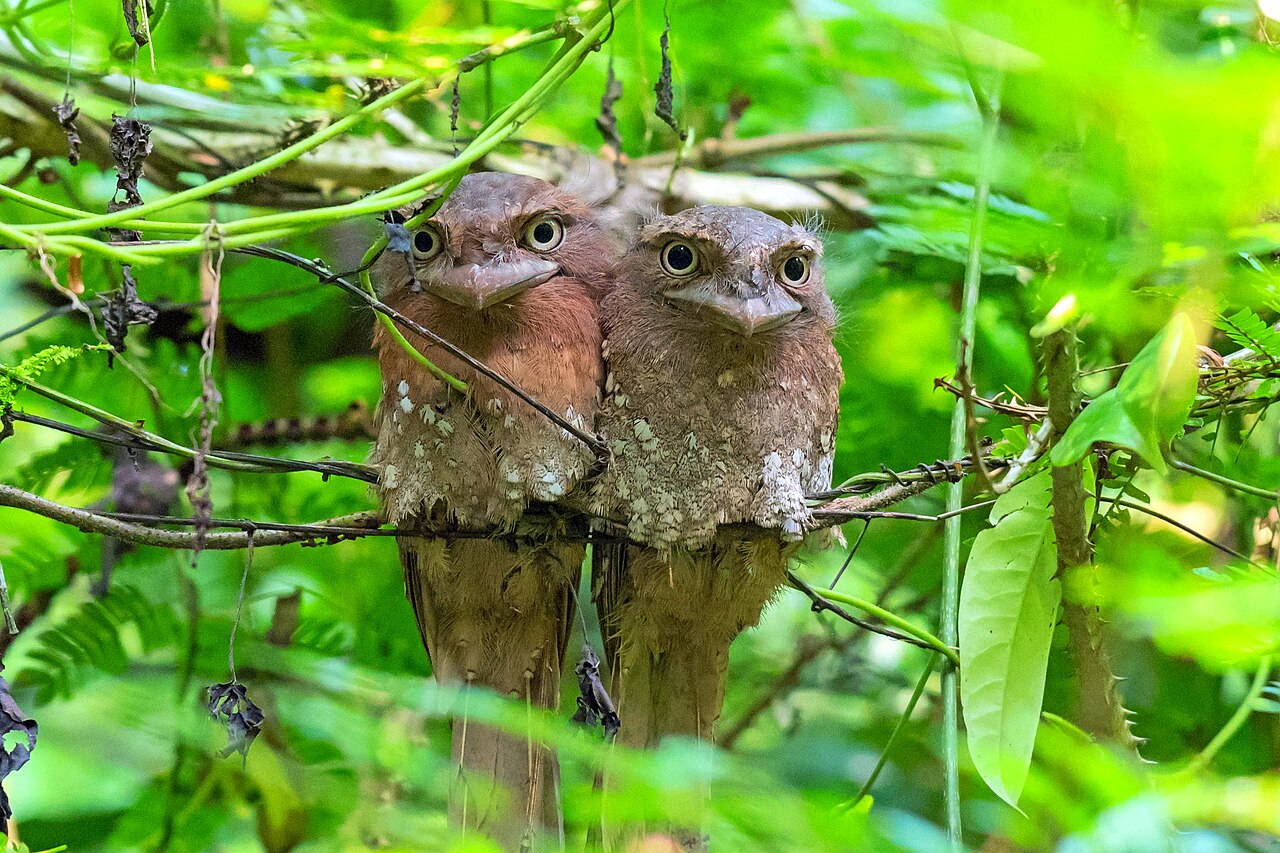
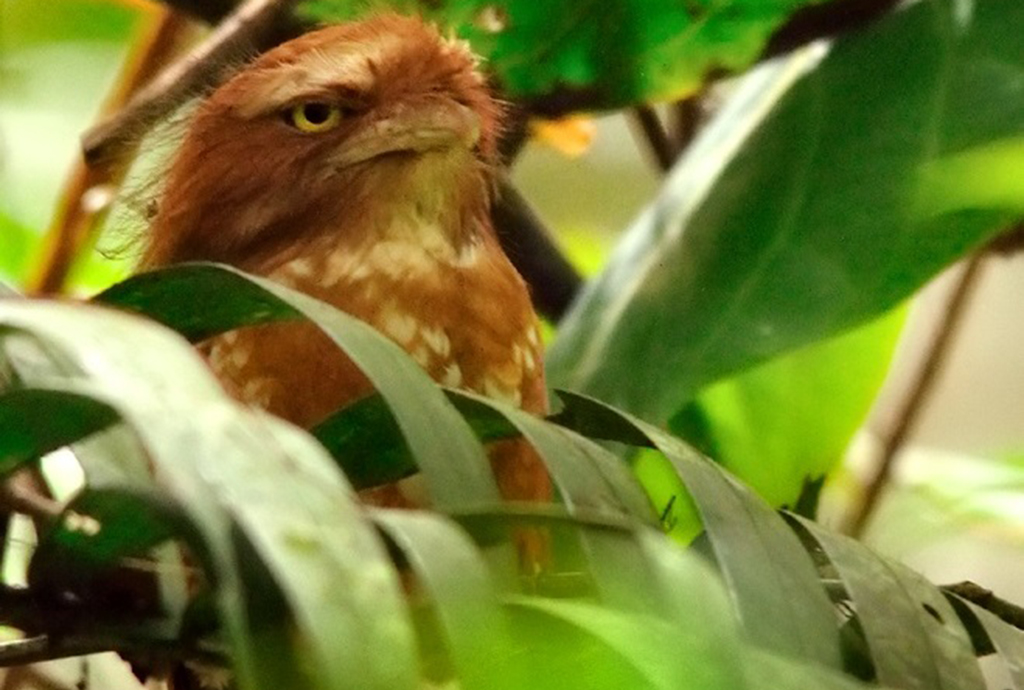
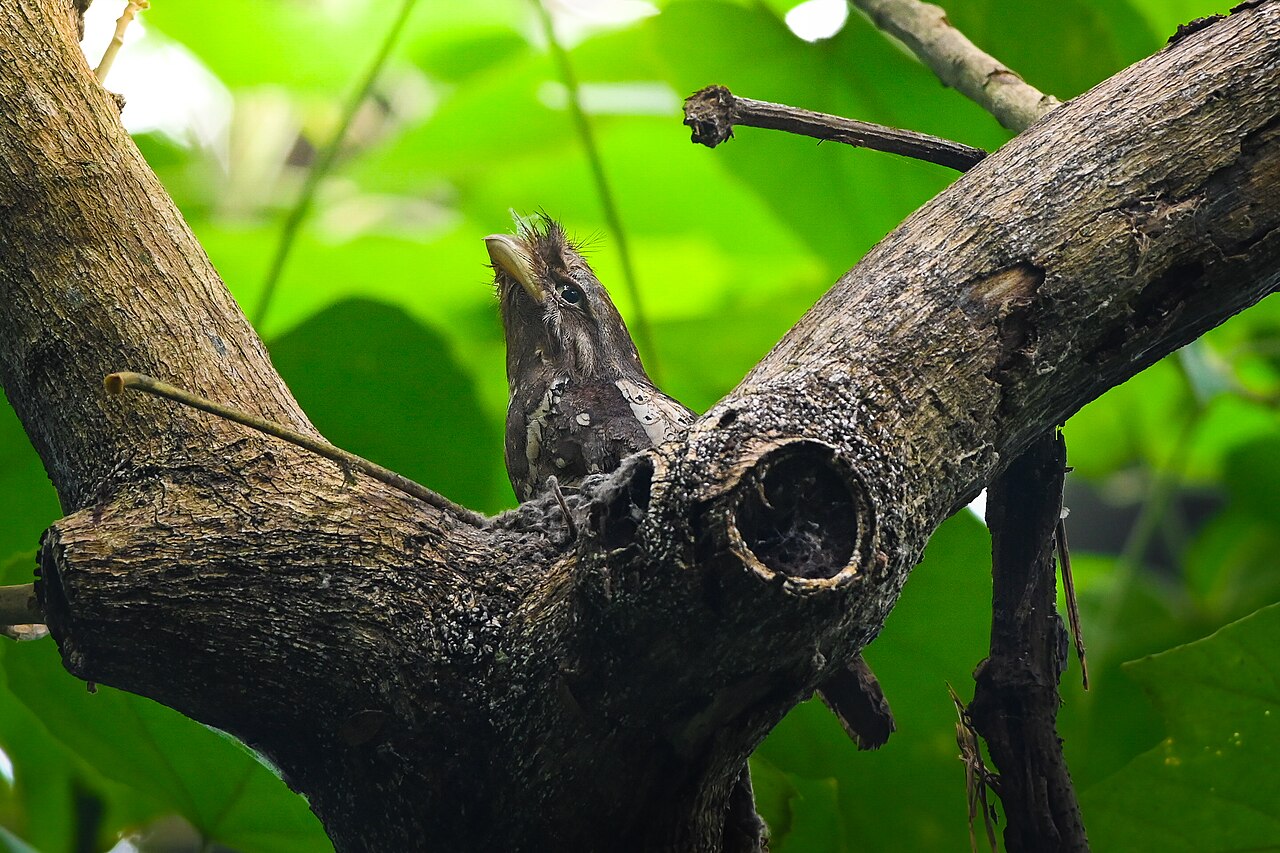
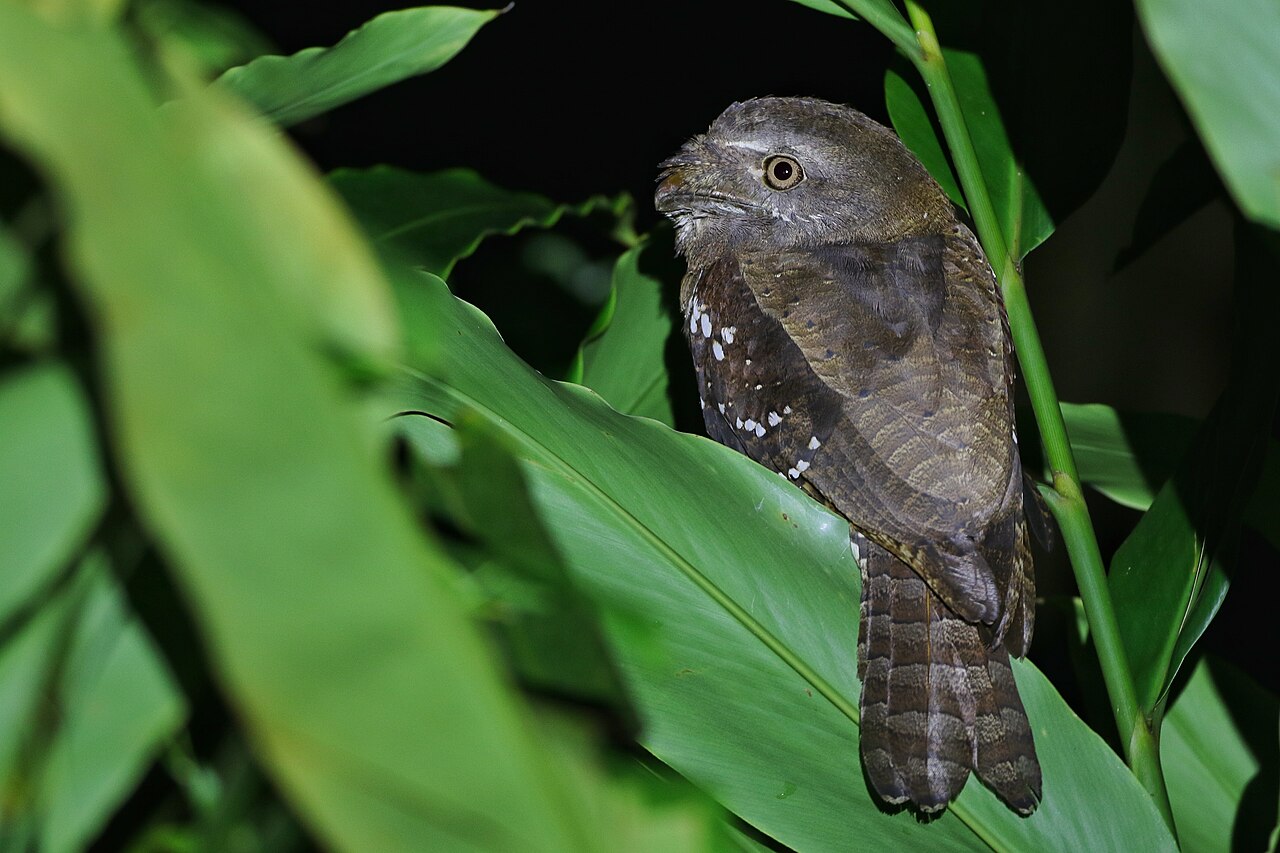
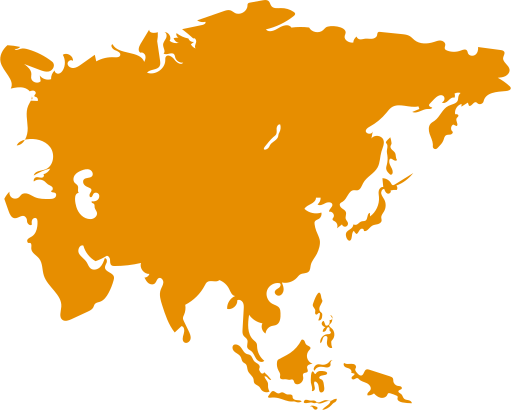
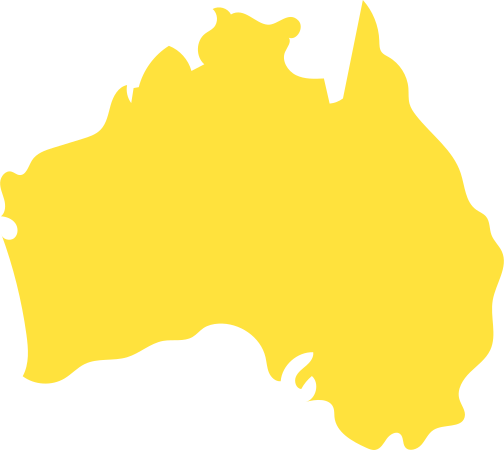
The Podargidae family includes about 15 species of birds called frogmouths. They are found in Asia, Australia, and nearby islands.
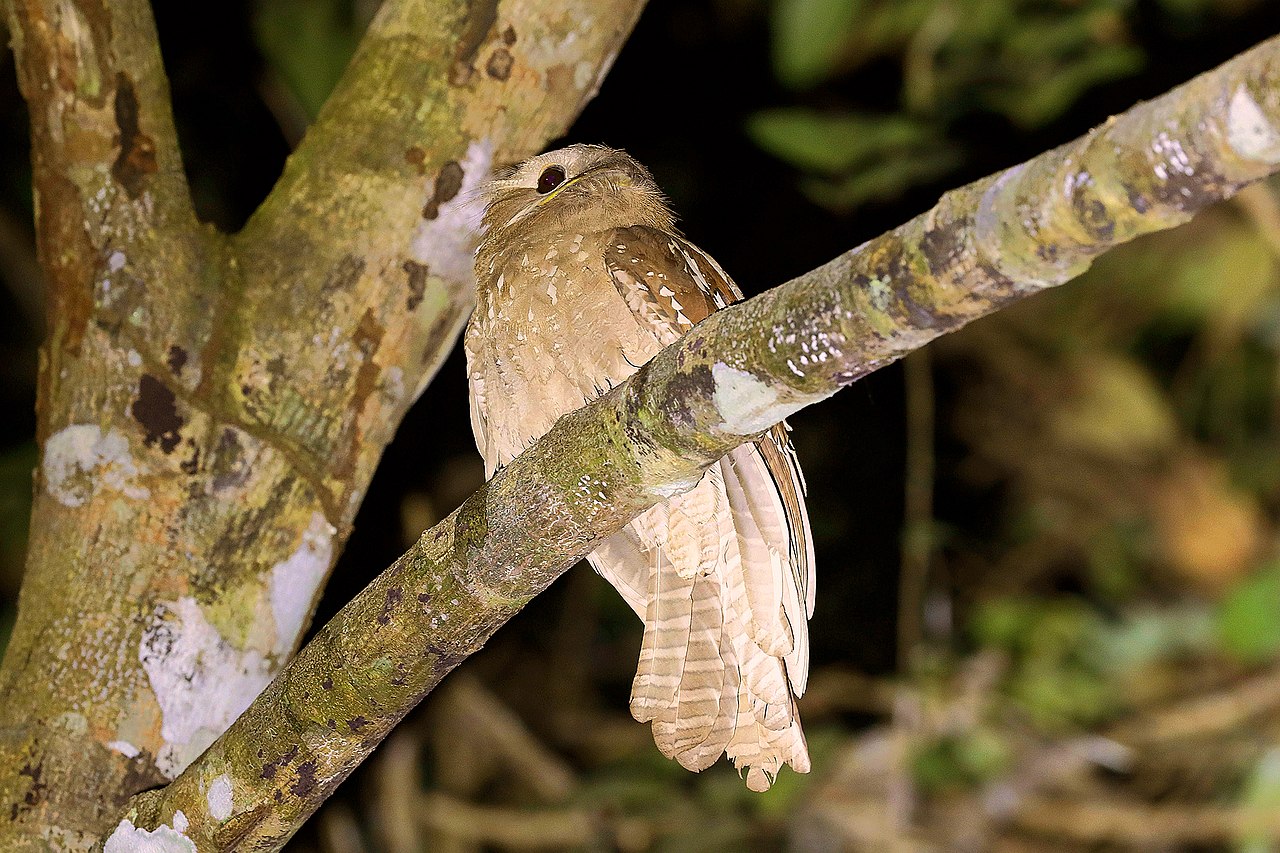
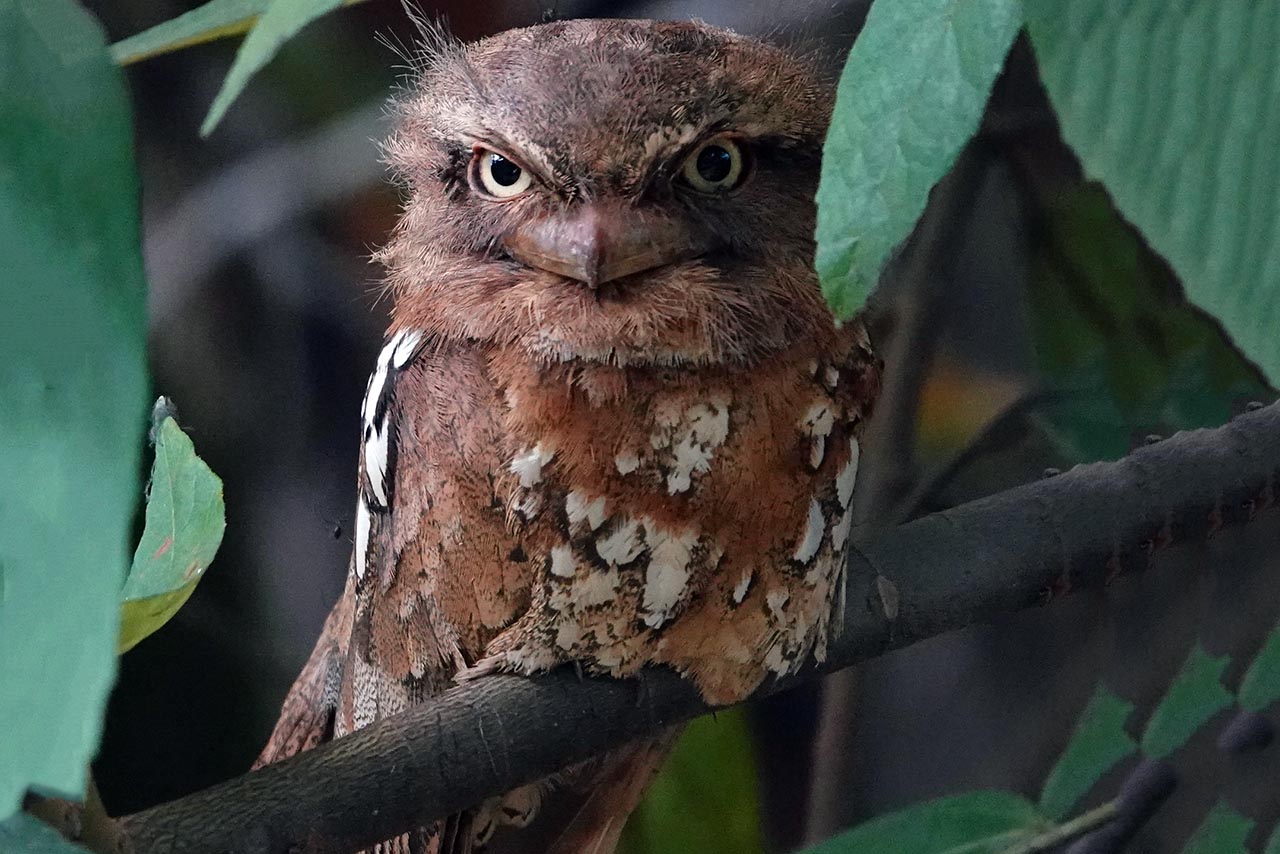
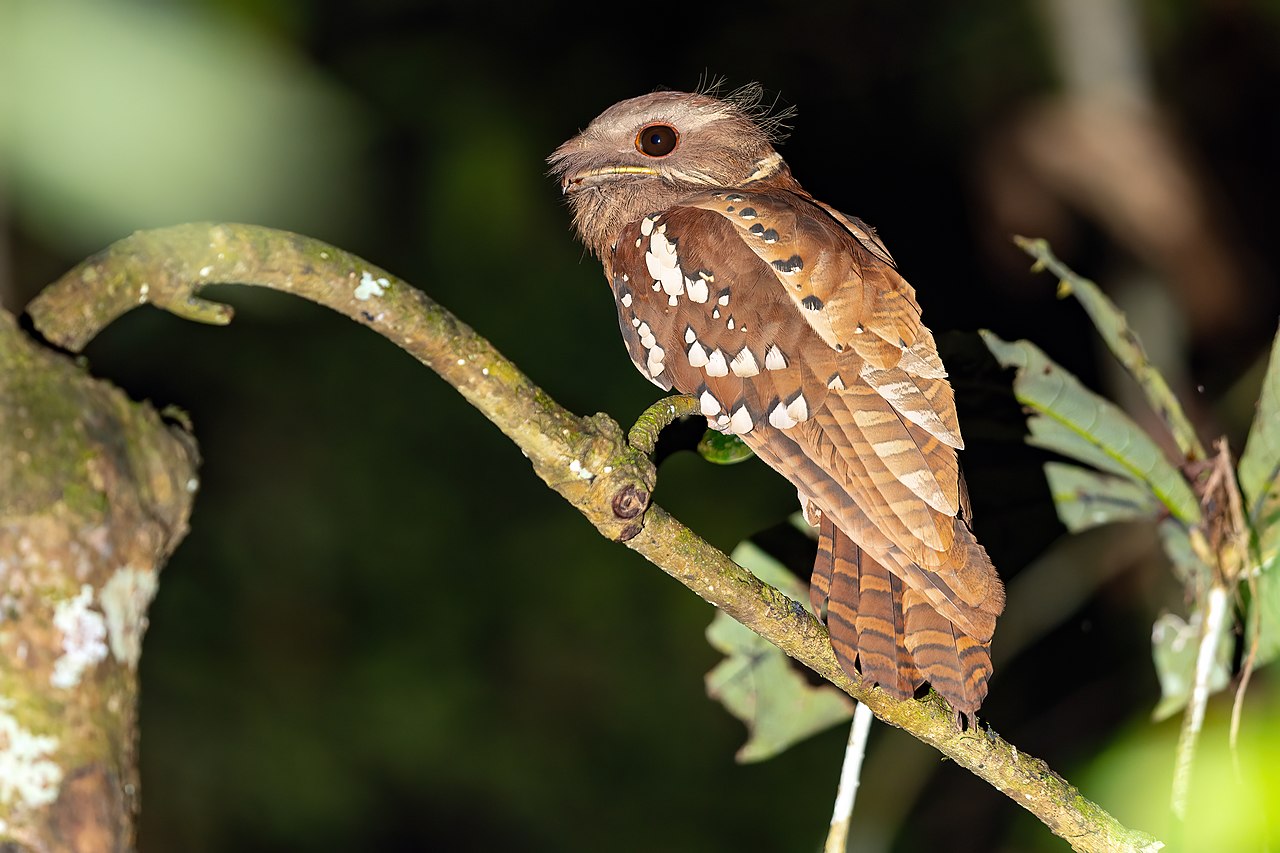
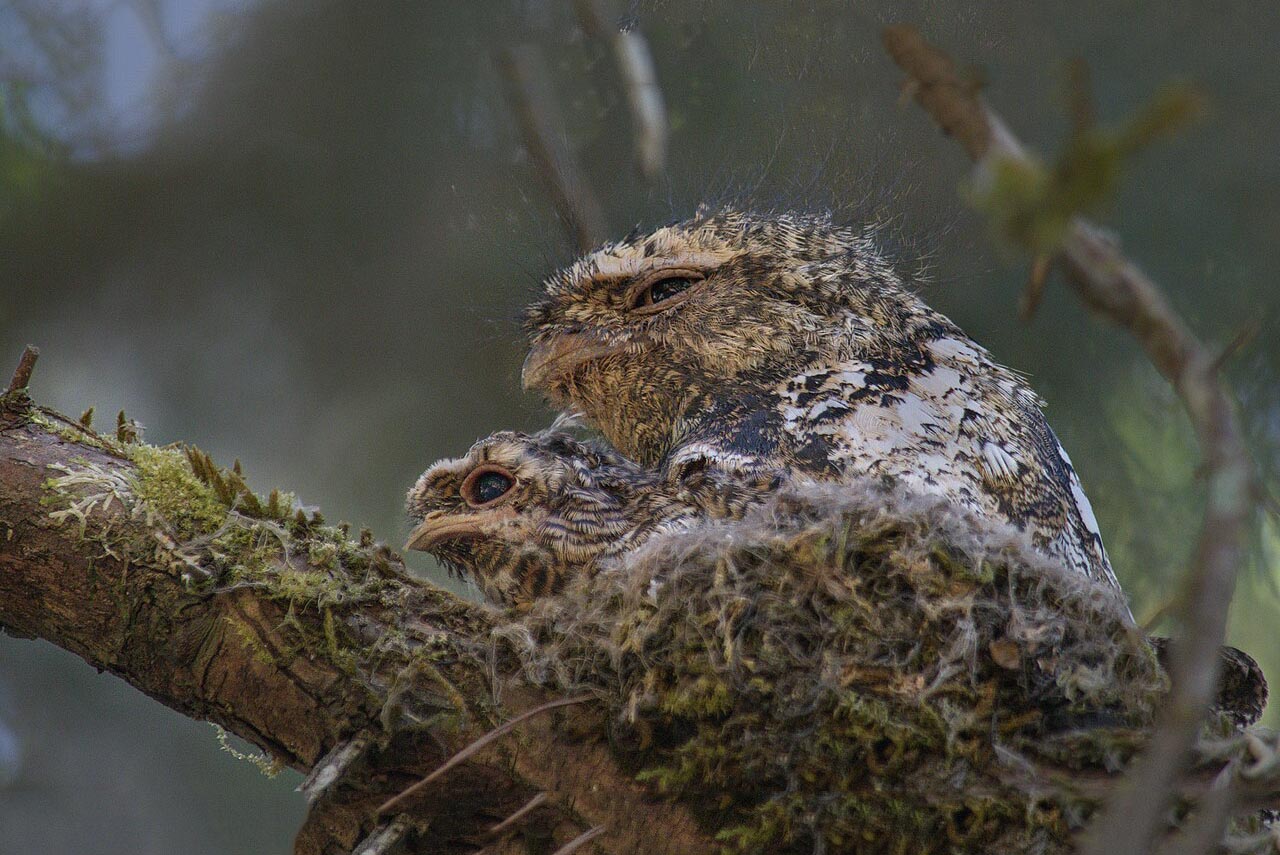
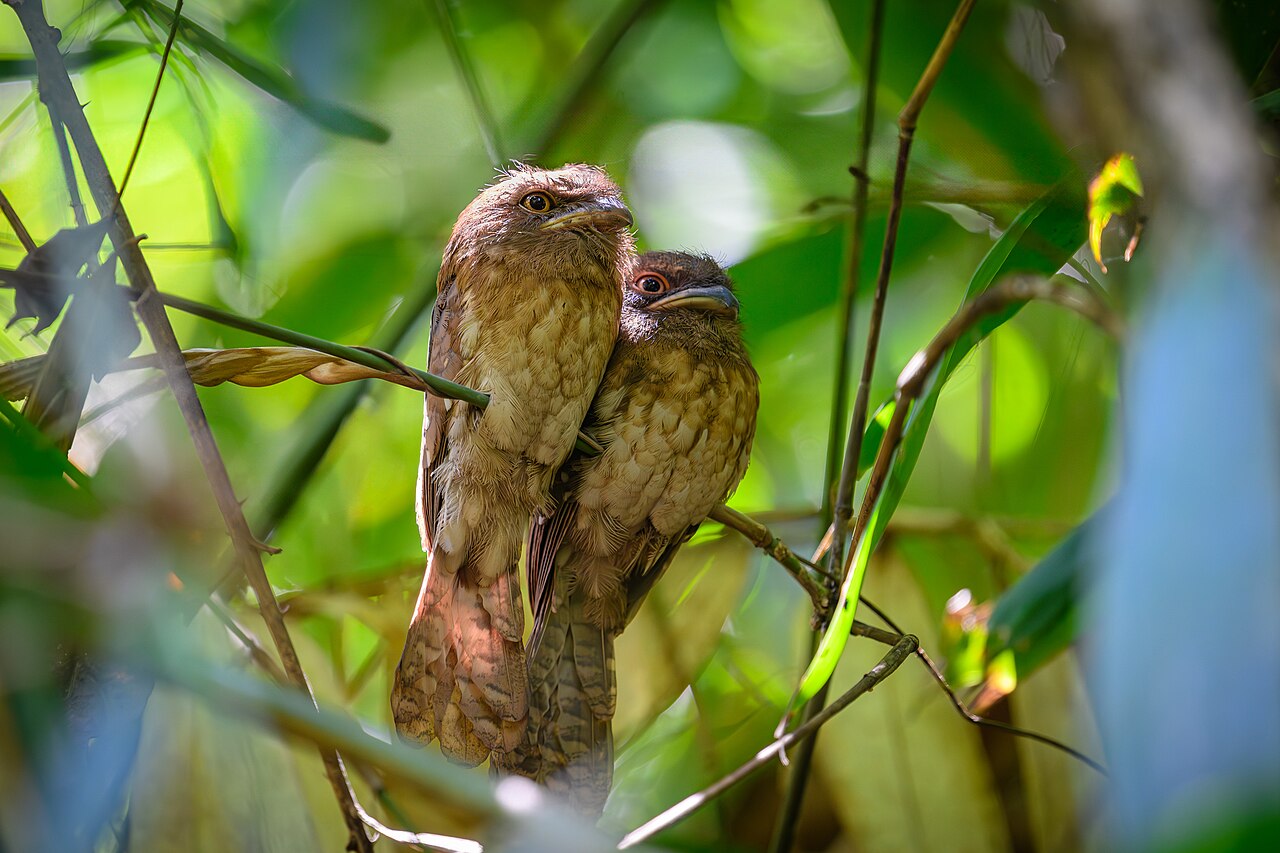
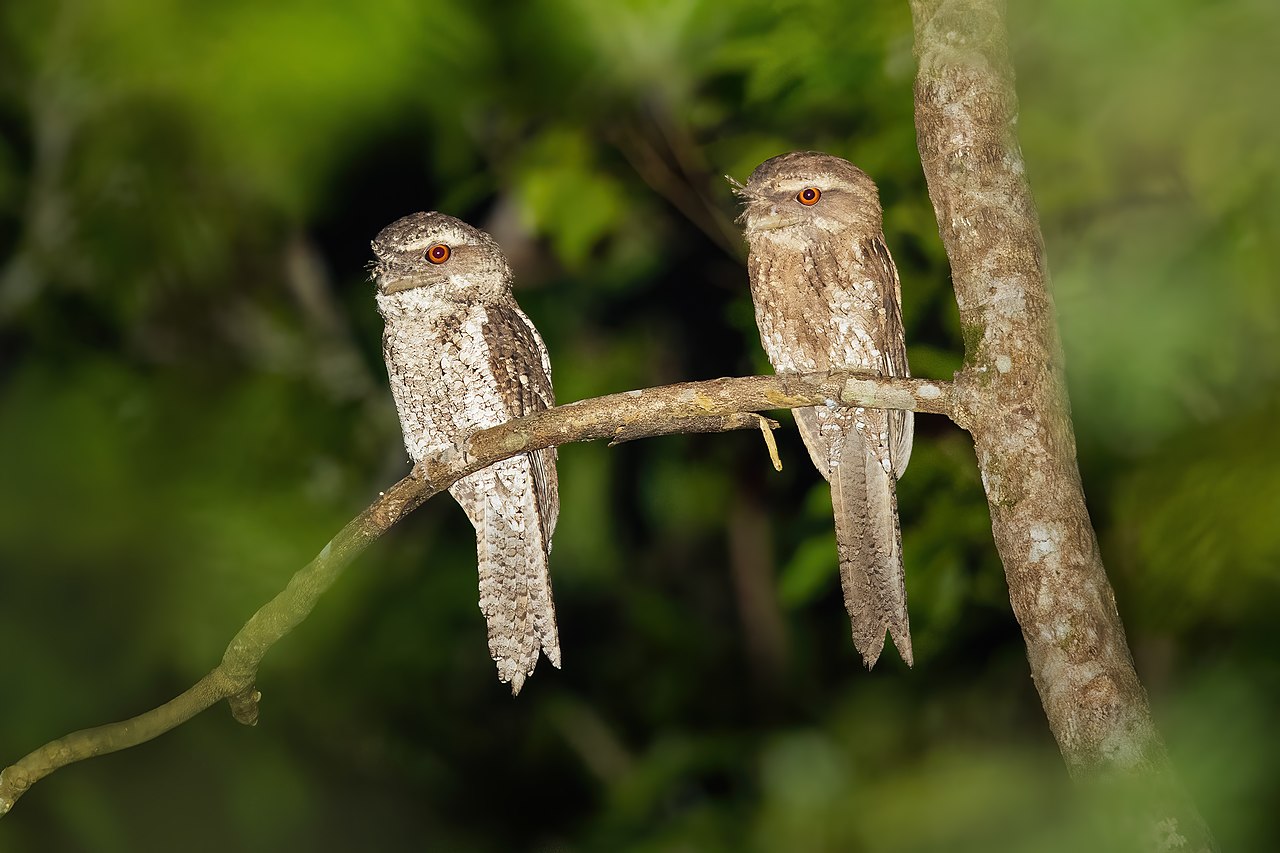
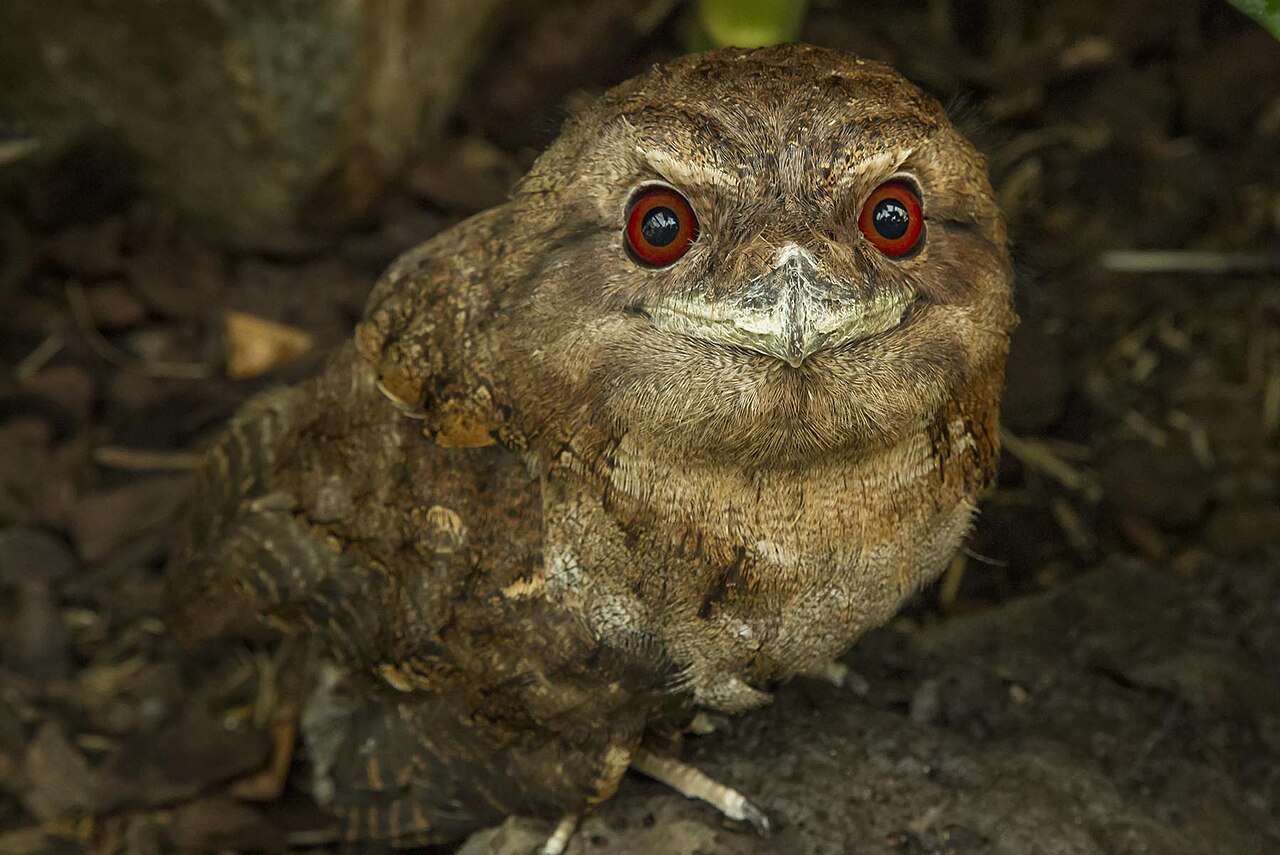
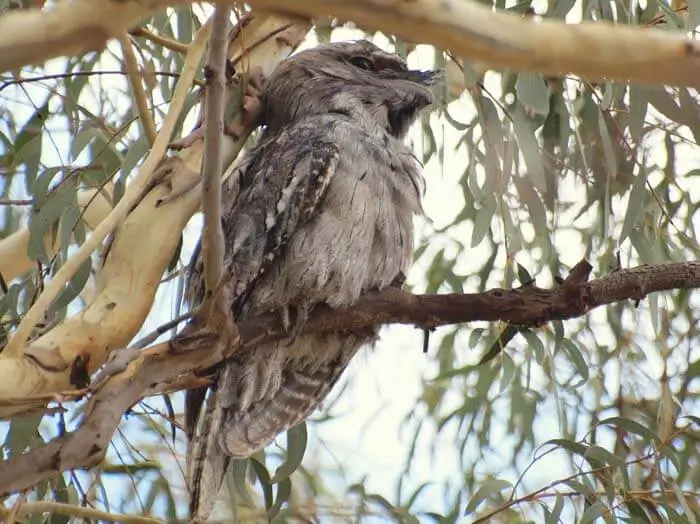
Frogmouths have large, wide, flattened bills that look a bit like a frog’s mouth when opened. During the day, they rest very still on tree branches, often stretching their bodies out so they look like part of the branch.
Their gray, brown, and mottled feathers help them blend in with tree bark, which makes them very hard to see.
Frogmouths are nocturnal, meaning they are active at night. They eat insects and sometimes small animals such as frogs and mice. They usually catch prey and swallow it whole rather than using tools or rocks.
People sometimes confuse frogmouths with owls because of their shape and night habits, but frogmouths are not closely related to owls. They are more closely related to nightjars. Unlike owls, they do not have strong grasping talons; instead, their feet are small and weak.
Large Frogmouth (Batrachostomus auritus)
The large frogmouth is found in Brunei Darussalam, Indonesia, Malaysia, and Thailand. IUCN Redlist Status: Vulnerable
Sunda Frogmouth (Batrachostomus cornutus)
The Sunda Frogmouth is found in Brunei Darussalam, Indonesia, and Malaysia. IUCN Redlist Status: Least Concern
Dulit Frogmouth (Batrachostomus harterti)
The Dulit Frogmouth is found in Indonesia and Malaysia. IUCN Redlist Status: Least Concern
Hodgson's Frogmouth (Batrachostomus hodgsoni)
Hodgson's Frogmouth is found in Bangladesh, Bhutan, China, India, Laos, Myanmar, Thailand, and Vietnam. IUCN Redlist Status: Least Concern
Horsfield's Frogmouth (Batrachostomus javensis)
Horsefield’s Frogmouth, also known as the Javan frogmouth, is found in Brunei Darussalam, Indonesia, Laos, Malaysia, Myanmar, the Philippines, and Thailand. IUCN Redlist Status: Least Concern
Sri Lanka Frogmouth (Batrachostomus moniliger)
The Sri Lanka Frogmouth is found in India and Sri Lanka. IUCN Redlist Status: Least Concern
Sumatran Frogmouth (Batrachostomus poliolophus)
The Sumatran Frogmouth, also known as the short-tailed frogmouth, is found in lowland forests in Sumatra, Indonesia. IUCN Redlist Status: Least Concern
Philippine Frogmouth (Batrachostomus septimus)
The Philippine Frogmouth is found in the Philippines. IUCN Redlist Status: Least Concern
Gould's Frogmouth (Batrachostomus stellatus)
Gould's Frogmouth is found in evergreen forests in Brunei Darussalam, Indonesia, Malaysia, and Thailand. IUCN Redlist Status: Near Threatened
Marbled Frogmouth (Podargus ocellatus)
The Marbled Frogmouth is found in Australia, Indonesia, Papua New Guinea, and the Solomon Islands. IUCN Redlist Status: Least Concern
Papuan Frogmouth (Podargus papuensis)
The Papuan Frogmouth is found in Australia, Indonesia, and Papua New Guinea. IUCN Redlist Status: Least Concern
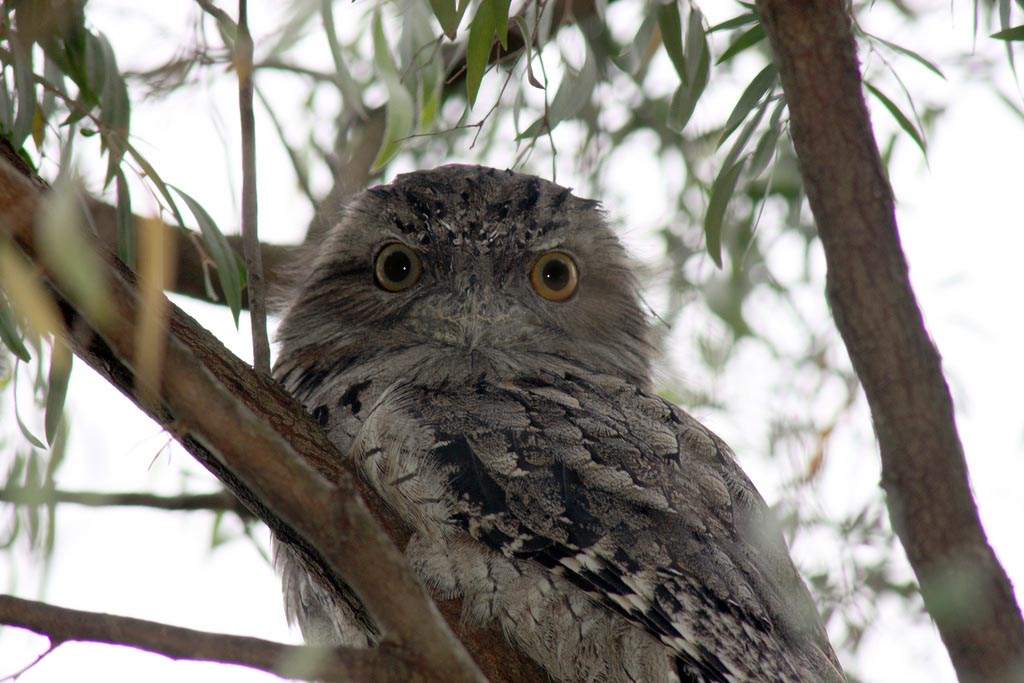
Tawny Frogmouth (Podargus strigoides)
During the day, Tawny Frogmouths sleep perched lengthwise on a branch with their heads up and their eyes closed. The are found across all of Australia, including Tasmania. IUCN Redlist Status: Least Concern
Solomans Frogmouth (Rigidipenna inexpectata)
Solomans Frogmouth is found in Papua New Guinea and the Solomon Islands. IUCN Redlist Status: Near Threatened