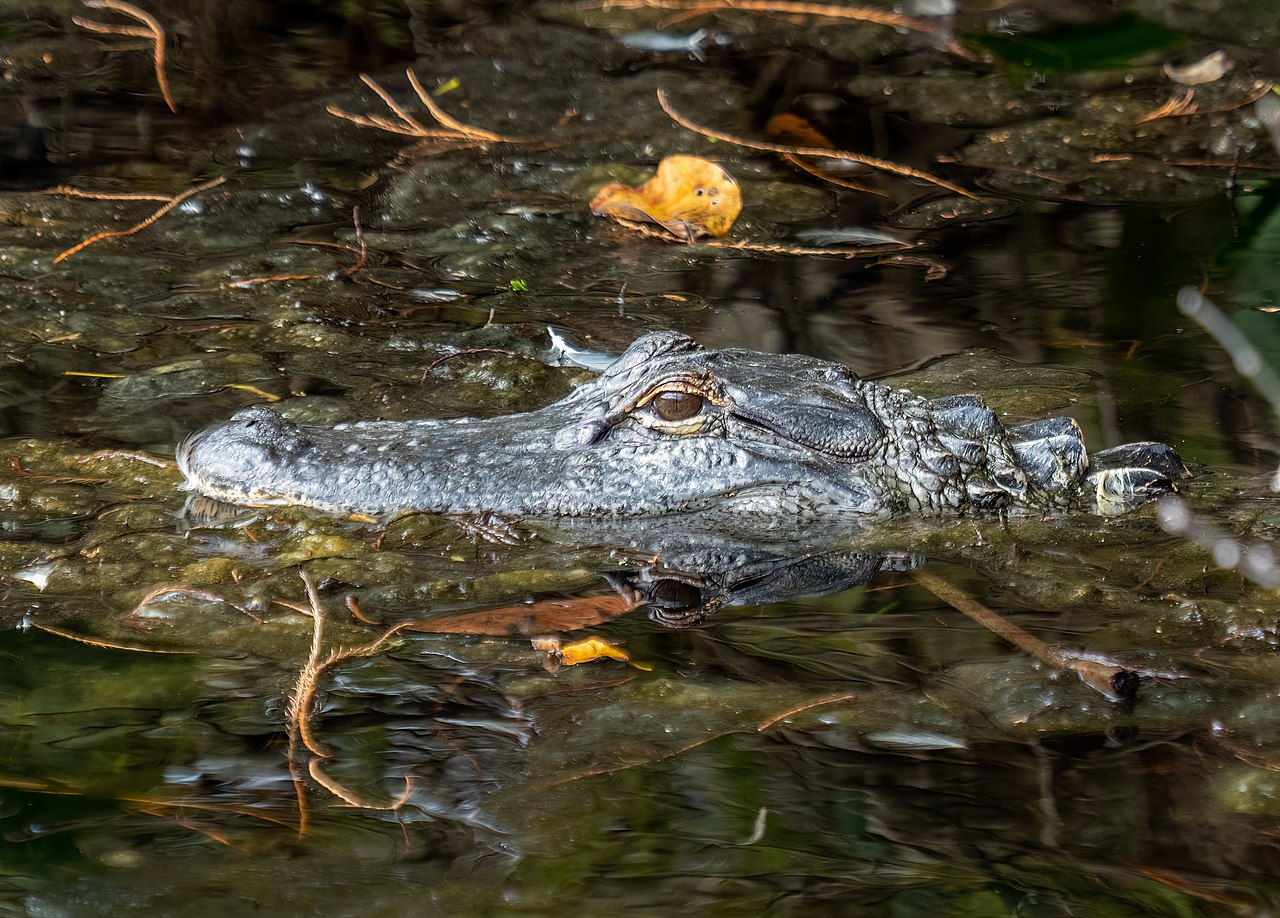
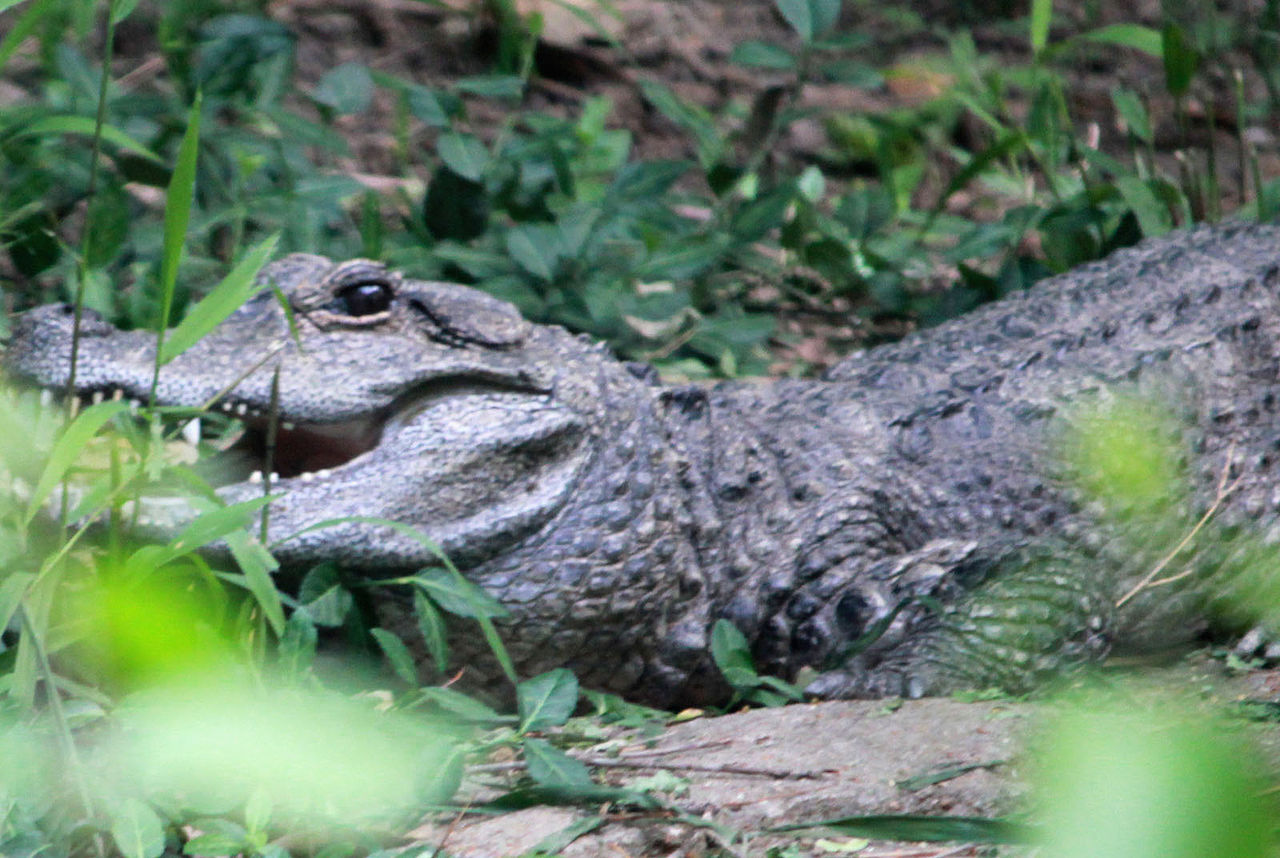
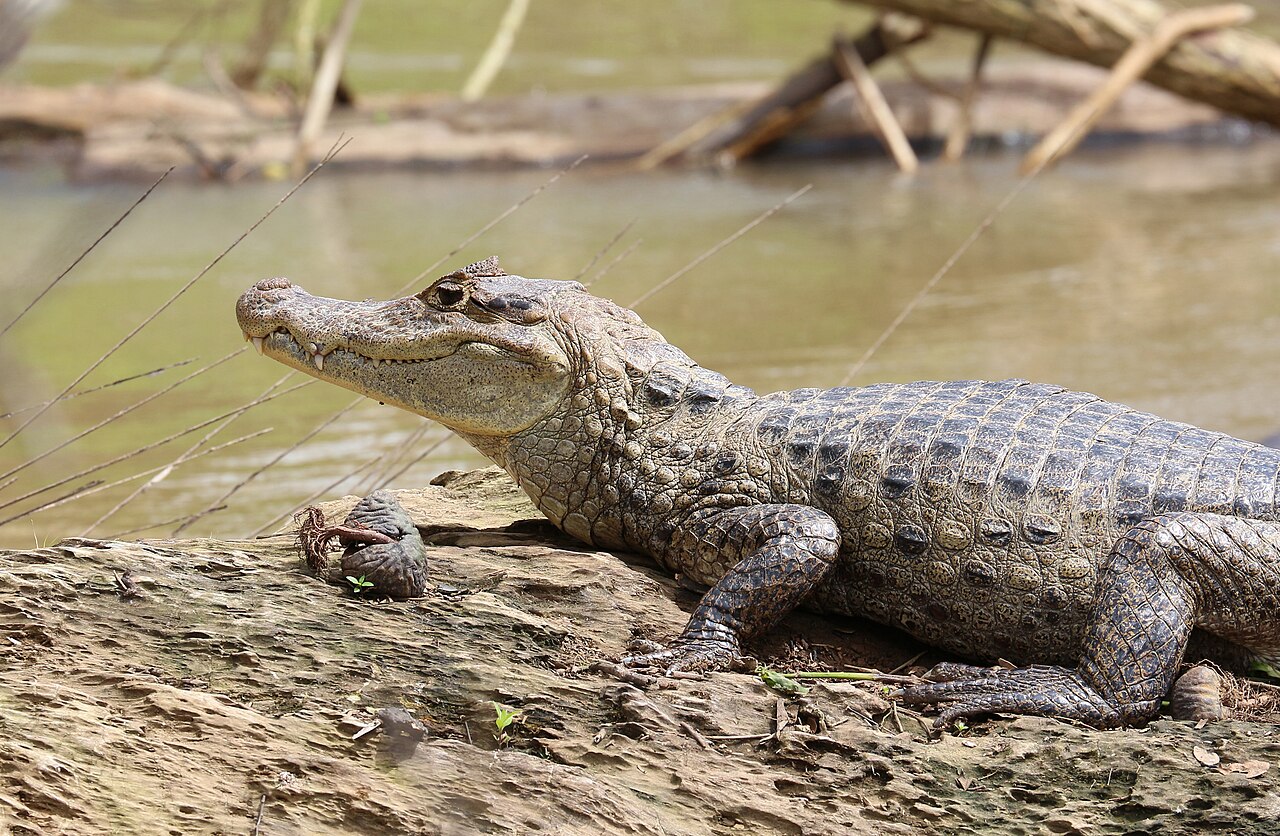
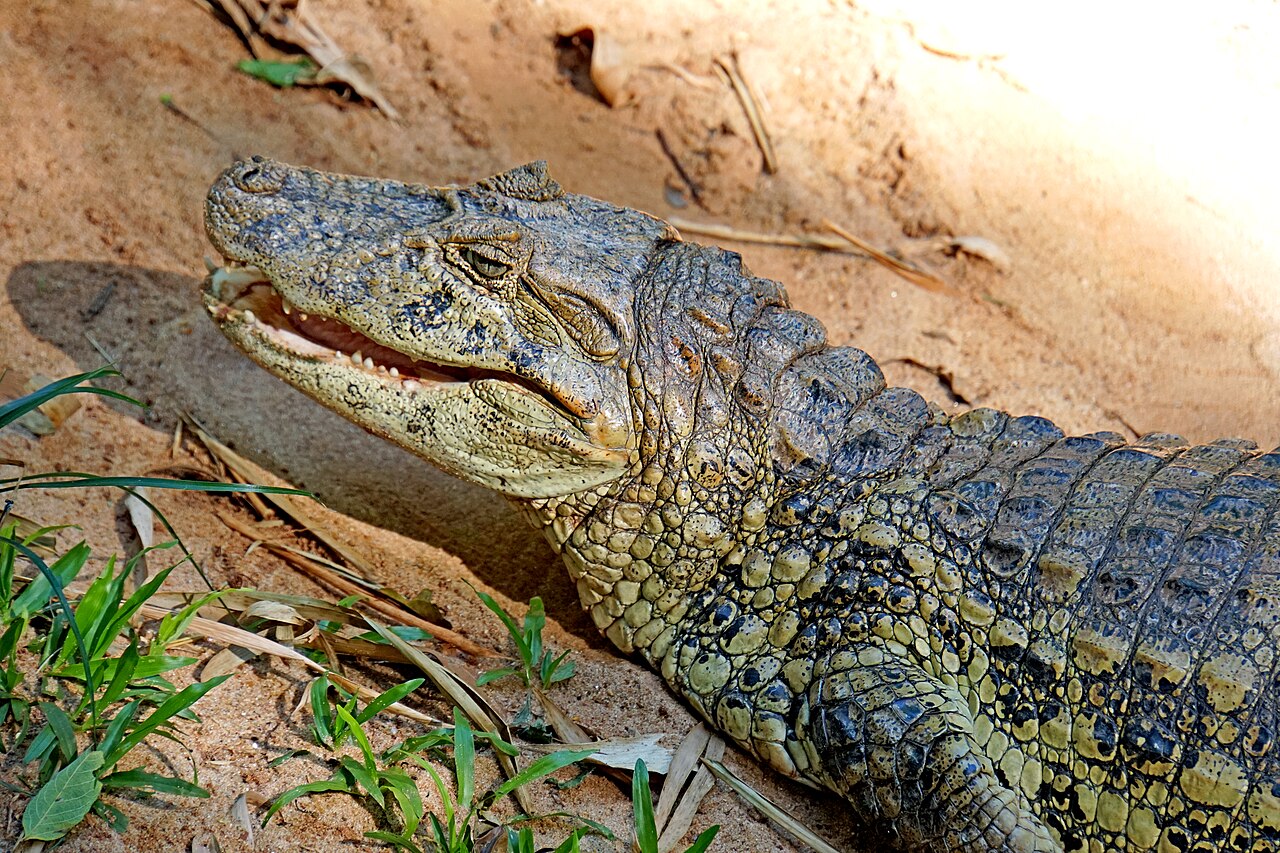
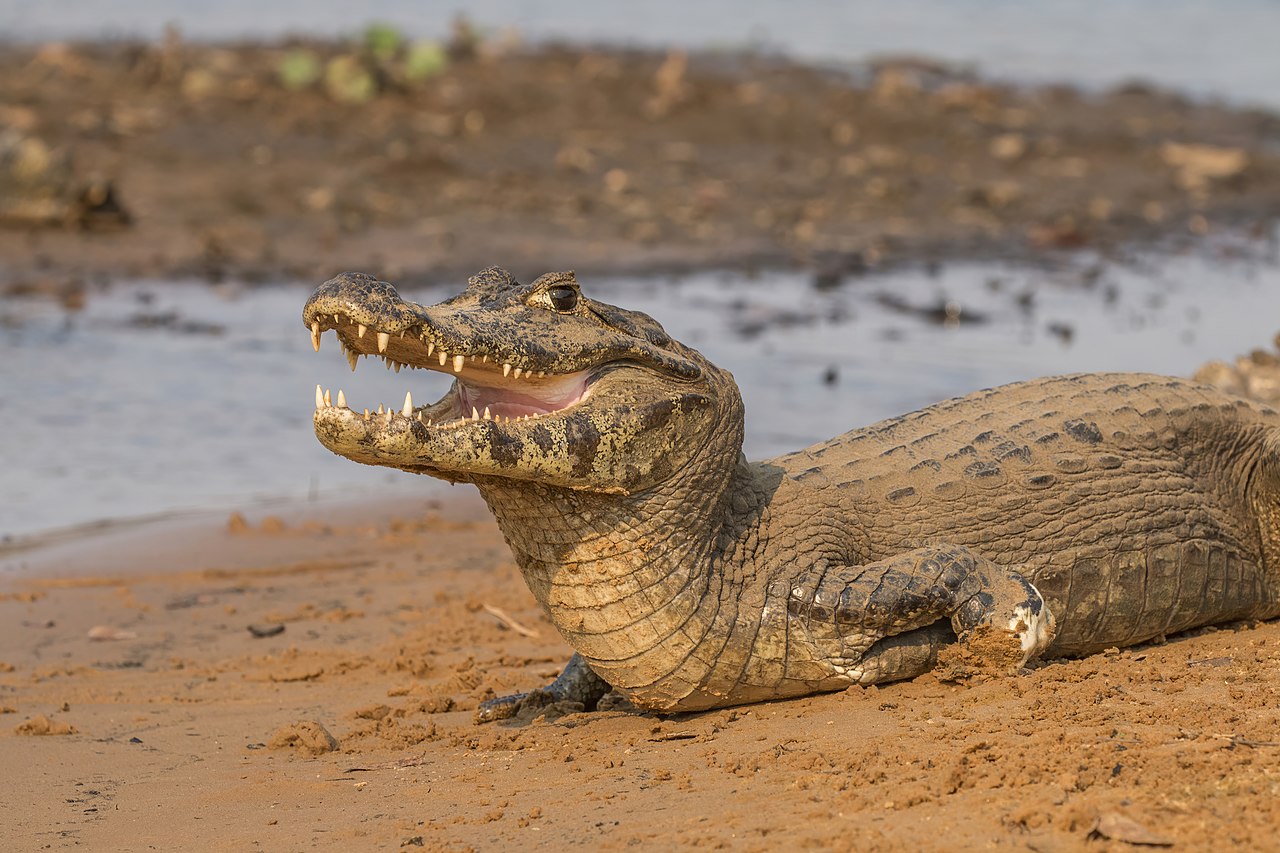
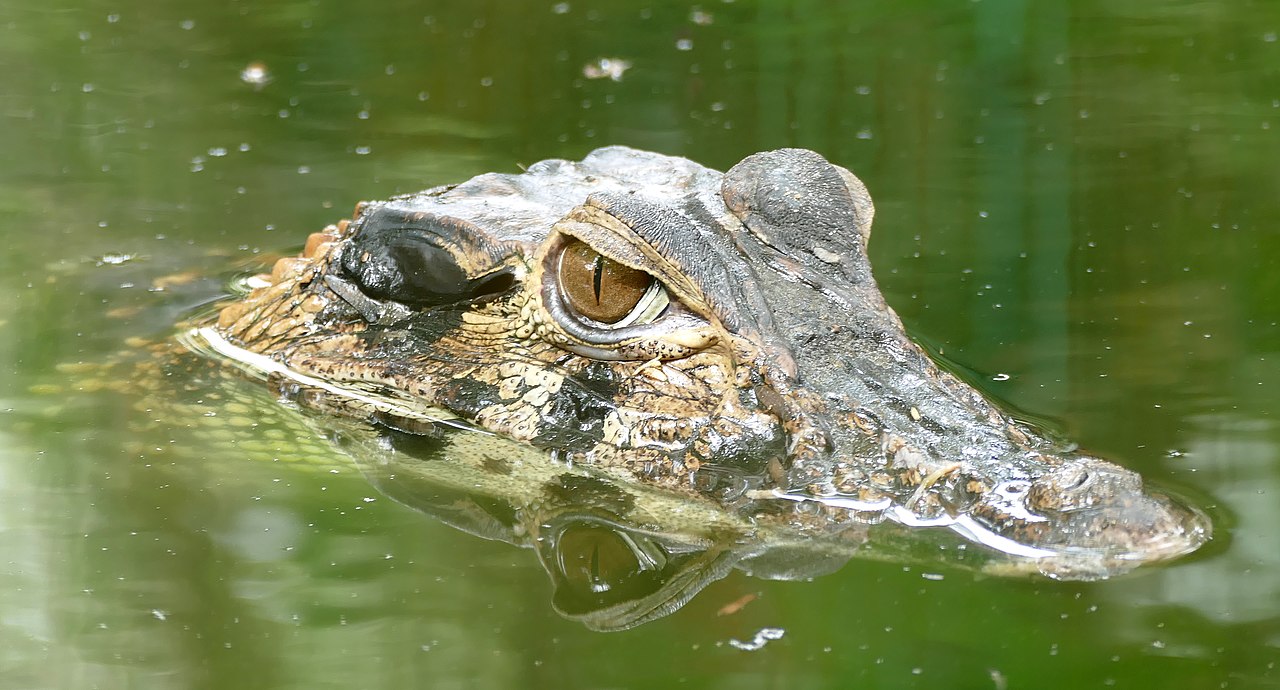
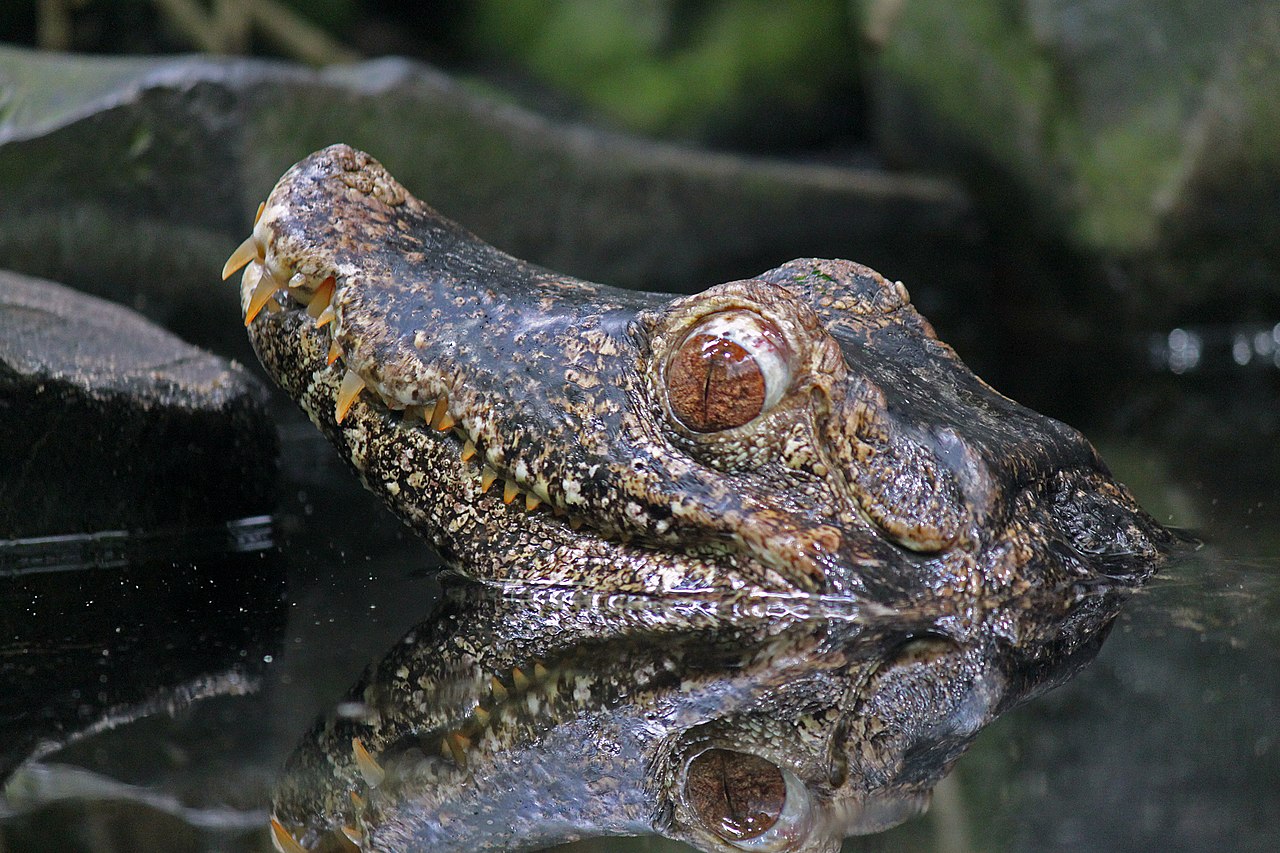
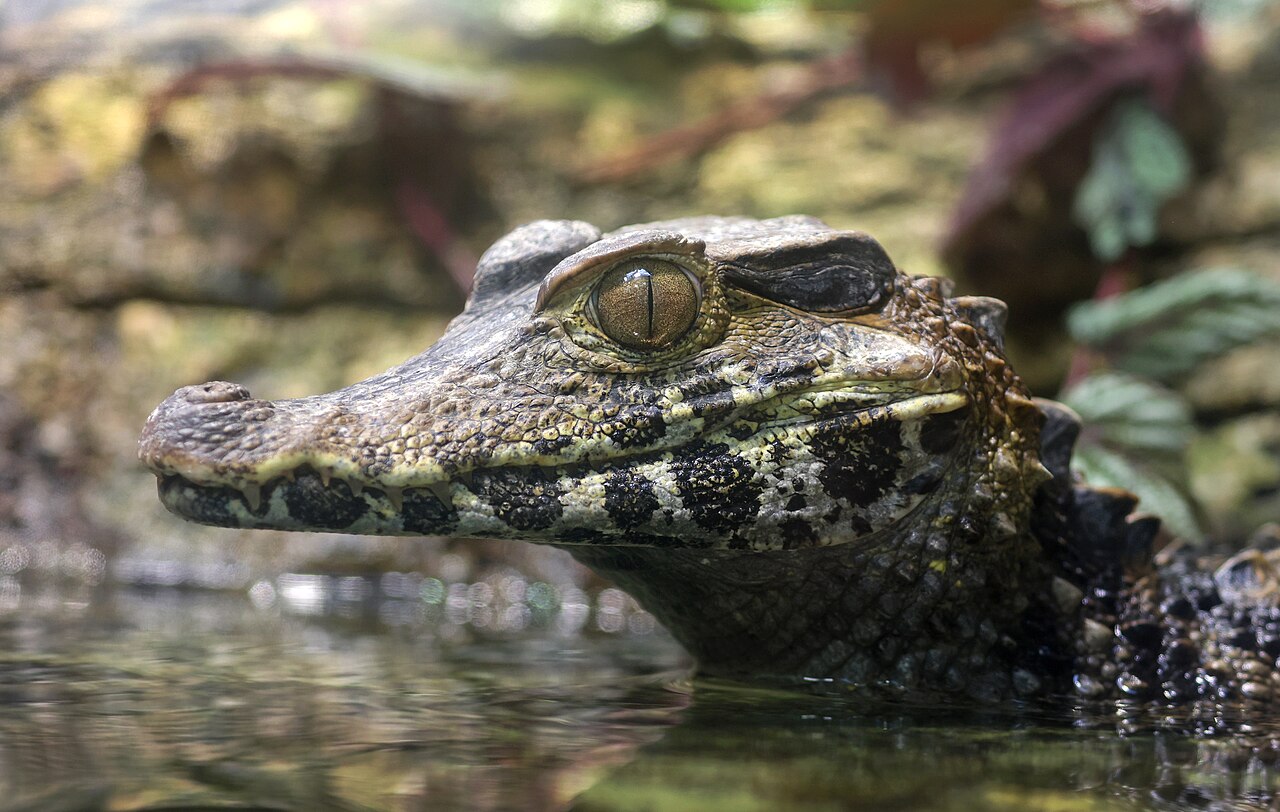
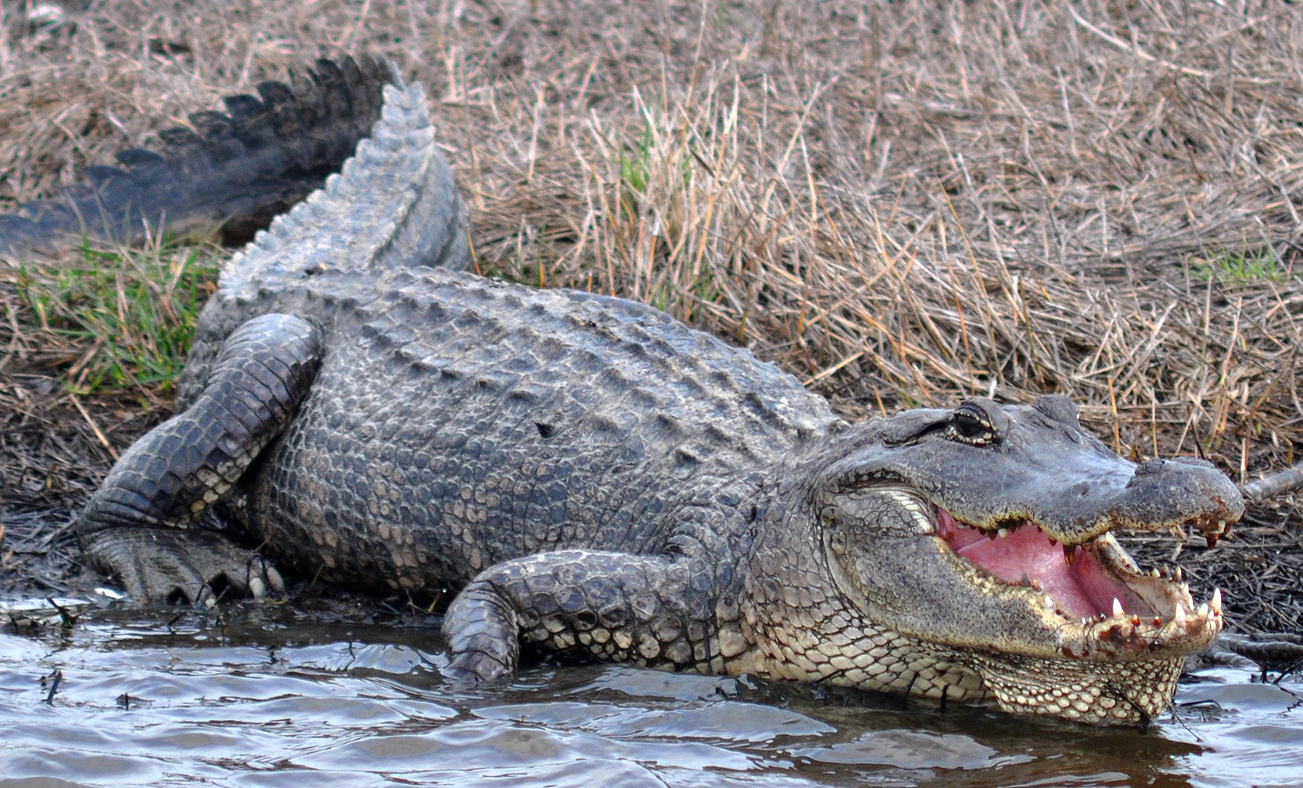
The Alligatoridae family includes alligators and caimans. There are eight living species in the family.
Alligators are found in the southeastern United States and China. Caimans live in Central and South America.
They inhabit freshwater habitats, including swamps, rivers, lakes, and wetlands.
They have rounded snouts, powerful tails, and dark skin that helps camouflage them both in the water and on land.
Alligators and caimans are covered in thick scales or bony plates called osteoderms or scutes.
When their mouths are closed, only the upper teeth are visible, which is different from crocodiles, where both rows of teeth can be seen.
Alligators and caimans are carnivores. They eat fish, birds, mammals, and sometimes smaller reptiles.
They are cold-blooded and rely on the sun to warm up.
Most are excellent swimmers, but they can also move quickly on land for short bursts.
Females build nests from plants and mud. They lay eggs, and the mother guards the nest carefully. When the babies hatch, the mother may carry them to the water in her mouth and protect them for several weeks.